Cephalexin For Cats is a broad-spectrum antibiotic commonly used in veterinary medicine to treat bacterial infections in cats. It belongs to the first-generation cephalosporin class, which works by damaging the bacteria’s cell wall, causing the bacteria to break down and die.
Although the U.S. FDA has officially approved cephalexin for dogs, its use in cats is considered “off-label.” Despite this, veterinarians frequently prescribe it for cats because it is effective and generally well tolerated when used correctly.
In cats, cephalexin is mainly used to treat skin infections, soft tissue infections, urinary tract infections, respiratory infections, and sometimes bone or joint infections. It is effective against many common bacteria, including some gram-positive and gram-negative organisms.




This antibiotic is available only with a veterinary prescription, and correct dosing is very important because improper use can lead to side effects or antibiotic resistance. Most cats respond well when the dosage is properly adjusted according to their weight and condition.
Cephalexin is also known by brand names such as Keflex® and Rilexine®, and is usually given orally. It is absorbed quickly, and its effects begin within a short time after administration.
Because every cat’s condition is different, determining the correct Cephalexin Dosage for Cats is essential for safe and effective treatment.
In This guide will help you understand Cephalexin Dosage for cats is a veterinary antibiotic used to treat bacterial infections like skin, wound, urinary, and respiratory infections. Learn safe dosage, uses, side effects, precautions, and how to properly give cephalexin to cats for effective treatment and recovery.
Disclaimer: This content is for informational purposes only and should not replace veterinary advice. Always consult your veterinarian especially if your cat has existing health conditions or is taking other medications before giving Cephalexin or adjusting your cat’s dosage.




Key Takeaways: Cephalexin Use in Cats
- Cephalexin is a veterinary antibiotic used in cats to treat bacterial infections, most commonly skin and soft tissue infections (pyoderma).
- It belongs to the first-generation cephalosporin (beta-lactam) class, which works by damaging bacterial cell walls, causing bacteria to break down and die.
- Although FDA-approved for dogs, its use in cats is off-label but commonly prescribed by veterinarians when needed.
- It is also used for other infections in cats, including wounds, urinary tract infections, respiratory infections, bone infections, and joint infections.
- Cephalexin is generally well tolerated in cats, with most side effects being mild and mainly related to the digestive system (vomiting, diarrhea, reduced appetite).
- Serious reactions are rare but may occur, especially in cats with allergies, kidney disease, or other underlying health issues.
- Correct dosage must always be determined by a veterinarian based on the cat’s weight, infection type, and overall condition.
- Treatment must always be completed fully, even if symptoms improve early, to prevent recurrence and antibiotic resistance.
- Cephalexin is available in multiple forms, including tablets, capsules, oral suspensions, and injectable forms (clinic use only).
- Safe and effective use depends entirely on veterinary supervision, correct dosing, and proper administration.
What is Cephalexin for Cats?
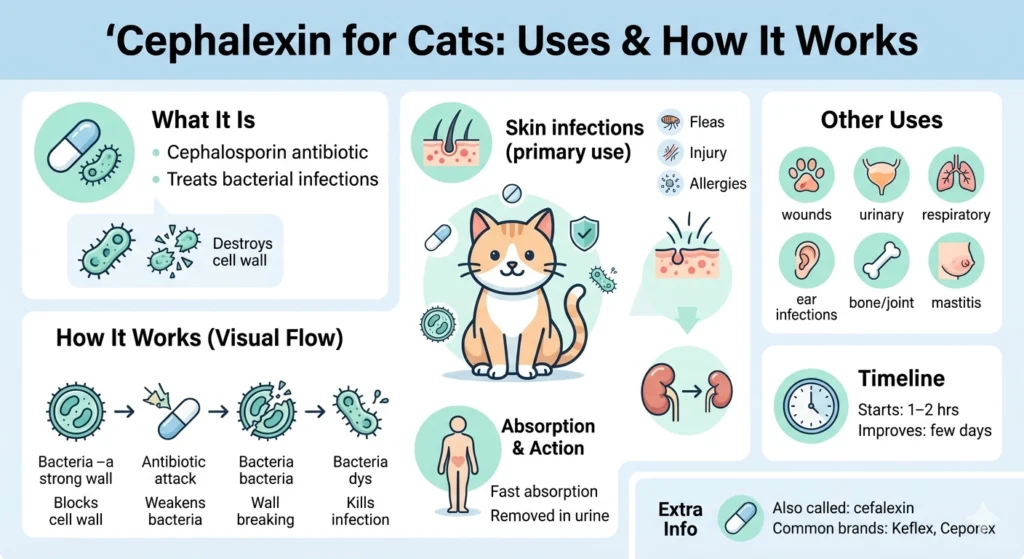
Cephalexin is a beta-lactam antibiotic in the cephalosporin class, used in cats to treat bacterial infections. It works by targeting the bacteria’s cell wall, which is essential for their survival.
Cephalosporins are derived from Cephalosporium acremonium bacteria, and they do not all kill the same types of bacteria as other antibiotics. Cephalexin specifically works by damaging and weakening the bacterial cell wall, making it unstable until the bacteria breaks apart and dies.
After administration, cephalexin is rapidly absorbed in the body and then eliminated through the renal system (urine).
It is also spelled cefalexin and is sold under brand names such as:
- Keflex
- Cephalex
- Ceporex
- Torlasporin
It is generally an affordable antibiotic and is included in the World Health Organization’s List of Essential Medicines.
Uses of Cephalexin for Cats
Cephalexin is an antibiotic used in cats to treat bacterial infections, mainly under veterinary supervision. It is most commonly prescribed for skin and soft tissue infections, but it can also be used for other infection types depending on the veterinarian’s decision.
Skin Infections (Main Use)
Veterinarians primarily use cephalexin for skin infections (pyoderma) in cats. These infections are usually caused by bacteria such as Staphylococcus that normally live on the skin but can cause infection when they enter broken or inflamed skin.
Skin infections in cats may happen due to:
- Allergies
- Fleas or mites
- Skin injuries
- Blocked hair follicles
- Hormonal problems
- Weak immune system
- Poor grooming
Common signs include:
- Hair loss
- Bumps or skin lesions
- Sores or wounds
- Pus-filled spots in severe cases
Cephalexin is often used when topical treatments like medicated shampoos or creams are not enough or when the infection is more serious.
Other Uses in Cats
Cephalexin may also be used for:
- Wound infections
- Urinary tract infections
- Respiratory infections
- Bone infections
- Joint infections
- Mastitis
- Ear infections
- Pneumonia
However, veterinarians may choose other antibiotics depending on the type of infection.
How Cephalexin Works in Cats
Cephalexin belongs to the cephalosporin group of antibiotics, which are effective mainly against certain bacterial infections.
It works by:
- Stopping bacteria from building a strong cell wall
- Making the bacterial structure unstable
- Causing bacteria to break down and die
Once administered, the antibiotic starts working quickly, often within 1 to 2 hours by beginning to kill bacteria. However, visible improvement in the cat may take a few days even though the medicine is already acting inside the body.
Preparations of Cephalexin for Cats
Cephalexin is available in several forms for cats, depending on the treatment needs:
- Oral suspension (liquid/syrup form) – commonly used for easy dosing
- Oral tablets – including chewable or flavored tablets for easier administration
- Capsules and powders – prescribed based on veterinary preference
- Injectable form – given only in veterinary clinics by professionals (intramuscular or subcutaneous use)
Cephalexin Dosage for Cats
The safe Cephalexin dosage for cats is typically 10–30 mg/kg (5–14 mg/lb), given every 6 to 12 hours, and the treatment duration usually ranges from 7 days up to 1 month, depending on the infection and as prescribed by a veterinarian.
For more specific veterinary guidelines, dosages may vary:
- 15–35 mg/kg orally every 6–12 hours (general recommendation)
- 22 mg/kg every 6 hours (some veterinary drug references)
Condition-Based Dosage in Cats
Depending on the type of infection, veterinarians may adjust the dose:
- Skin & soft tissue infections: 22–35 mg/kg every 12 hours
- Urinary tract infections: 12–25 mg/kg every 12 hours
- Other bacterial infections: 10–15 mg/kg every 6–8 hours
For skin infection treatment, therapy is often continued for 5–7 days after symptoms disappear to prevent relapse.
Liquid Cephalexin Dosage (Oral Suspension)
If using liquid formulations, common veterinary calculations include:
- 125 mg/5 ml (25 mg/ml): 0.4 ml/kg
- 250 mg/5 ml (50 mg/ml): 0.2 ml/kg
- In some cases (15% suspension): 0.1–0.2 ml per kg, twice daily
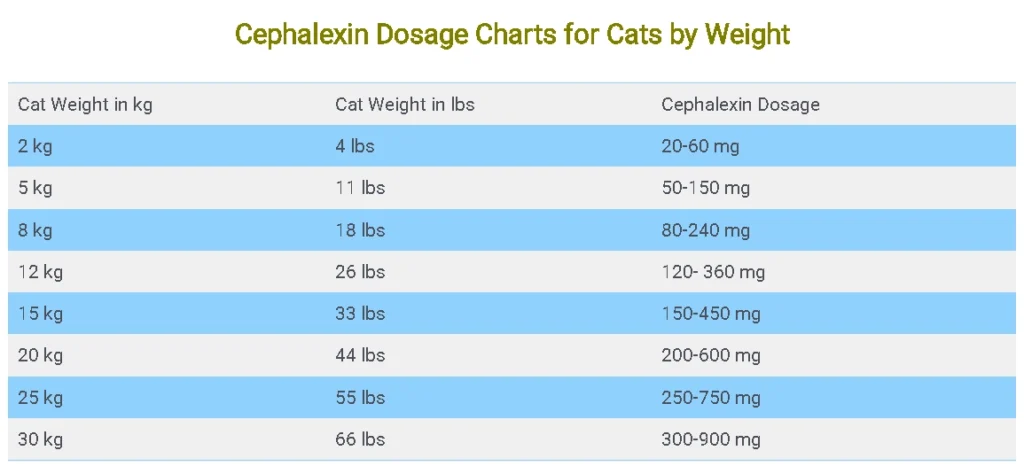
Cephalexin Dosage Charts for Cats by Weight
| Cat Weight in kg | Cat Weight in lbs | Cephalexin Dosage |
| 2 kg | 4 lbs | 20-60 mg |
| 5 kg | 11 lbs | 50-150 mg |
| 8 kg | 18 lbs | 80-240 mg |
| 12 kg | 26 lbs | 120- 360 mg |
| 15 kg | 33 lbs | 150-450 mg |
| 20 kg | 44 lbs | 200-600 mg |
| 25 kg | 55 lbs | 250-750 mg |
| 30 kg | 66 lbs | 300-900 mg |
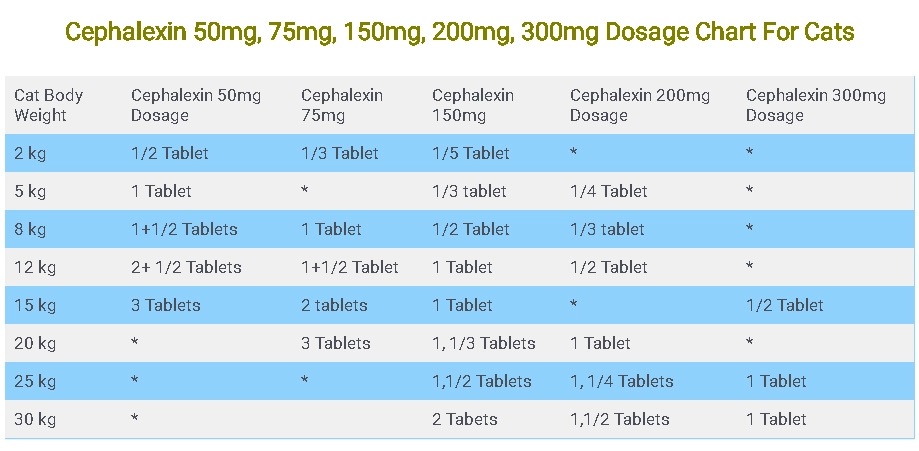
Cephalexin 50mg, 75mg, 150mg, 200mg, 300mg Dosage Chart For Cats
| Cat Body Weight | Cephalexin 50mg Dosage | Cephalexin 75mg | Cephalexin 150mg | Cephalexin 200mg Dosage | Cephalexin 300mg Dosage |
| 2 kg | 1/2 Tablet | 1/3 Tablet | 1/5 Tablet | * | * |
| 5 kg | 1 Tablet | * | 1/3 tablet | 1/4 Tablet | * |
| 8 kg | 1+1/2 Tablets | 1 Tablet | 1/2 Tablet | 1/3 tablet | * |
| 12 kg | 2+ 1/2 Tablets | 1+1/2 Tablet | 1 Tablet | 1/2 Tablet | * |
| 15 kg | 3 Tablets | 2 tablets | 1 Tablet | * | 1/2 Tablet |
| 20 kg | * | 3 Tablets | 1, 1/3 Tablets | 1 Tablet | * |
| 25 kg | * | * | 1,1/2 Tablets | 1, 1/4 Tablets | 1 Tablet |
| 30 kg | * | 2 Tabets | 1,1/2 Tablets | 1 Tablet |
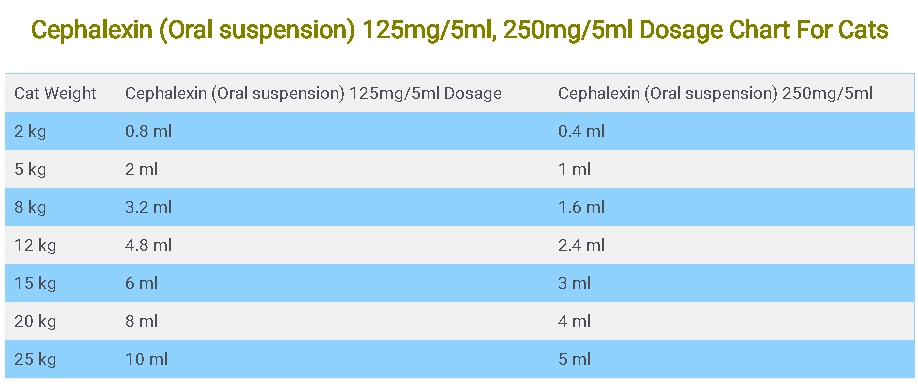
Cephalexin (Oral suspension) 125mg/5ml, 250mg/5ml Dosage Chart For Cats
| Cat Weight | Cephalexin (Oral suspension) 125mg/5ml Dosage | Cephalexin (Oral suspension) 250mg/5ml |
| 2 kg | 0.8 ml | 0.4 ml |
| 5 kg | 2 ml | 1 ml |
| 8 kg | 3.2 ml | 1.6 ml |
| 12 kg | 4.8 ml | 2.4 ml |
| 15 kg | 6 ml | 3 ml |
| 20 kg | 8 ml | 4 ml |
| 25 kg | 10 ml | 5 ml |
Important Safety Instructions
- Dosage must be decided only by a veterinarian based on weight, infection type, and health condition
- Never overdose, as it can be dangerous or fatal
- Self-medication is unsafe for cats
- If overdose or side effects occur, contact a vet immediately
- Dose may be increased or reduced depending on severity and response
- Reduced doses are required for cats with kidney disease
Treatment Duration & Usage Rules
- Treatment usually lasts 7 to 28 days, sometimes longer for chronic infections
- In conditions like severe skin infections, treatment may continue for weeks or even months
- Always complete the full course even if symptoms improve
- Do not stop medication early without veterinary advice
Monitoring During Treatment
- Regular monitoring of improvement is important
- Watch for any side effects or allergic reactions
- Follow-up visits help adjust dosage if needed
How to Give Cephalexin to Cats (Safe Administration Guide)
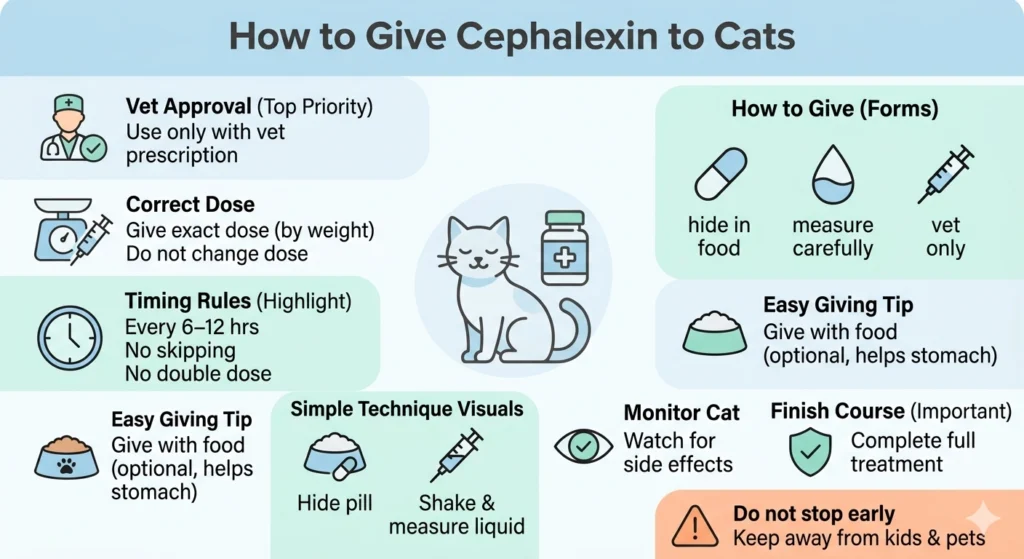
Cephalexin should always be given to cats only under a veterinarian’s prescription, and the correct dose must be followed exactly as instructed. Giving the right amount at the right time is essential for effective treatment and to prevent complications.
Step-by-Step Safe Administration
1. Use Only Veterinary Prescription
Cephalexin must only be used after a proper diagnosis by a veterinarian. Your vet will confirm the infection and prescribe the correct dosage based on your cat’s condition and weight.
2. Calculate and Give the Correct Dose
Always measure the exact dose prescribed by your vet using your cat’s weight. Never change the dosage or schedule on your own.
3. Choose the Right Form of Medicine
Cephalexin for cats may come in:
- Tablets or capsules
- Oral liquid suspension
- Occasionally injectable form (clinic use only)
Capsules can be hidden in food or pill pockets, while liquid forms must be measured carefully.
4. Give the Medicine on Time
- Administer doses at the same time every day (usually every 6–12 hours)
- Do not skip doses
- If a dose is missed, give it as soon as remembered unless it is close to the next dose
- Never double the dose
5. Give with or without Food
Cephalexin can be given with or without food, but:
- Giving it with food may help reduce stomach upset
- It can also make it easier for the cat to take the medicine
6. Proper Technique for Each Form
For capsules/tablets:
- Can be hidden in food or a pill pocket
- Veterinary staff can show proper administration technique if needed
- Store at room temperature
For liquid suspension:
- Shake the bottle well before each dose
- Measure using a calibrated oral syringe
- Store in the refrigerator
- Discard after 14 days if instructed
7. Monitor Your Cat After Each Dose
Watch closely for any side effects or unusual reactions. If anything abnormal appears, contact your veterinarian immediately.
8. Complete the Full Course
Always finish the entire prescribed treatment, even if your cat looks better. Stopping early can:
- Cause infection to return
- Lead to antibiotic resistance
Important Safety Precautions
- Avoid handling if allergic to cephalosporins or penicillin
- Keep medicine away from children and other pets
- Do not use products with unknown additives or artificial ingredients
- Seek veterinary help immediately if adverse reactions occur
Safety Considerations and Side Effects of Cephalexin in Cats
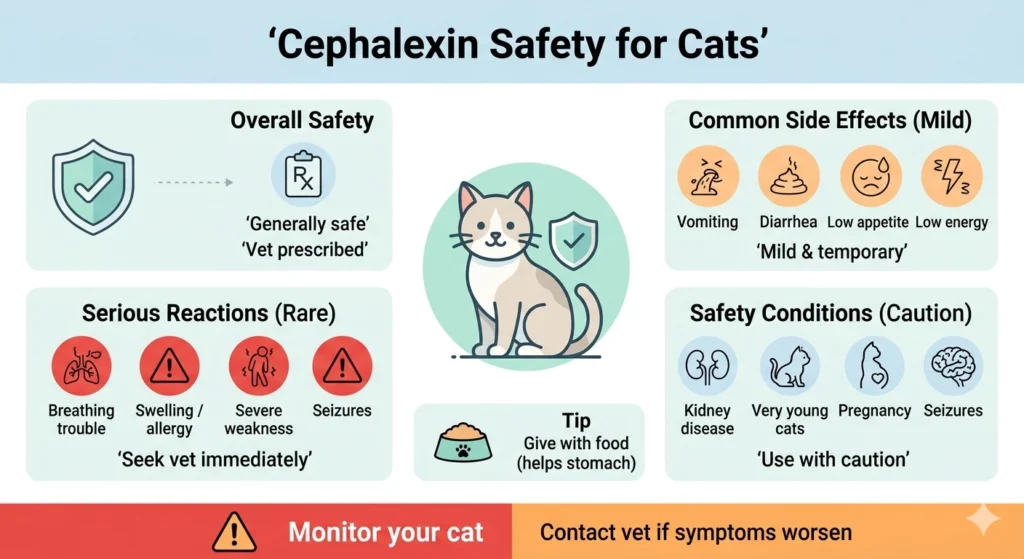
Cephalexin is generally considered a safe and well-tolerated antibiotic for cats when prescribed by a veterinarian. Most cats do not experience serious side effects, and when reactions do occur, they are usually mild and temporary. However, proper monitoring is important because some cats may develop gastrointestinal or sensitivity-related reactions during treatment.
Common Side Effects in Cats
The most frequently reported side effects of cephalexin in cats are related to the digestive system, including:
- Vomiting (most common)
- Diarrhea
- Loss of appetite
- Nausea or stomach discomfort
- Lethargy (low energy)
- Fever (in some cats)
- Drooling
- Mild skin or gastrointestinal upset
These effects are usually temporary and mild, and in many cases, they improve as the cat’s body adjusts to the medication. Giving cephalexin with food may help reduce stomach-related issues.
Less Common but Serious Reactions
In rare cases, cats may develop more serious reactions, such as:
- Severe allergic reactions (rash, hives, swelling)
- Difficulty breathing
- Severe skin reactions
- Complete loss of appetite
- Weakness or unusual behavior
- Blood abnormalities (with overdose or high doses)
- Seizures (rare, usually overdose-related)
If any of these symptoms appear, immediate veterinary attention is required.
Safety Considerations for Cats
Cephalexin should be used carefully in certain conditions. It may not be suitable or may require dose adjustment in:
- Cats with kidney disease (due to reduced drug elimination)
- Pregnant or lactating cats (use only if vet-approved)
- Very young kittens (generally under 9–10 weeks)
- Cats with a history of seizures or epilepsy
- Cats with liver or chronic illnesses
Veterinarians always evaluate the risk and benefit before prescribing in these cases.
Allergy and Sensitivity Risks
Cats (or households) with a known allergy to:
- Cephalosporins (like cefadroxil)
- Penicillins (like amoxicillin or ampicillin)
may also have a risk of cross-reaction. Signs of allergy include:
- Swelling of face or body
- Hives or skin rash
- Itching or red skin
- Breathing difficulty
These reactions require urgent veterinary care.
Overdose Risks
Cephalexin is generally safe, but overdose can cause:
- Severe vomiting or diarrhea
- Loss of appetite
- Blood cell abnormalities
- Kidney or liver stress
- Neurological signs (rare cases)
If overdose is suspected, a veterinarian should be contacted immediately.
Other Important Precautions
- Always use only veterinary-prescribed dosage
- Do not mix with unknown drugs, supplements, or medications without vet approval
- Tell your vet about all medications your cat is taking
- Store medication safely away from children and pets
- Monitor your cat closely during treatment
Cephalexin may occasionally interact with certain drugs such as probenecid, requiring veterinary adjustment.
Overall Safety Summary
Most cats tolerate cephalexin very well, and serious side effects are uncommon. It is widely used because of its effectiveness, affordability, and low risk profile. However, careful dosing, monitoring, and full veterinary supervision are essential to ensure safe treatment.
Which Cats Should Avoid Cephalexin?
Cephalexin should not be given to cats in the following situations without veterinary approval:
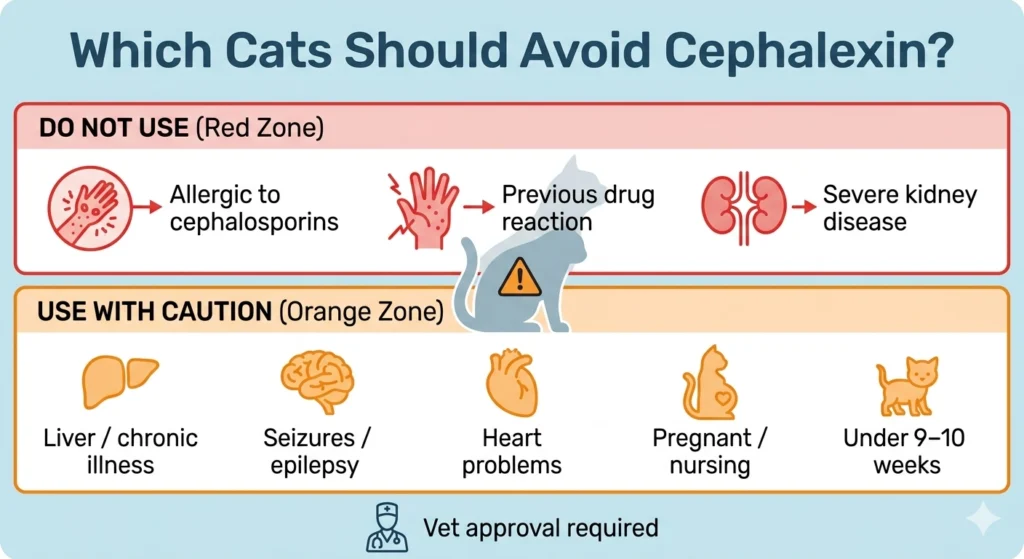
- Cats allergic to cephalosporin antibiotics
- Cats with known hypersensitivity reactions to cephalexin
- Cats with severe kidney disease
- Cats with liver disease or chronic illnesses (requires vet evaluation)
- Cats with seizures, epilepsy, or heart problems (requires caution)
- Pregnant or nursing cats (use only if vet approves)
- Very young kittens (under 9–10 weeks of age)
Drug Interactions, Brand Names, and Storage of Cephalexin in Cats
Cephalexin is generally considered a low-interaction antibiotic in cats, but it is still important that a veterinarian is informed about all medications, supplements, or vitamins your cat is receiving before starting treatment.
Possible Drug Interactions in Cats
Most medications do not affect cephalexin, but certain combinations may require caution.
Increased Risk Interaction:
- Aminoglycoside antibiotics (such as gentamicin) may increase the risk of kidney damage when used with cephalexin.
Other Possible Interacting Drugs:
- Amphotericin B
- Chloramphenicol
- Cholestyramine
- Estrogens
- Furosemide
- Metformin
- Metoclopramide
- Omeprazole
- Pantoprazole
- Probenecid
- Warfarin
In such cases, veterinarians may:
- Adjust the cephalexin dosage
- Choose a different antibiotic
- Monitor kidney and overall health more closely
Cephalexin may also affect some laboratory test results, including:
- Blood glucose
- Albumin levels
- Coombs test
- Urine protein tests
Brand Names of Cephalexin for Cats
Cephalexin is available under several human and veterinary brand names, including:
Human brands:
- Keflex®
- Cephaforte®
- Celexin
- Cepexin
- Ceporexin
- Ilium®
- Various generic forms
Veterinary brands:
- Rilexine®
- Ceporex®
- Cephacare®
- Cefaseptin®
- Cephorum®
- Cefabactin®
- Petalexin®
- Therios®
These may come in different strengths and formulations depending on the manufacturer.
How Cephalexin is Supplied for Cats
Cephalexin is available in multiple forms to suit different treatment needs:
Capsules & Tablets:
- Common strengths: 250 mg, 500 mg, up to 1000 mg
- Chewable tablets (e.g., Rilexine®): 75 mg, 150 mg, 300 mg, 600 mg
- Often flavored to make administration easier for pets
Oral Liquid Suspension:
- Strengths: 25 mg/mL, 50 mg/mL, 100 mg/mL, 150 mg/mL
- Usually stable for about 14 days after preparation
Other Forms:
- Oral paste (100 mg/mL in some cases)
- Injectable forms (available in some regions, clinic use only)
Storage Instructions
To maintain effectiveness:
- Store tablets and capsules at room temperature (65°F–77°F / 18°C–25°C)
- Keep liquid suspensions properly sealed and refrigerated if required
- Discard reconstituted suspension after 14 days (if instructed)
- Keep all medication away from children and pets
Key Safety Reminder
Always inform your veterinarian about:
- All medications your cat is taking
- Any supplements or vitamins
- Any existing health conditions
This helps prevent interactions and ensures safe and effective treatment with cephalexin in cats.
Cephalexin Alternatives for Cats
Veterinarians mainly prescribe cephalexin for skin infections in cats, but in some cases, alternative treatments may be used depending on the severity of the infection or the cat’s response to medication.
Topical Alternatives (First-Line Options)
In mild skin infections, veterinarians may start with topical antimicrobial treatments instead of oral antibiotics. These can sometimes clear the infection without the need for tablets.
Common topical treatments include medicated products such as:
- Chlorhexidine
- Benzoyl peroxide
- Ethyl lactate
- Sodium hypochlorite
These are available as:
- Medicated shampoos
- Creams
- Gels
- Mousses
Systemic Antibiotic Alternatives (If Infection is More Severe)
If topical treatments are not effective or the infection is more serious, veterinarians may use oral or injectable antibiotics as alternatives to cephalexin.
Common systemic alternatives include:
- Cefovecin (a third-generation cephalosporin, given as a single veterinary injection)
- Clindamycin
- Amoxicillin-clavulanate
- Sulfamethoxazole-trimethoprim (sulfa drug combination)
- Other first-generation cephalosporins (similar to cephalexin)
Key Veterinary Decision
Veterinarians choose these alternatives based on:
- Type and severity of infection
- Bacterial sensitivity
- Response to previous treatment
- Overall health condition of the cat
If cephalexin is not suitable or does not work effectively, these alternatives are commonly used substitutes to ensure proper treatment of bacterial infections in cats.
You My Also Like TO Read:
- Capstar Dosage for Cats: Chart, Safe Use, Benefits & More
- Fexofenadine Dosage for Cats: Chart, Safe Use, Benefits & Risks
FAQs About Cephalexin for Cats
How long does Cephalexin take to work in cats?
Cephalexin usually starts working within 24–48 hours after absorption in the body. However, visible improvement may take a few days depending on the infection. In some cases, it may take more than 7 days to see clear results. If there is no improvement within 7 days, a veterinarian should be contacted.
Can cats overdose on cephalexin?
Yes, an overdose is possible if too much is given. Mild overdose usually causes vomiting or digestive upset, but very high doses can lead to serious problems such as kidney damage, liver damage, nerve issues, or blood disorders. If an overdose is suspected, immediate veterinary care is required.
Can I give my cat cephalexin every day?
Yes, cephalexin is usually given daily or multiple times per day depending on the veterinarian’s prescription. It is important to continue the full course even if the cat starts feeling better, because stopping early can cause the infection to return. Treatment duration may range from several days to a few weeks, depending on the infection.
Can I give human cephalexin to my cat?
Yes, human cephalexin can sometimes be used for cats only if it does not contain extra or harmful ingredients and only under veterinary guidance. However, a pet-specific formulation is always preferred for safer and more accurate dosing.
Can cephalexin be used for fungal or viral infections in cats?
No. Cephalexin only works against bacterial infections. It is not effective for fungal or viral infections, so it should not be used for those conditions.
What happens if I miss a dose?
If a dose is missed, it should be given as soon as remembered. However, if it is close to the next scheduled dose, skip the missed one and continue the regular schedule. Never double the dose.
When should I contact a vet during treatment?
Contact your veterinarian if you notice:
No improvement after several days
Severe vomiting or diarrhea
Loss of appetite for more than 24 hours
Signs of allergic reaction (swelling, rash, breathing issues)
Final Thoughts on Cephalexin Use in Cats
Cephalexin is a commonly prescribed veterinary antibiotic for cats, mainly used to treat bacterial infections such as skin infections, wounds, urinary tract infections, and respiratory infections. It works by targeting and weakening bacterial cell walls, which helps stop the infection from spreading and allows the cat to recover.
When used correctly under a veterinarian’s guidance, cephalexin is generally safe and well tolerated in most cats. Side effects are usually mild, such as temporary digestive upset, but proper monitoring during treatment is still important. In rare cases, more serious reactions or sensitivities may occur, which is why veterinary supervision is essential throughout the treatment period.
It is also important to remember that cephalexin is a prescription-only medicine and is used off-label in cats, meaning the dosage and duration must always be determined by a qualified veterinarian based on the cat’s weight, infection type, and overall health condition.
For best results, pet owners should:
- Follow the exact dosage schedule
- Complete the full treatment course
- Monitor for any side effects
- Avoid self-medication or dose changes
With proper use and responsible veterinary care, cephalexin remains an effective option for managing bacterial infections in cats and supporting their recovery safely.