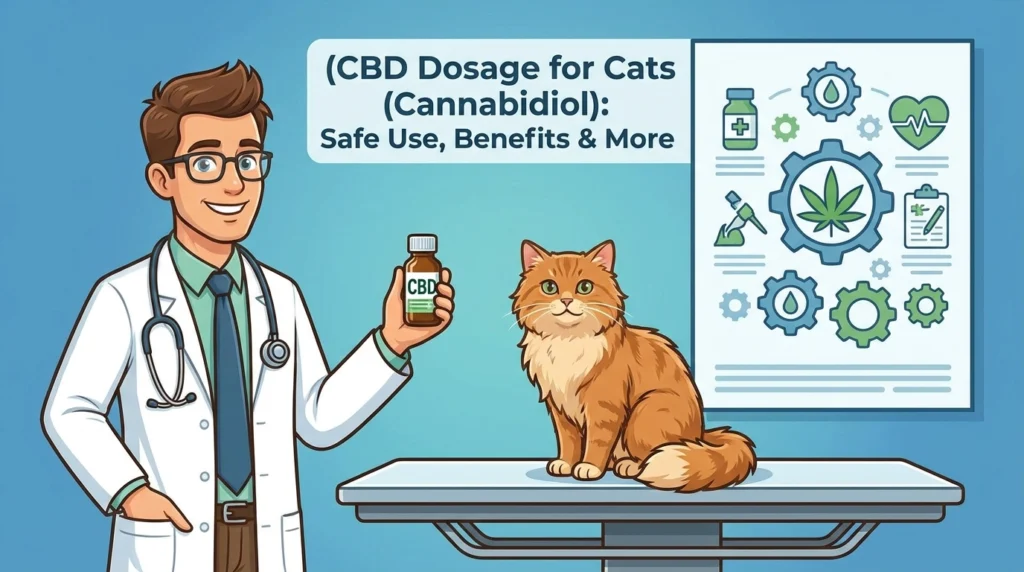
When your cat isn’t feeling their best, you notice it right away—their behavior changes, their appetite drops, and their usual playful energy fades. As a cat owner, finding a safe way to support their comfort becomes a top priority. This is where CBD (cannabidiol) has started gaining attention as a natural supplement specifically for cats.
CBD is a compound derived from hemp that interacts with a cat’s endocannabinoid system, which helps regulate important functions like mood, appetite, sleep, and immune response. Because of this, many pet owners are exploring CBD dosage for cats to help manage common issues such as anxiety, pain, inflammation, and behavioural problems.
However, one of the most important factors is giving the right dosage. There are currently no officially approved dosing guidelines for cats, and research is still limited. This means cat owners need to be careful—too little CBD may not be effective, while too much can lead to unwanted side effects.


In this guide, you’ll learn the safe CBD dosage for cats with easy weight-based charts, tincture dosing, and daily usage tips. Discover benefits for anxiety, pain, inflammation, and overall wellness, plus expert guidance on how much CBD oil to give your cat safely.
Disclaimer: This content is for informational purposes only and should not replace veterinary advice. Always consult your veterinarian especially if your cat has existing health conditions or is taking other medications before giving CBD (Cannabidiol) or adjusting your cat’s dosage.
Key Takeaways
- CBD (cannabidiol) is a hemp-derived compound that is non-intoxicating and does not make cats “high” because it contains very low THC.
- CBD interacts with the cat’s endocannabinoid system (ECS), which helps regulate mood, appetite, sleep, pain response, and overall balance.
- CBD is commonly used to support cats with anxiety, stress, pain, inflammation, mobility issues, seizures, and general wellness.
- There is no universal CBD dosage for cats, so dosing must be based on body weight, condition, and individual response.
- A common starting point is around 2mg per 10 pounds of body weight, with low, medium, and high-strength formulas used depending on need.
- CBD oil allows precise dosing and flexibility, while CBD treats offer simple, pre-measured dosing.
- Cats may experience mild side effects such as drowsiness, behavioral changes, or digestive upset, especially when dosing is too high.
- CBD products for cats should always be THC-free, high-quality, and third-party lab tested (COA verified).
- CBD is not FDA-approved for pets, and research is still limited, so it should be used as a supportive wellness option, not a replacement for veterinary care.
- Veterinary consultation is important before starting CBD, especially if the cat is on medication or has existing health conditions.
What Is CBD Cannabidiol for Cats?
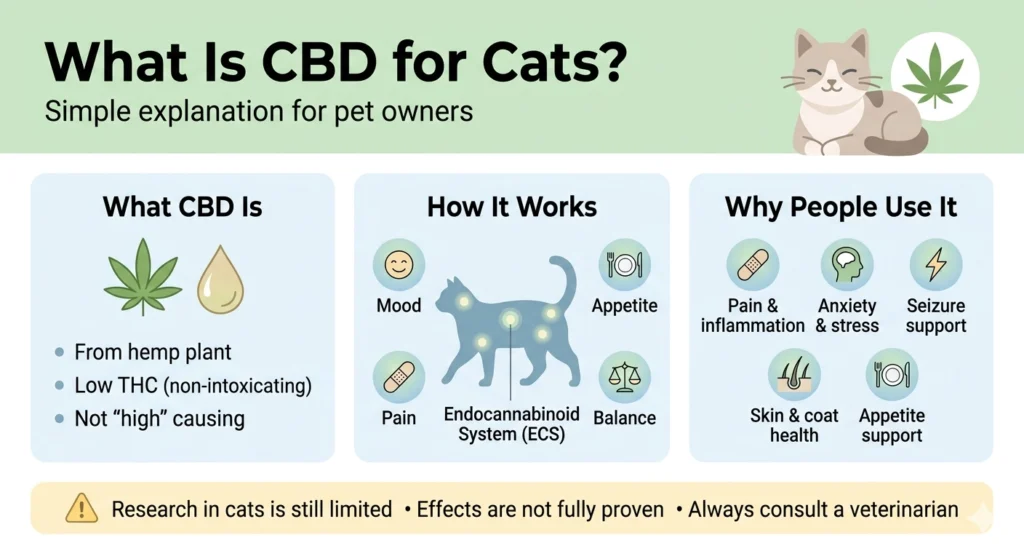
CBD (cannabidiol) is a compound derived from hemp plants. Unlike marijuana, which contains high levels of THC and can cause a “high,” CBD contains very low THC levels and is non-intoxicating, making it suitable for use in cats.
CBD works by interacting with a cat’s endocannabinoid system (ECS), which has receptors throughout the body. These receptors help regulate important functions like mood, appetite, pain, and overall balance. By influencing this system, CBD may help support a cat’s general well-being.



Cat owners commonly consider CBD for issues such as:
- Pain and inflammation (e.g., arthritis or injuries)
- Anxiety and stress
- Seizures and epilepsy
In addition, CBD may support healthy skin and coat, improve appetite, and help with certain cancer-related symptoms.
However, it’s important to understand that scientific research in cats is still limited, and there is no confirmed evidence on exactly what CBD oil can treat. Many owners use CBD oil for cats based on general wellness support and similarities to human use, such as managing anxiety or chronic pain.
Because CBD regulations vary, some veterinarians may not recommend it for specific conditions. Always approach its use carefully and consult a veterinarian before giving CBD to your cat.
Benefits of CBD (Cannabidiol) for Cats
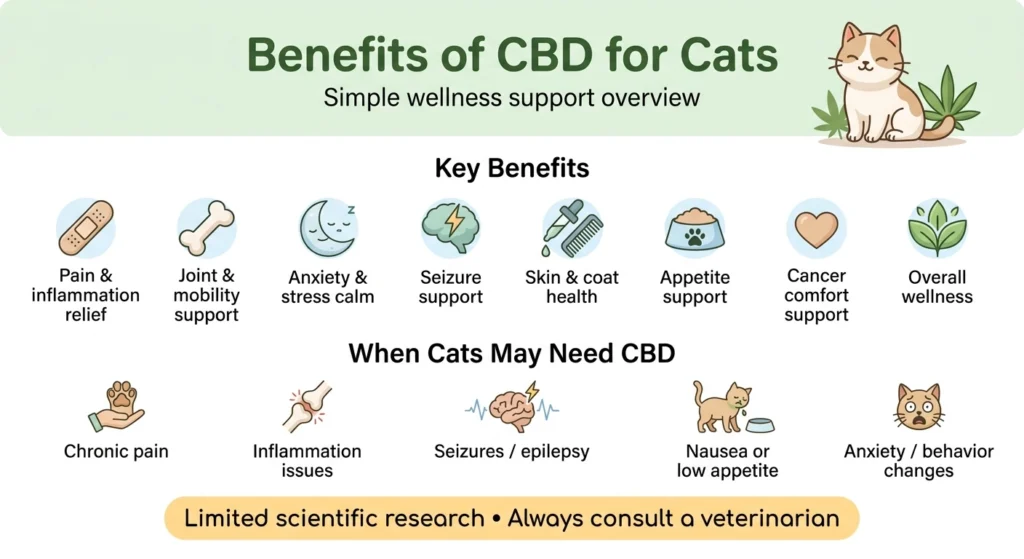
CBD has several potential benefits for cats, supported by both early research and real experiences shared by pet parents. It is commonly considered as a supportive option for different health and comfort-related issues in cats.
1. Pain, Swelling, and Inflammation
CBD has shown anti-inflammatory and pain-relieving properties in both humans and animals. It is often used to help cats deal with discomfort linked to conditions such as arthritis, asthma, injuries, and general inflammation, helping reduce pain and swelling.
2. Muscle, Joint Health, and Mobility
The same pain-relieving and anti-inflammatory effects may also support a cat’s muscles and joints, especially in older cats or those with joint issues. This can help improve mobility and daily comfort.
3. Mental Health (Anxiety and Stress)
CBD has calming properties and may help cats experiencing anxiety, stress, or depressive-like behavior, supporting a more relaxed and stable emotional state.
4. Cancer-Related Support
Preliminary research suggests CBD may have anti-cancer potential, including the ability to affect cancer cells. While more studies are needed, it is more commonly used to help manage pain and inflammation related to cancer, improving comfort.
5. Skin and Coat Health
CBD may help reduce itching and irritation, which can improve skin condition and lead to a healthier coat. Many CBD products also use oils like MCT or hemp seed oil, which may further support skin health in cats.
6. General Health and Quality of Life
Since CBD interacts with the endocannabinoid system, which helps regulate many important body functions, it may support a cat’s overall balance, wellness, and quality of life.
7. Seizures and Epilepsy
CBD is also used for cats with seizure disorders and epilepsy. Due to its neuroprotective properties, it may help reduce the frequency and intensity of seizures, based on research and observed use in animals.
8. Cats in Heat
For unspayed female cats experiencing behavioral changes during their heat cycle, CBD may help promote calmness and relaxation, helping reduce restlessness and anxious behavior.
When Cats May Need CBD (Cannabidiol)
1. Pain Management
Cats with chronic pain may benefit from CBD as part of a long-term plan. It may help support comfort alongside or as an alternative to prescription medication, under veterinary guidance.
2. Reducing Inflammation
Inflammation can worsen many health conditions in cats. CBD may help reduce inflammation, potentially easing related symptoms.
3. Seizure Disorders
CBD has been explored for epilepsy and seizure management in cats. It may be considered as part of a treatment plan with veterinary supervision.
4. Nausea and Appetite Support
When cats experience nausea and stop eating, CBD may help reduce nausea and support appetite stimulation, helping maintain healthy weight and nutrition.
5. Anxiety and Behavioral Issues
CBD may help reduce stress, anxiety, and related behavioral problems, including separation anxiety or stress caused by environmental changes such as new pets or people.
CBD Dosage for Cats: Complete Guide to Safe and Effective Dosing
How Much CBD Should You Give Your Cat?
CBD dosage for cats depends on why you are giving it and your cat’s individual condition, but a general starting point is:
- 2mg of CBD per 10 pounds of body weight
However, a more precise and widely used method is a weight-based formula system:
1. Low-Strength Dosage (General wellness, anxiety, sleep)
- Formula: (0.2) × (cat’s weight in pounds) = CBD dosage in mg
2. Medium-Strength Dosage (Pain, inflammation, joints, mobility)
- Formula: (0.4) × (cat’s weight in pounds) = CBD dosage in mg
3. High-Strength Dosage (Severe conditions like cancer or seizures)
- Formula: (0.6) × (cat’s weight in pounds) = CBD dosage in mg
- Always use veterinary guidance for high-strength dosing
These doses are usually calculated as a daily total, and can be split into 2–3 servings per day if needed. It is always recommended to start low and adjust gradually to find the ideal balance for your cat.
How Much CBD (Cannabidiol) Oil to Give a Cat
CBD oil dosage for cats is more complex because absorption differs between species. A study (2019) on healthy cats and dogs showed that cats do not absorb CBD as efficiently as dogs, meaning dosing must be adjusted specifically for cats.
- Always consult a veterinarian before starting CBD oil
- Cats with conditions like liver disease may require lower doses or may not be suitable for CBD
- CBD dosage is typically calculated using kilograms (kg) instead of pounds
Basic Starting Calculation:
- 0.2 mg/kg starting dose
- Convert weight: pounds ÷ 2.2 = kg
- Then multiply kg × 0.2 = CBD mg dose
Dosage Adjustment:
- Start with the lowest effective dose
- May increase up to 0.5 mg/kg or higher
- In some research cases, animals have received up to 2–2.5 mg/kg twice daily, but this should only be under veterinary supervision
Also, CBD oil products vary in concentration (mg/ml), so correct measurement is important.
How Much CBD (Cannabidiol) Can Cats Have?
CBD dosage for cats depends on:
- Body weight
- Health condition
- Individual response
- Product strength
CBD products for pets are usually lower in concentration to reduce risks. While CBD is generally well-tolerated, excessive doses may cause side effects in some cats, although overdose risk is considered low.
If Too Much CBD Is Suspected:
- Check how much was consumed and observe symptoms
- Contact a veterinarian immediately
- You may also contact:
- Pet Poison Helpline: 855-764-7661
- ASPCA Animal Poison Control Center: 888-426-4435
- Do NOT induce vomiting unless instructed by a vet
- Follow veterinary instructions for care and monitoring
Finding the Right CBD (Cannabidiol) Dosage for Cats (Balance Approach)
CBD dosage is not one-size-fits-all. The general starting rule remains:
- 2mg per 10 pounds of body weight
But the best approach is to start low and increase slowly.
Strength-Based Dosing:
- Low strength: 0.2 mg × body weight (lbs)
- Medium strength: 0.4 mg × body weight (lbs)
- High strength: 0.6 mg × body weight (lbs)
These are daily dosages, which can be split throughout the day. Age, health status, and sensitivity all influence the ideal amount.
CBD Dosage for Specific Conditions
1. Anxiety Support
CBD may help reduce symptoms like hiding, aggression, or over-grooming.
- Dose: 0.2 mg per pound (low strength)
- Best given before stressful events or twice daily for ongoing anxiety
2. Pain and Inflammation
CBD may help manage arthritis, injury, or chronic pain.
- Dose: 0.4 mg per pound (medium strength)
- Consistent daily use is recommended for chronic conditions
- Acute pain: use as needed
3. Sleep Support
CBD may help regulate sleep and improve rest quality.
- Dose: 0.2 mg per pound (low strength)
- Best given 30–60 minutes before bedtime
- Consistency improves sleep cycle regulation
Other Health Conditions
- Cancer: Helps manage pain, nausea, and appetite loss (vet-guided dosing required)
- Seizures: May reduce frequency and severity (requires veterinary supervision)
- Skin & Coat Health: Low-dose support for itching and inflammation
Important Note
CBD should always be used carefully in cats. The correct dosage depends on your cat’s weight, health condition, and individual response. Veterinary guidance is strongly recommended, especially for high-strength dosing or medical conditions.
How to Dose Different CBD (Cannabidiol) Products for Cats
CBD for cats mainly comes in two common forms: CBD oil and CBD treats. Both can be used depending on your cat’s comfort level and your preferred dosing method.
CBD Oil for Cats (Flexible Dosing Option)
CBD oil for cats is made from hemp extract mixed with a carrier oil. Many products use full-spectrum CBD, which includes naturally occurring cannabinoids (including small amounts of THC) and terpenes from the hemp plant that may offer additional benefits.
How to Give CBD Oil to Cats
CBD oil is measured using a metered dropper that comes with the bottle. Once the correct dose is measured, it can be given in different ways:
- Direct in the mouth: Place a small amount under the tongue or on the gums for faster absorption
- Mixed with food: Add the oil into wet food to help mask the taste
If your cat is not cooperative, mixing it with food is usually the easiest method to avoid stress or resistance.
CBD oil is considered a flexible option because it allows precise dose control and can be adjusted easily based on your cat’s needs.
CBD Treats for Cats (Simple and Pre-Measured Option)
CBD treats for cats are regular pet treats infused with hemp extract and CBD. These treats are pre-measured, which makes dosing simple and consistent.
Many CBD cat treats also include additional supportive ingredients such as:
- Turmeric
- Arnica extract
- Vitamins
- Minerals
Why CBD Treats Are Easy to Use
- Each treat contains a fixed amount of CBD
- Some treats can be split into smaller doses if needed
- Most cats accept them easily because they taste like normal treats
This makes CBD treats a convenient option for cats that resist oils or have difficulty with dropper administration.
Key Tips for Giving CBD (Cannabidiol) to Cats
- Be patient: It may take time to find the method your cat accepts
- Observe your cat: Watch behavior after dosing for any changes
- Adjust carefully: If side effects appear, consult a veterinarian before changing the dose
- Consistency matters: Regular use helps maintain more stable results
The goal is to find a method that is comfortable for both you and your cat while ensuring the correct CBD dose is delivered safely.
How to Administer CBD (Cannabidiol) to Cats & Understand Daily Use
How to Administer CBD to Cats
When giving CBD to cats, it’s important to choose THC-free CBD products made specifically for cats. Products designed for humans or those with unclear or “mystery” ingredients should be avoided.
The easiest way to give CBD to a cat is by mixing it into their food, especially if your cat is picky or refuses direct dosing. Some cats may still need gentle encouragement, so patience is important.
It’s best to:
- Start with a small dose of CBD for cats
- Observe changes in mood, movement, and skin condition
- Keep notes to track how your cat responds over time
If your cat is already taking medication or has existing health conditions, it is important to consult a veterinarian before starting CBD.
Understanding Daily CBD Use in Cats
CBD is increasingly used by pet owners to help cats feel more comfortable in daily life. It may support:
- Calming nervous or anxious behavior
- Improving mobility and comfort
CBD is non-intoxicating, meaning it does not make cats “high” because it does not contain the same effects as THC.
The main goal of daily CBD use is to help your cat feel more relaxed and comfortable, rather than treating it as a quick or guaranteed solution. Each cat responds differently, so it is important to focus on how your cat reacts over time instead of expecting immediate or uniform results.
Is CBD (Cannabidiol) Safe for Cats?
CBD can be generally considered safe for cats when it is given in the correct dosage and under veterinary guidance. However, research is still ongoing, and there is still much to understand about its long-term effects and possible interactions with other medications.
Safety Considerations for CBD (Cannabidiol) in Cats
1. Quality Control Matters
It is important to use high-quality CBD products made specifically for cats. Safe products should:
- Be sourced from organic hemp
- Undergo third-party testing for purity and potency
- Clearly show what ingredients are included
Avoid CBD products made for humans, as they may contain additional ingredients that are not safe for cats.
2. THC Content Must Be Very Low or Zero
CBD products for cats should contain very low or no THC.
THC (the compound in marijuana that causes a “high”) can be toxic to cats and must be strictly avoided.
3. Possible Side Effects
Some cats may experience mild side effects, although this is not common. These may include:
- Gastrointestinal upset
- Lethargy
- Drooling
- Excessive thirst
- Low blood pressure
These effects are usually temporary and resolve after stopping the product.
Some cats may also show mild reactions such as:
- Lip smacking
- Head shaking
- Slight drooling
4. Drug Interactions
CBD may interact with certain medications. That’s why it is important to:
- Inform your veterinarian about all medications and supplements your cat is taking
- Avoid combining CBD with unknown treatments without guidance
5. Individual Sensitivity
Every cat responds differently. When starting CBD:
- Monitor behavior, appetite, and activity closely
- Watch for any unusual changes
- Adjust only under veterinary advice
Is CBD (Cannabidiol) Oil Safe for Cats?
CBD oil is generally considered safe, but:
- Some cats may dislike the taste (drooling, lip smacking, head shaking)
- Mild side effects may include lethargy, thirst changes, or digestive upset
These effects are usually mild and temporary.
Important Warning: THC Toxicity in Cats
CBD products must NOT contain significant THC.
THC toxicity in cats is more dangerous and can cause:
- Wobbly walking
- Drooling
- Disorientation or agitation
- Vomiting
- Increased thirst or urination
- Abnormal heart rate
- Temperature changes
- Sleepiness
- Enlarged pupils
- Seizures or tremors
If THC poisoning is suspected, immediate veterinary care is required.
Is CBD FDA-Approved for Cats?
As of now, CBD is not FDA-approved for cats or other pets, except for one prescription drug used for rare epilepsy cases in children.
This means:
- CBD products have not been fully evaluated for safety, effectiveness, or dosage standards
- Possible drug interactions and side effects are still being studied
Precautions When Giving CBD (Cannabidiol) Oil to Cats
- CBD products are not strictly regulated by the FDA
- Labeling and quality control may vary
- Always look for transparent brands with lab testing results
- Choose THC-free, clearly labeled products only
If possible, consult a veterinarian experienced with CBD use for pets.
Veterinary Recommendations
Veterinarians generally advise:
- Focus on your cat’s overall behavior and comfort, not just conditions
- CBD is usually safe for healthy cats when used correctly
- Monitor long-term use, including liver health if used regularly
- Watch for mild side effects like digestive upset or behavior changes
- Always choose products with third-party lab testing and THC-free certification
Side Effects of CBD (Cannabidiol) on Cats
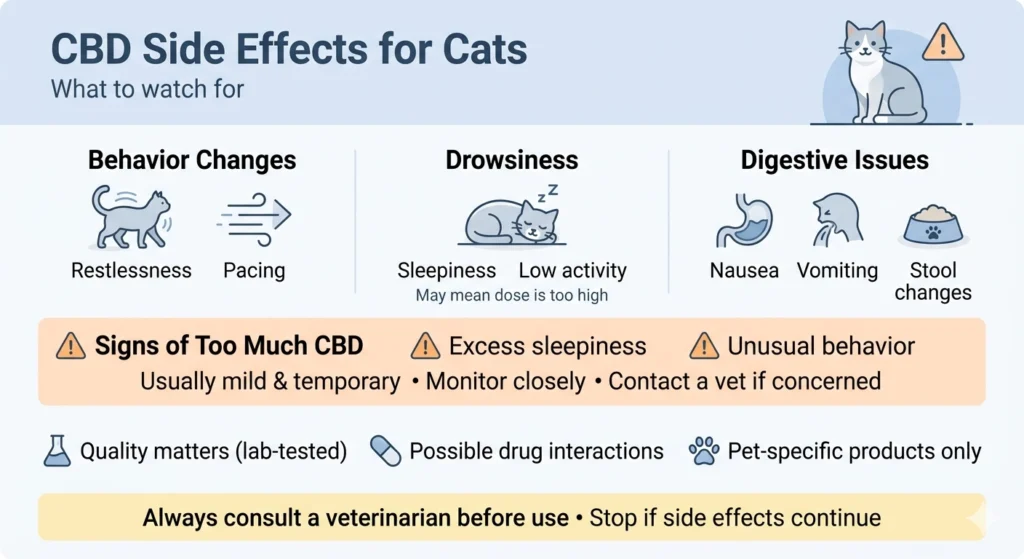
Getting the correct CBD dose for cats may require some adjustment over time. Until the right balance is found, some cats may show mild or temporary side effects after CBD is introduced for the first time. It is important to observe your cat closely whenever CBD is used.
1. Behavioral Changes in Cats
Some cats may show noticeable behavior changes after taking CBD, such as:
- Restlessness
- Pacing or unusual movement
If this happens:
- Make sure your cat has access to fresh water
- Allow time for symptoms to settle
- If behavior continues, stop using CBD and consult a veterinarian for alternatives
2. Drowsiness or Sedation
CBD may cause drowsiness in some cats, which can appear as:
- Sleepiness
- Reduced activity
- Longer resting periods
This effect may be helpful if your cat is anxious or overly active. However, if your cat becomes too sleepy or only shows sedation, it may indicate that the CBD dose is too high.
3. Gastrointestinal Upset
CBD products use a carrier oil, which may sometimes affect digestion. Some cats may experience:
- Nausea
- Vomiting
- Changes in stool consistency
These digestive effects are usually mild but should be monitored carefully.
Signs of CBD Overdose or Sensitivity in Cats
In general, CBD is well tolerated in cats, and serious overdose is considered rare. Even if a higher dose is given, symptoms are usually temporary and last only a few hours.
However, if too much CBD is suspected:
- Contact a veterinarian immediately
- Provide details of how much CBD was consumed
- Monitor for symptoms
If your vet is unavailable, you may contact:
- Pet Poison Helpline: 855-764-7661
- ASPCA Animal Poison Control Center: 888-426-4435
Do NOT try to make your cat vomit unless instructed by a professional.
General Risks to Consider
The risks of CBD for cats are usually low when purchased from a reputable source. However, product quality varies, so transparency is very important.
Safe CBD products should:
- Clearly state CBD content
- Provide third-party lab testing results
- List all ingredients
- Be made specifically for pets
CBD is available in different forms such as oils and treats, and trusted brands are always transparent about quality and testing.
When CBD May Not Be Suitable for Cats
CBD may not be appropriate if:
- Your cat is already taking certain medications (possible drug interactions)
- Your cat experiences negative side effects consistently
In such cases:
- Stop using CBD
- Consult a veterinarian for safer alternatives
CBD should not be used independently without veterinary guidance, especially if your cat has a medical history or ongoing treatment plan.
Adverse Reactions of CBD (Cannabidiol) in Cats
Although uncommon, possible adverse reactions include:
- Sedation or excessive drowsiness
- Gastrointestinal upset (nausea, vomiting, diarrhea)
- Behavioral changes such as restlessness or pacing
If any unusual symptoms appear:
- Discontinue CBD use
- Contact a veterinarian for evaluation
Important Reminder
CBD should always be used with caution and proper observation. Every cat reacts differently, so monitoring behavior, digestion, and activity levels is essential when starting or adjusting dosage.
How to Treat CBD (Cannabidiol) Overdose in Cats & Safe Alternatives
Step 1: Contact Your Veterinarian Immediately
If you suspect your cat has consumed too much CBD (for example, eating multiple CBD cat treats or getting into a CBD product), contact your veterinarian right away. Inform them about:
- The type of CBD product consumed
- The estimated amount ingested
Your vet will guide you on the correct next steps based on your cat’s situation.
Step 2: Monitor Your Cat Closely
Carefully observe your cat for any changes in behavior or health, such as:
- Lethargy or unusual tiredness
- Loss of coordination or unsteady movement
- Nausea or vomiting
- Diarrhea
These observations help your veterinarian assess your cat’s condition more accurately.
Step 3: Keep Your Cat Comfortable
To reduce stress and discomfort:
- Ensure your cat has access to fresh water
- Do NOT try to induce vomiting
- Keep your cat in a safe, quiet, and comfortable space
- Limit movement so you can monitor them closely
Keeping your cat calm helps prevent additional anxiety while waiting for veterinary guidance.
Step 4: Follow Veterinary Instructions
Your veterinarian will determine the correct treatment based on your cat’s condition. In some cases, treatment may include:
- IV fluids to prevent dehydration
- Supportive care depending on symptoms
Always follow your vet’s instructions carefully, as treatment will depend on your cat’s specific needs.
Alternatives to CBD (Cannabidiol) for Cats
If CBD is not suitable for your cat, there are several alternative options depending on the condition being addressed.
1. Supplements
Other cat-specific supplements may help support different health concerns:
- For joint pain: supplements containing glucosamine and chondroitin
- For anxiety or stress: supplements containing L-theanine for relaxation
2. Behavioral Training
Training can help manage anxiety and unwanted behaviors:
- Work with an animal behaviorist if possible
- Use positive reinforcement techniques
- Create a structured behavior improvement plan
3. Environmental Enrichment
Improving your cat’s environment can reduce boredom and anxiety:
- Provide a variety of toys
- Include puzzle toys and treat dispensers
- Use interactive toys for mental stimulation when you are away
A stimulating environment helps keep your cat active and engaged.
4. Homeopathic Options
Some pet owners explore homeopathic remedies, but it is important to:
- Always consult a veterinarian first
- Ensure any product used is safe for cats
5. Prescription Medications
In some cases, prescription medication may be necessary for:
- Pain management
- Anxiety or behavioral issues
- Chronic health conditions
Work closely with your veterinarian to find the safest and most effective treatment plan for your cat.
You May Also Like To Read:
- Cephalexin Dosage for Cats: Chart, Safe Use, Benefits & More
- Capstar Dosage for Cats: Chart, Safe Use, Benefits & More
FAQs About CBD (Cannabidiol) for Cats
CBD products are not intended to diagnose, treat, cure, or prevent any disease. Always consult a veterinarian before use.
How long does it take for CBD to work in cats?
It depends on how CBD is given and the cat’s condition.
Under the tongue: effects may appear in 30–45 minutes
Mixed with food or treats: usually takes around 1 hour
Long-term use: some cats, especially seniors, may need up to 1 month for full results
Early improvements may include better sleep, calm behavior, or increased activity before stronger benefits appear.
Can I give my cat CBD alongside other medications?
CBD may interact with medications that are processed by the liver. Because of this, it is important to:
Always consult your veterinarian first
Create a safe plan if your cat is already on prescription medication
Is CBD oil or CBD treats better for cats?
Both can be effective. The choice depends on your cat:
CBD oil: Faster absorption
More precise dosing control
CBD treats: Easier to give
Less stressful for picky cats
How do I know if my cat needs CBD?
CBD may be considered if your cat shows:
Nervous or anxious behavior
Reduced activity or stiffness
Stress from changes (new home, new pets, travel)
Signs of aging or recovery after surgery
Always rule out underlying medical issues with a vet first.
Is CBD safe for cats?
Research suggests CBD is generally safe and well-tolerated in cats when used appropriately. However, veterinary consultation is strongly recommended before starting.
How often should I give my cat CBD?
Most cats do well with:
Once daily dosing
In some cases:
The dose may be split into 2–3 smaller doses per day, depending on the condition and veterinary advice
How do I know CBD products for cats are safe and high quality?
High-quality CBD products should follow strict standards such as:
CO₂ extraction method
Hemp sourced from a trusted farm
Third-party lab testing for every batch
Clear ingredient and potency labeling
Final Thoughts
CBD for cats is becoming a widely discussed option among pet owners looking to support their cat’s comfort, behavior, and overall well-being. From easing anxiety and stress, to supporting pain, inflammation, mobility, sleep, and general health, CBD is being explored for a wide range of feline needs.
However, the most important takeaway is that CBD dosage for cats is not one-size-fits-all. Every cat is different, and the right amount depends on factors like body weight, sensitivity, health condition, and the reason it is being used. Starting with a low dose and adjusting slowly is the safest approach.
It is also essential to remember that research on CBD use in cats is still developing. While many pet parents report positive results, CBD should always be treated as a supportive option rather than a guaranteed treatment. It should never replace proper veterinary care.
Choosing high-quality, third-party tested CBD products made specifically for cats is equally important to ensure safety and consistency. Avoiding harmful additives and ensuring THC-free formulations helps reduce risks and protect your cat’s health.
Most importantly, always observe your cat’s response closely and stay in communication with a veterinarian, especially when starting CBD or adjusting dosage.
With the right approach—careful dosing, quality products, and veterinary guidance—CBD can be considered as part of a thoughtful wellness routine for your cat’s comfort and quality of life.