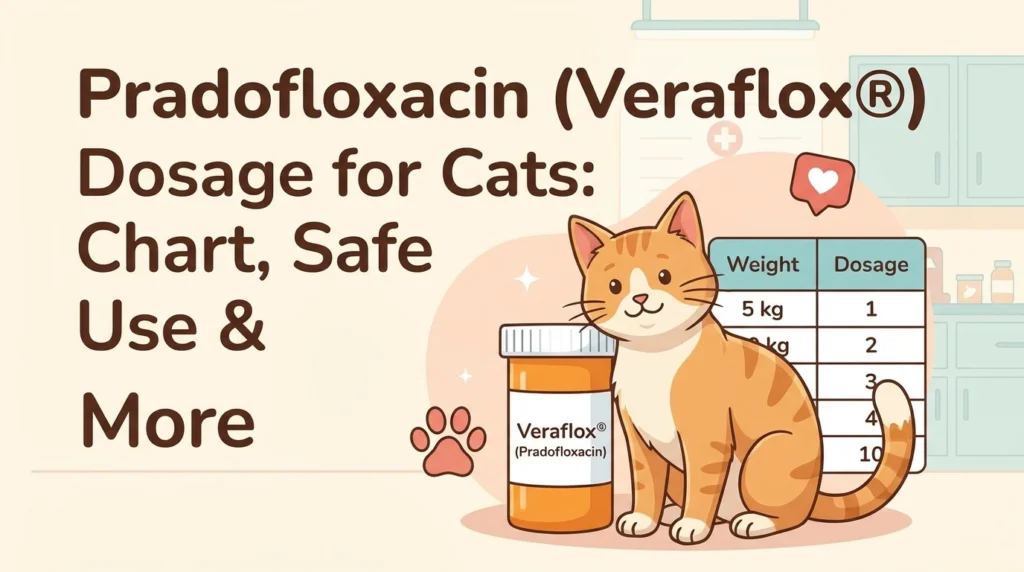
Pradofloxacin for cats, sold under the brand name Veraflox®, is a prescription antibiotic used to treat bacterial infections in cats. This FDA-approved veterinary medicine is commonly prescribed for skin infections, wounds, abscesses, respiratory infections, and some urinary tract infections. Veraflox comes as an oral liquid suspension, making it easier for cat owners to give the correct dose.
Veraflox for cats belongs to the fluoroquinolone antibiotic group and works by stopping bacteria from reproducing and spreading inside the body. Unlike some antibiotics that only slow bacterial growth, pradofloxacin actively kills harmful bacteria to help cats recover faster from infections.
Because the correct Pradofloxacin dosage for cats depends on body weight, infection type, and overall health, cat owners should always follow their veterinarian’s instructions carefully. Giving too much or too little medication can affect treatment success and may increase the risk of side effects or antibiotic resistance.



Paid Links - As an Amazon Associate, I earn from qualifying purchases.
In this guide, you’ll learn about Pradofloxacin (Veraflox®) dosage for cats guide with safe mg/kg dosing, uses, side effects, storage, and how to give for bacterial infections.
What is Pradofloxacin (Veraflox®) for Cats?
Pradofloxacin, sold under the brand name Veraflox, is an FDA-approved fluoroquinolone antibiotic used to treat bacterial infections in cats. It is commonly prescribed for skin infections, wounds, and abscesses caused by bacteria such as Pasteurella, Streptococcus, and Staphylococcus.




Paid Links - As an Amazon Associate, I earn from qualifying purchases.
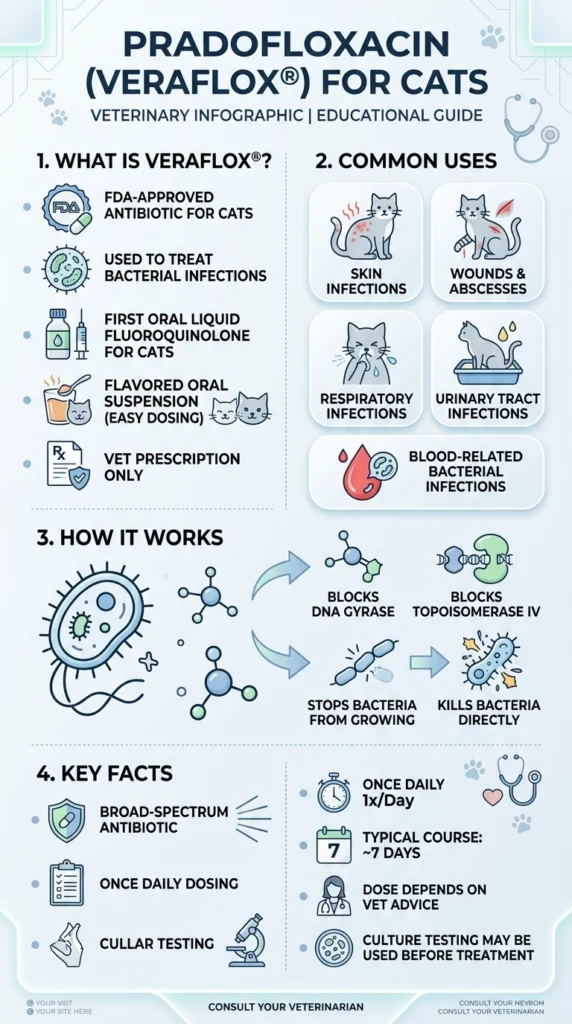
Pradofloxacin is the first oral liquid fluoroquinolone approved specifically for cats. Veraflox comes as a vanilla-flavored oral suspension with a low-mess dispenser, and it does not require refrigeration or mixing with water.
Common Uses of Veraflox for Cats
- Skin infections
- Wounds and abscesses
- Respiratory tract infections
- Urinary tract infections
- Some blood-related bacterial infections
How Veraflox Works
Veraflox works by blocking two important bacterial enzymes:
These enzymes help bacteria grow and reproduce. By blocking them, pradofloxacin actively kills bacteria instead of only slowing their growth.
Important Facts About Pradofloxacin
- It is a broad-spectrum antibiotic
- Effective against aerobic gram-positive bacteria
- Works against some anaerobic and gram-negative bacteria
- It is a concentration-dependent bactericidal antibiotic
- Proper dosing is important for effective treatment
Veterinarians may recommend bacterial culture and sensitivity testing before treatment to confirm the infection can be treated with Veraflox. In some cases, vets may prescribe it based on the bacteria commonly linked to a specific infection.
Typical Treatment Information
- Usually given once daily
- Common treatment length is seven consecutive days
- Dosage may vary depending on the infection and veterinary instructions
Pradofloxacin Dosage for Cats
Pradofloxacin (Veraflox) is labeled only for oral use in cats and kittens older than 12 weeks of age.
Standard Veraflox Dosage for Cats
The FDA-approved dosage for Pradofloxacin for cats is:
- 7.5 mg/kg orally once daily
- About 3.4 mg per pound of body weight
- Usually given for 7 consecutive days
Available Forms
In the United States, Veraflox for cats is available as:
- 25 mg/mL oral suspension liquid
A tablet form is approved in some countries outside the United States.
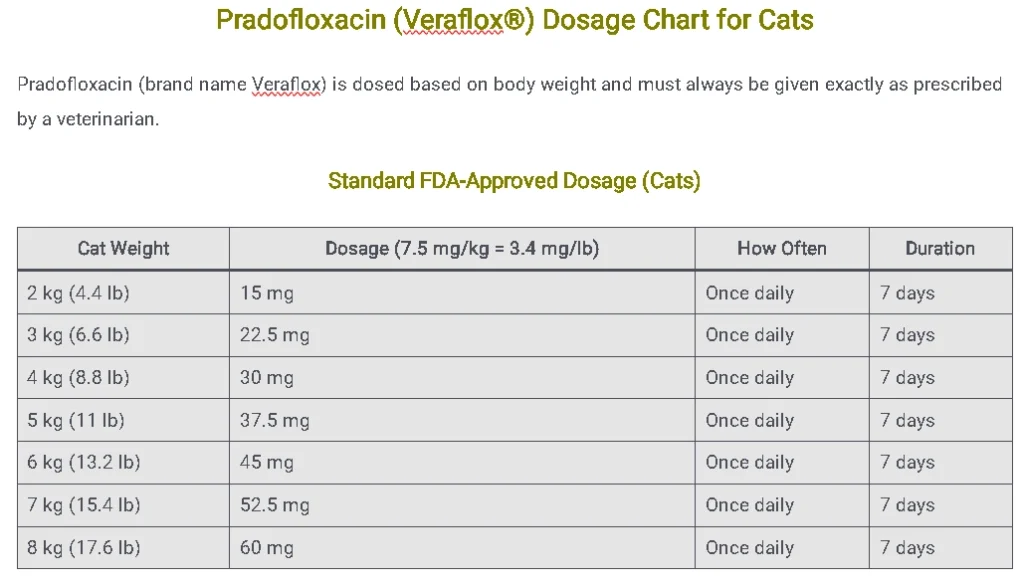
Pradofloxacin (Veraflox®) Dosage Chart for Cats
Pradofloxacin (brand name Veraflox) is dosed based on body weight and must always be given exactly as prescribed by a veterinarian.
Standard FDA-Approved Dosage (Cats)
| Cat Weight | Dosage (7.5 mg/kg = 3.4 mg/lb) | How Often | Duration |
|---|---|---|---|
| 2 kg (4.4 lb) | 15 mg | Once daily | 7 days |
| 3 kg (6.6 lb) | 22.5 mg | Once daily | 7 days |
| 4 kg (8.8 lb) | 30 mg | Once daily | 7 days |
| 5 kg (11 lb) | 37.5 mg | Once daily | 7 days |
| 6 kg (13.2 lb) | 45 mg | Once daily | 7 days |
| 7 kg (15.4 lb) | 52.5 mg | Once daily | 7 days |
| 8 kg (17.6 lb) | 60 mg | Once daily | 7 days |
Key Dosage Instructions
- Standard dose: 7.5 mg/kg orally
- Frequency: Once daily
- Treatment length: Usually 7 consecutive days
- Form: Oral liquid suspension (25 mg/mL in U.S.)
- Use only in cats older than 12 weeks
Safe Administration Notes
- Give on an empty stomach for best absorption
- If vomiting or stomach upset occurs, may give with a small non-dairy meal
- Shake bottle well before each use
- Use provided syringe for accurate dosing
- Do not double dose if one is missed
Important Safety Reminder
- Always complete the full course even if symptoms improve
- Do not stop early without veterinary advice
- Longer treatments may require vet monitoring (blood work)
- Not recommended for kittens under 12 weeks, pregnant or nursing cats unless a vet decides otherwise
How to Give Veraflox to Cats
For safe and effective treatment:
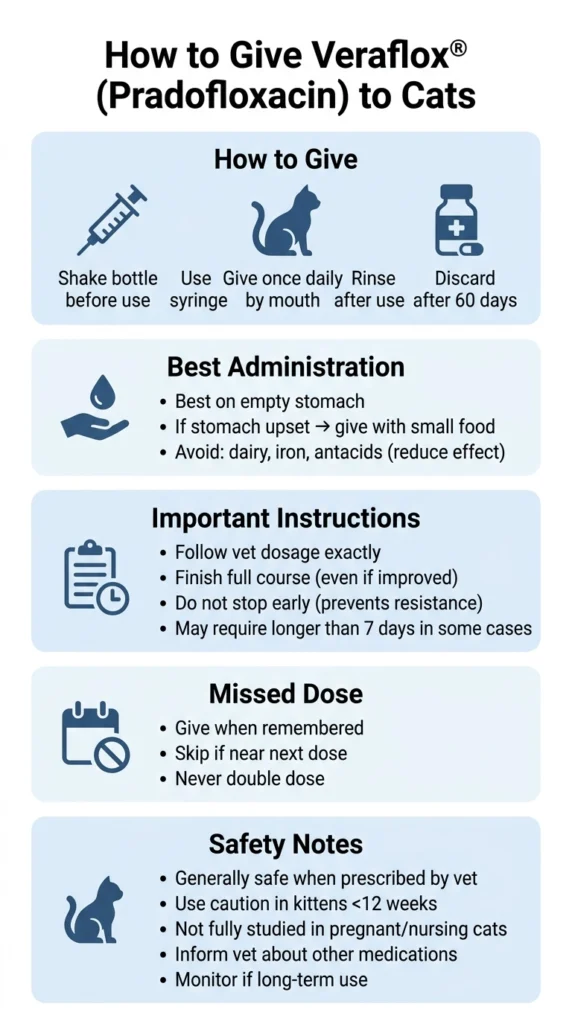
- Shake the bottle well before each dose
- Use the provided dosing syringe
- Give by mouth once daily
- Rinse the syringe after each use
- Discard unused medication after 60 days
Best Way to Give Pradofloxacin
Pradofloxacin is best absorbed on an empty stomach. However, if your cat develops digestive upset such as vomiting or reduced appetite, the medication may be given with a small amount of food.
Avoid:
- Dairy products
- Iron-containing products
- Certain antacids
These may reduce Veraflox absorption and make the antibiotic less effective.
Important Dosage Instructions
- Always follow your veterinarian’s dosage instructions exactly
- Finish the full antibiotic course even if your cat seems better
- Stopping treatment too early may allow bacteria to return and develop antibiotic resistance
- Some infections may require treatment longer than 7 days under veterinary supervision
- Long-term use may require recheck blood work monitoring
Missed Dose Instructions
If you forget a dose of Veraflox:
- Give it when you remember
- If it is almost time for the next dose, skip the missed dose
- Return to the regular dosing schedule
- Do not give double or extra doses
When to Contact Your Veterinarian
Contact your veterinarian if:
- Your cat’s infection does not improve within 3–4 days
- Side effects develop
- Your cat refuses medication repeatedly
Is Veraflox Safe for Cats?
Veraflox is generally considered safe for cats and kittens older than 12 weeks when used exactly as prescribed by a veterinarian. The correct dose, treatment length, and dosing schedule are important for safe and effective use.
Although fluoroquinolone antibiotics have been linked to retinal damage and blindness in cats, extensive eye safety testing with Pradofloxacin showed no abnormal eye changes during studies.
Important Safety Considerations
Veraflox should be used carefully in cats with:
- Known neurological disorders
- Suspected neurological conditions
- Sensitivity to quinolone antibiotics
Cats That May Need Extra Caution
Safety studies have not been fully evaluated in:
- Kittens younger than 12 weeks
- Pregnant cats
- Nursing cats
- Breeding cats
- Immunocompromised cats
- Cats with feline leukemia virus (FeLV)
- Cats with feline immunodeficiency virus (FIV)
Medication & Health Considerations
Before starting Veraflox, tell your veterinarian about:
- Other medications
- Vitamins or supplements
- Existing medical conditions
Some medications may interact with Veraflox and increase health risks.
Monitoring During Treatment
Quinolone antibiotics may affect some laboratory values, including:
- AST
- ALT
- ALP
- BUN
Urine glucose test results may also be altered during treatment.
Veterinary Testing Before Use
Your veterinarian may collect a sample from a skin wound or abscess to test whether the bacteria are susceptible to Veraflox before treatment begins.
Always speak with your veterinarian to determine whether Veraflox is the right antibiotic for your cat.
Side Effects of Pradofloxacin for Cats
Pradofloxacin is generally well tolerated in most cats when used as directed. In studies involving more than 200 cats, the most commonly reported side effect was diarrhea or loose stools, occurring in about 3% of cats.
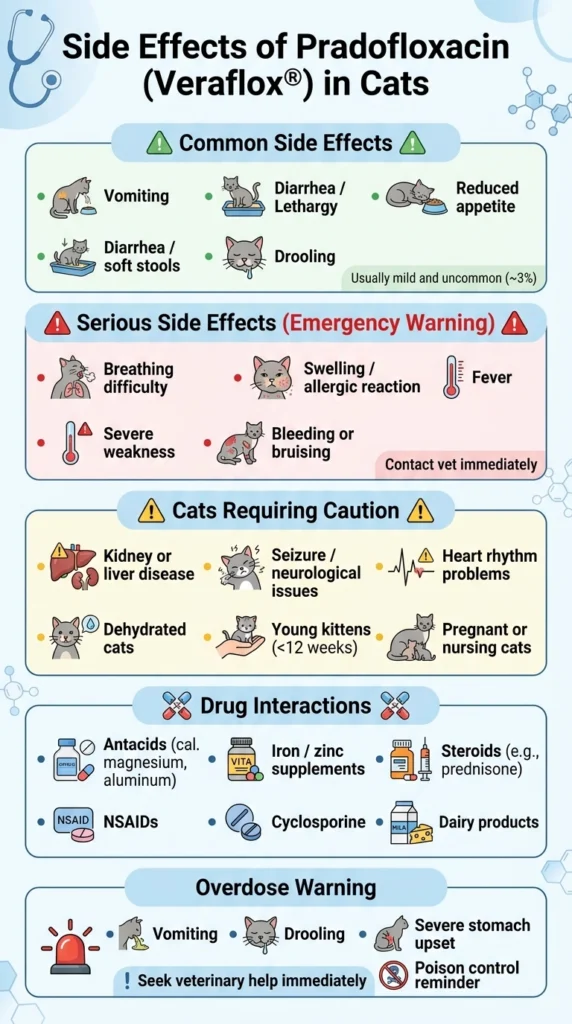
Common Side Effects of Veraflox in Cats
Possible side effects may include:
- Vomiting
- Diarrhea or loose stools
- Reduced appetite
- Lethargy
- Hypersalivation (excessive drooling)
Vomiting and drooling may occur more often with high doses, overdoses, or treatment periods longer than recommended.
Serious Side Effects
Contact your veterinarian immediately if your cat develops:
- Difficulty breathing
- Rash or swelling around the face
- Fever
- Bruising or bleeding
- Severe lethargy
- Signs of allergic reaction
Drug sensitivities may develop over time, even if earlier doses caused no problems.
Safety Warnings & Risk Factors
Pradofloxacin should be used cautiously in cats:
- With kidney disease
- With liver disease
- With seizure or neurological disorders
- With heart rhythm problems (arrhythmias)
- That are dehydrated
Because fluoroquinolones may affect developing joints and cartilage, use cautiously in growing animals.
Cats That Should Avoid Veraflox
Veraflox is not fully approved or evaluated for:
- Kittens younger than 12 weeks
- Pregnant cats
- Nursing cats
- Immunocompromised cats
- Cats with FeLV or FIV
Cats allergic to fluoroquinolone antibiotics should avoid this medication.
Eye & Sunlight Safety
Unlike Enrofloxacin (Baytril), pradofloxacin has not shown significant retinal damage or blindness in safety studies involving cats.
However, fluoroquinolones may increase photosensitivity, meaning cats may become more sensitive to sunlight or sunburn, especially around:
- The nose
- Ear areas with thin hair
Drug Interactions
Some medications and products may interact with pradofloxacin, including:
- Antacids containing aluminum, calcium, or magnesium
- Steroids like prednisone or dexamethasone
- Cyclosporine
- NSAIDs
- Digoxin
- Dairy products
- Iron or zinc supplements
- Sucralfate
- Theophylline
- QT prolonging medications
Always tell your veterinarian about:
- Medications
- Vitamins
- Supplements
- Herbal products
before starting Veraflox.
Veraflox Overdose Concerns in Cats
An overdose of Veraflox may cause:
- Vomiting
- Excessive drooling
- Severe digestive upset
If an overdose is suspected, contact your veterinarian or an animal poison control center immediately.
Emergency Poison Control Numbers
- ASPCA Animal Poison Control: 888-426-4435
- Pet Poison Helpline: 855-764-7661
Human Safety Information
Veraflox is a veterinary medication and should never be used by humans.
Safety Tips While Handling Veraflox
- Avoid contact with eyes
- Wash skin with soap and water after contact
- Do not eat, drink, or smoke while handling the medication
- Avoid direct sunlight after exposure because quinolones may cause photosensitivity
If accidental ingestion occurs, seek medical attention immediately.
How To Store Veraflox for Cats
Proper storage of Veraflox helps maintain the medication’s safety and effectiveness during treatment.
Veraflox Storage Instructions
- Store at room temperature below 86°F (30°C)
- Do not refrigerate
- Keep the medication in its original container
- Protect the bottle from direct light
- Shake well before each dose
After Opening
- Veraflox remains stable for 60 days after opening
- Follow label expiration instructions carefully
- Discard unused medication after the recommended storage period
Syringe Handling Tips
- Rinse the dosing syringe between doses
- Keep used syringes clean and dry
- Store syringes out of reach of children and pets
Safety Precautions
- Keep Veraflox away from children and other animals
- Wash hands after handling the medication
- Frequent handlers may wear gloves to reduce the risk of photosensitivity reactions
Because Veraflox is a prescription-strength veterinary antibiotic, it should always be stored and handled carefully.
You May Also Like To Read:
- Epakitin (chitosan) Dosage for Cats: Chart, Safe Use & More
- Orbax Dosage for Cats: Chart, Safe Use, Side Effects & More
FAQs About Pradofloxacin (Veraflox®) for Cats
What is Pradofloxacin used for in cats?
Pradofloxacin is used to treat bacterial infections in cats, especially skin infections, wounds, and abscesses. Veterinarians may also prescribe it for respiratory tract infections and urinary tract infections.
What is Veraflox used for in cats?
Veraflox is the brand name for pradofloxacin. It is commonly used to treat bacterial skin infections, abscesses, and wounds in cats.
How long does Veraflox take to work in cats?
Pradofloxacin is rapidly absorbed and starts working within 1–2 hours after dosing. However, visible improvement in infections may take 2–3 days.
Can Veraflox treat UTIs in cats?
Yes. Although Veraflox is FDA-approved mainly for wounds and abscesses, veterinarians may prescribe it off-label for urinary tract infections in cats when appropriate.
Is Veraflox safe for kittens?
Veraflox should only be used in cats older than 12 weeks because fluoroquinolone antibiotics may affect developing joints and cartilage in young animals.
Can I stop Veraflox early if my cat feels better?
No. Always complete the full prescribed treatment course, even if symptoms improve early. Stopping antibiotics too soon may cause bacterial resistance or relapse.
Does Veraflox need refrigeration?
No. Veraflox does not require refrigeration. Store it at room temperature below 86°F (30°C).
What should I do if I accidentally give the wrong dose?
Contact your veterinarian immediately for advice. Monitor your cat closely for vomiting, drooling, digestive upset, or unusual behavior.
Is monitoring needed during treatment?
Some cats may require follow-up visits or blood work during extended treatment to monitor response and safety.