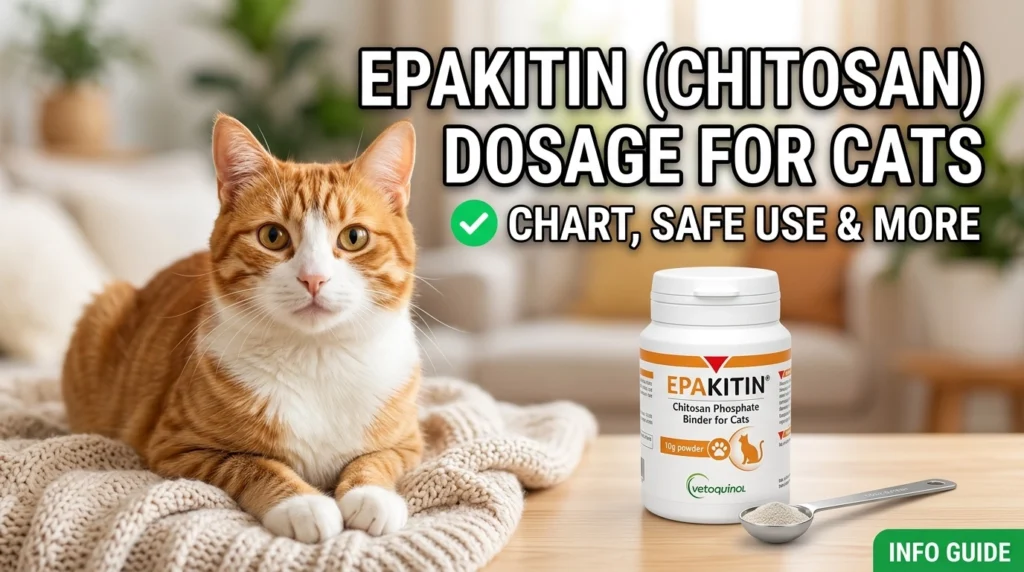
Kidney problems are common in cats, especially as they get older, and conditions like Chronic Kidney Disease (CKD) can seriously affect their health and quality of life. One helpful supplement many veterinarians recommend is Epakitin (chitosan) dosage for cats, which is designed to support cats with kidney issues.
Epakitin is a non-prescription supplement that works as a phosphate binder, helping reduce harmful phosphorus levels in your cat’s body. High phosphorus can worsen kidney damage, so controlling it is very important for cats with kidney disease. The key ingredient, chitosan, helps bind phosphorus in the digestive system so it can be removed safely from the body.
Not all cats will eat special kidney diets, which can make managing their condition harder. Epakitin can be easily mixed with your cat’s regular food, making it a simple and effective way to support kidney health without changing their diet too much.


In this guide, you’ll learn the correct Epakitin (chitosan) dosage for cats, uses, benefits, side effects, and safe kidney support guide for cats with CKD and phosphorus control.
Disclaimer: This content is for informational purposes only and should not replace veterinary advice. Always consult your veterinarian especially if your cat has existing health conditions or is taking other medications before giving Epakitin (chitosan) or adjusting your cat’s dosage.
Key Takeaways
- Epakitin (chitosan) dosage for cats is commonly 1 gram per 5 kg (11 lbs) of body weight, given twice daily with meals
- Epakitin works as a phosphate binder, helping reduce phosphorus levels and protect the kidneys
- It is widely used for cats with Chronic Kidney Disease (CKD) and other kidney issues
- Always mix with food, as it is only effective when given during meals
- Helps improve quality of life, including better appetite, energy, and overall comfort
- Generally safe and well tolerated, but calcium levels should be monitored
- Works best when combined with a kidney-friendly diet and proper hydration
- Regular veterinary checkups and blood tests are important for safe use
- Easy to use in powder form, making it suitable even for picky cats
What is Epakitin for Cats?
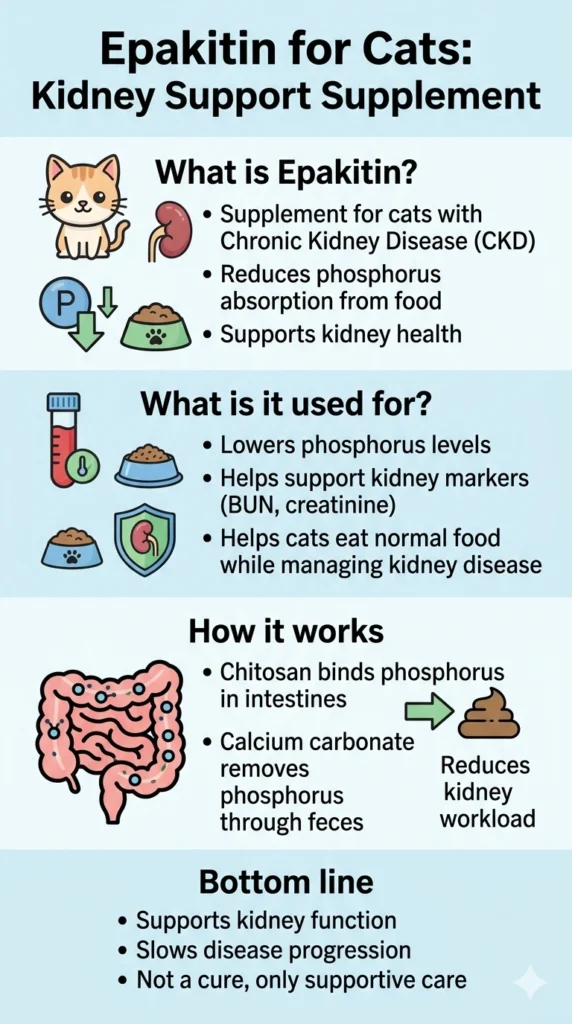
Epakitin for cats is a nutritional supplement used to support kidney health, especially in cats with Chronic Kidney Disease (CKD) or early kidney problems. It works as a phosphorus binding agent, helping reduce the amount of phosphorus absorbed from food, which is important because high phosphorus levels can worsen kidney damage.
This supplement contains:




- Chitosan – a natural compound derived from crustacean shells that binds phosphorus
- Calcium carbonate – helps bind phosphorus and supports calcium balance
- Lactose – improves taste and makes it easier to mix with food
Epakitin comes in powder form and can be easily mixed with your cat’s food, making it a practical option for daily use.
What Is Epakitin Used for in Cats?
Epakitin is mainly used to control phosphorus levels in cats with kidney disease. High dietary phosphorus can further damage the kidneys, so reducing its absorption is a key part of managing kidney conditions.
Here’s why it is used:
- Helps lower phosphorus absorption, even if blood phosphorus levels are normal
- Supports improvement in kidney-related values like creatinine and blood urea nitrogen (BUN)
- Helps maintain the balance between calcium and phosphorus in the body
- Useful when cats refuse prescription kidney diets
Managing kidney disease often includes reducing both phosphorus and protein intake. However, since many cats are picky eaters and may not accept renal diets, Epakitin allows them to continue eating their regular food while still getting kidney support.
How Epakitin for Cats Works
Epakitin works in the digestive system by binding phosphorus before it is absorbed into the bloodstream, reducing the workload on the kidneys and slowing disease progression.
Its mechanism includes:
- Chitosan: Binds dietary phosphorus and may help reduce harmful waste products and abnormal parathyroid hormone (PTH) levels
- Calcium carbonate: Forms calcium phosphate with phosphorus, which is then excreted in feces
- Lactose: Makes the supplement more palatable when mixed with food
By reducing phosphorus absorption:
- It protects the kidneys from further damage
- Helps lower the risk of conditions like hyperparathyroidism
- Supports overall kidney function and quality of life
Epakitin is not a cure but is an effective supplement for managing kidney disease when used consistently.
Epakitin Dosage for Cats
The recommended Epakitin (chitosan) dosage for cats is based on body weight and should always be given with food for maximum effectiveness. Since it works as a phosphate binder, it must be present in the digestive system during meals to bind phosphorus properly.
Standard Dosage
- 1 gram (one level scoop) per 5 kg (11 lbs) of body weight
- Given twice daily (morning and evening)
- Total daily dose: about 2 grams per 10 lbs body weight
A measuring spoon is usually included with the product to ensure accurate dosing.
Important:
- For cats significantly under or over 11 lbs, consult a veterinarian for the correct dosage
- Always measure carefully to avoid incorrect dosing
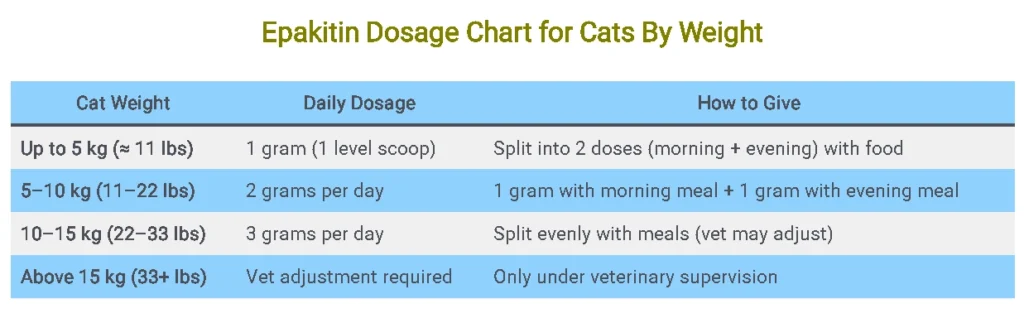
Epakitin Dosage Chart for Cats By Weight
| Cat Weight | Daily Dosage | How to Give |
|---|---|---|
| Up to 5 kg (≈ 11 lbs) | 1 gram (1 level scoop) | Split into 2 doses (morning + evening) with food |
| 5–10 kg (11–22 lbs) | 2 grams per day | 1 gram with morning meal + 1 gram with evening meal |
| 10–15 kg (22–33 lbs) | 3 grams per day | Split evenly with meals (vet may adjust) |
| Above 15 kg (33+ lbs) | Vet adjustment required | Only under veterinary supervision |
How to Give Epakitin Correctly
- Mix the powder directly into food
- Works best with wet food for easy mixing
- Must be given during meals only (not between meals)
- Do not double dose if missed
Important Dosage Notes
- Always use the provided scoop (1 level scoop ≈ 1 gram)
- Cats with Chronic Kidney Disease (CKD) may need adjusted dosing
- Cats under or over standard weight ranges should have veterinary-adjusted dosage
- Regular bloodwork is important to monitor calcium and phosphorus levels
Key Reminder
Epakitin works only when it binds phosphorus from food, so timing with meals is essential for effectiveness.
How to Use Epakitin for Cats
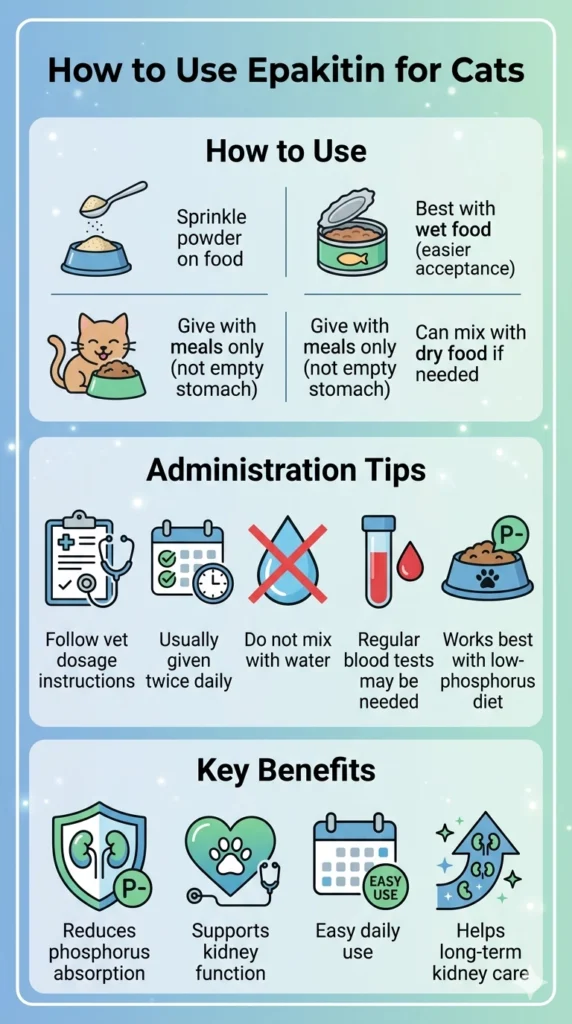
Using Epakitin is simple, but proper usage is important for results:
- Mix with food: Sprinkle the powder over your cat’s food
- Best with wet food: Easier to mix and more readily accepted
- Can also be used with dry food if your cat tolerates it
- Give with meals only: Do not give on an empty stomach, as it will not be effective
Additional Usage Tips
- Follow your vet’s advice based on your cat’s kidney condition
- Regular blood tests may be needed to monitor kidney function and phosphorus levels
- Works best when combined with a low-phosphorus diet
- If your cat refuses a kidney diet, Epakitin can still help reduce phosphorus intake
How Is Epakitin Administered
Epakitin is a non-prescription supplement, but veterinary guidance is strongly recommended before starting.
Key Administration Points
- Comes in powder form and should be mixed with food
- Do not dissolve in water for administration
- Typically given twice daily with meals
- Dosage may be adjusted by your vet depending on your cat’s condition
It can also be used alongside other treatments or kidney-support supplements if recommended by your veterinarian. In some cases, vets may adjust the dose if a cat refuses a low-phosphorus diet.
Supporting your cat with adequate fluid intake is also important, as it helps the body remove toxins and supports kidney function.
Why Kidney Health Matters for Cats
Kidney disease is a common issue in cats, especially those over the age of seven, and conditions like Chronic Kidney Disease (CKD) can seriously affect their overall health. The kidneys are responsible for filtering waste, maintaining hydration, and balancing electrolytes in the body.
When kidney function declines, harmful substances like urea and phosphorus start to build up, leading to symptoms such as:
- Low energy (lethargy)
- Weight loss
- Increased thirst
- Poor appetite
One of the biggest challenges in managing kidney disease is controlling high phosphorus levels (hyperphosphatemia). Epakitin helps address this issue by reducing phosphorus absorption, supporting kidney function, and improving comfort. Early use of kidney-support supplements can help slow disease progression and improve a cat’s quality of life.
Benefits of Using Epakitin for Cats
Epakitin for cats is widely used because it provides consistent support for kidney health while being easy to use in daily routines.
Key Benefits
- Supports kidney function: Reduces phosphorus absorption, helping protect the kidneys from further damage
- Improves quality of life: Cats may show better appetite, energy, and overall well-being
- Easy to administer: Powder form mixes easily with wet or dry food
- Safe for long-term use: Suitable for ongoing use under veterinary supervision
- Palatable formula: Most cats accept it easily, reducing stress during feeding
When combined with a kidney-friendly diet, Epakitin can help maintain better health and comfort for cats with kidney issues.
Why Choose Epakitin for Cats?
Epakitin for cats is a veterinarian-recommended supplement known for its effectiveness and ease of use. It helps manage kidney health by lowering phosphorus levels and supporting overall renal function.
Why Pet Owners Prefer Epakitin
- Helps cats feel better and stay active
- Supports longer lifespan in cats with kidney disease
- Easy to mix with daily meals
- Works well alongside kidney-friendly diets and regular veterinary care
With consistent use, many cats show improvements in appetite, energy, and overall condition, making Epakitin a reliable choice for managing chronic kidney problems.
Epakitin for Felines
Epakitin is commonly used in cats with kidney disease or renal failure and is made from natural ingredients, making it suitable for long-term use.
Main Ingredients
- Chitosan (from shrimp and crab shells) – acts as a phosphate binder
- Calcium carbonate – helps control phosphorus levels
- Lactose – improves taste
- Hydrolyzed soy protein – supports formulation
This combination helps reduce phosphorus levels, support recovery, and may even help extend the lifespan of cats with kidney disease. Its palatable nature also makes it easier to include in a cat’s daily diet.
Side Effects of Epakitin for Cats
Epakitin for cats is generally considered safe and well tolerated, especially when used at the recommended dosage. Unlike many other supplements, it does not contain aluminum, which can be harmful to cats with kidney problems.
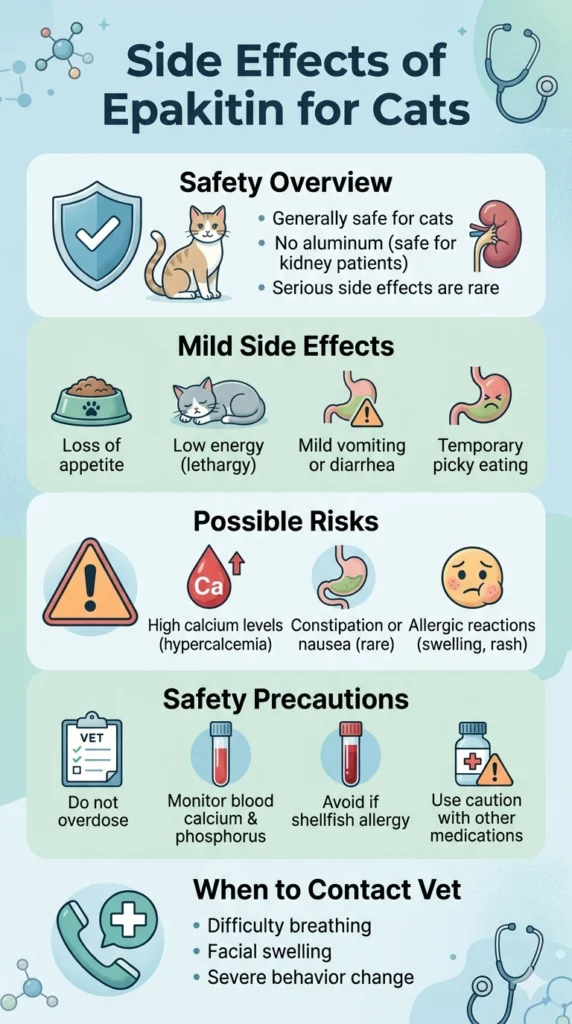
In most cases, serious side effects are not commonly reported. However, since Epakitin contains calcium carbonate, the main concern is related to calcium levels in the body. Excess calcium (hypercalcemia) can occur, especially if higher doses than recommended are given, so monitoring is important.
Common or Mild Side Effects
Some cats may experience mild or temporary effects, including:
- Lack of appetite
- Lethargy (low energy)
- Behavior changes
- Mild digestive upset such as vomiting or diarrhea
- Picky eating when first mixed with food
Potential Side Effects and Precautions
Although rare, some side effects may occur due to the active ingredients calcium carbonate and chitosan.
Possible Effects
- Increased blood calcium levels
- Nausea or constipation (reported more commonly in humans, but possible)
Rare but Serious Reactions
Contact your veterinarian immediately if you notice:
- Allergic reactions (rash, swelling around the face, fever)
- Irregular breathing
It’s also important to note that drug sensitivities can develop over time, meaning a cat may not react at first but could develop side effects later. Always monitor your cat throughout the treatment period.
Important Safety Considerations
To use Epakitin safely, keep these precautions in mind:
- Do not exceed the recommended dosage without veterinary advice
- Monitor calcium and phosphorus levels regularly
- Avoid use in cats with shellfish allergies, as chitosan is derived from crustacean shells
- Be cautious when combining with other medications, as some may:
- Become less effective
- Increase calcium levels
Monitoring and Overdose Information
Regular monitoring is a key part of safe use. The International Renal Interest Society (IRIS) recommends:
- Bloodwork every 4–6 weeks initially after starting a phosphorus binder
- Once stable, testing every 3 months
Overdoses of Epakitin are uncommon, but if they occur, they may lead to elevated calcium levels. If you suspect an overdose or notice unusual symptoms, contact your veterinarian immediately.
Are There Any Risk Factors for This Medication?
While Epakitin is generally safe, there are certain situations where calcium carbonate + chitosan should not be used or should be used with caution.
Do NOT Use in Cats That:
- Are allergic to any component of the supplement
- Have high blood calcium levels
- Are not eating
Use With Caution If:
- Your cat is taking calcitriol
In these cases, always consult your veterinarian before starting the supplement to avoid complications.
Are There Any Drug Interactions I Should Be Aware Of?
Some medications can interact with calcium carbonate + chitosan, affecting their effectiveness or increasing certain risks. These should be used with caution together:
Medications to Watch
- Aspirin
- Azole antifungals (e.g., itraconazole, ketoconazole)
- Calcitriol
- Corticosteroids (e.g., dexamethasone, prednisolone)
- Digoxin
- Famotidine, ranitidine
- Fluoroquinolone antibiotics (e.g., enrofloxacin)
- Furosemide, torsemide
- Levothyroxine
- Mycophenolate
- Oral bisphosphonates and phosphates
Important: Always inform your veterinarian about all medications, supplements, or herbal products your cat is taking before starting Epakitin.
Is Any Monitoring Needed With This Supplement?
Yes, regular monitoring is important to ensure safe and effective use.
Veterinary Monitoring
- Blood tests to check calcium and phosphorus levels
- Scheduled follow-up visits as recommended by your vet
At-Home Monitoring
- Watch for any unusual or abnormal changes in your cat
- If any issues appear, stop the supplement and contact your veterinarian immediately
Proper monitoring helps ensure your cat receives the full benefits of Epakitin while minimizing potential risks.
What is Calcium Carbonate + Chitosan?
Calcium carbonate + chitosan (brand name Epakitin®) is a phosphorus binder and calcium supplement used to support cats with Chronic Kidney Disease (CKD). It helps manage high phosphorus levels in the blood and can also be used to treat low calcium levels in cats and other animals.
As a supplement, it is not reviewed by the U.S. Food and Drug Administration (FDA) for safety or effectiveness before being sold. Manufacturers are responsible for ensuring product safety and accurate labeling. These products typically include a disclaimer stating they are not intended to diagnose, treat, cure, or prevent any disease.
Veterinary health products may also be licensed by Health Canada based on manufacturer-provided information, but they are not independently tested. Because of this, it is important to understand that even natural supplements can have risks if used incorrectly.
Important:
- “Natural” does not always mean safe
- High doses or improper use can lead to toxicity
- Supplements may still cause side effects
- Scientific evidence for some supplements may be limited
Your veterinarian is the best source of guidance when deciding if this supplement is appropriate for your cat.
How Do I Give My Pet Calcium Carbonate + Chitosan?
This supplement is available in powder, tablet, and capsule forms and is given orally (by mouth).
How to Administer
- Give with food for proper effectiveness
- Follow your veterinarian’s dosage instructions carefully
- Continue for the full prescribed duration, even if your cat seems better
Additional Notes
- The supplement typically starts working within 1 hour
- Consistency is important for best results
Tips for Optimizing Your Cat’s Kidney Health
Along with using Epakitin, supporting overall kidney health is essential for better outcomes.
Key Tips
- Provide fresh water: Ensure constant access to clean water to maintain hydration
- Feed a kidney-friendly diet: Choose a low-phosphorus, high-quality diet with veterinary guidance
- Regular vet checkups: Monitor kidney function through routine bloodwork and urinalysis
- Reduce stress: Maintain a calm and comfortable environment
- Watch for symptoms: Look for signs like increased thirst, frequent urination, or weight loss and report them early
These steps, combined with proper supplement use, can help improve your cat’s comfort and overall quality of life.
You May Also Like To Read:
- Orbax Dosage for Cats: Chart, Safe Use, Side Effects & More
- Erythromycin Dosage for Cats: Chart, Safe Use & Side Effects
FAQs About Epakitin for Cats
Do cats need a prescription for Epakitin?
No, Epakitin is a nutritional supplement (nutraceutical), so it does not require a prescription. However, it should still only be used after veterinary advice, especially in cats with **, because calcium levels must be monitored.
Is Epakitin safe for cats?
Yes, Epakitin is generally safe when used at the correct dosage. It is designed for cats with kidney problems and is usually well tolerated. Side effects are uncommon, but monitoring calcium and phosphorus levels is important during use.
How long does it take for Epakitin to work?
Results can vary depending on the cat’s condition:
Some cats may show better appetite and energy within a few weeks
Bloodwork improvements (like phosphorus control) may take 1–3 months
What if I miss a dose?
If you miss a dose:
Give it as soon as you remember
If it’s close to the next dose, skip the missed one
Do not double the dose
What should I do in case of overdose or reaction?
If you suspect an overdose or unusual reaction:
Contact your veterinarian immediately
If unavailable, contact an emergency veterinary clinic
Can healthy cats use Epakitin?
No, it is mainly designed for cats with kidney issues. Healthy cats do not need it unless a veterinarian recommends it for a specific reason.
What is Epakitin made of?
Epakitin contains:
Calcium carbonate – helps bind phosphorus
Chitosan – natural phosphorus binder from shellfish
Can Epakitin cure kidney disease in cats?
No. Epakitin cannot cure kidney disease. It is used to:
Help manage symptoms
Reduce phosphorus levels
Slow disease progression
Improve quality of life
Final Thoughts
Managing kidney problems in cats, especially conditions like Chronic Kidney Disease (CKD), requires consistent care, proper nutrition, and the right support. Epakitin (chitosan) dosage for cats plays an important role by helping control phosphorus levels, reducing stress on the kidneys, and supporting overall health.
While Epakitin is not a cure, it is a reliable and well-tolerated supplement that can improve your cat’s quality of life when used correctly. Its easy-to-mix powder form makes daily use simple, even for picky eaters, and it works well alongside kidney-friendly diets and regular veterinary care.
The key to success is consistency and monitoring. Always follow the correct dosage, give it with meals, and keep up with regular vet checkups to track your cat’s progress. Small steps like maintaining hydration, providing proper nutrition, and using supplements like Epakitin can make a meaningful difference over time.
With the right approach, you can help your cat stay more comfortable, active, and healthy—even while managing a chronic condition.