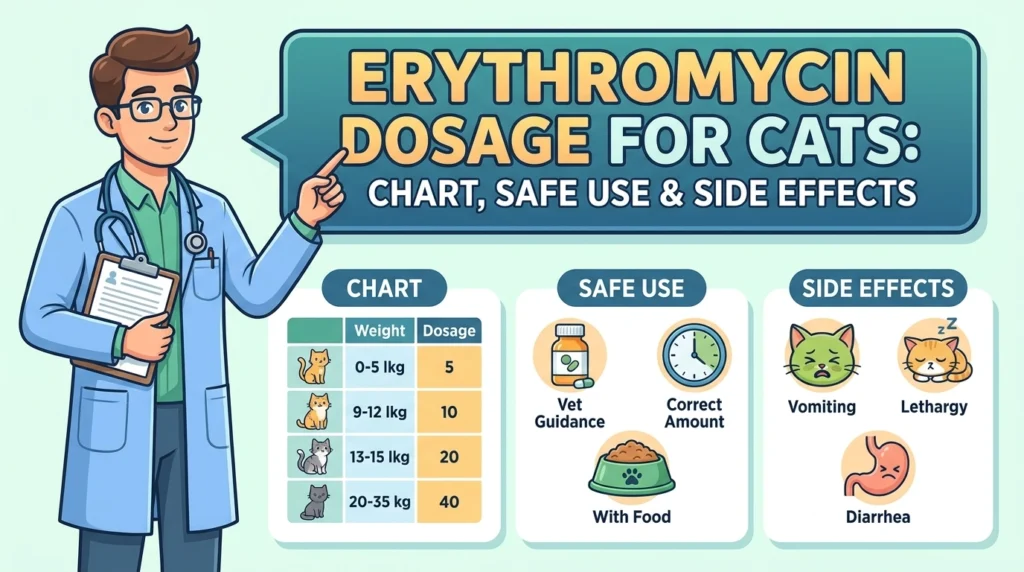
When it comes to treating bacterial infections in cats, understanding the correct Erythromycin dosage for cats is essential for keeping your pet safe and healthy. Erythromycin is a prescription antibiotic used by veterinarians to treat infections in cats, including skin infections, wound infections, and respiratory issues like sinus infections and pneumonia. It works by stopping bacteria from growing, helping your cat’s body fight off infection effectively.
However, erythromycin is not suitable for all types of bacteria. It mainly targets infections of the skin and respiratory system and is not effective against certain bacteria like E. coli. Because of this, vets only prescribe it when it is the right choice for the specific infection your cat has.
In cats, erythromycin is most commonly used as an eye ointment to treat conditions like conjunctivitis and other eye infections. Oral use (by mouth) is less common because it can sometimes cause digestive upset and may not work well against some bacteria. In rare cases, it may also be used to help with stomach movement, but this is not a typical use in cats.




Since erythromycin is a prescription-only medication, you should never give it to your cat without veterinary advice. Using the correct erythromycin dosage for cats is very important to avoid side effects and ensure the treatment works properly.
In this guide, you’ll Learn everything about Safe Erythromycin dosage for cats, uses, eye treatment, side effects, and vet-guided care in this complete guide.
Disclaimer: This content is for informational purposes only and should not replace veterinary advice. Always consult your veterinarian especially if your cat has existing health conditions or is taking other medications before giving Erythromycin or adjusting your cat’s dosage.
Key Takeaways
- Erythromycin is a prescription macrolide antibiotic used in cats to treat specific bacterial infections.
- It works by stopping bacterial protein production, which slows bacterial growth.
- The most common use in cats is eye infections, especially conjunctivitis, using ophthalmic (eye) ointment.
- Oral use in cats is less common due to possible digestive side effects and limited effectiveness against some bacteria.
- It may also be used for skin, respiratory, and gastrointestinal infections, but only in selected cases by a vet.
- It is not effective against viruses, fungi, parasites, or resistant bacteria like E. coli.
- Side effects are usually mild but may include vomiting, diarrhea, or loss of appetite with oral use.
- It should be used carefully in cats with liver disease, allergies, or those taking other interacting medications.
- Proper use always requires veterinary guidance and correct dosing to ensure safety and effectiveness.
What is Erythromycin for Cats?
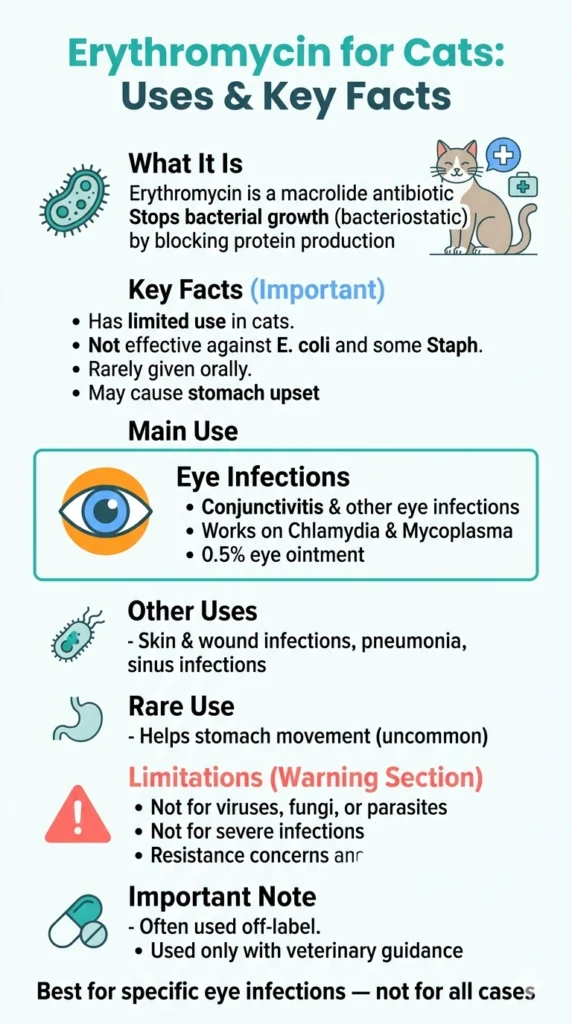
Erythromycin is a macrolide antibiotic used to treat certain bacterial infections by slowing the growth of bacteria through blocking essential protein production. It is considered a bacteriostatic antibiotic, meaning it stops bacteria from multiplying rather than killing them directly.




In cats, erythromycin has limited and selective use. It is effective only against certain bacteria and is not useful against resistant bacteria like E. coli or some Staphylococcus species. Because of this narrow spectrum, veterinarians only use it when it is the right match for the infection.
Erythromycin is rarely given orally in cats due to:
- Limited effectiveness against common feline bacteria
- Risk of digestive upset
- Concerns about bacterial resistance
The most common use in cats is as an ophthalmic (eye) ointment (0.5%), which is widely prescribed to treat conjunctivitis and other eye infections. This form works directly on the infection and avoids many systemic side effects.
Erythromycin may also act as a prokinetic (to increase stomach movement), but this use is uncommon in cats because:
- Better treatment options are available
- Lower doses used for this purpose may increase resistance
- Many veterinarians avoid this practice
In cats, erythromycin use is typically off-label, meaning it is prescribed based on veterinary judgment rather than official approval for that specific use. Because of this, it is important to follow your veterinarian’s instructions carefully.
Uses of Erythromycin for Cats
Erythromycin for cats is mainly used to treat specific bacterial infections, but its use is limited and depends on the infection type.
Eye Infections (Main Use)
The most common use is as an eye ointment to treat:
- Conjunctivitis
- Other eye infections
It works well against bacteria like Chlamydia and Mycoplasma, which commonly affect cats’ eyes.
Other Bacterial Infections
In some cases, erythromycin may be used for:
- Skin and wound infections
- Pneumonia
- Sinus infections
However, it is rarely used orally in cats because some bacteria (like E. coli) are resistant, and it may cause side effects.
Digestive Use (Rare)
Erythromycin can help with stomach movement (reflux issues), but this use is uncommon in cats and not a first choice.
Limitations
- Not effective against viruses, parasites, or fungi
- Not ideal for abscesses or severe infections
- Only used when recommended by a vet
Erythromycin Dosage for Cats
The correct dosage of Erythromycin for cats depends on the type of use (eye infection, bacterial infection, or stomach motility support) and must always be guided by a veterinarian.
Ophthalmic (Eye) Dosage – Most Common Use
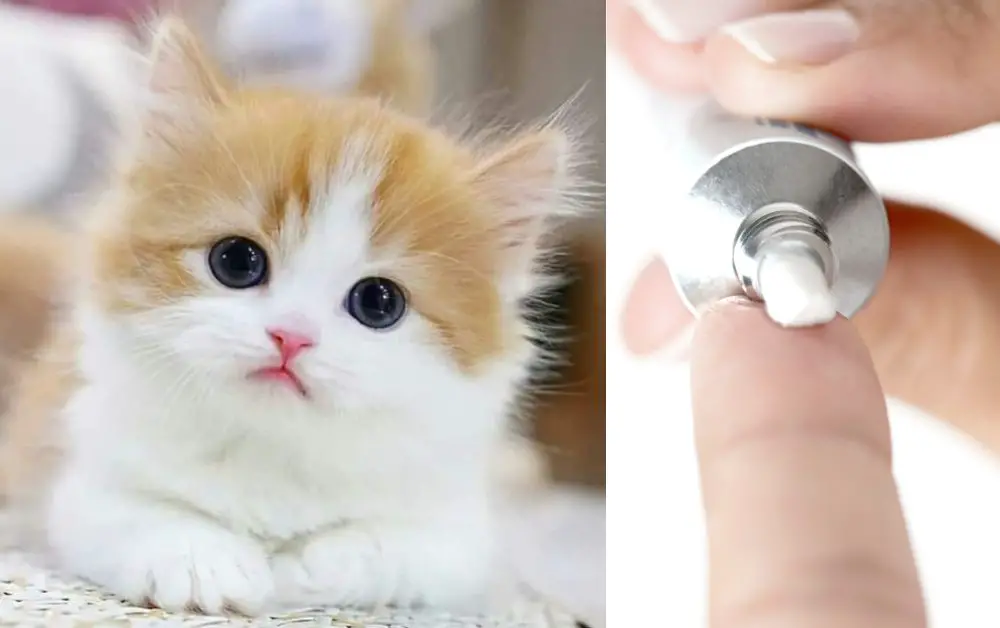
For eye infections, erythromycin is usually given as an ointment:
- Apply a ¼ to ½ inch strip into the affected eye
- Use every 4–6 hours (up to 6 times daily)
- Continue treatment for 7–14 days or as prescribed
This is the most common form used in cats for conditions like conjunctivitis and other eye infections.
Oral Antibiotic Dosage (Veterinary-Controlled)
When used as an oral antibiotic in cats:
- 5 to 10 mg per pound (10–20 mg/kg)
- Given every 8–12 hours
This dosage is typically used only when a veterinarian confirms sensitivity through testing, because not all bacteria respond to erythromycin.
Prokinetic (Stomach Motility) Dosage – Rare Use
For digestive motility support:
- 0.25 to 0.5 mg per pound (0.5–1 mg/kg)
- Given every 8 hours
This use is uncommon in cats and only applied in specific cases.
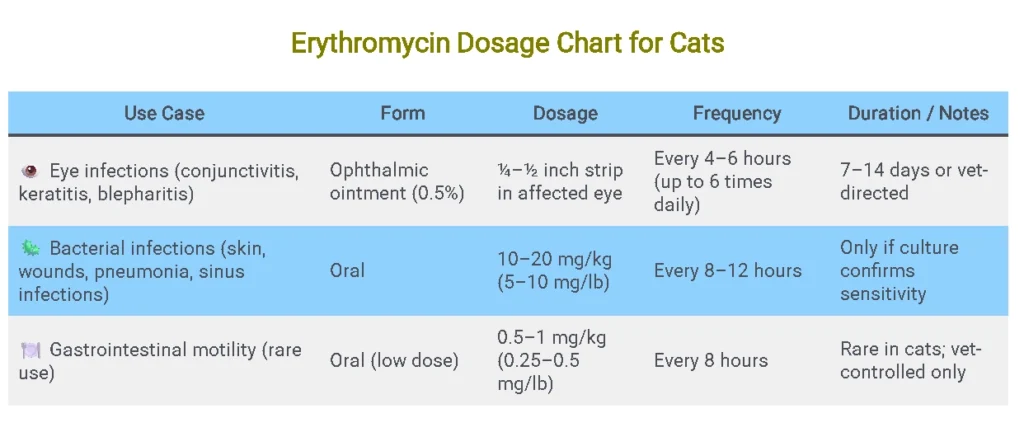
Erythromycin Dosage Chart for Cats
| Use Case | Form | Dosage | Frequency | Duration / Notes |
|---|---|---|---|---|
| 👁️ Eye infections (conjunctivitis, keratitis, blepharitis) | Ophthalmic ointment (0.5%) | ¼–½ inch strip in affected eye | Every 4–6 hours (up to 6 times daily) | 7–14 days or vet-directed |
| 🦠 Bacterial infections (skin, wounds, pneumonia, sinus infections) | Oral | 10–20 mg/kg (5–10 mg/lb) | Every 8–12 hours | Only if culture confirms sensitivity |
| 🍽️ Gastrointestinal motility (rare use) | Oral (low dose) | 0.5–1 mg/kg (0.25–0.5 mg/lb) | Every 8 hours | Rare in cats; vet-controlled only |
Important Dosage Notes
- Dosage must be based on weight and condition
- Do not self-adjust or guess doses
- Complete the full course even if symptoms improve
- Overuse or incorrect dosing can lead to side effects or resistance
- Kittens and senior cats may need adjusted lower doses under vet supervision
Key Takeaway
The erythromycin dosage for cats is not one fixed number—it varies depending on whether it is used for eye infections, bacterial infections, or digestive issues, and should always be prescribed by a veterinarian for safe and effective treatment.
How to Administer Erythromycin to Cats
Giving erythromycin to cats must be done carefully and exactly as prescribed by your veterinarian. The method depends on whether it is used for eye treatment or oral medication.
Eye (Ointment) Administration
For eye infections:
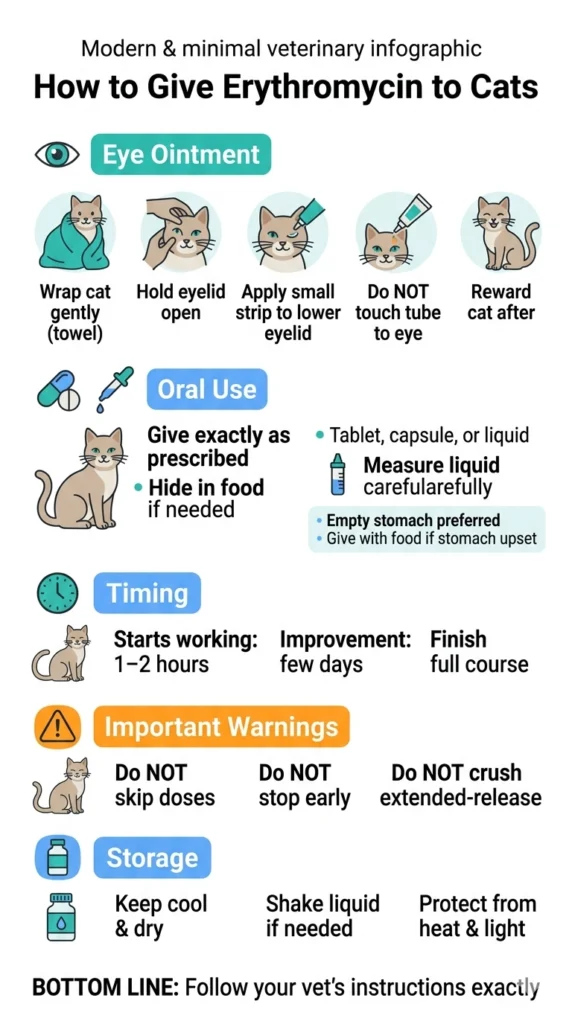
- Dim the lights and gently wrap your cat in a towel
- Gently hold the eyelid open
- Apply a small strip of ointment directly into the lower eyelid
- Avoid touching the tube tip to the eye
- Reward your cat after application to reduce stress
This method is commonly used for conjunctivitis and other eye infections in cats.
Oral Administration
If erythromycin is given by mouth:
- Give it exactly as prescribed by the vet
- It can be given as a tablet, capsule, or liquid suspension
- Try hiding tablets in food like treats or soft meals
- Liquid forms should be measured carefully
Important notes:
- Give on an empty stomach if possible
- If vomiting or stomach upset occurs, it may be given with food
- Do not crush or break extended-release forms unless directed
Timing & Effect
- Starts working in about 1–2 hours
- Visible improvement may take a few days
- Must be given for the full prescribed duration, even if symptoms improve
Skipping doses can reduce effectiveness and increase the risk of treatment failure or resistance.
Storage & Safety
- Store eye ointment in a cool, dry place
- Liquid forms may need refrigeration and shaking before use
- Keep away from heat, moisture, and light
Key Takeaway
Proper administration of Erythromycin in cats depends on the form used, but the most important rule is simple: follow your veterinarian’s instructions exactly and complete the full course of treatment.
Side Effects of Erythromycin for Cats
Erythromycin is generally considered a low-toxicity antibiotic in cats, but it can still cause side effects, especially when given orally.
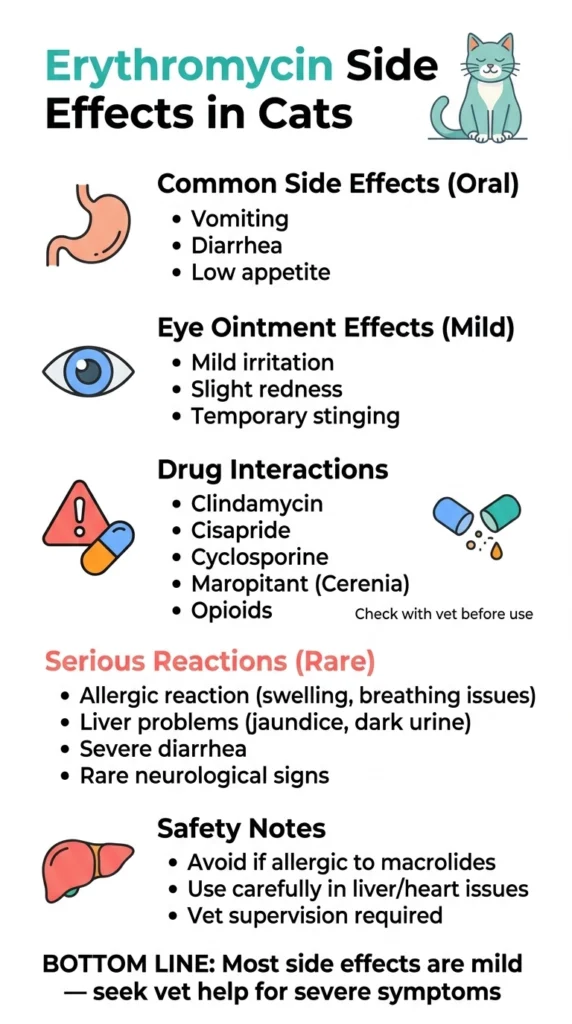
Common Side Effects (Oral Use)
When given by mouth, erythromycin may cause digestive upset, including:
- Vomiting
- Diarrhea
- Decreased appetite (poor appetite)
These effects are the most frequently reported and are usually related to how the medication affects the stomach and intestines.
Eye Ointment Side Effects
When used as an ophthalmic (eye) ointment, side effects are usually mild:
- Temporary stinging or burning
- Mild eye irritation or redness
- Slight tearing
These effects are typically short-term and resolve quickly with continued use.
Drug Interactions
Oral erythromycin can interact with several medications used in cats, including:
- Clindamycin
- Cisapride
- Cyclosporine
- Maropitant (Cerenia)
- Opioid pain medications
Because of this, veterinarians always check current medications before prescribing erythromycin.
Rare but Serious Side Effects
In rare cases, more serious reactions may include:
- Severe allergic reactions (swelling, difficulty breathing, hives)
- Liver problems (loss of appetite, jaundice, dark urine)
- Severe or watery diarrhea
- Neurological signs (rare)
If any of these occur, veterinary attention is required immediately.
Important Safety Notes
- Not suitable for cats with known allergy to macrolide antibiotics
- Must be used carefully in pets with liver problems or heart conditions
- Should only be given under veterinary supervision
- Any other medications your cat is taking must be disclosed to the vet
Key Takeaway
Side effects of Erythromycin in cats are usually mild and digestive in nature, especially with oral use, while eye ointment forms are generally safer. Serious reactions are rare but require immediate veterinary care.
Risk Factors for Erythromycin in Cats
Erythromycin should be used carefully in cats because certain health conditions and situations can increase the risk of side effects or complications.
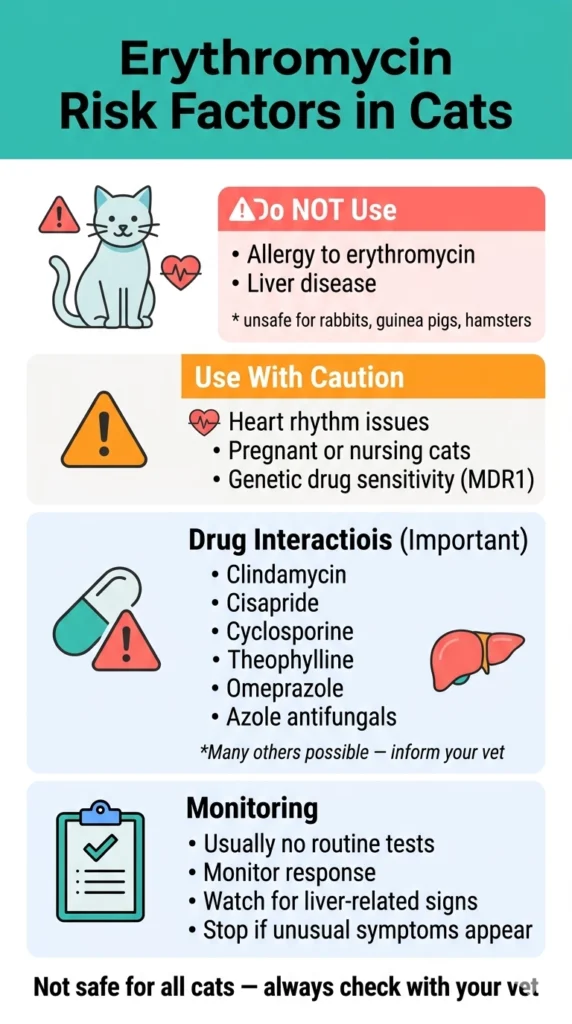
Do NOT Use Erythromycin In:
- Cats allergic to erythromycin
- Cats with liver disease or liver dysfunction
- Small animals like rabbits, gerbils, guinea pigs, or hamsters
Use WITH CAUTION In:
- Cats with heart rhythm abnormalities
- Pregnant or lactating cats (safety not fully confirmed in studies)
- Cats with genetic sensitivity (MDR1/ABCB1-related risk in some breeds)
Some breeds (especially collie- or sheepdog-related dogs) may be more sensitive due to genetic mutations that affect drug tolerance.
Drug Interaction Risks
Erythromycin may interact with several medications, so veterinarians must be informed about any other drugs your cat is taking, including supplements.
Important interacting drugs include:
- Clindamycin
- Cisapride
- Cyclosporine
- Theophylline
- Omeprazole
- Chloramphenicol
- Azole antifungals
- Methylprednisolone
- Sildenafil
- Midazolam
- Buspirone
- Diltiazem
- Sucralfate
- Chemotherapy drugs
These combinations can increase side effects or change drug effectiveness.
Monitoring During Use
- Usually, no special routine monitoring is required
- Veterinarians may check response to treatment
- Long-term use should be monitored for possible liver-related side effects
- Stop medication and contact a vet if any unusual signs appear
Key Takeaway
Erythromycin is not suitable for all cats. It should be avoided in cats with allergies or liver disease, and used carefully in those with heart issues or multiple medications, due to possible drug interactions and sensitivity risks.
You May Also Like To Read:
- Ranitidine (Zantac®) Dosage for Cats: Chart, Safe Use & Complete Guide
- Ketoconazole dosage for cats: Safe Use, Side Effects & More
FAQs About Erythromycin for Cats
Is erythromycin safe for cats with eye infections?
Yes. Erythromycin eye ointment is commonly used for bacterial eye infections like conjunctivitis in cats and is generally safe when prescribed by a veterinarian.
Can I use human erythromycin for my cat?
No. Human medications may contain ingredients or dosing levels that are not safe for cats. Always use a veterinary-prescribed formulation only.
How long does erythromycin take to work in cats?
For eye infections, improvement is often seen within 1–3 days, while full treatment usually lasts 7–14 days depending on the condition.
What does erythromycin treat in cats?
It is mainly used to treat:
Eye infections (most common use)
Some skin and respiratory infections (less common)
Occasionally digestive motility issues (rare use)
Can kittens take erythromycin?
Yes, but only at carefully adjusted low doses prescribed by a veterinarian.
What if I overdose my cat?
Seek veterinary help immediately or contact an emergency poison helpline. Provide your cat’s weight and symptoms.
What if I miss a dose?
Give it when you remember. If it is close to the next dose, skip the missed one. Do not double dose.
How should erythromycin be stored?
Tablets/capsules: Room temperature, away from light
Liquid forms: Usually refrigerated and shaken before use
Keep all forms tightly closed and dry
Final Thoughts
Erythromycin for cats is a prescription macrolide antibiotic used mainly to treat specific bacterial infections. It works by slowing bacterial growth through protein synthesis inhibition, making it effective only against certain susceptible bacteria.
In cats, its most common and reliable use is for eye infections (ophthalmic ointment), especially conditions like conjunctivitis. Oral use is less common due to limited effectiveness against some bacteria, possible digestive side effects, and increasing bacterial resistance. In rare cases, it may also be used for skin, respiratory, or gastrointestinal conditions, but only under strict veterinary guidance.
Erythromycin is not a broad-spectrum solution and does not work against viruses, fungi, parasites, or resistant bacteria such as E. coli. Because of this, its use is always based on veterinary evaluation and, when possible, culture testing.
When used correctly, erythromycin is generally safe and well tolerated in cats, but it must be avoided or used carefully in cats with allergies, liver disease, or those taking interacting medications. Monitoring for side effects such as vomiting, diarrhea, or appetite changes is important, especially during oral treatment.
Overall, erythromycin remains a targeted and specialized antibiotic option for cats, most valuable when precisely prescribed and properly administered under veterinary supervision.