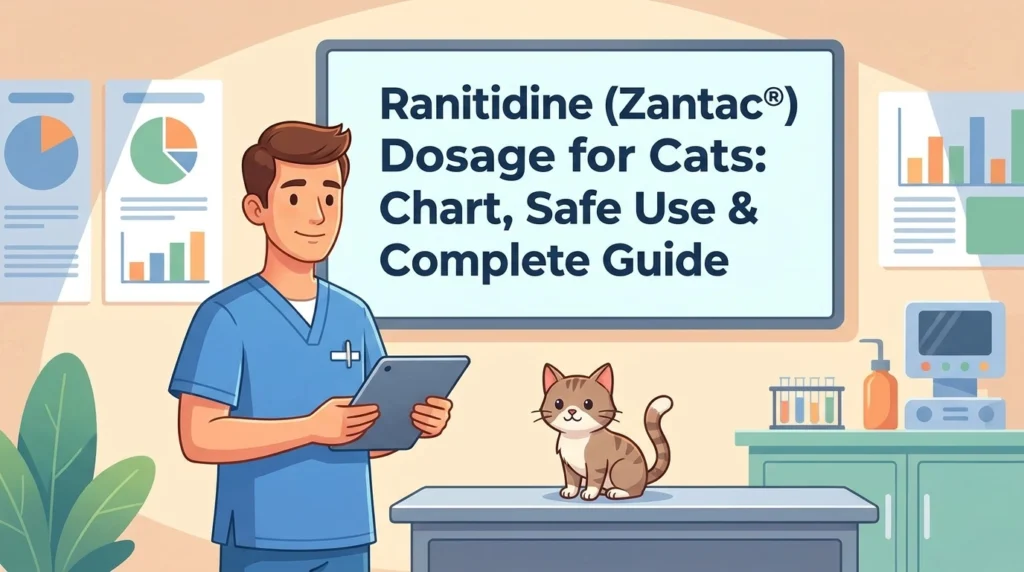
Ranitidine (Zantac®) for cats is a medication that helps reduce excess stomach acid. It works by blocking H2 receptors in the stomach, which are responsible for producing acid. By lowering acid levels, it helps protect a cat’s stomach and digestive tract.
Veterinarians may use ranitidine in cats to manage conditions such as gastritis, acid reflux, esophagitis, and stomach ulcers. In some cases, it may also be used when cats have digestive irritation caused by other illnesses or medications.
Ranitidine belongs to a group of medicines called H2 blockers, which also includes drugs like famotidine (Pepcid®). These medicines all work in a similar way by reducing stomach acid and improving comfort in the digestive system.


Although ranitidine is not officially approved for use in cats, veterinarians can still prescribe it safely when needed.
In this guide, you’ll Learn everything about Ranitidine (Zantac®) dosage for cats, uses, side effects, safety, and a weight-based chart for treating gastritis, reflux, and ulcers under vet care.
Disclaimer: This content is for informational purposes only and should not replace veterinary advice. Always consult your veterinarian especially if your cat has existing health conditions or is taking other medications before giving Ranitidine (Zantac®) or adjusting your cat’s dosage.
Key Takeaways: Ranitidine (Zantac®) for Cats
- Ranitidine (Zantac®) is a histamine-2 (H2) blocker used in cats to reduce stomach acid.
- It works by blocking H2 receptors in the stomach, which helps lower acid production and protect the digestive tract.
- It is commonly used in cats for gastritis, peptic ulcers, acid reflux, and esophagitis.
- It may also help with nausea, vomiting, and general stomach irritation caused by illness or medications.
- Ranitidine can support healing of the stomach lining by reducing acid and irritation.
- It may also help improve digestive movement and gastric emptying in some cases.
- The correct Ranitidine (Zantac®) dosage for cats depends on body weight and medical condition and must always be prescribed by a veterinarian.
- It should never be given without veterinary guidance, as incorrect use can lead to side effects or reduced effectiveness.
- Possible side effects include vomiting, diarrhea, irregular heartbeat, tremors, and drug accumulation in kidney or liver disease cases.
- It should be used with caution in cats with kidney disease, liver disease, pregnancy, or nursing conditions.
- Ranitidine may interact with other drugs such as antacids, antifungals, and certain heart medications.
- Regular veterinary monitoring is important to ensure safety and proper response to treatment.
What is Ranitidine for Cats?
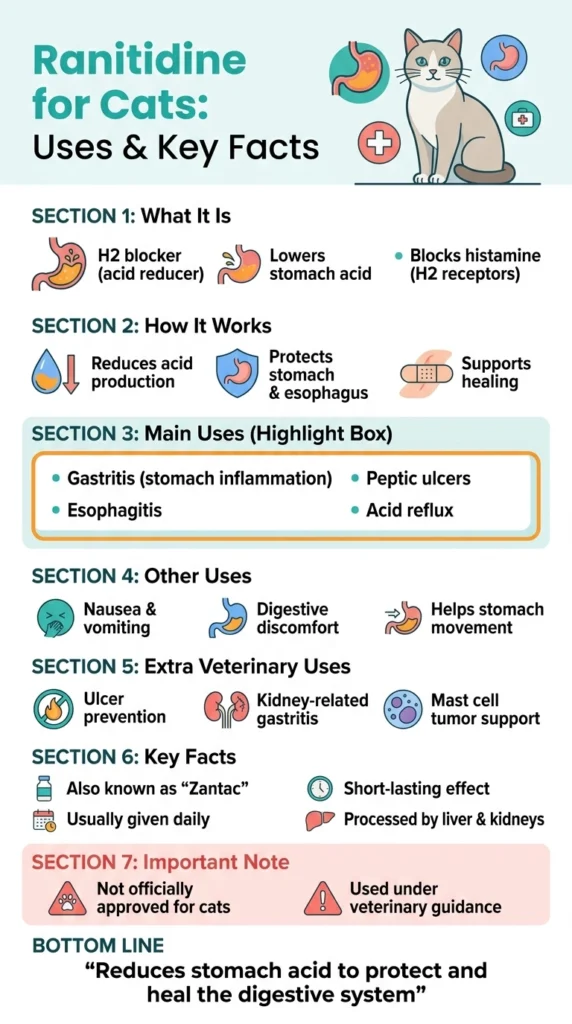
Ranitidine is a drug for cats that belongs to a group called H2 antagonists (histamine-2 blockers). It works by reducing the amount of acid produced in the stomach.




In a cat’s stomach, acid is released when histamine binds to H2 receptors. Ranitidine works by blocking these H2 receptors, which stops histamine from triggering acid release. This leads to lower stomach acid production.
Because of this effect, ranitidine is used in cats to treat and prevent peptic ulcers, gastritis (stomach inflammation), gastroesophageal reflux, and esophagitis (inflammation of the food pipe). It helps protect and heal the stomach and esophagus by reducing irritation caused by acid.
Ranitidine can also help improve stomach and intestinal movement, supporting faster digestion and emptying of the gastrointestinal tract. It may also help protect the stomach lining, especially when irritation is caused by certain medicines like (NSAIDs) Non-Steroidal Anti-Inflammatory Drugs (pain medicines).
After giving ranitidine to cats, it spreads through the body, can enter body fluids, and its effect on stomach acid lasts only for a few hours. That is why it is usually given daily. It is broken down in the liver and removed through the kidneys.
Ranitidine is also known as Zantac® and is part of the same drug family as other acid-reducing medicines. It is not officially approved for cats, but veterinarians may still prescribe it when needed.
Uses of Ranitidine for Cats
Ranitidine for cats is mainly used to reduce stomach acid by blocking histamine activity, which helps manage different digestive system problems. Because it lowers acid levels in the stomach, it supports healing and reduces irritation in the gastrointestinal tract.
It is commonly used in cats for the following conditions:
1. Gastritis (Stomach Inflammation)
Gastritis is inflammation of the stomach lining (gastric mucosa). In cats, it can be caused by toxins, poor diet, side effects of medications, or overeating. It may also appear due to health conditions such as viral infections, kidney disease (including polycystic kidney disease), or cancer. Since gastritis can have multiple causes, identifying the underlying problem is important for proper treatment.
2. Esophagitis (Food Pipe Inflammation)
Esophagitis is inflammation of the esophagus. It can occur from the same causes as gastritis, or when both conditions happen together. It may also be caused by foreign objects stuck in the throat, leading to choking and irritation. This condition can cause pain and difficulty swallowing, so veterinary attention is important.
3. Peptic Ulcers
Peptic ulcers are sores in the stomach lining or sometimes the esophagus. Since stomach acid can make ulcers worse, ranitidine helps by reducing acid levels, allowing ulcers to heal and also lowering the risk of new ulcers forming. It helps create a more balanced stomach environment.
4. Nausea and Digestive Discomfort
Ranitidine may also be used in cats to manage nausea, especially when caused by medications, poisoning, excess stomach acid, or chronic diseases such as kidney disease, liver disorders, cancer, pancreatitis, or irritable bowel issues. Signs of nausea in cats include drooling, vomiting, loss of appetite, food refusal, lip smacking, and repeated swallowing.
Additional Veterinary Uses
Ranitidine is also used in both cats and dogs for:
- Treatment and prevention of stomach and intestinal ulcers
- Gastritis linked with kidney failure
- Management of acid reflux disease, helping reduce damage caused by stomach acid moving into the esophagus
- Support in cats with mast cell tumors, because these tumors can release large amounts of histamine, increasing stomach acid production
Dosage of Ranitidine for Cats
The usual ranitidine dosage for cats is 2 to 4 mg per kg of body weight per day. In some veterinary guidance, it may also be given at around 3.5 mg per kg every 12 hours, depending on the condition being treated.
Ranitidine can be given in different forms, including oral (by mouth), injectable (into tissue), or intravenous (into a vein). The exact dose and form depend on the cat’s weight, health condition, and the concentration of the medication being used.
It is very important that ranitidine should never be given to a cat without veterinary advice or prescription, because only a veterinarian can determine the correct dose for the specific condition.
Treatment may take a few days before full improvement is seen. However, early signs of improvement such as reduced nausea, acid reflux, or loss of appetite may appear gradually. Regular veterinary monitoring is important to adjust the dose if needed and ensure the treatment is working safely.
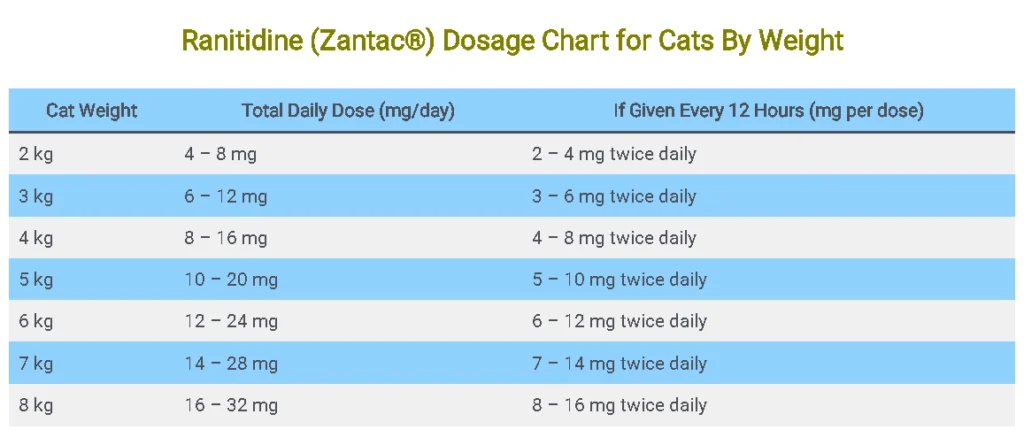
Ranitidine (Zantac®) Dosage Chart for Cats By Weight
| Cat Weight | Total Daily Dose (mg/day) | If Given Every 12 Hours (mg per dose) |
|---|---|---|
| 2 kg | 4 – 8 mg | 2 – 4 mg twice daily |
| 3 kg | 6 – 12 mg | 3 – 6 mg twice daily |
| 4 kg | 8 – 16 mg | 4 – 8 mg twice daily |
| 5 kg | 10 – 20 mg | 5 – 10 mg twice daily |
| 6 kg | 12 – 24 mg | 6 – 12 mg twice daily |
| 7 kg | 14 – 28 mg | 7 – 14 mg twice daily |
| 8 kg | 16 – 32 mg | 8 – 16 mg twice daily |
Administration Notes
- Usual veterinary dosing: 2–4 mg/kg per day
- Another common schedule: ~3.5 mg/kg every 12 hours
- Can be given as oral tablet, liquid, or injection
- Works best when given on an empty stomach
- Always follow veterinarian instructions strictly
Safety Reminder
- Never self-adjust the dose
- Avoid use without veterinary prescription
- Extra caution needed in cats with kidney or liver disease
- Regular monitoring may be required during treatment
How Ranitidine is Given to Cats
Ranitidine is available in different forms such as tablets, capsules, liquid syrup, and injections. Injectable forms are usually given by a veterinarian.
When given at home, liquid forms should be measured carefully using a proper dosing syringe or measuring device, not a kitchen spoon.
It works best when given on an empty stomach, usually before the first meal of the day. If vomiting occurs after giving the medicine, a small amount of food may help in some cases (only if advised by a vet).
The medication usually starts working within 1 to 2 hours, but visible improvement may take longer. It is important to complete the full treatment course, even if the cat starts feeling better, to avoid the condition returning.
Side Effects of Ranitidine for Cats
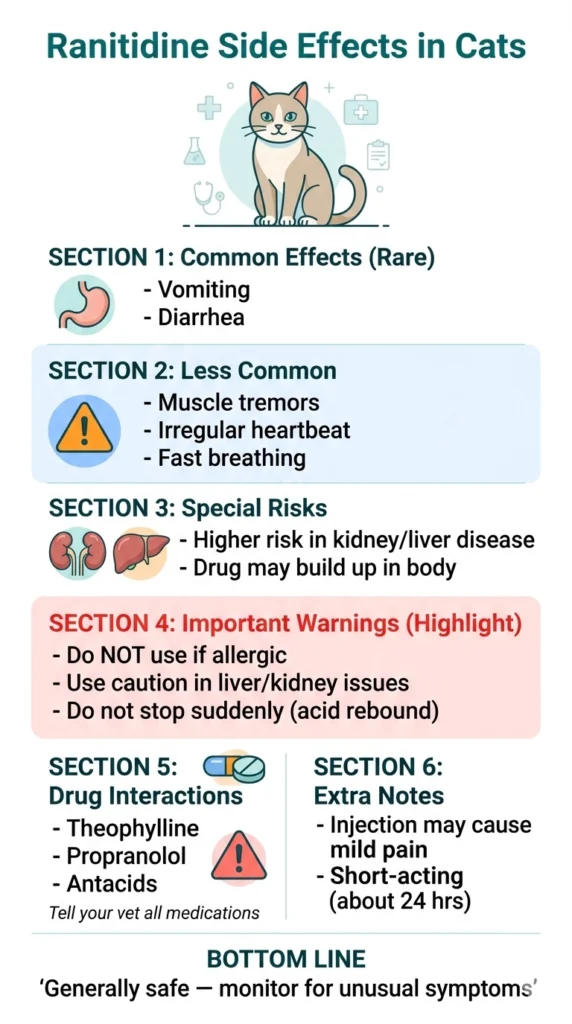
Ranitidine is generally considered safe for cats when used as prescribed by a veterinarian, and side effects are not common. However, in some cases, certain unwanted effects may still occur.
One possible effect is a rebound increase in stomach acid after stopping the medication suddenly. It may also cause an increase in gastrin levels in the blood, which is related to acid production.
In cats with kidney or liver disease, ranitidine may build up in the body more than usual, increasing the risk of side effects.
Some cats may show symptoms such as:
- Vomiting
- Diarrhea
- Muscle tremors
- Irregular heartbeat
- Rapid breathing (tachypnea)
These signs can also appear in many other cat health problems, so it is important to observe your cat carefully and consult a veterinarian if anything unusual occurs.
In rare cases, cats may experience discomfort or reactions if they are sensitive to the medication. If a cat has kidney or liver problems, extra caution is needed because the drug may stay longer in the body.
Important Warnings and Precautions
Ranitidine should not be used in cats with known allergy or hypersensitivity to the drug.
It should also be avoided or used carefully in cats with liver or kidney disease, as these conditions can affect how the drug is processed.
Ranitidine may interact with other medicines such as:
- Theophylline
- Propranolol
- Certain antacids
Always inform your veterinarian about any other medications your cat is receiving.
If ranitidine is given by injection, pain at the injection site may sometimes occur.
This medication is short-acting and usually stops working within 24 hours, although effects may last longer in cats with liver or kidney problems.
Risk Factors, Drug Interactions & Monitoring for Ranitidine in Cats
Ranitidine should not be used in cats that are allergic to the drug or to similar medicines such as famotidine or cimetidine.
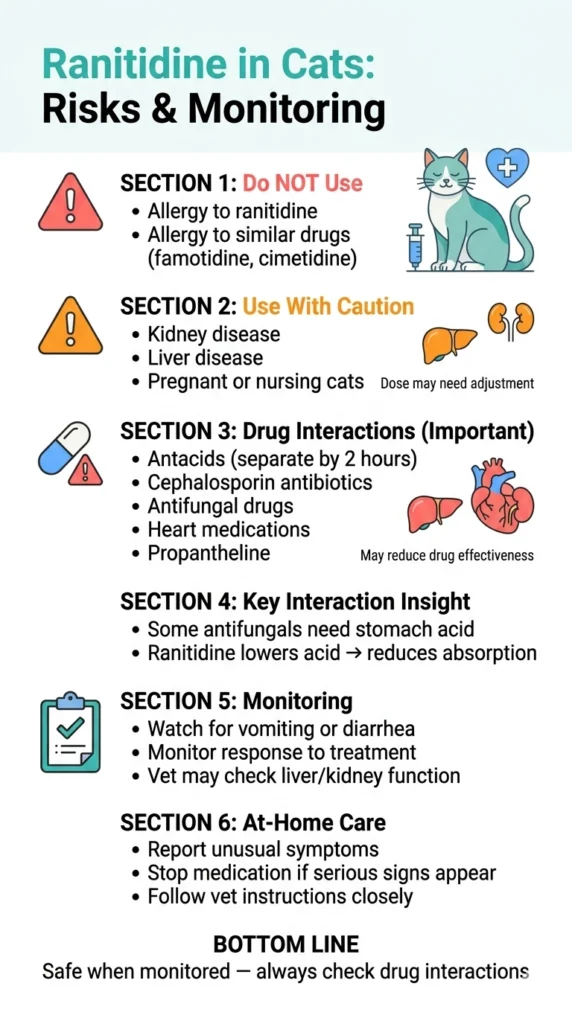
It should be used with extra caution in:
- Pregnant or nursing cats
- Cats with kidney disease
- Cats with liver disease
In these cases, a veterinarian may adjust the dose or closely monitor the cat during treatment.
Drug Interactions with Ranitidine
Ranitidine can interact with several other medications. Caution is needed if your cat is taking:
- Antacids (may reduce absorption of ranitidine)
- Cephalosporin antibiotics
- Certain antifungal medicines
- Certain heart medications
- Propantheline
If a cat is also receiving antacids and ranitidine, they should be given at different times, usually about two hours apart, to avoid reducing effectiveness.
Some antifungal medications like ketoconazole and itraconazole may also become less effective because they need stomach acid for proper absorption, and ranitidine lowers stomach acidity.
Always inform your veterinarian about all medications, supplements, vitamins, or herbal products your cat is taking before starting ranitidine.
Monitoring During Treatment
Veterinarians may schedule follow-up checks to ensure that ranitidine is working properly and not causing side effects.
At home, it is important to watch for any unusual signs such as vomiting, diarrhea, or other changes mentioned in side effects. If any of these occur, the medication should be stopped and a veterinarian should be contacted immediately.
Ranitidine may also require dose adjustment in cats with liver or kidney problems, and in some cases, liver function monitoring may be recommended.
Contraindications Summary
Ranitidine should NOT be given to:
- Cats allergic to ranitidine or similar drugs
It should be used carefully or avoided in:
- Cats with kidney or liver disease
- Pregnant or lactating cats (as advised by veterinarian)
You May Also Like To Read:
- Ketoconazole dosage for cats: Safe Use, Side Effects & More
- Omeprazole Dosage for Cats: Chart, Safe Use, benefits & More
FAQs About Ranitidine (Zantac®) for Cats
What happens if I miss a dose?
If you miss a dose, give it as soon as you remember. However, if it is almost time for the next dose, skip the missed one. Do not give two doses at the same time.
What should I do if my cat gets too much ranitidine?
If an overdose is suspected, contact your veterinarian immediately or go to an emergency clinic. Always keep information ready such as your cat’s weight, symptoms, and the amount given.
How is ranitidine supplied for cats?
Ranitidine is available in different forms such as tablets, capsules, liquid solution, oral powder, and injectable form. Tablets may come in different strengths depending on veterinary use.
How should ranitidine be stored?
Store ranitidine at room temperature in a tightly closed, light-resistant container and keep it away from heat and moisture. Liquid and compounded forms should be stored as directed on the label. Injectable forms may require refrigeration. Always keep all medications out of reach of children and pets.
Is Zantac safe for cats?
Ranitidine (Zantac®) may be used in cats, but only under veterinary supervision. The correct dose and safety depend on the cat’s health condition, so it should never be given without professional guidance.
What if my cat continues to refuse food?
Ongoing loss of appetite may indicate an underlying health problem. If your cat continues not eating, you should contact your veterinarian for proper evaluation.
Are there alternatives to ranitidine for cats?
Yes, depending on the condition, veterinarians may recommend other treatments, acid-reducing medications, or dietary changes that better suit your cat’s needs.
Final Thoughts on Ranitidine (Zantac®) for Cats
Ranitidine (Zantac®) is a useful medication in cats for reducing excess stomach acid and supporting digestive health. It is commonly used to help manage conditions such as gastritis, peptic ulcers, acid reflux, and esophagitis, and in some cases may also help with nausea and other stomach-related discomforts.
By blocking histamine H2 receptors in the stomach, ranitidine lowers acid production, helping protect and heal the stomach lining. It may also support digestive movement and reduce irritation caused by other medications like NSAIDs.
However, despite its benefits, ranitidine is not suitable for every cat. It should be avoided in cats with known allergies and used with caution in cats with kidney or liver disease, pregnant or nursing cats, or when other interacting medications are being used.
Because dosing depends on the cat’s weight and medical condition, the correct Ranitidine (Zantac®) dosage for cats must always be determined by a veterinarian. Regular monitoring is also important to ensure the treatment is working safely and effectively.
Overall, ranitidine can be a helpful part of feline gastrointestinal treatment when used correctly, but it should always be given under professional veterinary guidance to ensure the best and safest results for your cat.