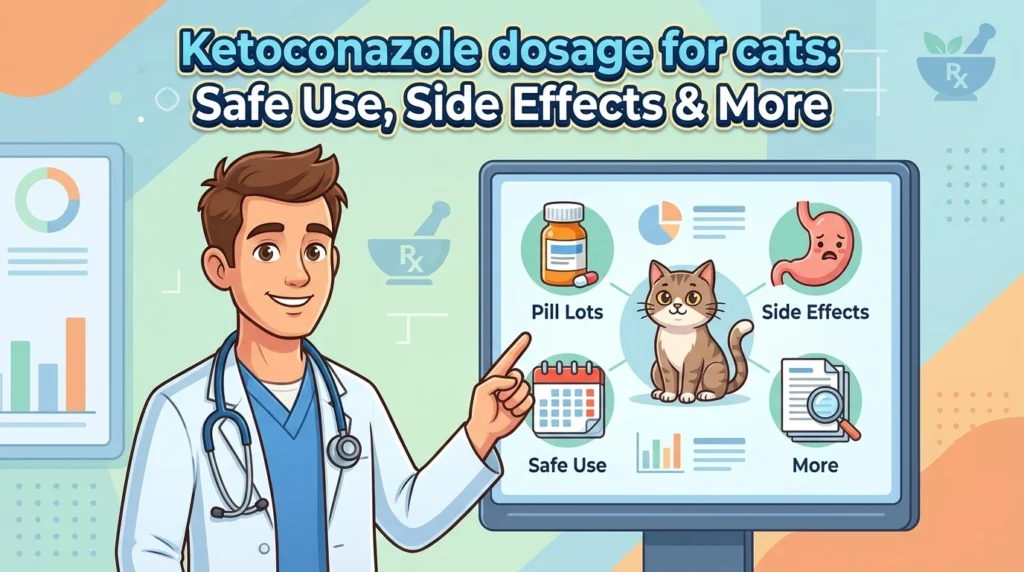
Cats can develop fungal infections that affect their skin, ears, or even internal organs. To treat these infections, veterinarians often prescribe ketoconazole for cats, a widely used antifungal medication. It is commonly known by the brand name Nizoral and is effective against conditions like ringworm and yeast infections.
Ketoconazole works by stopping the growth of fungi, helping your cat recover from infections safely when used correctly. It is available in tablet and topical forms, but it should only be given with a veterinarian’s prescription. The correct ketoconazole dosage for cats depends on your cat’s weight, the type of infection, and overall health, so following your vet’s instructions is very important.
Because this medication can have side effects and may not be suitable for every cat, understanding its proper use, dosage, and safety is essential.


In this guide, you’ll learn about ketoconazole dosage for cats, including uses, side effects, safety tips, and treatment details. A complete guide to help cat owners understand proper ketoconazole use for fungal infections and ensure safe veterinary care.
Key Takeaways
- Ketoconazole for cats is an antifungal medication used to treat skin, ear, and internal fungal infections.
- It works by stopping the growth of fungi and weakening their cell structure so the infection cannot spread.
- It is available in oral tablets and topical forms, depending on the type and severity of infection.
- The correct ketoconazole dosage for cats depends on body weight, infection type, and veterinary guidance.
- Treatment may take several weeks, and improvement is usually gradual.
- Common side effects include vomiting, diarrhea, loss of appetite, and lethargy.
- In some cases, it may affect the liver or hormone levels, so monitoring is important.
- Ketoconazole can interact with other medications, so vets must be informed about all treatments the cat is taking.
- It should only be used under strict veterinary supervision, especially in cats with health conditions.
What is Ketoconazole for Cats?
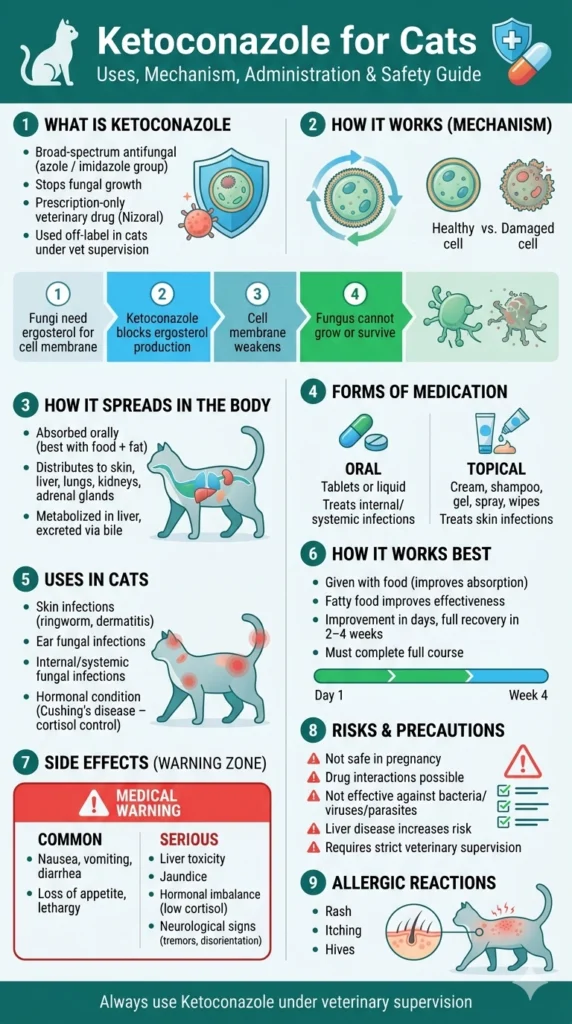
Ketoconazole for cats is a broad-spectrum antifungal medication used to treat fungal infections. It belongs to the azole antifungals (imidazole group) and works by stopping the growth of fungi.
This medication works by damaging the fungal cell membrane. It blocks the production of ergosterol, an essential part of the fungus cell, making the fungus unable to function and grow properly.
When given orally, ketoconazole is absorbed quickly, especially when given with food. It spreads throughout the body and reaches important areas such as the skin, liver, lungs, kidneys, pancreas, and adrenal glands, helping treat both surface and deeper infections. The drug is processed in the liver and mostly removed through bile, with a small amount eliminated by the kidneys.




Ketoconazole is available in oral and topical forms.
- The oral form is used for deeper infections.
- The topical form is used for skin infections and may sometimes be combined with other treatments.
This medication is known by the brand name Nizoral and is a prescription drug, meaning it should only be used under a veterinarian’s guidance. In cats, it is often used as an off-label (extra-label) medication, so it’s important to follow your vet’s instructions carefully.
Ketoconazole may also affect how other drugs work in the body, so proper veterinary supervision is essential.
Uses of Ketoconazole for Cats
Ketoconazole for cats is mainly used to treat fungal infections affecting different parts of the body. It works by stopping the growth and spread of fungi, making it effective for both mild and more serious infections.
Common Uses in Cats
- Fungal Skin Infections
Ketoconazole creams, shampoos, or topical forms are used to treat skin infections such as ringworm and other dermatophyte infections. It helps clear fungi from the skin and supports healing. - Systemic (Internal) Fungal Infections
Oral ketoconazole may be prescribed when infections spread inside the body, affecting areas like the respiratory system, digestive system, bones, or lymph nodes. It is used carefully due to possible side effects. - Ear Fungal Infections
Ketoconazole ear drops or ointments can be used to treat fungal infections in the ears by applying the medication directly to the affected area.
Types of Fungi Treated
Hormonal Use (Special Cases)
In some cases, ketoconazole is also used to help manage Cushing’s disease in cats, a condition where the body produces too much cortisol. It works by blocking cortisol production in the adrenal glands.
Important Notes
- Ketoconazole is not effective against bacteria, viruses, parasites, or worms.
- Veterinarians may prefer other antifungal medications due to the risk of side effects in cats.
- It can also affect how other drugs (like cyclosporine) work in the body.
Overall, ketoconazole for cats is useful for treating a wide range of fungal infections and certain hormonal conditions, but it should always be used under veterinary supervision.
How Does Ketoconazole for Cats Work?
Ketoconazole for cats works by stopping the growth and reproduction of fungi. Fungal cells rely on a substance called ergosterol to maintain the strength and function of their cell membranes. Ketoconazole blocks the production of ergosterol, which weakens the fungal cell membrane and makes the fungus unable to survive properly.
Because of this action, ketoconazole has broad-spectrum antifungal activity, meaning it can treat many types of fungal infections. It is used for conditions such as skin infections (like ringworm), respiratory infections, and systemic infections that spread throughout the body.
How Long Does Ketoconazole Cream Take to Work?
When using ketoconazole topical for cats, improvement can often be seen within a few days, especially in symptoms like itching, redness, and irritation. However, the full treatment usually lasts around 2 to 4 weeks, depending on how severe the infection is.
It is important to follow your veterinarian’s instructions and complete the full course of treatment. If the infection does not improve within a few weeks or gets worse, a veterinarian should recheck the condition and may adjust the treatment.
Ketoconazole Dosage for Cats
The ketoconazole dosage for cats should always be given exactly as prescribed by a veterinarian, because the correct dose depends on your cat’s body weight, type of infection, and how severe the condition is.
Typical Oral Dosage
For most cats, ketoconazole is given in tablet form. The usual dose is:
- 2.5 to 5 mg per pound (5 to 10 mg/kg) of body weight
- In some cases, it may be given once or twice daily, depending on the infection and vet recommendation
For specific conditions like yeast skin infections (Malassezia), the dose may be adjusted to around 5 mg/kg once daily.
Ketoconazole should always be given with food to improve absorption and reduce stomach upset.
Dosage Based on Condition
- Skin fungal infections: treatment usually lasts about 3 weeks
- Bone or deeper infections: may require 2 to 3 months of treatment
- Systemic or chronic infections: may need longer treatment, depending on response
Even if symptoms improve early, treatment should be continued for at least one extra week after recovery, unless the veterinarian advises otherwise.
Topical Ketoconazole Dosage
For mild to moderate skin infections, ketoconazole may be used in topical form (creams or shampoos):
- Applied twice daily as directed by a veterinarian
- Treatment is usually stopped about one week after the skin has healed
- Shampoos may be used for widespread skin infections
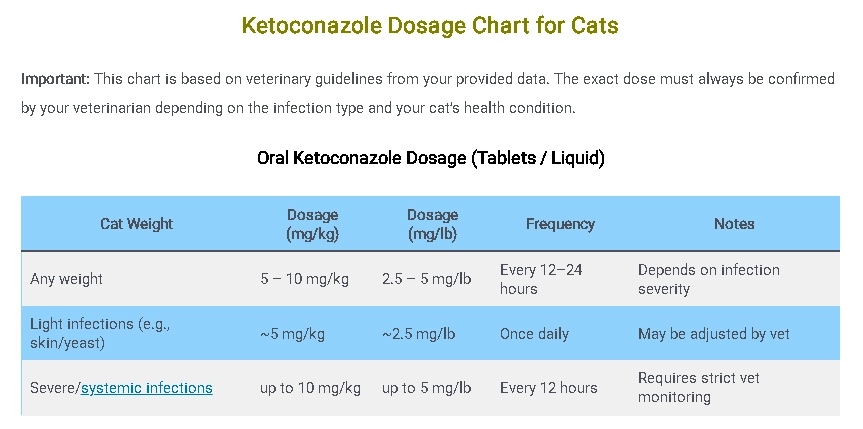
Ketoconazole Dosage Chart for Cats
Important: This chart is based on veterinary guidelines from your provided data. The exact dose must always be confirmed by your veterinarian depending on the infection type and your cat’s health condition.
Oral Ketoconazole Dosage (Tablets / Liquid)
| Cat Weight | Dosage (mg/kg) | Dosage (mg/lb) | Frequency | Notes |
|---|---|---|---|---|
| Any weight | 5 – 10 mg/kg | 2.5 – 5 mg/lb | Every 12–24 hours | Depends on infection severity |
| Light infections (e.g., skin/yeast) | ~5 mg/kg | ~2.5 mg/lb | Once daily | May be adjusted by vet |
| Severe/systemic infections | up to 10 mg/kg | up to 5 mg/lb | Every 12 hours | Requires strict vet monitoring |
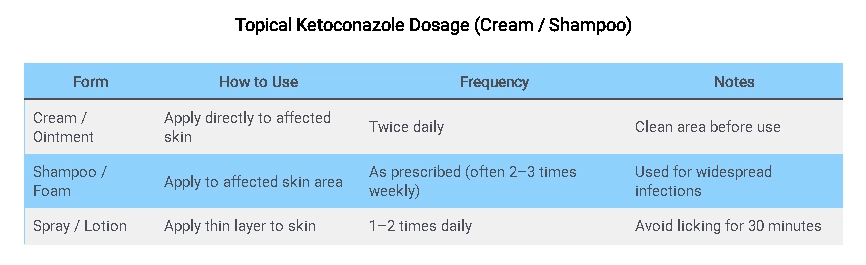
Topical Ketoconazole Dosage (Cream / Shampoo)
| Form | How to Use | Frequency | Notes |
|---|---|---|---|
| Cream / Ointment | Apply directly to affected skin | Twice daily | Clean area before use |
| Shampoo / Foam | Apply to affected skin area | As prescribed (often 2–3 times weekly) | Used for widespread infections |
| Spray / Lotion | Apply thin layer to skin | 1–2 times daily | Avoid licking for 30 minutes |
Treatment Duration (Important)
- Skin infections: ~3 weeks
- Severe fungal infections: 2–3 months
- Continue treatment 1 week after symptoms disappear
Key Reminders
- Always give with food (better absorption)
- Never adjust dosage without a veterinarian
- Complete full treatment even if symptoms improve early
Important Safety Information
- Always follow your veterinarian’s exact instructions
- Do not stop treatment early, even if your cat looks better
- Regular veterinary monitoring may be needed during long treatments
- Possible side effects include vomiting, loss of appetite, diarrhea, or lethargy
Proper dosing is very important to ensure the infection is fully treated and does not return.
How is Ketoconazole Given to Cats?
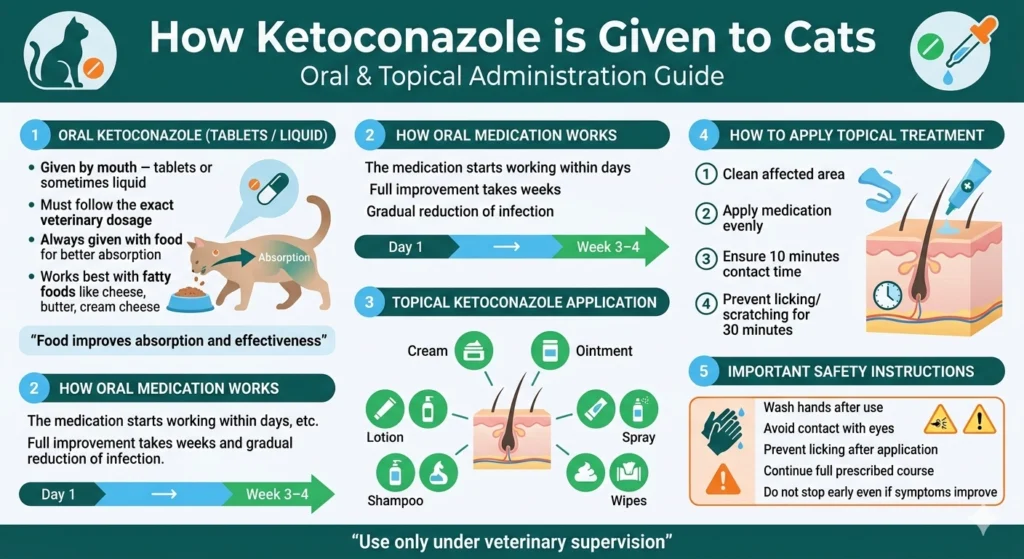
Ketoconazole for cats is usually given by mouth as a tablet. In some cases, it may also be prepared as an oral liquid if your veterinarian prescribes it. It is very important to follow the label instructions carefully and measure each dose exactly as directed.
This medication should always be given with food, and it is often better absorbed when given with fat-containing food such as cheese, butter, or cream cheese. This helps the medicine work more effectively in the body.
Even though some improvement may be seen after a few days, full results usually take a few weeks. The infection should continue improving gradually during treatment.
How to Give Ketoconazole Topical to Cats
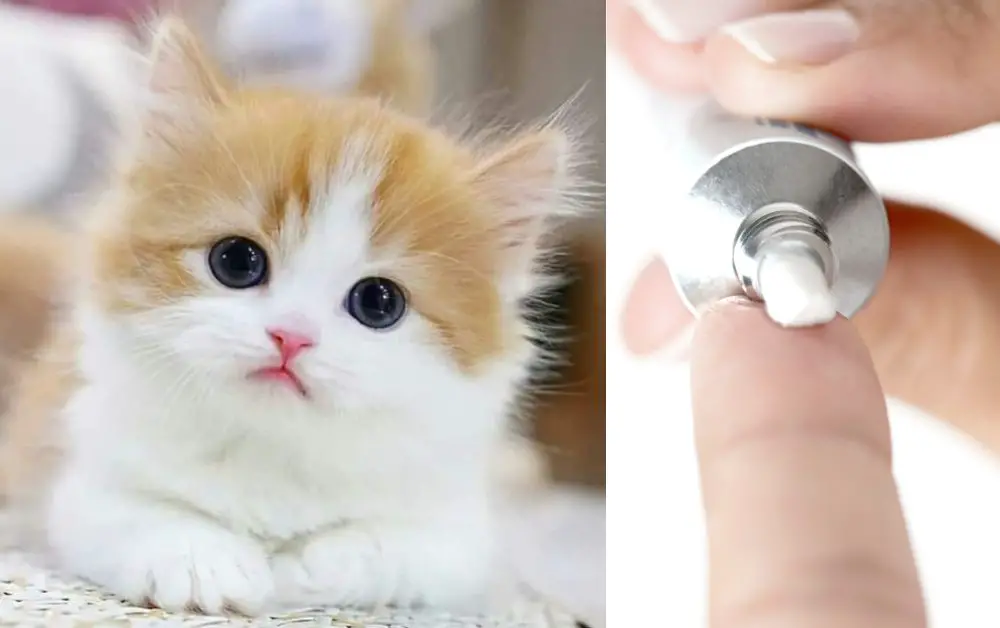
Ketoconazole topical for cats is available in several forms, including cream, ointment, lotion, gel, spray, shampoo, mousse, and wipes. All of these are applied directly to the skin.
Before applying, the affected area should be cleaned as directed by your veterinarian. The medication must stay on the skin for at least 10 minutes of contact time to work properly.
After applying, prevent your cat from scratching or licking the area for at least 30 minutes. This helps ensure the medicine stays effective.
Always wash your hands after applying the medication and avoid contact with your eyes.
It is important to continue treatment for the full duration prescribed by the veterinarian, even if your cat starts to look better earlier, to fully clear the infection.
Side Effects of Ketoconazole for Cats
Ketoconazole for cats can cause side effects in some cats, especially when used for a long time or at higher doses. The most common side effects usually affect the digestive system.
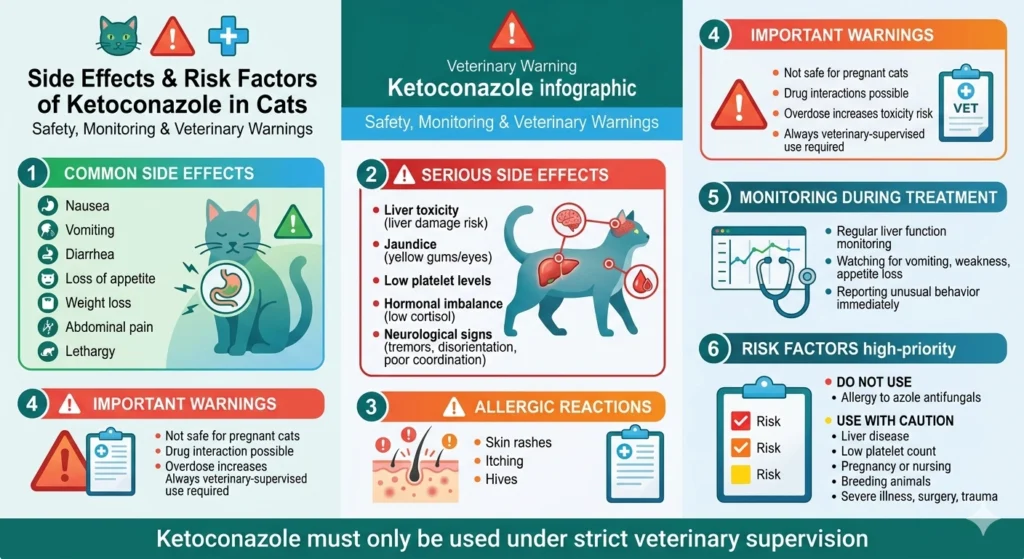
Common Side Effects
- Nausea
- Vomiting
- Diarrhea
- Decreased appetite
- Weight loss
- Abdominal pain
- Lethargy
Serious Side Effects
In some cases, ketoconazole may cause more serious problems, including:
- Liver toxicity (may affect liver function)
- Jaundice (yellowing of gums or eyes)
- Low platelet levels
- Hormonal changes due to reduced cortisol production (may cause weakness or adrenal problems)
- Neurological signs such as tremors, disorientation, or lack of coordination
Allergic Reactions
Some cats may show sensitivity or allergic reactions, which can include:
- Skin rashes
- Itching
- Hives
If any of these occur, veterinary attention is needed immediately.
Important Warnings
- Ketoconazole should not be used in pregnant cats, as it may harm unborn kittens.
- It may interact with other medications, so always inform your veterinarian about any other treatments your cat is receiving.
- Overdose can increase the risk of severe side effects and requires urgent veterinary care.
Monitoring During Treatment
Because ketoconazole can affect the liver and hormones, your veterinarian may recommend regular health monitoring, especially during long-term treatment. Signs like vomiting, loss of appetite, or unusual tiredness should always be reported.
Risk Factors for Ketoconazole Use in Cats
Ketoconazole for cats is not suitable for every cat, and there are several important risk factors that must be considered before using this medication.
Do NOT Use Ketoconazole If:
- The cat is allergic to ketoconazole or any azole antifungal
- There is a known hypersensitivity reaction to the medication
Use WITH EXTREME CAUTION In:
- Pregnant cats, and only if the infection is life-threatening
- Cats (in general) due to the risk of toxic side effects and availability of safer alternatives
Use WITH CAUTION If the Cat Has:
- Liver disease (higher risk of liver-related complications)
- Low platelet count
- Is undergoing stressful conditions such as serious illness, surgery, or trauma
- Is used for breeding, as it may cause temporary infertility
- Is nursing, since the drug can pass into milk
Important Note
Because of these risks, ketoconazole should always be used only under strict veterinary supervision, especially in cats with underlying health conditions.
Drug Interactions of Ketoconazole for Cats
Ketoconazole for cats can interact with many other medications, which may increase side effects or change how other drugs work in the body. Because of this, it is very important to tell your veterinarian about all medicines, supplements, or herbal products your cat is taking before starting treatment.
Medications That Should Be Used With Caution
Ketoconazole may interact with the following drugs in cats:
- Antacids
- Antiarrhythmics
- Tricyclic antidepressants
- Benzodiazepines
- Calcium channel blockers
- Ciprofloxacin
- Cisapride
- Corticosteroids
- Cyclosporine
- Fentanyl
- Fluoxetine
- H2 blockers
- Hepatotoxic (liver-affecting) drugs
- Ivermectin
- Macrolide antibiotics
- Methadone
- Ondansetron
- Praziquantel
- Proton pump inhibitors
- Sildenafil
- Sucralfate
- Theophylline
- Tramadol
- Trazodone
Important Interaction Effect
- When ketoconazole is used with cyclosporine, it can reduce cyclosporine elimination, leading to higher levels in the body.
- In some cases, veterinarians may use this effect intentionally to lower the required cyclosporine dose.
Topical Ketoconazole
- No known drug interactions have been reported for ketoconazole topical for cats, but veterinary guidance is still important.
Important Safety Notes
- Ketoconazole should not be used with certain drugs that affect stomach acidity (like antacids or H2 blockers) because it needs an acidic environment for proper absorption.
- It may also affect drugs processed by liver enzymes (cytochrome P450), increasing or decreasing their levels.
- Some combinations may increase the risk of heart rhythm problems, liver stress, or drug toxicity.
Key Reminder
Always inform your veterinarian about every medication your cat is taking to avoid harmful interactions and ensure safe treatment.
Brand Names and Supply Information of Ketoconazole for Cats
Ketoconazole for cats is originally a human antifungal medication and is not officially manufactured as a veterinary product.
Brand Names and Other Names
This medication is registered for human use only and is commonly available under the brand name:
- Nizoral® (Janssen)
- Other human topical and oral formulations may also exist
There are no approved veterinary formulations specifically made for animals.
How Ketoconazole Is Supplied
Ketoconazole is commonly available as:
- 200 mg oral tablets
These tablets are the standard form used when veterinarians prescribe ketoconazole for cats.
Managing Treatment Cost
Ketoconazole treatment can become expensive, especially if used for a long time. Some support programs like CareCard may help reduce the cost of medications, making treatment more affordable for pet owners.
Important Note
Even though ketoconazole is a human medication, it is sometimes used in cats under veterinary supervision when needed.
You May Also Like To Read:
- Omeprazole Dosage for Cats: Chart, Safe Use, benefits & More
- CBD Dosage for Cats (Cannabidiol): Safe Use, Benefits & More
FAQs About Ketoconazole for Cats
Are there any side effects of ketoconazole topical?
Yes. Ketoconazole topical for cats may cause:
Redness, itching, or irritation at the application site
Mild decrease in energy or appetite if accidentally ingested
Temporary changes in fur color
Rare but serious reactions include:
Allergic reaction (swelling, rash, difficulty breathing, fever)
If any severe reaction occurs, contact a veterinarian immediately.
How long does ketoconazole cream take to work?
Some cats may show improvement in itching and redness within a few days.
However, full treatment usually takes 2 to 4 weeks, depending on the infection.
If there is no improvement, a veterinarian should reassess the condition.
What if I miss a dose?
Give the missed dose as soon as you remember
If it is almost time for the next dose, skip the missed one
Do NOT give two doses at the same time
What should I do in case of overdose or emergency?
If you suspect an overdose or serious reaction:
Contact your veterinarian immediately
If unavailable, go to an emergency veterinary clinic right away
How do I store ketoconazole?
Store at room temperature in a dry place
Keep away from light and moisture
Keep the container tightly closed
Keep out of reach of children and pets
Is ketoconazole safe for cats?
Topical ketoconazole is generally safer when used correctly.
However, oral ketoconazole may cause side effects, so it must always be used under veterinary supervision.
Can CareCard help with cost?
Yes, CareCard may help reduce the cost of ketoconazole treatment and make long-term therapy more affordable for cat owners.
What infections does ketoconazole treat in cats?
It is used for fungal infections, including:
Ringworm
Yeast infections
Some internal fungal infections
How do I know the correct dose for my cat?
The correct dose depends on:
Your cat’s weight
Type of infection
Severity of the condition
It must always be prescribed by a veterinarian.
Can ketoconazole cause serious side effects?
Yes, in some cases it may affect:
The liver
Digestion (vomiting, diarrhea)
Regular vet check-ups are important during treatment.
Final Thoughts on Ketoconazole for Cats
Ketoconazole for cats is an antifungal medication used to treat different types of fungal infections, including skin, ear, and internal infections. It works by stopping the growth of fungi and helping the body control the infection over time.
This medication is available in tablet and topical forms, but it should only be used under veterinary supervision because the correct dose depends on the cat’s condition, weight, and overall health. In many cases, treatment may continue for several weeks to ensure the infection is fully cleared.
While ketoconazole can be effective, it may also cause side effects and requires careful monitoring, especially during long-term use. Regular veterinary check-ups help ensure the treatment is both safe and successful.
In short, ketoconazole can be a helpful treatment option for fungal infections in cats when used correctly, with proper dosing, monitoring, and guidance from a veterinarian.