When it comes to treating digestive problems in felines, understanding the correct omeprazole dosage for cats is essential for safe and effective care. Omeprazole is a widely used medication that helps reduce stomach acid, making it useful for cats suffering from acid-related issues.
Veterinarians often prescribe omeprazole for cats to manage conditions such as acid reflux, gastritis, vomiting, and stomach ulcers. By lowering excess stomach acid, it helps relieve irritation, reduce discomfort, and support healing in the digestive tract. This is especially helpful in cats experiencing ongoing digestive problems that don’t respond well to other treatments.
Although omeprazole is commonly known in human medicine under the brand name Prilosec, its use in cats is considered off-label and should always be guided by a veterinarian. When used correctly, it is generally safe and well-tolerated, with only mild side effects in most cases. However, it is usually recommended for short-term use to avoid potential risks linked to long-term treatment.


In this guide, you’ll learn everything about omeprazole dosage for cats, including safe dosing by weight, uses for gastritis, ulcers, and acid reflux, side effects, alternatives, and vet-approved safety guidelines to help protect your cat’s digestive health.
Disclaimer: This content is for informational purposes only and should not replace veterinary advice. Always consult your veterinarian especially if your cat has existing health conditions or is taking other medications before giving Omeprazole or adjusting your cat’s dosage.
Key Takeaways
Omeprazole is a proton pump inhibitor used in cats to reduce stomach acid and support healing of the digestive tract.
- It blocks the stomach’s acid-producing pump (H+/K+ ATPase), reducing acid production for up to 24 hours after a single dose.
- It is commonly used in cats for gastritis, stomach ulcers, esophagitis, and acid reflux.
- The typical dosage range is 0.5–1 mg/kg, but the exact dose must always be determined by a veterinarian.
- It is usually given orally on an empty stomach, and treatment duration depends on the cat’s condition.
- Side effects are generally mild but may include vomiting, diarrhea, decreased appetite, and gas.
- Caution is needed in cats with liver disease, kidney disease, or medication interactions.
- Long-term use is not recommended unless closely monitored by a veterinarian.
- If omeprazole is not suitable, alternatives include other PPIs, H2 blockers, antacids, and protective agents like sucralfate.
What is omeprazole for cats?
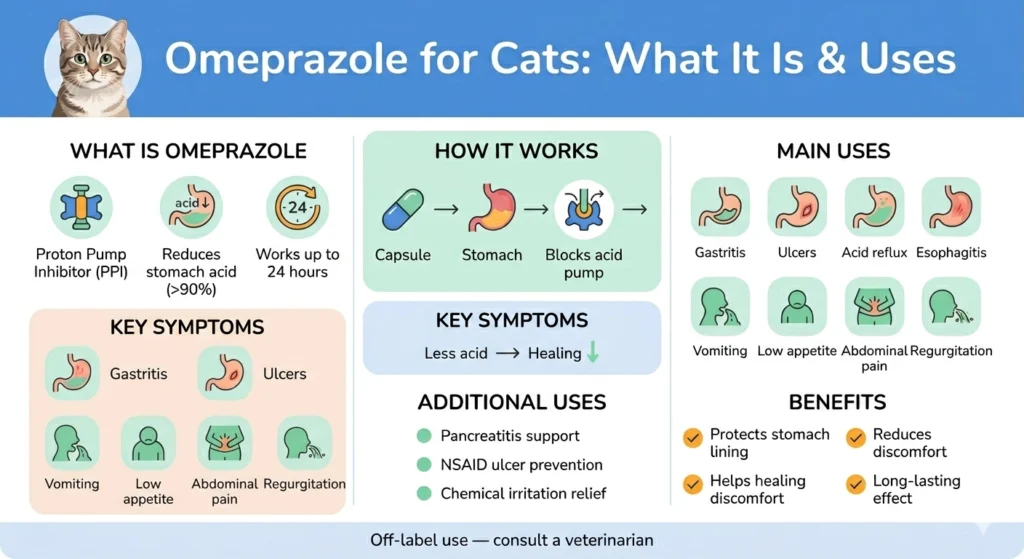
Omeprazole is a proton pump inhibitor (PPI) used in cats to reduce the production of stomach acid. It works by blocking the H+/K+ ATPase enzyme (proton pump) in the stomach’s parietal cells, which are responsible for releasing gastric acid needed for digestion.



Once given, omeprazole reaches the acid-producing areas of the stomach and becomes active in the acidic environment. It then binds to the proton pump and inhibits acid production by over 90%, providing strong and effective acid suppression. A single dose can reduce stomach acid for up to 24 hours, helping protect the stomach and esophagus from irritation and damage.
This medication is especially useful in cats with acid-related conditions such as gastritis, ulcers, and esophagitis. By lowering stomach acid, it helps reduce discomfort and allows the stomach lining to heal. It may also be used when other acid-reducing medications are not effective.
Omeprazole is processed in the liver (via cytochrome P450) and is mainly excreted in urine, with a smaller amount passed in feces. In veterinary medicine, it is commonly used off-label, meaning it is prescribed by veterinarians for cats even though it is not specifically approved for them.
Uses of omeprazole for cats
Omeprazole is mainly used in cats to reduce stomach acid production, which helps protect the digestive tract and supports healing in acid-related conditions. By blocking the secretion of hydrochloric acid, it creates a less acidic environment in the stomach, allowing damaged tissues to recover.
Common uses in cats
Omeprazole for cats is commonly prescribed for the following conditions:
- Gastric or gastroduodenal ulcers
- Gastritis (inflammation of the stomach lining)
- Gastroesophageal reflux (acid reflux)
- Esophagitis (inflammation of the esophagus)
Gastritis in cats
Gastritis is one of the most common reasons for using omeprazole. It can occur due to:
- Liver or kidney disease
- Ingestion of foreign objects
- Stress, toxins, or allergies
- Bacterial infections (such as Helicobacter)
This condition affects the stomach lining and may cause vomiting, loss of appetite, and abdominal pain. In some cases, cats may vomit yellow fluid due to bile. By reducing stomach acid, omeprazole helps relieve irritation and allows the stomach lining to heal.
Ulcers and their management
Although stomach ulcers are less common in cats, they can occur due to serious underlying issues such as infections, toxins, medications (like NSAIDs), or foreign bodies.
Symptoms may include:
- Vomiting (sometimes with blood)
- Black or tarry stools
- Weight loss and appetite loss
- Diarrhea or anemia
Omeprazole is often used to reduce acid levels, which helps protect the stomach and supports ulcer healing once the underlying cause is identified.
Esophagitis and acid reflux
Esophagitis is more common in cats and is usually caused by acid reflux. This happens when stomach acid flows back into the esophagus, leading to irritation.
Signs may include:
- Regurgitation
- Difficulty or pain when swallowing
- Excessive salivation
Omeprazole helps by lowering acid exposure, making it easier for the esophagus to heal. It is often used when other medications are not effective.
Additional supportive uses
Omeprazole may also be used in other situations where reducing stomach acid is beneficial, including:
- Chronic pancreatitis (to reduce digestive irritation)
- Risk of ulcers from long-term NSAID use
- Stomach irritation caused by harmful substances or chemicals
Although it is not an anti-vomiting drug, it can help relieve mild nausea and stomach discomfort by controlling acid levels.
How it helps
Unlike simple antacids, omeprazole works for a longer duration by reducing acid production continuously, even between meals. This prolonged effect gives the stomach and esophagus more time to heal and recover from irritation.
Omeprazole dosage for cats
Omeprazole is used in cats to reduce stomach acid, and the dosage must always be carefully adjusted based on body weight and veterinary guidance.
Standard dosage in cats
The commonly recommended dose is:
- 0.25–0.5 mg per lb
- 0.5–1 mg per kg of body weight
- Usually given once daily, though in some cases veterinarians may recommend dosing every 12 hours depending on the condition being treated.
For an average 10 lb cat, the typical dose is around 5 mg per administration.
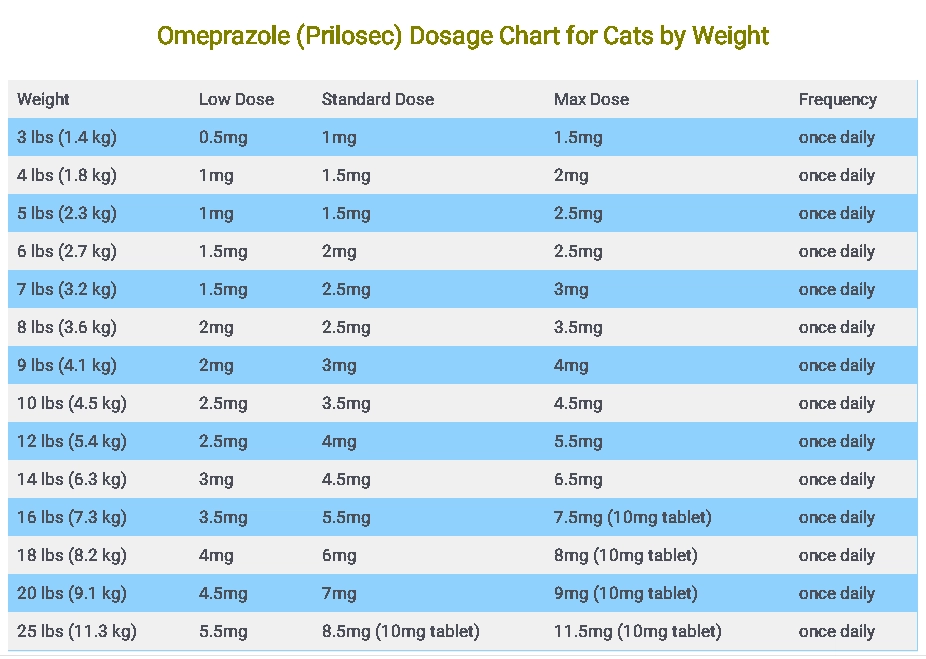
Omeprazole (Prilosec) Dosage Chart for Cats by Weight
| Weight | Low Dose | Standard Dose | Max Dose | Frequency |
| 3 lbs (1.4 kg) | 0.5mg | 1mg | 1.5mg | once daily |
| 4 lbs (1.8 kg) | 1mg | 1.5mg | 2mg | once daily |
| 5 lbs (2.3 kg) | 1mg | 1.5mg | 2.5mg | once daily |
| 6 lbs (2.7 kg) | 1.5mg | 2mg | 2.5mg | once daily |
| 7 lbs (3.2 kg) | 1.5mg | 2.5mg | 3mg | once daily |
| 8 lbs (3.6 kg) | 2mg | 2.5mg | 3.5mg | once daily |
| 9 lbs (4.1 kg) | 2mg | 3mg | 4mg | once daily |
| 10 lbs (4.5 kg) | 2.5mg | 3.5mg | 4.5mg | once daily |
| 12 lbs (5.4 kg) | 2.5mg | 4mg | 5.5mg | once daily |
| 14 lbs (6.3 kg) | 3mg | 4.5mg | 6.5mg | once daily |
| 16 lbs (7.3 kg) | 3.5mg | 5.5mg | 7.5mg (10mg tablet) | once daily |
| 18 lbs (8.2 kg) | 4mg | 6mg | 8mg (10mg tablet) | once daily |
| 20 lbs (9.1 kg) | 4.5mg | 7mg | 9mg (10mg tablet) | once daily |
| 25 lbs (11.3 kg) | 5.5mg | 8.5mg (10mg tablet) | 11.5mg (10mg tablet) | once daily |
Available forms and strengths
Omeprazole for cats may come in different forms:
- Tablets or capsules (10 mg, 20 mg, or 40 mg strengths)
- Oral suspension (2 mg/ml concentration)
- Oral paste (high-strength formulations not suitable for cats, such as those designed for horses)
Tablets or capsules are most commonly used in cats, and lower strengths (like 10 mg) are preferred to allow accurate dosing. In some cases, capsules can be opened and adjusted into smaller doses when needed.
How to give omeprazole to your cat
- Given by mouth on an empty stomach, usually before the morning meal
- Should not be crushed or chewed
- If vomiting occurs, it may be given with food next time
- Oral suspension should be shaken well before use and measured with a syringe
Treatment duration and safety
- Always follow the veterinarian’s prescribed duration
- Do not stop early without veterinary advice
- Missing a dose should be corrected only if it is not close to the next scheduled dose (never double dose)
- Effects usually begin within 1–2 days, with gradual improvement afterward
Important considerations
- Omeprazole is used off-label in cats, meaning it is not specifically approved but is commonly prescribed in veterinary medicine
- Dosage may vary depending on the severity of conditions such as ulcers, gastritis, or esophagitis
- In some cases, compounded formulations may be used for more precise long-term dosing
Veterinarians may adjust dosage or frequency based on the cat’s health condition, making individualized treatment essential for safe and effective results.
Is omeprazole safe for cats?
Omeprazole can be safe for cats when used for short-term treatment (generally up to 4 weeks or less) and only under veterinary supervision. It is commonly prescribed to reduce stomach acid, but it is not suitable for every cat.
When omeprazole is considered safe
- Safe for short-term use (usually up to 4 weeks)
- May be used in cats with acid-related stomach issues when prescribed by a veterinarian
- Can be used during pregnancy or lactation if the veterinarian approves
When omeprazole is NOT safe
Omeprazole should not be given in certain cases:
- Cats with allergy or hypersensitivity to omeprazole or its ingredients
- Cats with kidney disease or liver disease (dose may need adjustment or avoidance)
- Cats taking certain medications due to interaction risks
Drug interactions (important safety concern)
Omeprazole may interact with several medications, including:
- Diazepam, alprazolam, midazolam
- Warfarin, clopidogrel
- Digoxin
- Cyclosporine
- Ketoconazole, itraconazole, erythromycin, clarithromycin
- Phenytoin, carbamazepine
- Diltiazem, verapamil, nifedipine, felodipine
- Rifampin, ampicillin, iron supplements
- Cisapride, lidocaine, quinidine, lovastatin, terfenadine
It should also be used carefully with:
- (NSAIDs) Non-Steroidal Anti-Inflammatory Drugs (may increase stomach damage risk)
- Steroids (like prednisone) (may increase digestive side effects)
- Certain antibiotics (may affect absorption)
Possible effects on the body
Long-term or improper use may affect:
- Liver enzyme levels
- Serum gastrin levels
- Blood clotting tests (prothrombin time)
- Nutrient absorption, especially vitamin B12 and magnesium
Precautions for cat safety
- Always give only as prescribed by a veterinarian
- Use caution with long-term treatment
- Do not stop suddenly without veterinary advice
- Monitor for diarrhea or worsening digestive signs
- Cats with liver disease may need adjusted dosing
Side effects of omeprazole for cats
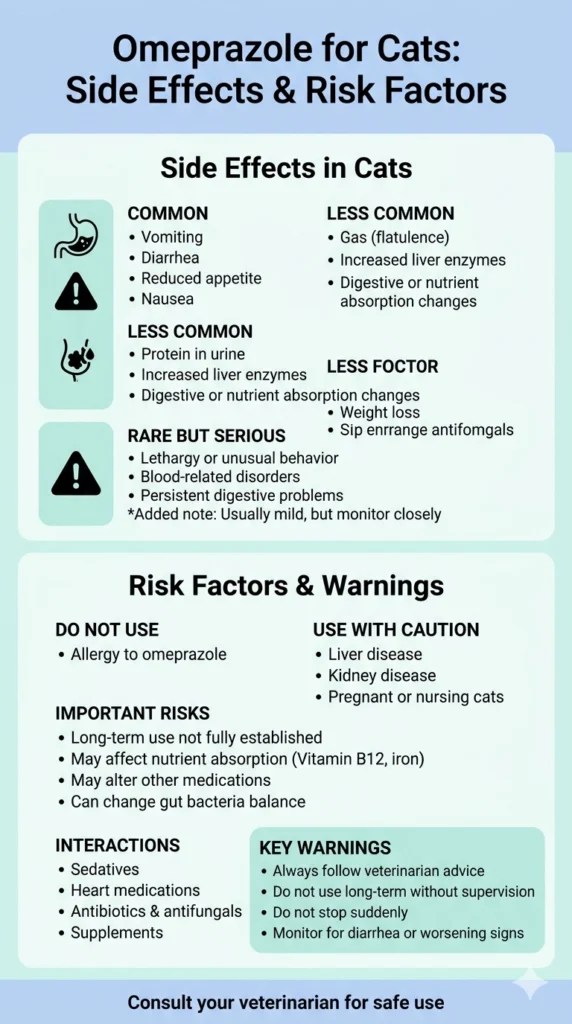
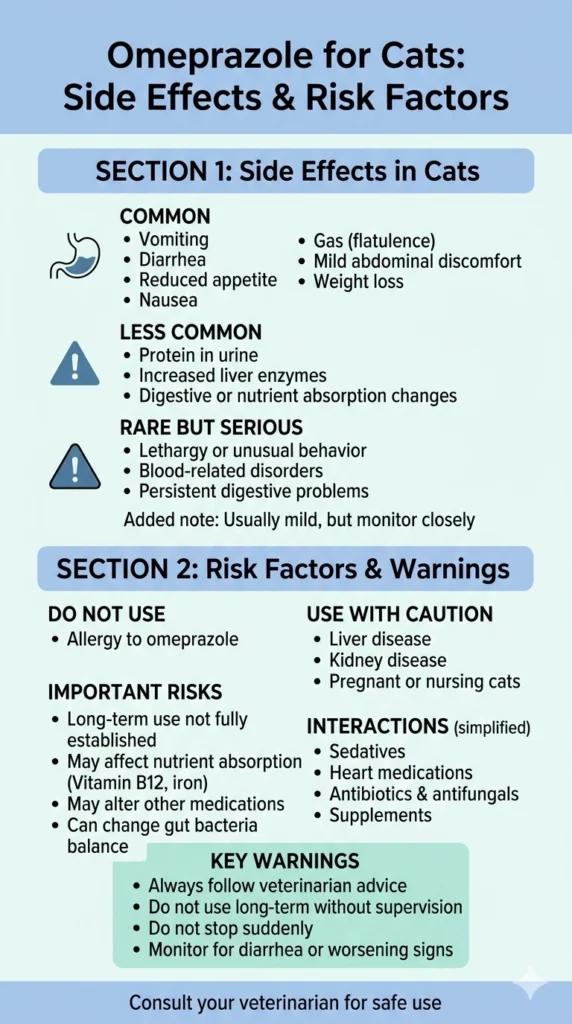
Omeprazole is generally well tolerated in cats, and side effects are uncommon when it is used correctly and under veterinary supervision. However, when side effects do occur, they mainly affect the digestive system, and in rare cases may involve other body systems.
Common side effects in cats
The most frequently observed side effects include:
- Vomiting
- Diarrhea or loose stools
- Reduced appetite (anorexia)
- Nausea (sickness)
- Flatulence (gas)
- Mild abdominal discomfort (colic)
- Weight loss
These signs are usually mild but should still be monitored, especially at the start of treatment.
Less common but possible effects
In some cases, cats may also experience:
- Proteinuria (protein in urine)
- Increased liver enzyme levels in blood
- Temporary changes in digestion or nutrient absorption
These effects are not always dangerous but should be reported to a veterinarian if detected during testing or treatment.
Rare side effects
Although uncommon, more serious reactions may include:
- Neurological changes (such as lethargy or unusual behavior)
- Blood-related disorders
- Persistent gastrointestinal upset
Important safety considerations
- Side effects are more likely if omeprazole is used incorrectly or without veterinary guidance
- Cats with liver or kidney disease may be more sensitive, since these organs process and eliminate the drug
- Long-term safety in cats is not fully established, so extended use should be carefully monitored
Drug-related interactions and absorption effects
Omeprazole may affect how other medications work in cats:
- It can slow the breakdown of some drugs, increasing side effect risk (e.g., diazepam, cyclosporine, warfarin, digoxin)
- It can reduce absorption of certain medications and nutrients (e.g., ampicillin, ketoconazole, iron, vitamin B12)
- It may alter blood test results, including liver enzymes and other parameters
Key warning
Some cats may not show immediate reactions but can develop sensitivity over time, so continuous monitoring throughout treatment is important.
Are there any risk factors for omeprazole in cats?
Omeprazole should be used carefully in cats because certain health conditions and situations can increase the risk of side effects or complications.
Do NOT use omeprazole in:
- Cats that are allergic to omeprazole or similar drugs
Use WITH CAUTION in:
- Cats with liver disease
- Cats with kidney disease
- Cats that are pregnant or nursing
In these cases, a veterinarian may adjust the dose or avoid the medication depending on the cat’s condition.
Important safety risks and effects
Although omeprazole is generally considered safe, it may still cause important changes in the body:
Gut microbiome changes
Omeprazole can alter the natural balance of gut bacteria in cats:
- Decreases Helicobacter species
- Increases bacteria like Lactobacillus, Streptococcus, and Enterococcus
- May reduce Faecalibacterium, a beneficial anti-inflammatory bacteria
Possible risks associated with these changes:
- Diarrhea
- Increased risk of gastrointestinal infections
- Changes in normal gut bacterial balance
- Worsening intestinal irritation if used with NSAIDs
Other important warnings
- Do not use for long periods unless prescribed by a veterinarian
- Do not stop suddenly, as this may cause rebound acid production
- Use caution when combined with NSAIDs or steroids, as it may increase digestive side effects
- Monitor for worsening gastrointestinal signs like diarrhea or discomfort
- Cats with liver disease may need adjusted dosing
Omeprazole alternatives for cats
Omeprazole is often the preferred treatment for stomach ulcers and acid-related problems in cats. However, if it is not suitable or cannot be used, veterinarians may choose other medications in a step-by-step alternative order based on your data.
1. Other proton pump inhibitors (PPIs)
Veterinarians may first consider switching to other PPIs, which work in a similar way by blocking stomach acid production:
- Pantoprazole
- Lansoprazole
- Esomeprazole
According to veterinary guidance (ACVIM), PPIs are generally the best class of drugs for ulcers and esophagitis in cats, although some alternatives may be slightly less effective than omeprazole.
2. Histamine 2 receptor antagonists (H2 blockers)
If PPIs are not used, H2 blockers are another option for reducing stomach acid:
- Famotidine (Pepcid)
- Ranitidine (less commonly used now)
These medications also reduce acid production but are generally considered less powerful than PPIs.
3. Antacids
Antacids help by neutralizing stomach acid already present in the stomach.
- Can be given with meals
- Less effective for ulcers and esophagitis compared to PPIs or H2 blockers
- May be used alongside omeprazole if timed correctly (2 hours before or after dosing)
4. Sucralfate (protective therapy)
Sucralfate works differently from acid-reducing drugs. Instead of lowering acid, it:
- Reacts with stomach acid
- Forms a protective coating over the stomach lining
- Helps prevent and heal ulcers
Key takeaway
Omeprazole remains the first-choice acid suppressant in cats, but alternatives follow this order:
Other PPIs → H2 blockers → Antacids → Sucralfate (protective option)
You May Also Like To Read:
- CBD Dosage for Cats (Cannabidiol): Safe Use, Benefits & More
- Cephalexin Dosage for Cats: Chart, Safe Use, Benefits & More
FAQs About Omeprazole for Cats
Omeprazole is commonly used in cats for acid-related stomach conditions. Below are the most important and refined FAQs based on veterinary guidance:
How much omeprazole can a cat take?
For an average cat, a common dose is around 0.5–1 mg/kg, which may equal about 5 mg for a 10 lb cat, often given every 12 hours. Exact dosing must always be confirmed by a veterinarian, and in some cases, compounded formulations may be used for accuracy.
How fast does omeprazole start working in cats?
Omeprazole begins reducing stomach acid within 1–2 days, but full improvement of ulcers or inflammation may take longer depending on the condition.
Can omeprazole be used long term in cats?
It is generally recommended for short-term use (usually up to 4 weeks). Long-term use should only be done under veterinary supervision due to possible effects on digestion and nutrient absorption.
What if I miss a dose?
If a dose is missed, give it when remembered. If it is close to the next dose, skip the missed one. Never double the dose.
Can cats overdose on omeprazole?
Serious overdose is rare, but very high doses may still cause digestive upset. If overdose is suspected, contact a veterinarian immediately.
Does omeprazole help with vomiting?
It may help if vomiting is caused by excess stomach acid, but it is not a direct anti-vomiting medication.
Why do vets prescribe omeprazole?
Veterinarians prescribe it mainly to:
Treat or prevent stomach ulcers
Manage gastritis and esophagitis
Reduce acid irritation in the stomach and esophagus
How should omeprazole be stored?
Store tablets or capsules in a tightly closed container, protected from light, at room temperature (below 30°C / 86°F), and keep away from children and pets.
What should I do in an emergency?
If an overdose or unusual reaction is suspected, contact a veterinarian or emergency clinic immediately with details of the cat’s weight and symptoms.
Final Thoughts
Omeprazole plays an important role in managing stomach acid–related problems in cats, especially conditions like ulcers, gastritis, and esophagitis. By significantly reducing acid production, it helps protect the stomach and esophagus, allowing irritated or damaged tissues to heal more effectively.
However, while it is widely used in veterinary medicine, omeprazole should always be given only under veterinary guidance, with proper attention to dosage, duration, and the cat’s overall health condition. Cats with liver or kidney issues, or those on certain medications, may require special caution or alternative treatments.
Although generally well tolerated, monitoring is important because side effects, drug interactions, and long-term risks can occur in some cases. If omeprazole is not suitable, veterinarians may choose other acid-reducing or protective options based on the cat’s needs.
Overall, when used correctly and responsibly, omeprazole is a valuable and effective part of feline gastrointestinal care, helping improve comfort and support recovery in acid-related digestive disorders.