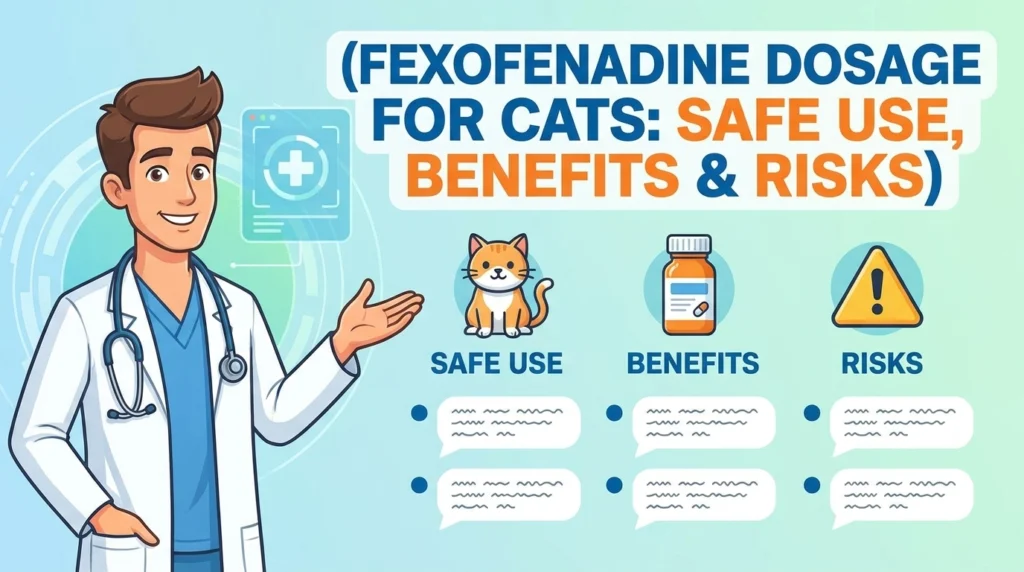
Fexofenadine is used to help manage allergy symptoms in cats such as itching, skin irritation, and mild swelling. Fexofenadine (also known by brand names like Allegra® and Telfast®) is a second-generation antihistamine that may be prescribed by veterinarians to reduce allergic reactions in cats.
This medicine works by blocking histamine (H1 receptors) in the body. Histamine is a chemical released during allergies that causes itching, redness, and discomfort. By stopping histamine activity, fexofenadine helps relieve these symptoms and makes cats more comfortable.
Fexofenadine is usually considered less sedating compared to older antihistamines, which means it is less likely to make cats sleepy. However, its use in cats is off-label, meaning it is not officially approved for animals but can still be prescribed safely by a veterinarian.




It is very important to use only plain fexofenadine products. Do NOT use combination medicines like Allegra-D®, because they contain pseudoephedrine, which is toxic to cats. Some liquid human versions may also contain xylitol, which is dangerous for pets.
Because correct dosing is essential for safety, the fexofenadine dosage for cats should always be given only under veterinary guidance.
Fexofenadine Dosage for Cats guide explaining safe use, benefits, and proper dosing (10–15 mg per cat once daily). Learn how this antihistamine helps relieve itching and allergies in cats, along with safety warnings, side effects, and veterinary guidance for effective treatment.
Disclaimer: This content is for informational purposes only and should not replace veterinary advice. Always consult your veterinarian before giving Fexofenadine or adjusting your cat’s dosage.




Key Takeaways: Fexofenadine for Cats
- Fexofenadine is a second-generation antihistamine used to help manage allergy symptoms in cats, especially itching and skin irritation.
- It works by blocking histamine (H1 receptors), which reduces common allergic reactions like itching, sneezing, and discomfort.
- This medication is an off-label (extra-label) drug in cats, meaning it is not officially approved for animals but may be prescribed by a veterinarian when needed.
- The fexofenadine dosage for cats is not fully standardized, so correct dosing must always be determined by a veterinarian.
- It may be given in tablet or liquid form, but some products (like those containing xylitol or pseudoephedrine) are unsafe for cats and must be avoided.
- Fexofenadine is generally less sedating compared to older antihistamines.
- Regular veterinary supervision and monitoring are important to ensure safety and effectiveness.
- Always watch for side effects or unusual behavior and contact a veterinarian if anything abnormal occurs.
What is Fexofenadine for Cats?
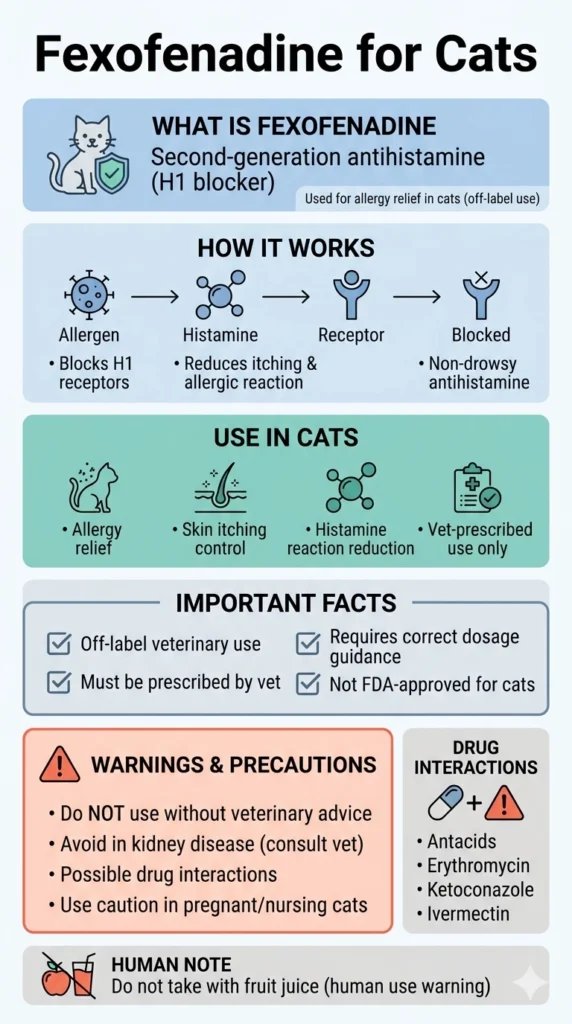
Fexofenadine is a second-generation antihistamine that is used to help relieve allergy symptoms and other histamine-related conditions in cats. It is mainly used to reduce discomfort caused by allergic reactions.
This medication is considered an off-label (extra-label) drug in veterinary medicine, meaning it has not been officially approved by the U.S. Food and Drug Administration (FDA) or Health Canada for use in animals. Even so, veterinarians may prescribe it when needed. In these cases, it is very important to follow the veterinarian’s instructions carefully, because the usage and dosage may be different from standard label directions.
In humans, fexofenadine is used to treat allergy symptoms such as hay fever, as well as skin itching and hives (chronic idiopathic urticaria) in adults and children 6 years and older.
Fexofenadine works by selectively blocking histamine-1 (H1) receptors found in the body, but it does not significantly affect the central nervous system. Because of this, it is less likely to cause drowsiness compared to older antihistamines.
Histamine is a chemical released by mast cells when the body reacts to allergens. It causes symptoms such as itching, sneezing, watery eyes, and runny nose. Fexofenadine works by blocking histamine from attaching to its receptors, which helps reduce these allergy symptoms.
There are many brands and forms of fexofenadine available, and it was FDA-approved in 1996.
Warnings
Do not take fexofenadine with fruit juice (such as apple, orange, or grapefruit).
Fexofenadine should only be used in cats when it is prescribed by a veterinarian. It is not suitable for every cat, and certain health conditions or risks must be considered before giving this medicine.
Before Giving Fexofenadine
Do NOT use fexofenadine in cats if they have a known allergy or hypersensitivity to the drug.
Use extra caution and consult a veterinarian if your cat has:
- Kidney disease
- A history of drug sensitivities or reactions
Fexofenadine is generally not approved for use in pregnant or nursing cats, so veterinary guidance is essential in these cases.
Older animals or sensitive pets may react more strongly, so monitoring is important throughout treatment.
Some formulations may contain phenylalanine, which can be harmful in animals with phenylketonuria (PKU).
Fexofenadine may also interact with other medications. Always tell your veterinarian if your cat is taking other drugs such as:
- Antacids
- Erythromycin
- Ketoconazole
- Ivermectin
Dosing Information for Cats
In veterinary use, fexofenadine dosing is still limited, and in cats it is not well studied. However, some reports suggest the following total dose:
- Cats: 10 to 15 mg per cat, given orally once daily
Important notes:
- Dose should always be confirmed by a veterinarian
- Treatment should be based on the cat’s condition and response
- The medication may be given with or without food
- If your cat shows stomach upset, giving it with food may help
Duration of Treatment
- A minimum trial of about 2 weeks is often needed to see if the medication is effective
- Even if symptoms improve, the full treatment plan should be completed unless your veterinarian advises otherwise
- Stopping early may cause symptoms to return
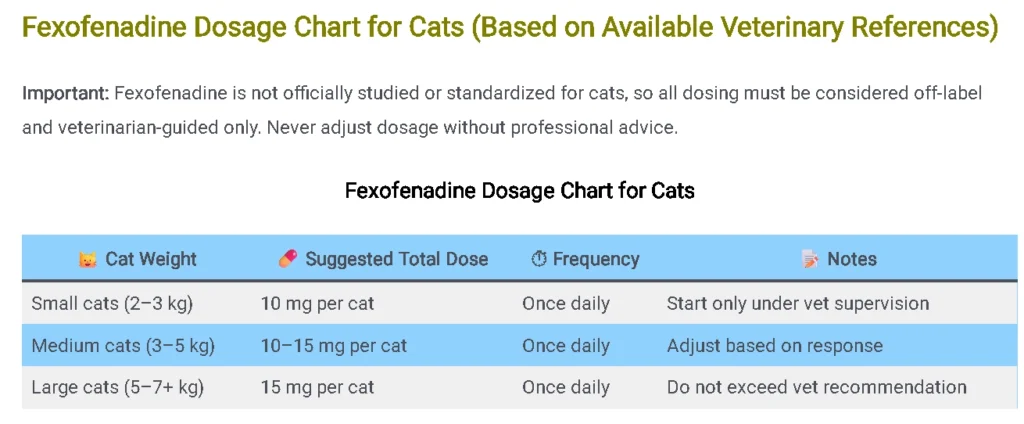
Fexofenadine Dosage Chart for Cats (Based on Available Veterinary References)
Important: Fexofenadine is not officially studied or standardized for cats, so all dosing must be considered off-label and veterinarian-guided only. Never adjust dosage without professional advice.
Fexofenadine Dosage Chart for Cats
| 🐱 Cat Weight | 💊 Suggested Total Dose | ⏱ Frequency | 📝 Notes |
|---|---|---|---|
| Small cats (2–3 kg) | 10 mg per cat | Once daily | Start only under vet supervision |
| Medium cats (3–5 kg) | 10–15 mg per cat | Once daily | Adjust based on response |
| Large cats (5–7+ kg) | 15 mg per cat | Once daily | Do not exceed vet recommendation |
Key Dosage Notes (Very Important)
- Fexofenadine dosage for cats is not officially standardized
- Some cats may require trial and adjustment by a veterinarian
- Always give once daily unless your vet advises otherwise
- Can be given with or without food
- If vomiting occurs, try giving with food next time
- A minimum 2-week trial period is often needed to evaluate effectiveness
- Never combine with unsafe products like Allegra-D® (pseudoephedrine) or xylitol-containing liquids
How to Give Fexofenadine to Cats
Fexofenadine can be given in different forms depending on what your veterinarian prescribes:
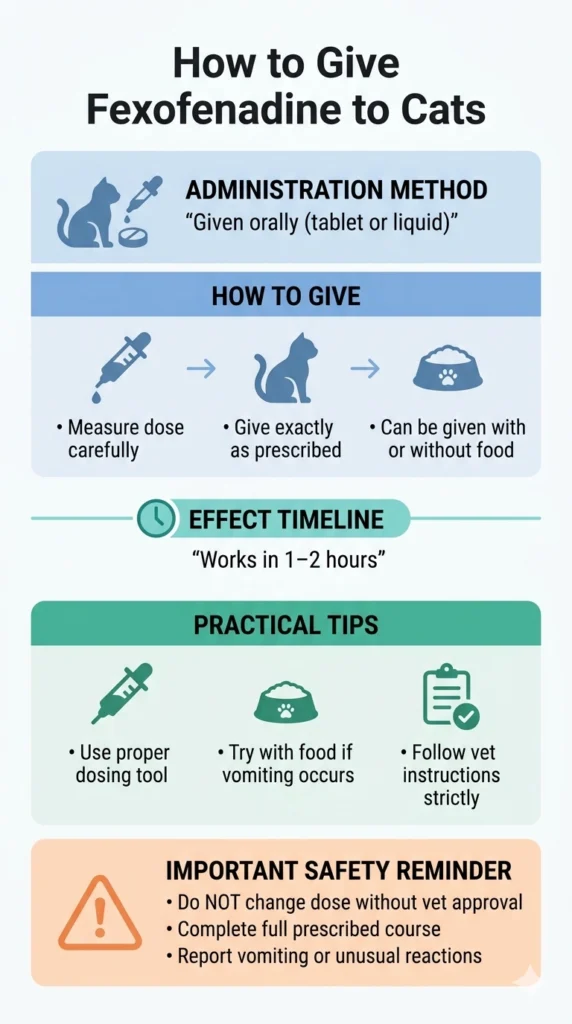
- Given orally (by mouth)
- Available in tablet or liquid form
Administration tips:
- Measure liquid doses carefully using a proper dosing tool
- Give exactly as prescribed by your veterinarian
- Can be given with food or on an empty stomach
- If vomiting occurs, try giving with food next time
- Effects may begin within 1–2 hours after giving the dose
Important Safety Reminder
- Never adjust the dose without veterinary approval
- Always complete the prescribed course unless told otherwise
- Contact your veterinarian if vomiting, worsening symptoms, or unusual reactions occur
Possible Side Effects in Cats
While fexofenadine is generally considered safe when prescribed correctly, some cats may still experience side effects.
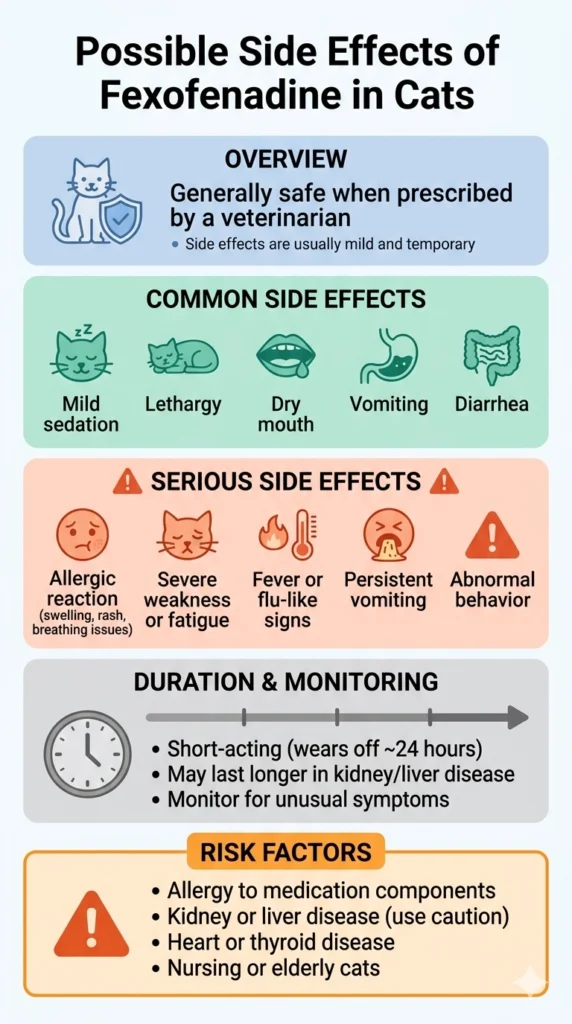
Common side effects:
- Mild sleepiness (sedation)
- Lethargy
- Dry mouth
- Vomiting
- Diarrhea
Serious side effects (seek veterinary help immediately):
- Signs of allergic reaction (swelling of face, rash, irregular breathing, fever)
- Unusual tiredness or weakness
- Flu-like signs (fever, chills)
- Persistent vomiting or worsening condition
- Any abnormal behavior or physical change
Important: Sensitivity can develop over time, even if your cat had no reaction at the beginning of treatment.
Duration & Monitoring
- Fexofenadine is a short-acting medication, and effects usually wear off within 24 hours.
- In cats with kidney or liver issues, effects may last longer.
- Any unusual symptoms should be reported to a veterinarian immediately.
Risk Factors (When Fexofenadine Should NOT Be Used)
Fexofenadine should not be used in cats if they are:
- Allergic to any component of the medication
- Scheduled for allergy testing
Use With Caution in Cats With:
Extra care is needed if your cat has any of the following conditions:
- Urinary disease or prostate enlargement
- Thyroid disease
- Heart disease
- Glaucoma
- Nursing (lactating) cats
- Older cats
- Severe liver or kidney disease
- Working or highly active dogs (if used in mixed household veterinary care contexts)
Drug Interactions With Fexofenadine
Fexofenadine may interact with certain substances and medications. Use caution if your cat is receiving:
- Antacids containing aluminum or magnesium
- Erythromycin
- Certain fruit juices
- Ivermectin
- Ketoconazole
Always inform your veterinarian about all medications, vitamins, supplements, or herbal products your cat is taking before starting fexofenadine.
Monitoring While Using Fexofenadine
Your veterinarian will decide how your cat should be monitored during treatment to ensure:
- The medication is working properly
- No harmful side effects are developing
At home, you should carefully watch your cat for any unusual or abnormal changes. If anything concerning appears:
- Stop the medication (as advised in veterinary guidance)
- Contact your veterinarian immediately
How Fexofenadine Is Supplied
Fexofenadine is available in the following forms:
- Tablets
- Oral dispersible tablets
- Oral solution (liquid form)
Common strengths include:
- Tablets: 60 mg and 180 mg
- Dispersible tablets: 30 mg
Important caution:
- Dispersible (melting) tablets are designed to dissolve on the human tongue, making them difficult to use in cats
- Some of these tablets may contain xylitol, which can be toxic to pets
Oral suspension form:
- Strength: 30 mg/5 mL (6 mg/mL)
- Some liquid products may contain xylitol, which is not safe for pets
Strict warning:
- Avoid fexofenadine + pseudoephedrine (Allegra-D®) in pets
- Combination products are not safe for cats
Monitoring While Using Fexofenadine
Your veterinarian will guide how your cat should be monitored during treatment to ensure:
- The medication is working properly
- No side effects are developing
At home monitoring:
- Watch for any unusual behavior or physical changes
- If anything abnormal occurs:
- Stop the medication (only if advised by your vet guidance)
- Contact your veterinarian immediately
How to Store Fexofenadine
Proper storage is important to maintain safety and effectiveness:
- Store at room temperature (20°C–25°C / 68°F–77°F)
- Keep protected from moisture
You May Also Like To Read:
- Zyrtec Dosage for Cats (Cetirizine): Chart, Safety & More
- Hydroxyzine Dosage for Cats: Chart, Safe Use, Effects & More
FAQs About Fexofenadine for Cats
What happens if I miss a dose?
Fexofenadine is often used on a schedule in cats. If a dose is missed:
Give it as soon as you remember
If it is almost time for the next dose, skip the missed one
Do NOT give two doses at the same time
What happens if I overdose?
If an overdose is suspected:
Seek emergency veterinary help immediately
Or contact a poison helpline if directed
Possible overdose signs may include:
Dry mouth
Dizziness
Drowsiness
How do I store fexofenadine?
Store at room temperature (20°C–25°C / 68°F–77°F)
Keep away from moisture
Is fexofenadine safe for cats?
Fexofenadine is not always the first-choice treatment for cats, and its safety and effectiveness in felines is not fully established. It should only be used if recommended by a veterinarian.
What should I do in case of emergency?
If your cat has a suspected overdose or reaction:
Contact your veterinarian immediately
Follow instructions for emergency care
Be ready to provide details like medication, symptoms, and your cat’s weight
What should I avoid while using fexofenadine?
To ensure safe use:
Avoid giving with fruit juices (apple, orange, grapefruit), as they may reduce absorption
Do not give with antacids containing magnesium or aluminum within 2 hours before or after dosing
Avoid using other cough or cold medicines without veterinary advice
Final Thoughts on Fexofenadine for Cats
Fexofenadine can be a helpful option for managing allergy-related symptoms in cats, especially itching and other discomfort caused by histamine reactions. It is a second-generation antihistamine that works by blocking histamine (H1 receptors), which helps reduce common allergy signs such as irritation, sneezing, and skin discomfort.
Although it is sometimes used in veterinary care, fexofenadine is considered an off-label medication for cats, meaning it is not officially approved for animal use by regulatory authorities. Because of this, it should only be given under the guidance of a veterinarian.
Different forms and strengths of fexofenadine are available, but not all products are safe for pets. Some formulations may contain harmful ingredients like xylitol or combination drugs such as pseudoephedrine, which should be strictly avoided in cats.
Since the fexofenadine dosage for cats is not fully standardized, correct dosing, monitoring, and duration of treatment must always be determined by a veterinarian. This ensures both safety and effectiveness for your cat’s specific condition.
In summary, when used carefully and responsibly, fexofenadine may help improve comfort in cats suffering from allergies—but veterinary supervision is essential for safe use.