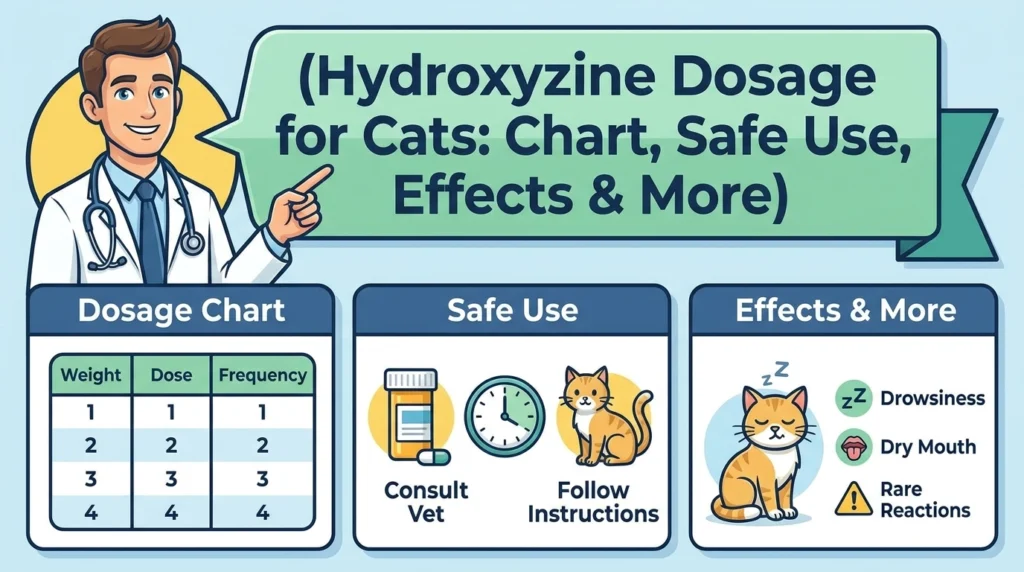
Cats can suffer from allergies just like humans, often leading to itching, skin irritation, and discomfort. To help manage these symptoms, veterinarians may prescribe hydroxyzine, a prescription antihistamine commonly used to treat allergic skin conditions in cats.
Hydroxyzine works by blocking histamine, the chemical responsible for allergic reactions, helping reduce itching and inflammation. It is available in tablets, capsules, and liquid form, and can usually be given with or without food.
When it comes to hydroxyzine dosage for cats, giving the correct amount is very important. The dosage depends on your cat’s weight and health condition, so it should always be given exactly as prescribed by a veterinarian. While hydroxyzine is generally safe, the most common side effect is drowsiness. In rare cases, more serious effects like tremors or seizures can occur.




Hydroxyzine may be used for both short-term relief and long-term allergy management, but some cats can develop tolerance over time, making the medication less effective. In such cases, your vet may suggest alternatives.
In this guide, you’ll learn Hydroxyzine dosage for cats is a prescription antihistamine used to treat allergies, itching, and skin conditions. Learn safe uses, side effects, and how to give it correctly under veterinary guidance.
Disclaimer: This content is for informational purposes only and should not replace veterinary advice. Always consult your veterinarian before giving Hydroxyzine or adjusting your cat’s dosage.
Key Takeaways
- Hydroxyzine is a prescription antihistamine used in cats mainly for allergies, itching, and skin inflammation.
- It helps by blocking histamine, which reduces itching, swelling, and allergic reactions.
- It is commonly used for conditions like atopic dermatitis, flea or food allergies, and other skin allergies.
- The most common side effect in cats is sleepiness (sedation), while serious side effects are rare.
- It should only be used under a veterinarian’s guidance because dosage and safety depend on the cat’s condition.
- Hydroxyzine may not work equally in all cats, and response can vary.
- It can be used as a supportive or preventive treatment, sometimes alongside other medications for better results.
- Safer use depends on avoiding overdosing, drug interactions, and use in cats with certain health conditions.
What is hydroxyzine for cats?
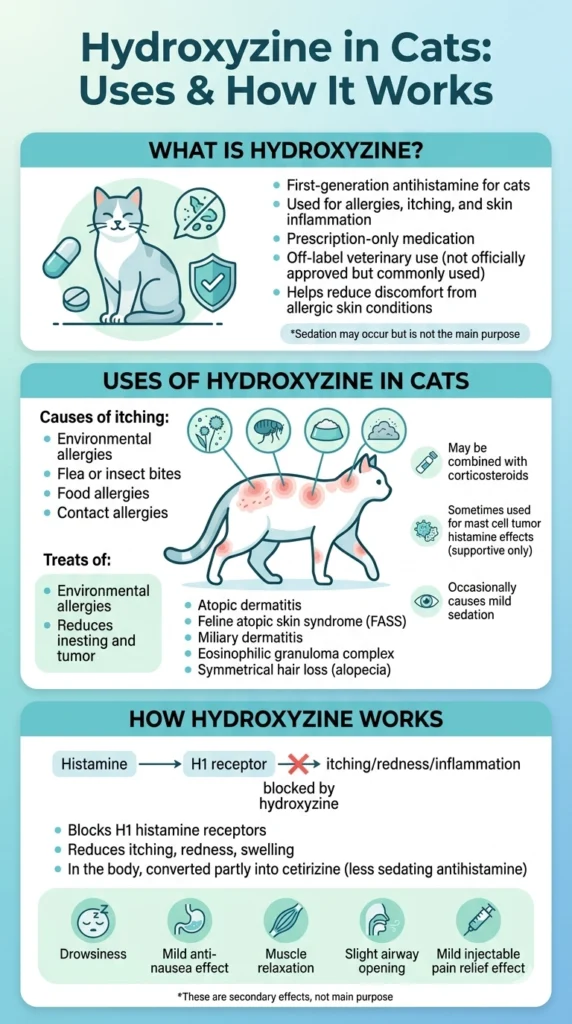
Hydroxyzine is a first-generation antihistamine used in cats to treat allergies, itching, and skin inflammation. It is a prescription-only medication and is used as an off-label drug, meaning it is not officially approved for animals but is commonly prescribed by veterinarians.




It is mainly used to help control allergic skin conditions and reduce discomfort caused by itching. Although it can have other effects like sedation or calming, these are not well established in cats and are not the main reason it is used.
Uses of Hydroxyzine in Cats
Hydroxyzine is mainly used in cats to treat allergic conditions that cause itching and skin inflammation. It is most commonly prescribed for atopic dermatitis (allergic skin disease) and other allergy-related skin problems.
It helps relieve itching caused by:
- Environmental allergies
- Flea or insect bites
- Food allergies
- Contact allergies
It is also used in conditions such as:
- Atopic dermatitis
- Symmetrical hair loss (alopecia)
- Miliary dermatitis
- Eosinophilic granuloma complex
- Feline atopic skin syndrome (FASS)
Hydroxyzine works by blocking histamine, which reduces itching, redness, and swelling in cats. However, its effect is often limited, so it may be used together with other medications like corticosteroids.
In some cases, it may also be used to reduce the effects of histamine release in mast cell tumors, but it does not treat the tumor itself.
Some cats may experience drowsiness, so it is sometimes used to help with calming during travel or vet visits, but this is not its main use.
Overall, hydroxyzine is mainly used in cats for allergy control and itch relief, often as a supportive treatment.
How does hydroxyzine work in cats?
Hydroxyzine works by blocking histamine, a chemical released during allergic reactions. Histamine attaches to H1 receptors, which causes itching, swelling, and inflammation. By blocking these receptors, hydroxyzine helps reduce itching and allergic symptoms in cats.
It has little to no effect on other receptors that control heart rate or stomach acid.
In the body, hydroxyzine is converted into cetirizine, another antihistamine that has similar effects but causes less sedation.
Hydroxyzine may also:
- Cause drowsiness (sedation)
- Help reduce nausea and vomiting
- Relieve muscle spasms
- Slightly open airways
- Provide mild pain relief (injectable form)
However, these additional effects are not the main purpose of its use in cats.
Hydroxyzine Dosage for Cats
The standard hydroxyzine dosage for cats is 5–10 mg per cat, given every 8 to 12 hours.
By weight, the usual dose is:
- 0.5 to 1 mg per pound (1 to 2 mg/kg)
The exact dosage must always be set by a veterinarian based on the cat’s condition and response.
Hydroxyzine is given by mouth, and the total treatment duration depends on the condition being treated and how the cat responds. Even if symptoms improve, the full course should be followed as directed by the veterinarian.
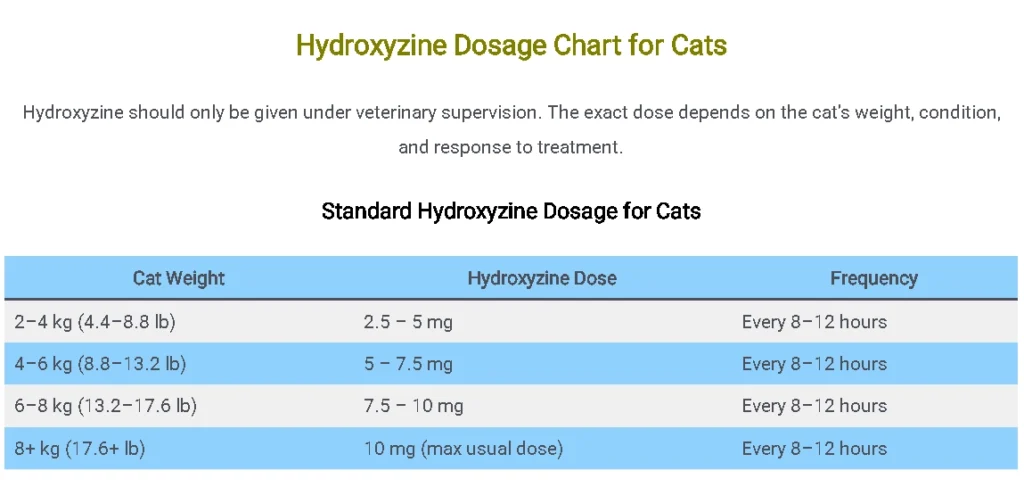
Hydroxyzine Dosage Chart for Cats By Weight
Hydroxyzine should only be given under veterinary supervision. The exact dose depends on the cat’s weight, condition, and response to treatment.
Standard Hydroxyzine Dosage for Cats
| Cat Weight | Hydroxyzine Dose | Frequency |
|---|---|---|
| 2–4 kg (4.4–8.8 lb) | 2.5 – 5 mg | Every 8–12 hours |
| 4–6 kg (8.8–13.2 lb) | 5 – 7.5 mg | Every 8–12 hours |
| 6–8 kg (13.2–17.6 lb) | 7.5 – 10 mg | Every 8–12 hours |
| 8+ kg (17.6+ lb) | 10 mg (max usual dose) | Every 8–12 hours |
Important Notes
- Typical dosage range: 0.5 to 1 mg per pound (1–2 mg/kg)
- Usual total dose: 5–10 mg per cat per dose
- Most commonly given every 12 hours, sometimes every 8 hours
- Do not exceed 10 mg per dose unless specifically directed by a veterinarian
- Cats may develop tolerance over time, reducing effectiveness
- Sedation is the most common side effect
Administration Reminder
- Can be given with or without food
- If vomiting occurs on empty stomach, give with food next time
- Available in tablets, capsules, or liquid form
- Always use vet-prescribed measuring tools for liquid doses
How to Give Hydroxyzine to Cats
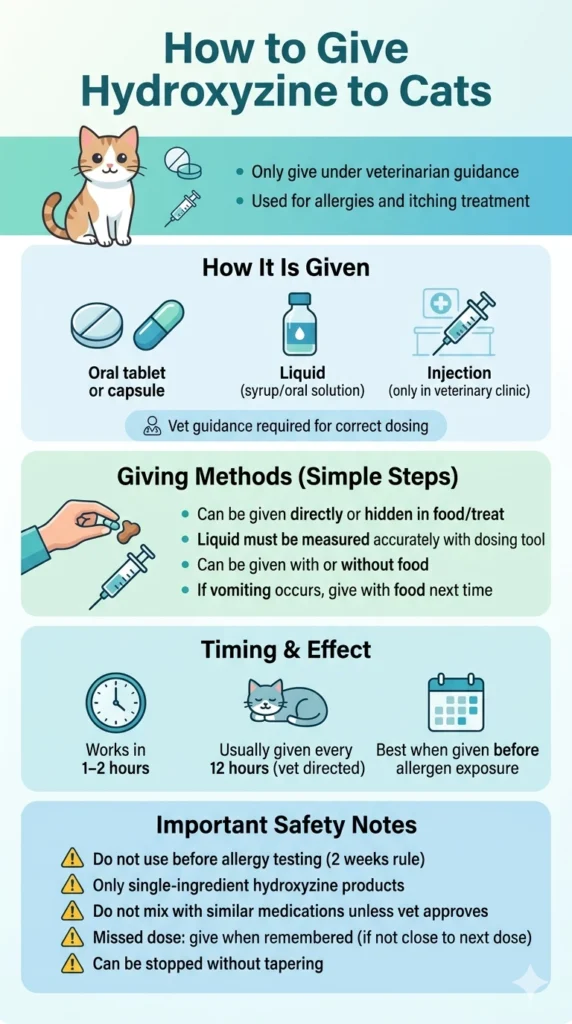
Hydroxyzine should only be given to a cat under the direction of a veterinarian. It is given by mouth in the form of a tablet, capsule, or liquid (oral solution or syrup). In some cases, it may also be given as an injection at a veterinary clinic.
Oral Administration
All oral forms of hydroxyzine can be given directly to the cat or hidden in a small amount of food or a treat to make dosing easier. If using tablets for the first time, a veterinarian can demonstrate the correct technique.
Liquid Form
If using a liquid form, always measure the dose carefully using the measuring device provided by the veterinarian or medication package to ensure accuracy.
With or Without Food
Hydroxyzine can be given with or without food. However, if the cat vomits after taking it on an empty stomach, future doses should be given with food.
Timing and Effect
Hydroxyzine works within 1 to 2 hours, and it is usually most effective when given regularly and before exposure to allergens. It is commonly given every 12 hours, depending on the veterinarian’s instructions.
Important Instructions
- Do not give within two weeks of allergy testing
- Use only products containing hydroxyzine as the single active ingredient
- Do not combine with other similar products unless directed by a vet
- Missed doses should be given when remembered, unless it is close to the next dose
- Hydroxyzine can be stopped without tapering
Side Effects of Hydroxyzine in Cats
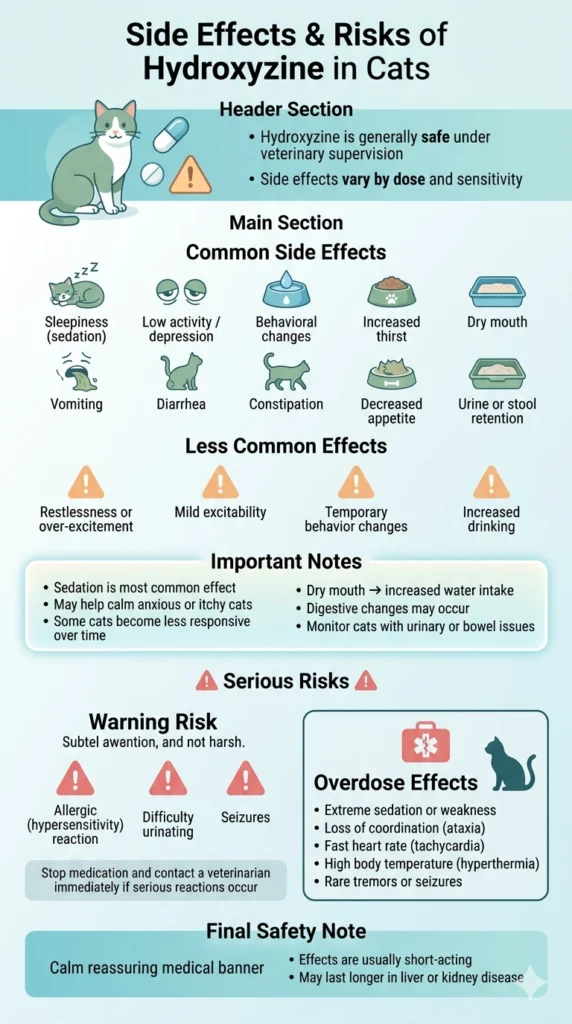
Hydroxyzine is generally safe when used under veterinary guidance, but it can still cause side effects in some cats. These effects may vary depending on the cat’s sensitivity, dosage, and duration of use.
Common side effects:
- Sleepiness (sedation)
- Depression or low activity
- Behavioral changes
- Increased thirst
- Dry mouth
- Vomiting
- Diarrhea
- Constipation
- Decreased appetite
- Urine or stool retention
Less common effects:
- Over-excitement or restlessness
- Increased drinking
- Mild excitability
- Temporary changes in behavior
Important notes:
Sedation is the most common side effect and may sometimes be helpful, especially in stressed or itchy cats. However, some cats may become less responsive to the sedative effect over time.
Dry mouth may cause the cat to drink more water, and digestive changes like constipation or reduced appetite can also occur. Because of this, cats with urinary or bowel problems should be monitored carefully.
What are the most serious risks of hydroxyzine for cats?
- Allergic (hypersensitivity) reaction
- Difficulty urinating
- Seizures
If any serious reaction occurs, hydroxyzine should be stopped and a veterinarian should be contacted immediately.
Overdose effects:
- Extreme sedation or weakness
- Loss of coordination (ataxia)
- High heart rate (tachycardia)
- Elevated body temperature (hyperthermia)
- Rare tremors or seizures
Hydroxyzine effects are usually short-acting, but may last longer in cats with liver or kidney problems.
Is Hydroxyzine Safe for Cats?
Hydroxyzine is generally safe for cats when it is prescribed and monitored by a veterinarian. It is used as a symptom-relief medication, especially for allergies and itching.
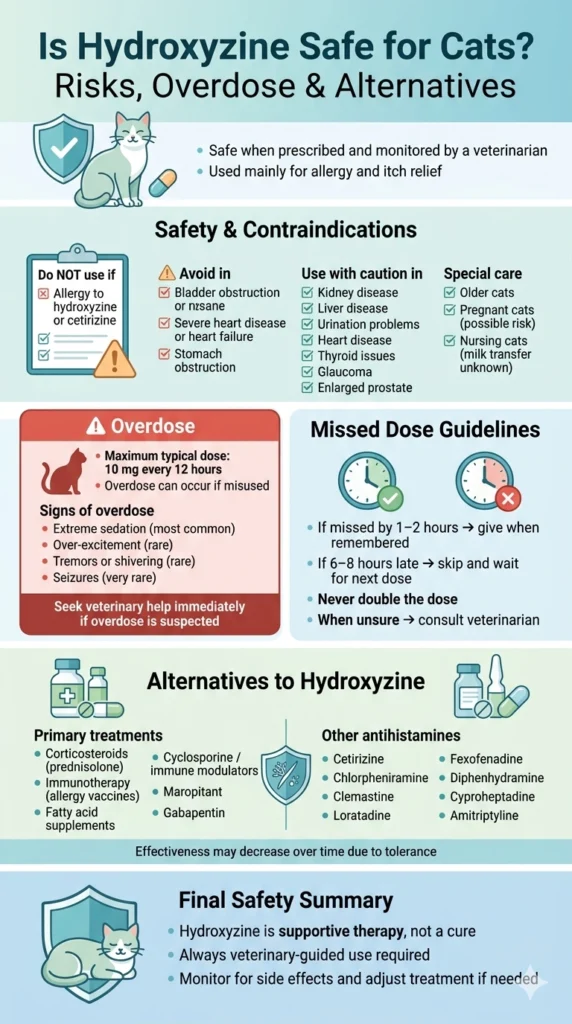
However, hydroxyzine should never be given to cats with a known allergy to hydroxyzine or cetirizine.
Veterinarians should avoid using hydroxyzine in cats with:
- Bladder obstruction
- Heart failure
- Severe heart disease
- Stomach obstruction
It should be used with caution in cats with:
- Urination problems
- Kidney disease
- Liver disease
- Heart disease
- Thyroid problems
- Glaucoma
- Enlarged prostate
Extra care is also needed in:
- Older cats
- Pregnant cats (risk of birth defects)
- Nursing cats (possible risk to kittens, as transfer through milk is unknown)
Can Cats Overdose on Hydroxyzine?
Yes, cats can overdose on hydroxyzine. Giving more than the prescribed dose or giving it too often can be dangerous. The maximum recommended dose for cats is 10 mg every 12 hours.
Signs of overdose may include:
- Extreme sedation (most common)
- Over-excitement (in some cases)
- Tremors or shivering (rare)
- Seizures (very rare, mostly reported in other animals)
If an overdose is suspected, a veterinarian or poison control center should be contacted immediately.
What to Do If a Cat Misses a Dose
If a dose is missed, in most cases it is safe to wait until the next scheduled dose (usually 12 hours later).
Guidelines:
- If only 1–2 hours are missed, the dose can be given as soon as remembered
- If more than 6–8 hours have passed, it is usually better to skip and wait for the next dose
- Do not double the dose
If unsure, always consult a veterinarian.
Hydroxyzine Alternatives for Cats
Hydroxyzine is not always the first choice for treating allergies or itchy skin in cats. Veterinarians may prefer other treatments such as:
Primary alternatives:
- Corticosteroids (e.g., prednisolone)
- Immune suppressants (e.g., cyclosporine, oclacitinib)
- Allergen-specific immunotherapy
- Essential fatty acids
- Maropitant
- Gabapentin
Other antihistamine alternatives:
- Cetirizine (Zyrtec) – less sedating active form of hydroxyzine
- Chlorpheniramine
- Cyproheptadine
- Clemastine
- Loratadine
- Fexofenadine
- Diphenhydramine
- Amitriptyline (has strong antihistamine effects)
Over time, cats may develop tolerance to antihistamines, making them less effective, so veterinarians may switch medications or drug classes if needed.
You May Also Like To Read:
- Benadryl Dosage for Cats: Chart, Safe Use & Vet Guide
- Vitamin B12 Dosage for Cats: Benefits, Side Effects & More
FAQs About Hydroxyzine For Cats
What if I miss giving my cat a dose of hydroxyzine?
If you miss a dose, give it as soon as you remember. If it is close to the next scheduled dose, skip the missed one and continue the normal schedule. Do not double the dose.
Can I give my cat hydroxyzine every day?
Hydroxyzine can be used daily as a long-term preventive treatment for allergies. However, cats may develop tolerance over time, which can reduce its effectiveness. Your veterinarian may change the medication if this happens.
Is hydroxyzine safe for long-term use in cats?
It can be safe when prescribed and monitored by a veterinarian. Regular checkups are important to ensure it continues working and does not cause unwanted side effects.
What should I do in case of emergency or overdose?
Contact a veterinarian or emergency clinic immediately if overdose is suspected. Provide details such as dose given, cat’s weight, and symptoms.
How should I store hydroxyzine?
Store at room temperature, away from light and moisture. Do not freeze liquid forms, and keep all forms out of reach of pets and children.
Can hydroxyzine interact with other medications?
Yes. It can interact with sedatives, opioids, antidepressants, and other medications. Always inform your veterinarian about all drugs or supplements your cat is taking.
Can hydroxyzine cause side effects in cats?
Yes. Common side effects include sleepiness, dry mouth, increased thirst, behavioral changes, and urinary changes. Serious reactions are rare but should be reported immediately.
Is any monitoring needed while using hydroxyzine?
Yes. Your veterinarian may schedule follow-ups. At home, watch for side effects like sedation, behavior changes, or urinary issues and report them if they occur.
Can hydroxyzine be used for travel or calming cats?
In some cases, it may cause sedation and can help reduce stress during travel or vet visits, but this is not its primary use in cats.
Final Thoughts
Hydroxyzine can be a helpful medication for cats, mainly for controlling allergic reactions, itching, and skin inflammation. When used correctly under a veterinarian’s guidance, it is generally safe and can provide relief for many cats suffering from conditions like atopic dermatitis and other allergy-related skin problems.
However, its effects can vary from cat to cat, and not all cats respond the same way. The most common side effect is sleepiness, while more serious reactions are rare but possible, especially if the dose is too high or if the cat has underlying health issues.
Because hydroxyzine can interact with other medications and may not be suitable for cats with certain medical conditions, it should always be used carefully and exactly as prescribed. In some cases, veterinarians may recommend alternative treatments if hydroxyzine is not effective or causes unwanted side effects.
Overall, hydroxyzine is best seen as a supportive treatment option, not a cure, and works most effectively as part of a broader allergy management plan designed by a veterinarian.