Benadryl Dosage for Cats is an important topic for cat owners because cats can suffer from allergies caused by insect bites, flea infestations, vaccines, pollen, grass, and other environmental triggers. These allergic reactions often lead to symptoms such as itching, swelling, hives, sneezing, and skin irritation that can make cats uncomfortable.
Benadryl, which contains the active ingredient diphenhydramine hydrochloride, is an antihistamine that helps reduce these allergy symptoms in cats by blocking histamine in the body. Because of this effect, veterinarians sometimes recommend it to help manage both short-term allergic reactions and ongoing allergy issues in cats.
It may also be used in cats for conditions like motion sickness, mild allergic reactions, or reactions to insect stings. Benadryl is available over the counter in tablet or liquid form, but not all formulations are safe for cats, so proper guidance is very important.



Even though it is commonly used in veterinary care, the correct Benadryl dosage for cats must always be determined carefully based on weight, health condition, and veterinary advice. Giving the wrong dose can cause side effects or health risks, so professional consultation is necessary before use.
In This guide will help you To Learn everything about Benadryl dosage for cats, including safe uses, benefits, side effects, overdose risks, administration methods, and safety guidelines. Understand when and how to use Benadryl for cat allergies, motion sickness, and travel anxiety, plus important veterinary precautions every cat owner must know.
Disclaimer: This content is for informational purposes only and should not replace veterinary advice. Always consult your veterinarian before giving Benadryl or adjusting your cat’s dosage.
Key Takeaways: Benadryl for Cats
- Benadryl (diphenhydramine) is an antihistamine used in cats to help control allergy-related symptoms.
- It mainly helps reduce itching, swelling, sneezing, hives, and watery eyes caused by histamine reactions.
- It is commonly used for insect bites, mild vaccine reactions, motion sickness, and short-term calming support.
- The typical Benadryl dosage for cats is based on body weight, so correct dosing is very important.
- It is not suitable for all cats, especially those with certain medical conditions or on specific medications.
- Possible side effects include drowsiness, dry mouth, vomiting, diarrhea, and in some cases hyperexcitability.
- Overdose can be serious and may cause breathing problems, seizures, coma, or even death.
- Benadryl treats symptoms only, not the root cause of allergies or other conditions.
- Always ensure the product contains only diphenhydramine HCl with no harmful added ingredients.
- Veterinary consultation is essential before giving Benadryl to any cat.
What Is Benadryl for Cats?
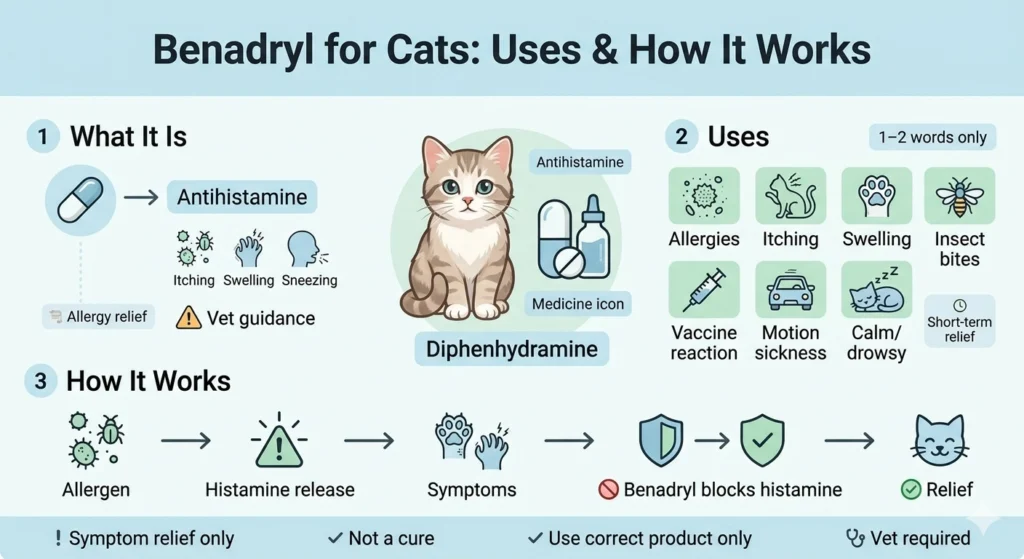
Benadryl is the brand name for a drug called diphenhydramine hydrochloride, which is an over-the-counter antihistamine medication. It is available in different forms such as tablets, capsules, liquid gels, and liquid, with different strengths depending on the product.




In cats, Benadryl is used mainly to treat allergies and allergic reactions. It helps reduce symptoms like swelling, itching, sneezing, and hives. These symptoms in cats can happen due to insect bites or stings, flea bites, contact with environmental allergens like grass or pollen, or reactions to vaccines.
Benadryl works as a histamine antagonist, which means it blocks histamine in the body that causes allergic symptoms in cats.
Its use in cats is considered “off-label”, meaning it is used for conditions it was not originally made for. Because cats have different body weight and metabolism compared to humans, the dosage is not the same and must be carefully followed based on veterinary guidance.
Benadryl is sometimes combined with other medications in human products, but some of these combinations can be harmful to cats. That is why it is very important to check the label carefully and make sure the product contains only diphenhydramine as the active ingredient.
It is available in generic diphenhydramine form, and veterinarians may also use a faster-acting injectable version when needed.
Always consult a veterinarian before giving Benadryl to a cat to ensure safe and correct use.
Uses of Benadryl for Cats
Benadryl (diphenhydramine) is used in cats mainly to help manage allergic reactions and related symptoms. It works by blocking histamine in the body, which is responsible for allergy signs like itching, swelling, sneezing, and watery eyes.
Main Uses in Cats:
- Allergies and allergic reactions
- Insect bites or stings
- Mild vaccine reactions
- Motion sickness during travel
- Mild calming (sedative effect in some cats)
Allergy and Skin Reaction Relief
Cats can develop allergies from food, dust, pollen, or smells, as well as flea allergy dermatitis. Benadryl is sometimes used to reduce itching, swelling, and skin irritation, especially in short-term allergic reactions.
Insect Bites and Stings
When a cat is bitten or stung by insects, Benadryl may help reduce local swelling and itching. However, it does not treat the bite itself—only the allergic reaction symptoms.
Vaccine Reactions
Some cats may have mild reactions after vaccines, such as soreness or itching. Benadryl may be used to help reduce these symptoms when recommended by a veterinarian.
Motion Sickness During Travel
Benadryl can help cats that get sick during travel by reducing nausea and vomiting. It may also help make the cat feel calmer during the journey.
Calming Effect
In some cats, Benadryl may cause mild drowsiness. This can help reduce stress during situations like travel or loud environments (fireworks, thunderstorms).
Important Note
- Benadryl only helps with symptoms, not the root cause
- It is mainly used for short-term relief
- Severe allergic reactions need emergency veterinary care
- Always use only under veterinary guidance
How Does Benadryl Work in Cats?
Benadryl (diphenhydramine) is an antihistamine that works by blocking the effects of histamine in a cat’s body. Histamine is released during allergic reactions and causes symptoms like itching, swelling, sneezing, watery eyes, and hives.
When a cat is exposed to an allergen, the immune system releases histamine, which attaches to histamine receptors and triggers allergic symptoms. Benadryl works by blocking these histamine receptors, preventing histamine from causing these reactions.
What Benadryl Does in Cats:
- Blocks histamine receptors in the body
- Reduces allergic response caused by histamine release
- Helps relieve itching, swelling, sneezing, watery eyes, and hives
- Helps reduce skin irritation and hypersensitivity reactions
In some cats, Benadryl may also produce a mild sedative effect, leading to drowsiness and a calming response due to its action on the central nervous system.
It may also help with motion sickness, as it has anti-nausea properties that can reduce vomiting during travel.
Response to Benadryl can vary from cat to cat, so its effectiveness is not always the same in every case. Veterinary guidance is important to ensure safe and appropriate use.
Benadryl Dosage for Cats
The typical Benadryl dosage for cats is 1 milligram per pound of body weight. It is usually given two to three times per day, depending on the cat’s condition and the veterinarian’s recommendation.
Standard Dosage Guide
- General dose: 1 mg per pound of body weight
- Frequency: 2–3 times daily (about every 8 hours in 24 hours)
Example:
- A 12.5-pound cat may take 12.5 mg (half of a 25 mg tablet) up to three times a day, as advised by a vet.
Forms of Benadryl for Cats
Benadryl is available in several forms:
- Tablets
- Liquid
- Gel capsules (not recommended for pets)
- Spray
Liquid forms can be easier to measure for smaller cats, but it is important that the product contains only diphenhydramine HCl as the active ingredient.
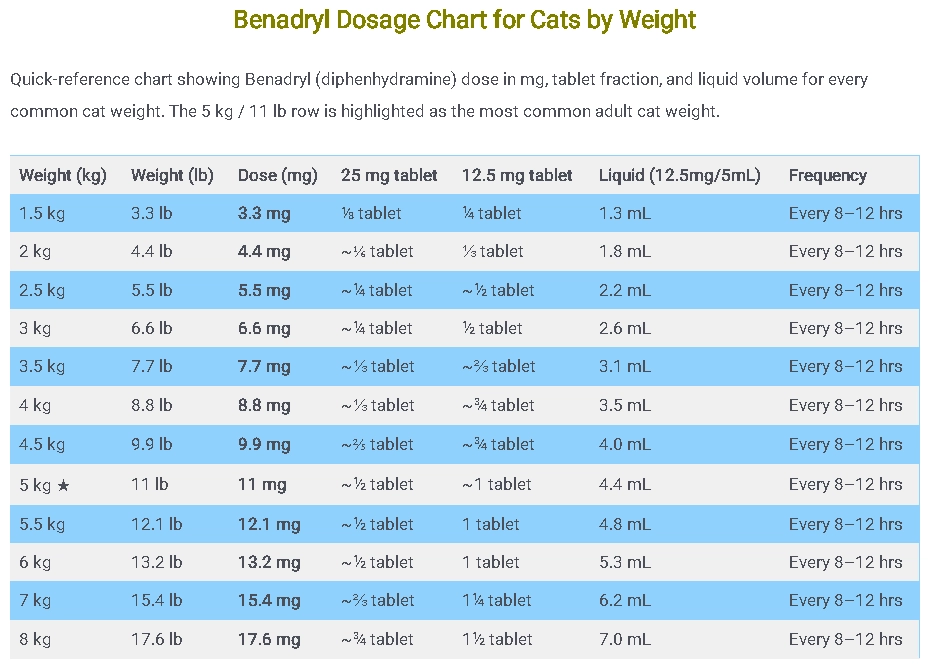
Benadryl Dosage Chart for Cats by Weight
Quick-reference chart showing Benadryl (diphenhydramine) dose in mg, tablet fraction, and liquid volume for every common cat weight. The 5 kg / 11 lb row is highlighted as the most common adult cat weight.
| Weight (kg) | Weight (lb) | Dose (mg) | 25 mg tablet | 12.5 mg tablet | Liquid (12.5mg/5mL) | Frequency |
| 1.5 kg | 3.3 lb | 3.3 mg | ⅛ tablet | ¼ tablet | 1.3 mL | Every 8–12 hrs |
| 2 kg | 4.4 lb | 4.4 mg | ~⅙ tablet | ⅓ tablet | 1.8 mL | Every 8–12 hrs |
| 2.5 kg | 5.5 lb | 5.5 mg | ~¼ tablet | ~½ tablet | 2.2 mL | Every 8–12 hrs |
| 3 kg | 6.6 lb | 6.6 mg | ~¼ tablet | ½ tablet | 2.6 mL | Every 8–12 hrs |
| 3.5 kg | 7.7 lb | 7.7 mg | ~⅓ tablet | ~⅔ tablet | 3.1 mL | Every 8–12 hrs |
| 4 kg | 8.8 lb | 8.8 mg | ~⅓ tablet | ~¾ tablet | 3.5 mL | Every 8–12 hrs |
| 4.5 kg | 9.9 lb | 9.9 mg | ~⅖ tablet | ~¾ tablet | 4.0 mL | Every 8–12 hrs |
| 5 kg ★ | 11 lb | 11 mg | ~½ tablet | ~1 tablet | 4.4 mL | Every 8–12 hrs |
| 5.5 kg | 12.1 lb | 12.1 mg | ~½ tablet | 1 tablet | 4.8 mL | Every 8–12 hrs |
| 6 kg | 13.2 lb | 13.2 mg | ~½ tablet | 1 tablet | 5.3 mL | Every 8–12 hrs |
| 7 kg | 15.4 lb | 15.4 mg | ~⅔ tablet | 1¼ tablet | 6.2 mL | Every 8–12 hrs |
| 8 kg | 17.6 lb | 17.6 mg | ~¾ tablet | 1½ tablet | 7.0 mL | Every 8–12 hrs |
Most common adult cat weight. Dose formula: 1 mg per pound of body weight. Liquid column assumes Children’s Benadryl at 12.5 mg per 5 mL concentration — confirm the concentration on your bottle. Tablet fractions are approximate — liquid is easier and more precise for smaller cats. Never exceed 1 mg/lb per dose or more than 3 doses in 24 hours. Sources: VCA Animal Hospitals; Cats.com; Merck Veterinary Manual.
Available forms
- 25 mg tablets — standard Benadryl tablet; needs splitting for most cats
- 12.5 mg tablets — smaller format; easier to give precise fractions
- 50 mg tablets — too large; not practical for cats
- Liquid (12.5 mg/5 mL) — Children’s Benadryl; most precise for small doses; most cats dislike taste
- Vetadryl — veterinary diphenhydramine; same active ingredient, same dose
Dosing rules
- 1 mg per pound — the standard veterinary dose for cats
- Every 8–12 hours — do not give more frequently than every 8 hours
- Max 3 doses in 24 hours — never exceed this
- Give with or without food — food can help if nausea occurs
- Works in 30–60 minutes — effects last 8–12 hours
Important Safety Points
- Only use plain Benadryl (diphenhydramine HCl only)
- Avoid products with extra ingredients like decongestants (e.g., pseudoephedrine), as they can be toxic to cats
- Do not use combination medications (such as “D” formulas)
- Always confirm inactive ingredients in liquid forms are safe
- Never double a missed dose—continue the normal schedule
- Overdosing can cause serious health risks
How To Give Benadryl to Cats
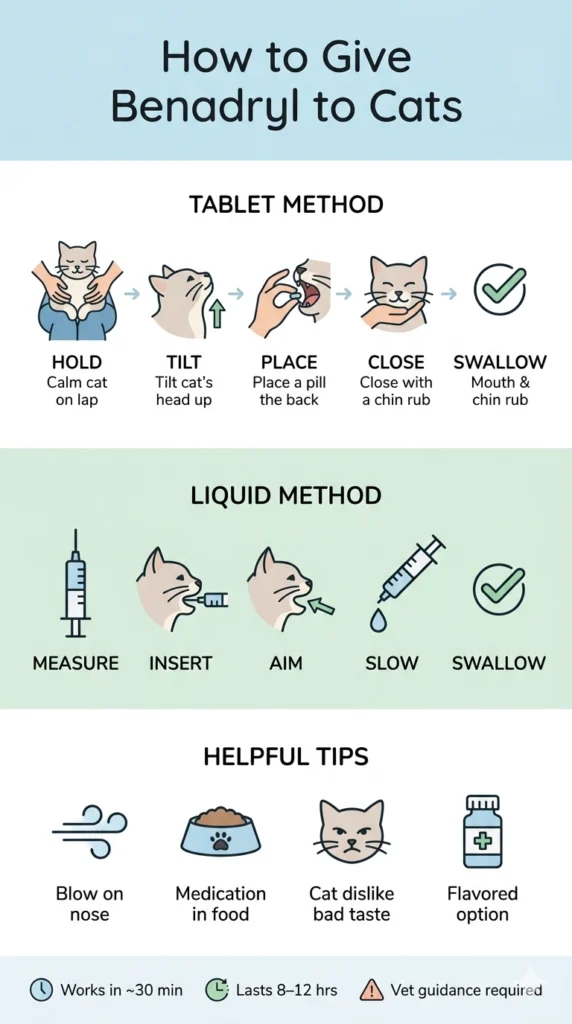
Giving Benadryl to cats can be challenging, so it is important to use the correct and safe method whether using tablets or liquid form.
Giving Benadryl Tablets to Cats
If using tablets:
- Hold your cat gently on your lap or place them on a stable table
- Tilt your cat’s head slightly upward
- Open the mouth by gently pressing on the lower teeth
- Place the pill as far back in the throat as possible
- Close the mouth and gently rub under the chin to help swallowing
- Keep the mouth closed briefly until the pill is swallowed
Giving Liquid Benadryl to Cats
If using liquid form:
- Use the measuring syringe provided with the medicine
- Measure the exact prescribed dose
- Place the syringe inside the mouth behind the canine teeth
- Aim toward the back of the tongue
- Slowly release the liquid, allowing time for swallowing and breathing
Helpful Tips for Administration
- Lightly blowing on the cat’s nose may encourage swallowing
- Benadryl can sometimes be hidden in food or mixed with food
- Cats usually dislike the taste of both tablet and liquid forms
- Compounding pharmacies may offer flavored versions to make it easier
Important Notes
- Cats may resist oral medication due to taste or stress
- Some cases may require veterinary-administered injection instead of oral dosing
- Benadryl acts quickly, usually within 30 minutes
- Effects typically last 8–12 hours
- Always follow veterinary instructions for timing and dosage
Is Benadryl Safe for Cats?
Benadryl is generally considered safe for cats when used correctly. However, it should always be given under proper guidance because not every cat can safely take it, and incorrect use can lead to health risks.
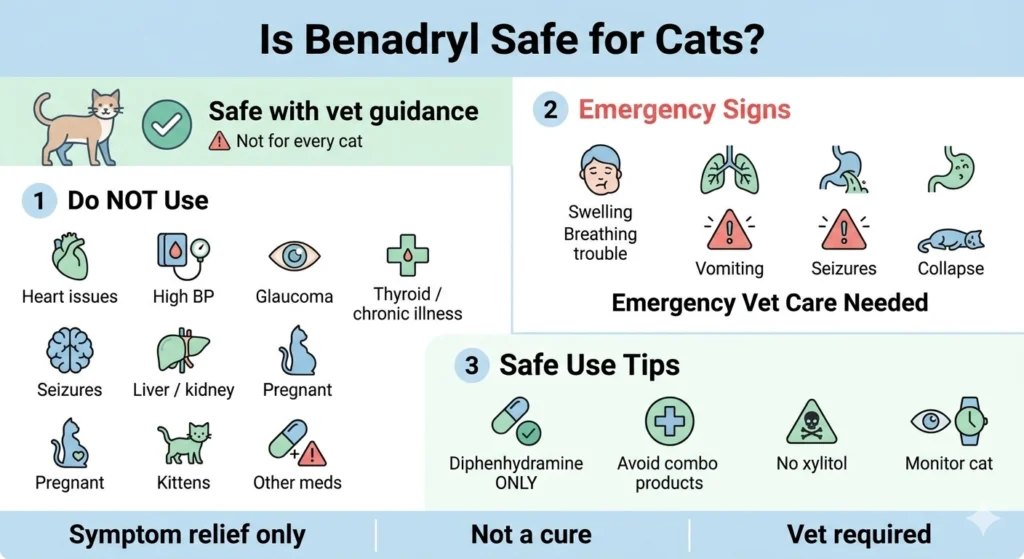
When Benadryl Should NOT Be Used in Cats
Benadryl is not suitable for all cats. It should be avoided or only used with veterinary advice in the following cases:
- Cats with heart problems
- Cats with high blood pressure
- Cats with glaucoma
- Cats with chronic conditions such as asthma, hyperthyroidism, seizure disorders, liver disease, or kidney disease
- Cats allergic to diphenhydramine hydrochloride
- Pregnant or nursing cats (requires veterinary caution)
- Kittens under 6 months old
- Cats already taking other medications (possible interactions)
It is also not recommended to use Benadryl just to sedate a highly anxious or stressed cat without veterinary diagnosis.
Severe Allergic Reactions (Emergency Cases)
In severe allergic reactions (anaphylaxis), cats may show:
- Facial swelling
- Difficulty breathing
- Vomiting or diarrhea
- Lethargy
- Seizures
- Collapse
These cases require immediate emergency veterinary care. Benadryl alone is not enough to treat severe reactions.
Important Safety Information
- Some Benadryl forms are unsafe for cats, especially those with xylitol or toxic flavorings
- Gel capsules and combination products should be avoided
- Only use products containing pure diphenhydramine hydrochloride
- Cats may react differently depending on health and sensitivity
- Always consult a veterinarian before use
Key Notes for Cat Owners
- Benadryl treats symptoms like itching, swelling, and sneezing, but not the root cause
- Conditions like flea allergy or skin infections need proper treatment
- Cats with chronic health issues require special veterinary evaluation
- Monitoring after giving the medication is important for safety
Side Effects of Benadryl for Cats
Benadryl (diphenhydramine) is generally considered safe for cats when given at the correct dosage, but it can still cause side effects, especially in sensitive cats.
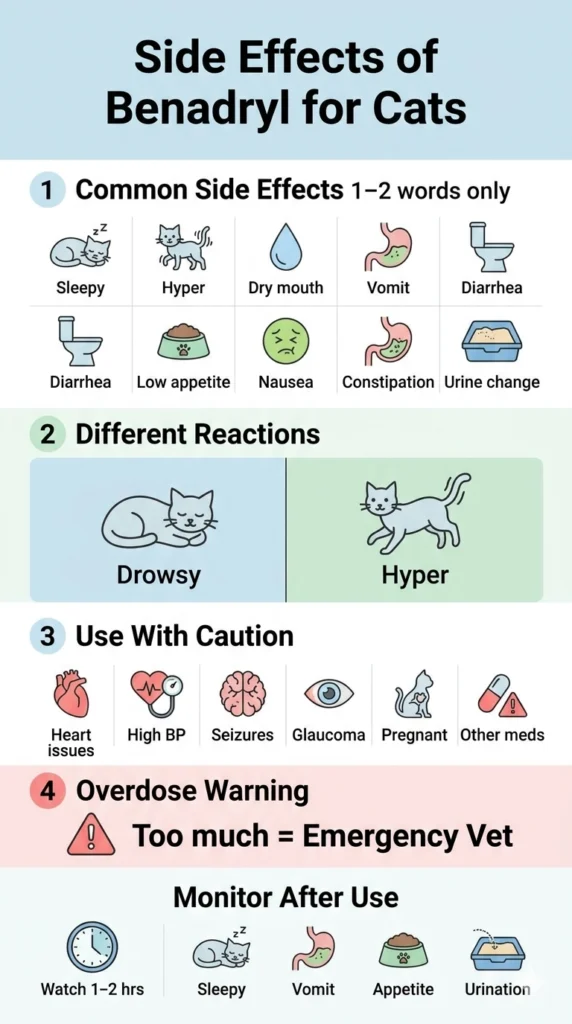
Common Side Effects in Cats
Some of the most commonly reported side effects include:
- Sedation or drowsiness
- Hyperexcitability (restlessness or unusual excitement in some cats)
- Dry mouth
- Vomiting
- Diarrhea
- Decreased urination or urinary retention
- Nausea
- Loss of appetite
- Constipation or gastrointestinal upset
Important Reactions in Some Cats
Most cats may experience mild effects like sleepiness, but in some cases, Benadryl can cause the opposite reaction:
- Instead of sedation, some cats may become excited or jittery (hyperexcitability)
- Some may show appetite loss or behavioral changes
- Mild digestive issues such as vomiting or diarrhea may occur
This reaction can vary from cat to cat and is not always predictable.
When Side Effects Become a Concern
Benadryl should be used with caution, and veterinary guidance is important, especially in cats that:
- Have heart disease, high blood pressure, glaucoma, or seizure disorders
- Are pregnant or nursing
- Are extremely stressed or sensitive
- Are taking other medications that may interact with diphenhydramine
Overdose Warning
If a cat takes too much Benadryl, it can lead to serious symptoms and requires immediate veterinary attention.
Monitoring After Use
After giving Benadryl for the first time, cats should be closely observed for 1–2 hours to check for any unusual behavior or side effects such as:
- Excessive sleepiness or agitation
- Vomiting or diarrhea
- Changes in urination
- Loss of appetite
Benadryl Overdose in Cats
What Happens If a Cat Gets Too Much Benadryl
Giving too much Benadryl to a cat can lead to serious and dangerous reactions. Even though it is generally considered safe when used correctly, an overdose can affect the nervous system and breathing.
Signs of Benadryl Overdose in Cats
An overdose may cause one or more of the following symptoms:
- Lethargy (extreme sleepiness)
- Excitement or hyperactivity
- Dry mouth
- Rapid heartbeat
- Slow, rapid, or difficult breathing
- Respiratory distress
- Seizures
- Unconsciousness
- Coma
- Death
Causes of Benadryl Overdose
Overdose risk increases when:
- More than 1 mg per pound of body weight is given
- Medication is given more often than every 8 hours in 24 hours
- The cat’s weight is not measured correctly before dosing
- Too many doses are given in a short time
What To Do in Case of Overdose
If any overdose signs appear, the cat should be taken immediately to an emergency veterinary clinic for treatment and evaluation.
Important Safety Reminder
Always consult a veterinarian before giving any medication. Correct dosage and timing are essential to prevent serious health risks.
Alternatives to Benadryl for Cats
Other Antihistamine Options for Cats
If Benadryl is not suitable for a cat, veterinarians may suggest other antihistamine options that work in a similar way, but may have different dosages or side effects. These alternatives should always be used under veterinary guidance.
Common alternatives include:
- Zyrtec (24-hour relief, 10 mg tablet)
- Claritin (24-hour, 10 mg tablet)
- Xyzal Allergy (24-hour relief)
If these are not appropriate due to health concerns, a veterinarian may recommend a different type of medication based on the cat’s condition.
Drug Interactions and Safety Concerns
Benadryl and other antihistamines should be used with caution in cats that have certain health conditions, including:
- Glaucoma
- Intestinal obstruction
- Heart disease
- High blood pressure
- Elevated thyroid hormone levels
It should also be used carefully if the cat is taking medications such as:
- CNS depressants (sedatives, anesthetics, pain medications)
- Anticholinergic drugs (atropine)
- Epinephrine (adrenaline)
- Tricyclic antidepressants (amitriptyline)
- MAO inhibitors (selegiline)
- Certain antiparasitic or antibacterial medications
- Potassium supplements
- Prokinetic drugs (cisapride, metoclopramide)
Because of possible interactions, it is important to always consult a veterinarian before starting or stopping any medication.
Natural Alternative Option
Some pet owners may also consider CBD oil for cats as a natural option to help manage chronic allergy symptoms by supporting immune balance and reducing overreaction. However, it should not be used as a first-line treatment for acute allergic reactions, which require veterinary care.
You May Also Like To Read:
- Vitamin B12 Dosage for Cats: Benefits, Side Effects & More
- Chlorpheniramine Dosage for Cats: Chart, Safe Use & More
FAQs About Benadryl Dosage for Cats
Can I use Benadryl for cats travel anxiety?
Yes, Benadryl can be used for cats experiencing travel anxiety. The commonly mentioned dosage is 2 mg/kg, given 30 minutes to 1 hour before travel. It may help calm the cat during the journey.
How long does Benadryl take to work in cats?
Benadryl usually starts working in about 30 minutes after administration. However, the response can vary depending on the cat’s metabolism and condition. In some cases, full relief or improvement may take a few days depending on the situation being treated.
Can I give my cat Benadryl?
Yes, Benadryl (diphenhydramine) can be given to cats, but only after consulting a veterinarian. Factors like weight, age, health condition, and other medications must be considered before use. It is commonly used off-label for allergy-related conditions in cats.
Can I give my cat children’s Benadryl?
Yes, children’s Benadryl can be used for cats only if it contains no harmful ingredients like xylitol or added toxic flavors. The dosage mentioned is approximately 0.9 ml/kg or 0.4 ml/lb, but veterinary confirmation is strongly recommended before use.
Does Benadryl calm cats down?
Yes, Benadryl may help calm cats due to its sedative effect. The active ingredient, diphenhydramine, can reduce anxiety and promote relaxation in some cats when used at the correct dose.
Will Benadryl make a cat sleepy?
Yes, one of the common effects of Benadryl is drowsiness. Many cats may appear sleepy, relaxed, or may even fall asleep after taking it.
Is it safe to give cats Benadryl?
Benadryl is generally considered safe for cats when used correctly. However, some cats may be sensitive to antihistamines, so veterinary consultation is always necessary before giving it.
Final Thoughts on Benadryl for Cats
Benadryl (diphenhydramine) is commonly used in cats to help manage allergic reactions, itching, swelling, sneezing, and other histamine-related symptoms. It can also be helpful in situations like insect bites, mild vaccine reactions, motion sickness, and short-term calming support in some cats.
However, while it is generally considered safe when used correctly, Benadryl is not suitable for every cat. Cats with certain health conditions, those on other medications, pregnant or nursing cats, and very young kittens may not be able to safely use it. In some cases, it may also cause side effects such as drowsiness, dry mouth, vomiting, or even unusual excitement.
Most importantly, Benadryl does not treat the root cause of the problem—it mainly helps control the symptoms. That means conditions like allergies, flea issues, or skin infections still need proper veterinary diagnosis and treatment for long-term relief.
Because of this, the safest approach is always to consult a veterinarian before giving Benadryl to your cat. The correct dosage, frequency, and suitability depend on your cat’s weight, health status, and specific condition.
Used responsibly and under veterinary guidance, Benadryl can be a helpful supportive medication—but it should always be part of a properly managed treatment plan, not a standalone solution.