If your cat is suffering from itching, sneezing, or allergies, knowing the correct chlorpheniramine dosage for cats is very important. Chlorpheniramine is an antihistamine that veterinarians often use to help relieve allergy symptoms in cats, especially skin problems like itching and conditions such as atopy.
This medicine works by blocking histamine, a chemical in the body that causes allergic reactions like swelling, itching, and irritation. By stopping this reaction, chlorpheniramine helps your cat feel more comfortable.
It is commonly available in tablet form and may also be used as a mild sedative in some cases. Although it is sold over the counter for humans, it should only be given to cats under veterinary guidance to ensure the safe chlorpheniramine dosage for cats.




In this guide, you’ll learn Chlorpheniramine dosage for cats is an antihistamine used to relieve allergy symptoms like itching, sneezing, and skin irritation. Learn more about, uses, side effects, safety, and vet-guided treatment for cats.
Disclaimer: This content is for informational purposes only and should not replace veterinary advice. Always consult your veterinarian before giving Chlorpheniramine or adjusting your cat’s dosage.
Key Takeaways
- Used in cats for allergy-related symptoms like itching, sneezing, and runny nose
- Works by blocking histamine, the chemical responsible for allergic reactions
- Commonly used to treat skin allergies and inflammation-related conditions
- Available in tablets, syrups, drops, injectable forms, and compounded gels
- Usually low-cost and widely available in pharmacies
- More effective for preventing symptoms than treating severe allergy flare-ups
- Most common side effect is drowsiness (sleepiness)
- Should only be given under veterinary supervision
- Correct dosage and correct product selection are very important for safety
- Some combination products may contain harmful ingredients for cats
- Improvement may be seen within about 48 hours of use in many cases
What Is Chlorpheniramine for Cats?
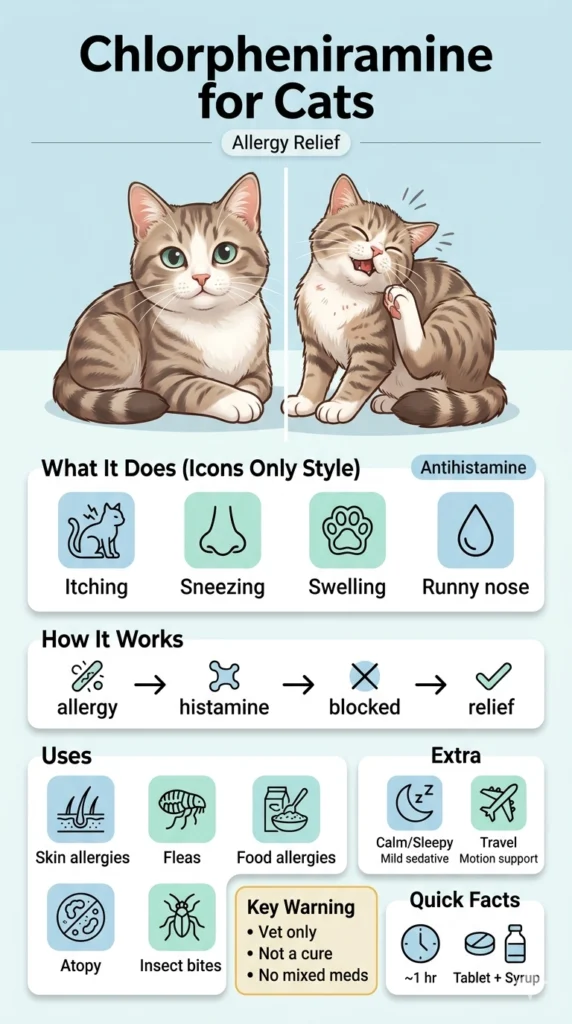
Chlorpheniramine is an antihistamine used to help cats with allergies and skin-related problems. It works by blocking histamine, a chemical in the body that causes itching, sneezing, swelling, and a runny nose. By reducing this reaction, it helps relieve common allergy symptoms in cats.
The main ingredient is chlorpheniramine maleate, and it is available in forms like tablets and syrups. This allows veterinarians to choose the right option based on a cat’s needs.




Although it is made for human use and available over the counter, it is commonly used in cats under veterinary guidance. It is not officially approved for animals, but vets prescribe it when needed.
Chlorpheniramine does not cure allergies but helps control symptoms like itching and inflammation. It is often used as part of a longer-term treatment plan and may be combined with other medications. It usually works better when used regularly to manage allergies rather than for sudden flare-ups.
It is important to use only products that contain chlorpheniramine alone, as some human medicines include other ingredients that can be harmful to cats. In some cases, veterinarians may prepare a special (compounded) version if the standard form is not suitable.
Overall, chlorpheniramine is a commonly used and helpful option for managing allergy symptoms in cats.
Uses Of Chlorpheniramine For Cats
Chlorpheniramine is mainly used to treat allergy-related symptoms in cats. Veterinarians commonly prescribe it to help relieve itching, sneezing, and a runny nose caused by different types of allergies, including environmental, food, and flea allergies.
This medication works by reducing the effects of histamine, which is responsible for allergic reactions. Because of this, it can quickly help cats feel more comfortable, often starting to work within about an hour.
One of its important uses is in treating atopy, a skin condition that causes inflammation and severe itching in cats. It is also helpful in conditions like flea allergy dermatitis and other hypersensitivity reactions, including those caused by insect bites.
In some cases, chlorpheniramine is used for reactions related to vaccines or other triggers that cause allergic responses. It may also be combined with other treatments, such as antihistamines or fatty acids, to improve results.
Besides allergy relief, veterinarians may sometimes use it as a mild sedative or for motion sickness in pets. It can also be used before certain procedures to help reduce histamine-related reactions.
Overall, chlorpheniramine is widely used to manage allergy symptoms and improve comfort in cats, especially when used as part of a long-term treatment plan recommended by a veterinarian.
Dosage Of Chlorpheniramine For Cats
Chlorpheniramine is commonly used in cats to help manage allergy symptoms, but the correct dosage must always be followed carefully as advised by a veterinarian.
In most cases, vets generally prescribe 1 to 2 milligrams per cat every 12 hours. In some situations, the dose may also be adjusted based on the cat’s condition, overall health, and any other medications the cat is taking. A common guideline used in veterinary practice is about 2 mg total dose per cat every 8 to 12 hours.
Chlorpheniramine can be given in different forms such as tablets, syrups, or other preparations, but it is most commonly given by mouth. Because the taste can be unpleasant for cats, some alternative forms may be used if needed.
It is very important to always give the medicine exactly as prescribed. Do not change the dose or timing without consulting a vet. If a dose is missed, do not double it—simply continue with the next scheduled dose unless your veterinarian gives different instructions.
The duration of treatment depends on the condition being treated and how the cat responds. Even if symptoms improve, the full treatment plan should be completed to avoid relapse.
Overall, safe and correct dosing is essential to ensure chlorpheniramine works effectively and safely in cats.
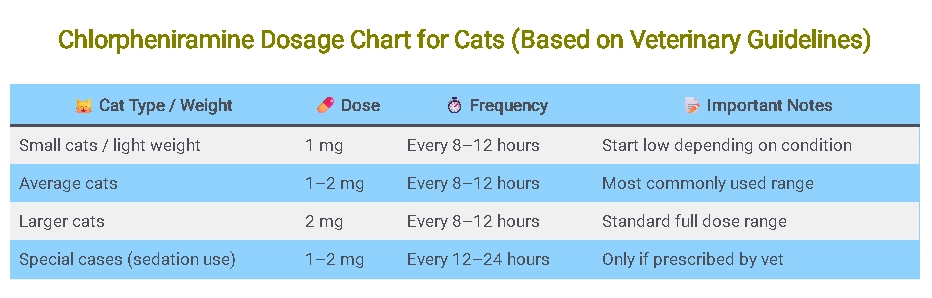
Chlorpheniramine Dosage Chart for Cats (Based on Veterinary Guidelines)
| 🐱 Cat Type / Weight | 💊 Dose | ⏱️ Frequency | 📝 Important Notes |
|---|---|---|---|
| Small cats / light weight | 1 mg | Every 8–12 hours | Start low depending on condition |
| Average cats | 1–2 mg | Every 8–12 hours | Most commonly used range |
| Larger cats | 2 mg | Every 8–12 hours | Standard full dose range |
| Special cases (sedation use) | 1–2 mg | Every 12–24 hours | Only if prescribed by vet |
How Chlorpheniramine Works in Cats
Chlorpheniramine works as an antihistamine, meaning it blocks the effects of histamine—a natural chemical released by the immune system when a cat is exposed to allergens like pollen, dust, parasites, or insect bites.
Normally, histamine helps the body respond to these triggers, but it also causes unwanted effects such as inflammation, itching, redness, and swelling. Chlorpheniramine works by blocking H1 receptors, preventing histamine from attaching to them. This stops the chain of allergic reactions and helps reduce symptoms like itching, sneezing, and skin irritation.
Because pets also produce other chemicals involved in allergic reactions, antihistamines like chlorpheniramine may sometimes be less effective in cats compared to humans. However, it still plays an important role in managing allergy symptoms, especially when used as part of a treatment plan.
In addition to controlling allergies, chlorpheniramine has mild sedative effects, which can help calm cats with skin discomfort or irritation. Its main benefit is reducing inflammation and improving overall comfort in cats suffering from allergies or skin conditions.
Side Effects Of Chlorpheniramine For Cats
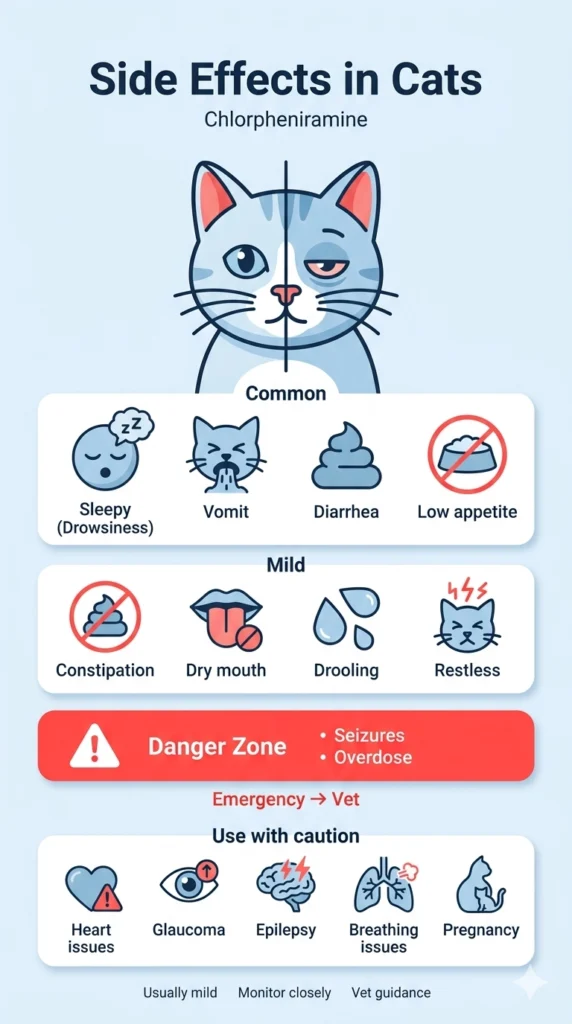
Chlorpheniramine is generally safe for cats when used under veterinary guidance, but it can still cause some side effects in some cases. The most common effect is drowsiness or sleepiness, which may improve as the cat gets used to the medicine. Some cats may also experience vomiting, diarrhea, or reduced appetite during treatment.
Other possible side effects include:
- Constipation
- Dry mouth
- Drooling
- Mild restlessness or unusual behavior
These effects are usually mild, but they should still be monitored carefully during treatment.
In rare cases, more serious reactions such as seizures can occur, especially if a cat receives too much medication or an overdose happens. If this occurs, it is an emergency and a veterinarian should be contacted immediately.
Extra caution is needed for cats with certain health conditions such as heart disease, high blood pressure, glaucoma, epilepsy, or breathing problems. Pregnant or nursing cats should only use this medication under strict veterinary supervision because its safety is not fully confirmed in these cases.
Overall, chlorpheniramine side effects are usually mild, but careful monitoring and correct dosing are very important to keep your cat safe.
Chlorpheniramine Considerations
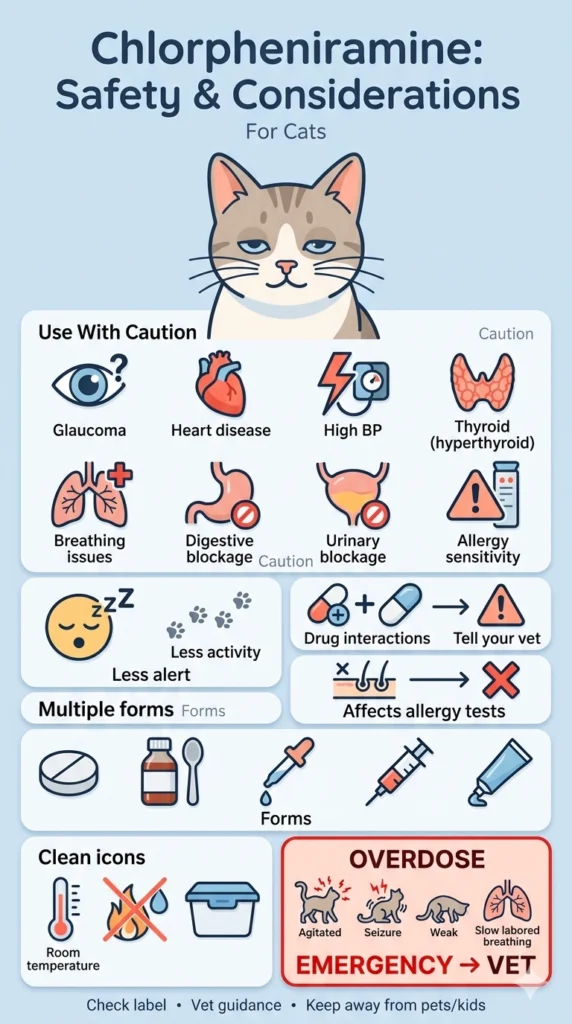
Chlorpheniramine should be used with caution in cats with certain conditions such as glaucoma, high blood pressure, gastrointestinal or urinary obstruction, hyperthyroidism, heart disease, prostate enlargement, respiratory diseases, or hypersensitivity to antihistamines. It should also be used carefully in nursing cats because it can pass into breast milk.
Chlorpheniramine may cause sleepiness or grogginess in cats, which can reduce their alertness and activity. Because of this, it should be used carefully in cats that need full awareness.
It is very important to inform your veterinarian about all medications, vitamins, supplements, and medical conditions before giving this medicine, as drug combinations may create health risks.
Drug and Laboratory Interactions
Chlorpheniramine may interact with several medications. These include amitraz, amitriptyline, amphetamine, barbiturates, epinephrine, fatty acid supplements, heparin, phenytoin, pseudoephedrine, selegiline, and tranquilizers. Always consult your veterinarian before combining treatments.
It can also interfere with the results of skin antigen testing, which may affect allergy diagnosis.
How Chlorpheniramine Is Supplied and Stored
Chlorpheniramine is available in different forms and strengths. Tablets come in 2 mg, 4 mg, 8 mg, 12 mg, and 16 mg, and an extended-release version is available in 12 mg. It is also available as 2 mg chewable tablets.
Other forms include oral syrup (2 mg/5 mL and 4 mg/5 mL), oral drops (2 mg/mL), injectable forms (10 mg/mL and 100 mg/mL), and compounded transdermal gels prepared by pharmacies.
Tablets and syrup should be stored between 50°F and 85°F, avoiding freezing and hot or humid conditions. Always check the label carefully because some products contain additional active ingredients.
Chlorpheniramine Overdose Information for Cats
Even though chlorpheniramine is generally safe in cats, overdose can occur. Symptoms include excitability or agitation, seizures, fatigue (lethargy), loss of coordination, coma, dangerously low breathing or heart rate, and severe dry mouth.
If overdose is suspected, emergency veterinary care must be contacted immediately or an animal poison control center should be reached. Consultation fees may apply.
Chlorpheniramine Storage for Cats
Chlorpheniramine should be stored according to the label instructions, usually at around 77°F. Short exposure between 59°F and 86°F is acceptable. The container must be kept tightly closed and protected from moisture and light.
Compounded medications must be stored as directed by the compounding pharmacy. Always keep the medicine out of reach of children and pets.
Chlorpheniramine Alternatives
Chlorpheniramine is a commonly used antihistamine for cats, but veterinarians may sometimes recommend other options depending on the cat’s condition and response to treatment. Since allergies affect around 10% to 15% of cats, different treatments may be used based on what works best for each cat.
Common alternatives include:
- Hydroxyzine: an antihistamine that helps control allergy symptoms in cats, but may cause drowsiness and dry mouth
- Diphenhydramine: another antihistamine used for allergy relief, with similar possible side effects
- Corticosteroids: strong anti-inflammatory medicines that reduce itching and swelling, but long-term use may cause side effects like weight gain
- Omega-3 and Omega-6 fatty acids: nutritional support that improves skin health and helps reduce allergic reactions, though results may be slow and vary between cats
A combination of these treatments may sometimes be recommended depending on the cat’s needs, and a veterinarian should always guide the choice of therapy.
Chlorpheniramine for Cats: Comparison to Similar Drugs
Chlorpheniramine is often used because it is affordable and widely available compared to newer antihistamines such as loratadine or cetirizine. It can start working within a few hours and may reduce itching within about a day, making it useful for quick symptom relief.
However, it may also cause side effects such as drowsiness in some cats. Other antihistamines like diphenhydramine are also used, but they may cause similar effects including sedation, dry mouth, vomiting, and urinary retention.
Veterinarians may try different antihistamines to find what works best for each cat, depending on symptoms, response, and cost. In many cases, chlorpheniramine remains a useful option, but the best choice depends on the individual cat’s condition and how it responds to treatment.
Key Points About Giving Chlorpheniramine to Cats
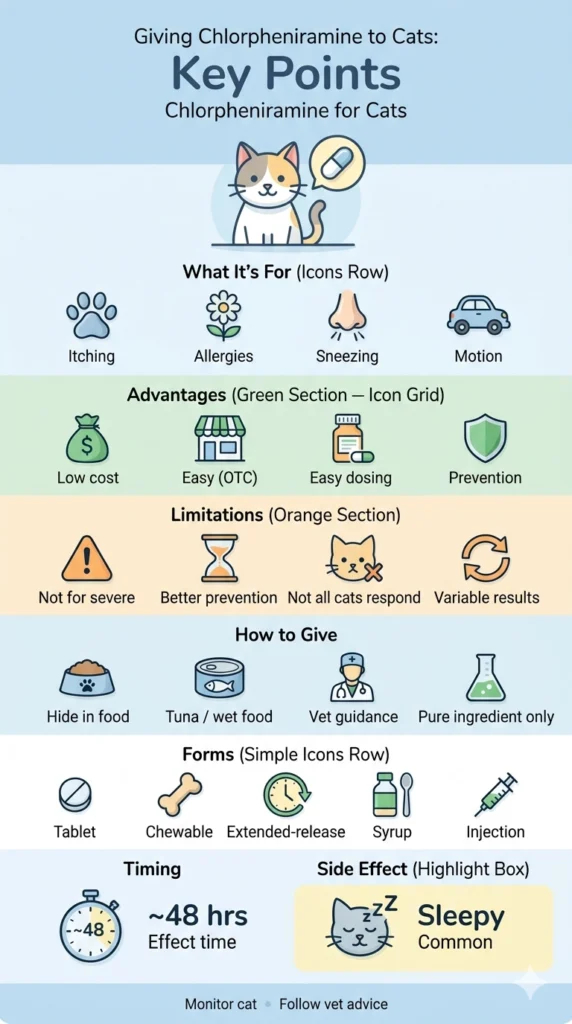
Chlorpheniramine is an antihistamine used in cats to control itching (pruritus) and other allergy-related problems. It may also be used for motion sickness in dogs and as a mild sedative. It is low-cost and available over the counter in most pharmacies, with convenient tablet sizes that make dosing easier.
Advantages
- Low cost compared to many allergy medicines
- Easily available in most pharmacies (OTC)
- Comes in convenient pill sizes
- Can help prevent allergy symptoms over time
Limitations
- May not fully control severe allergy symptoms
- Works better for prevention than strong flare-ups
- Some cats may not respond well
- Not always the most effective allergy treatment option
Administration Notes for Cats
- Often unpalatable for cats
- Can be hidden in food (like tuna or wet cat food)
- Should only be given under veterinary guidance
- Ensure product contains only chlorpheniramine (no harmful combination ingredients)
Forms Available
- Chewable tablets
- Regular tablets
- Extended-release tablets
- Oral syrup
- Injectable form
Effect Time
- Therapeutic effects may be seen within 48 hours
Side Effect
- Most common side effect: sedation (sleepiness)
Brand Names and Other Names of Chlorpheniramine
Chlorpheniramine is available in both human and veterinary formulations.
Human Brands
- Aller-Chlor®
- Chlo-Amine®
- Chlor-Trimeton®
- Chlor-tabs®
- Pharbechlor®
- Piriton®
- Generic versions
Veterinary Brands
- Histamil®
- Histodine®
- Iramine®
- Mavlab
- Niramine®
You May Also Like To Read:
- Famciclovir Dosage for Cats: Chart, Safe Use, Effects & More
- Cyclosporine (Atopica®) Dosage for Cats: Chart, Safe Use & More
FAQs About Chlorpheniramine Dosage for Cats
What symptoms does chlorpheniramine treat in cats?
It is mainly used to treat itching, irritation, and other allergy-related skin symptoms in cats.
Can you crush chlorpheniramine for cats?
No, it should not be crushed because of its bitter taste. A veterinarian may suggest a compounded form that is easier for cats to take.
Does chlorpheniramine make pets sleepy?
Yes, drowsiness is a common side effect. It usually becomes less noticeable over time, but severe sleepiness should be checked by a vet immediately.
How does chlorpheniramine compare to similar antihistamines?
Chlorpheniramine is cheaper and widely available, but newer antihistamines may be more effective and cause fewer side effects like drowsiness in some cats.
Are there alternatives to chlorpheniramine for cats?
Yes, alternatives include hydroxyzine, corticosteroids, and sometimes omega-3 fatty acids. In some cases, a combination of treatments may work better for cats.
What are the benefits of using chlorpheniramine for cats?
It helps reduce common allergy symptoms such as itching, redness, sneezing, and irritation. This makes cats more comfortable and improves their overall condition.
Final Thoughts
Chlorpheniramine is a commonly used antihistamine in cats to help manage allergy-related problems such as itching, sneezing, and other discomfort caused by histamine reactions. It is affordable, widely available, and comes in different forms, making it a practical option for many cat owners when used correctly.
However, it is not always the strongest treatment for severe allergy symptoms and may work better for preventing issues rather than controlling intense flare-ups. Some cats may also experience side effects like sedation, so careful observation is important during use.
Because chlorpheniramine may not be suitable for every cat and can interact with certain conditions or medications, it should always be given only under veterinary guidance. Ensuring the correct product, proper dosage, and safe usage is essential for the best results and your cat’s safety.
Overall, when used responsibly and as part of a vet-recommended plan, chlorpheniramine can be a helpful option for improving comfort and managing mild allergy symptoms in cats.