Famciclovir is an antiviral medication commonly used by veterinarians to treat feline herpesvirus (FHV-1) in cats, a virus that often causes sneezing, eye infections, and upper respiratory problems. Although this drug is made for humans, it is safely used off-label in cats to help control symptoms and improve their comfort.
This medication works by slowing down the virus, not killing it. Since feline herpesvirus stays in a cat’s body for life and can come back during stress or illness, famciclovir helps manage flare-ups and reduce how severe the symptoms become.
Famciclovir is usually given as a tablet or liquid and must be prescribed by a veterinarian. Getting the correct famciclovir dosage for cats is very important because the dose depends on your cat’s weight and health condition. While most cats tolerate it well, some may have mild side effects like vomiting or diarrhea.


In this guide, you’ll learn the right Famciclovir dosage for cats is an antiviral medication used to treat feline herpesvirus (FHV-1). Learn more about its uses, side effects, safety, and how it helps manage upper respiratory infections in cats effectively.
Disclaimer: This content is for informational purposes only and should not replace veterinary advice. Always consult your veterinarian before giving Famciclovir or adjusting your cat’s dosage.
Key Takeaways
- Famciclovir is an antiviral medication for cats, mainly used to manage feline herpesvirus (FHV-1).
- It does not kill the virus, but it helps slow viral replication and reduce symptoms.
- Common signs it helps control include sneezing, eye infections, fever, and nasal discharge.
- The virus stays in a cat’s body for life and can reactivate during stress or illness.
- Correct famciclovir dosage for cats must always be prescribed by a veterinarian based on weight and health condition.
- It is usually given as a tablet (or sometimes compounded liquid) and can be given with or without food.
- Most cats tolerate it well, but possible side effects include vomiting, diarrhea, decreased appetite, and increased thirst or urination.
- Serious reactions are rare, but any unusual symptoms should be reported to a vet immediately.
- Famciclovir is used off-label in cats (not FDA-approved for veterinary use), but is widely prescribed by veterinarians.
- With proper use, it can improve comfort, reduce viral shedding, and support long-term quality of life in infected cats.
What is Famciclovir for Cats?
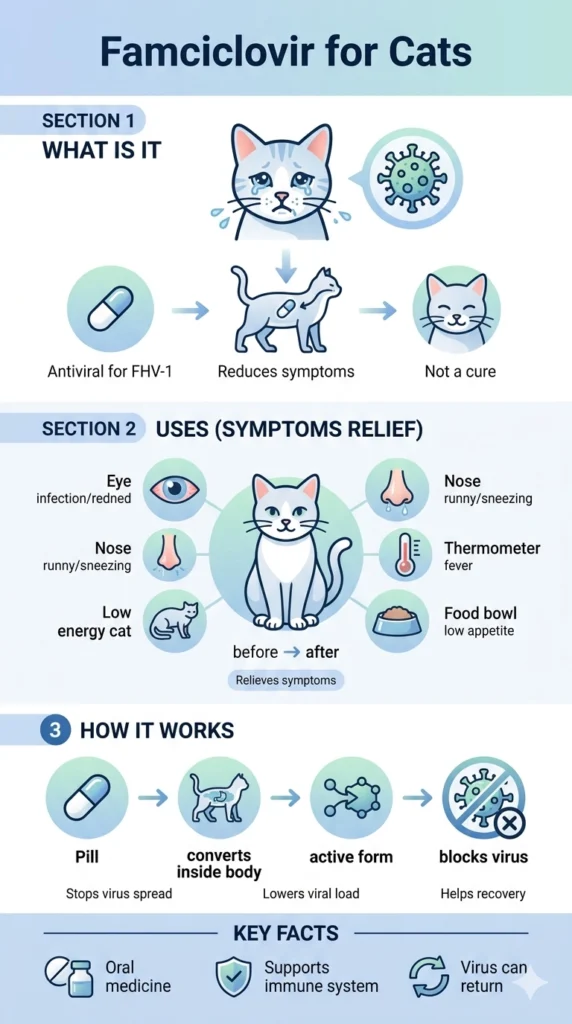
Famciclovir is an antiviral medicine used by veterinarians to treat cats with feline herpesvirus (FHV-1), a common virus that causes “cat flu” and breathing problems.
It does not kill the virus, but it slows it down, helping your cat’s immune system fight it better. This reduces symptoms and makes your cat feel more comfortable.



In a cat’s body, famciclovir changes into its active form (called penciclovir), which blocks the virus from spreading.
It is mainly used to treat symptoms like:
- Sneezing
- Runny or blocked nose
- Eye infections (red or watery eyes)
- Fever
- Low appetite
Famciclovir does not cure herpesvirus, because the virus stays in the body for life and can come back during stress. However, it helps reduce symptoms and improve your cat’s quality of life.
The medicine is usually given as a tablet or liquid and must be prescribed by a veterinarian.
Uses of Famciclovir in Cats
Famciclovir is an antiviral medicine used in cats to manage feline herpesvirus type-1 (FHV-1), which is a major cause of feline rhinotracheitis and upper respiratory infections.
Its main use is to control the spread of the herpesvirus inside the cat’s body and help reduce the severity of infection. While it does not cure the virus, it can improve symptoms and slow disease progression, helping the cat recover more comfortably.
Famciclovir is commonly used to treat or reduce symptoms such as:
- Eye infections (conjunctivitis)
- Eye ulcers
- Sneezing
- Runny nose and nasal secretions
- Fever
- Lethargy
- Loss of appetite
By reducing viral activity, famciclovir can also decrease viral shedding, shorten the duration of illness, and help prevent the condition from getting worse.
It is usually prescribed in tablet form, most commonly under the brand name Famvir®, which is originally made for humans. Although it is not a veterinary-approved drug and is sometimes debated for its absorption in animals, it is still widely considered safe and commonly used by veterinarians for cats.
Overall, famciclovir is used to manage feline herpesvirus symptoms, improve comfort, and support recovery, especially in cats affected by recurring respiratory infections.
How Famciclovir Works in Cats
Famciclovir is an antiviral medicine that helps control feline herpesvirus by stopping the virus from spreading inside a cat’s body. It does not kill the virus directly, but it prevents it from multiplying, which helps reduce the severity of infection.
Once a cat takes famciclovir, the body converts it into its active form called penciclovir. This active form works by targeting an important viral enzyme called DNA polymerase, which the herpesvirus needs to reproduce.
By blocking this enzyme, famciclovir:
- Slows down viral replication
- Reduces the overall viral load in the cat’s body
- Helps control symptoms like sneezing, eye discharge, and fever
- Decreases viral shedding, making the cat less contagious
Because the virus cannot multiply as quickly, the cat’s immune system gets more time to respond and manage the infection. This leads to improved recovery, fewer symptoms, and better overall comfort, especially in cats affected by chronic or recurring herpesvirus infections.
Dosage Of Famciclovir For Cats
The dosage of famciclovir for cats can vary depending on the cat’s weight, age, overall health, and the severity of feline herpesvirus symptoms. Because each case is different, the exact dose must always be determined by a veterinarian.
In general veterinary practice, famciclovir may be prescribed at doses ranging from 30 to 90 mg per kg of body weight, given two to three times daily. In many cases, a commonly used regimen is around 40 mg/kg every 8–12 hours, but this can be adjusted based on how severe the infection is.
For mild cases, veterinarians may start with a lower dose, while more severe infections may require higher dosing for stronger viral control. Some studies suggest that higher dosing schedules (such as 90 mg/kg every 12 hours or 40 mg/kg every 8 hours) may work faster in reducing symptoms and viral load.
The treatment duration is usually around 2 to 3 weeks, but it may be extended in more serious or recurring cases. Even if a cat starts feeling better early, it is very important to complete the full course of medication to prevent the infection from returning.
In special cases such as kittens, cats with kidney disease, or underlying health problems, vets may adjust the dosage—for example, a lower once-daily dose may be used to ensure safety. Veterinarians also consider kidney and liver function before prescribing to make sure the treatment is both safe and effective.
Most importantly, famciclovir should only be given under veterinary supervision, and never self-dosed at home, as incorrect dosing can reduce effectiveness or cause unnecessary risk.
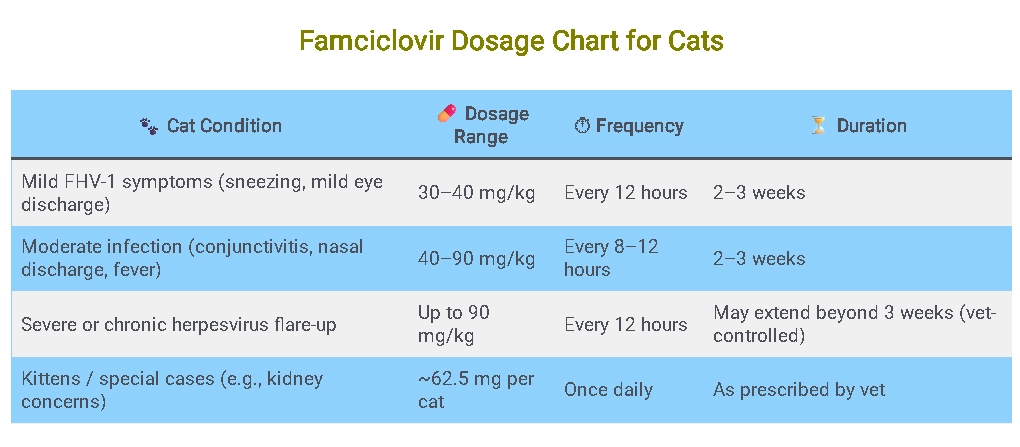
Famciclovir Dosage Chart for Cats
| 🐾 Cat Condition | 💊 Dosage Range | ⏱ Frequency | ⏳ Duration |
|---|---|---|---|
| Mild FHV-1 symptoms (sneezing, mild eye discharge) | 30–40 mg/kg | Every 12 hours | 2–3 weeks |
| Moderate infection (conjunctivitis, nasal discharge, fever) | 40–90 mg/kg | Every 8–12 hours | 2–3 weeks |
| Severe or chronic herpesvirus flare-up | Up to 90 mg/kg | Every 12 hours | May extend beyond 3 weeks (vet-controlled) |
| Kittens / special cases (e.g., kidney concerns) | ~62.5 mg per cat | Once daily | As prescribed by vet |
Important: This is a general guideline only. The exact famciclovir dosage for cats must always be prescribed by a veterinarian based on your cat’s condition.
How To Administer Famciclovir to Cats
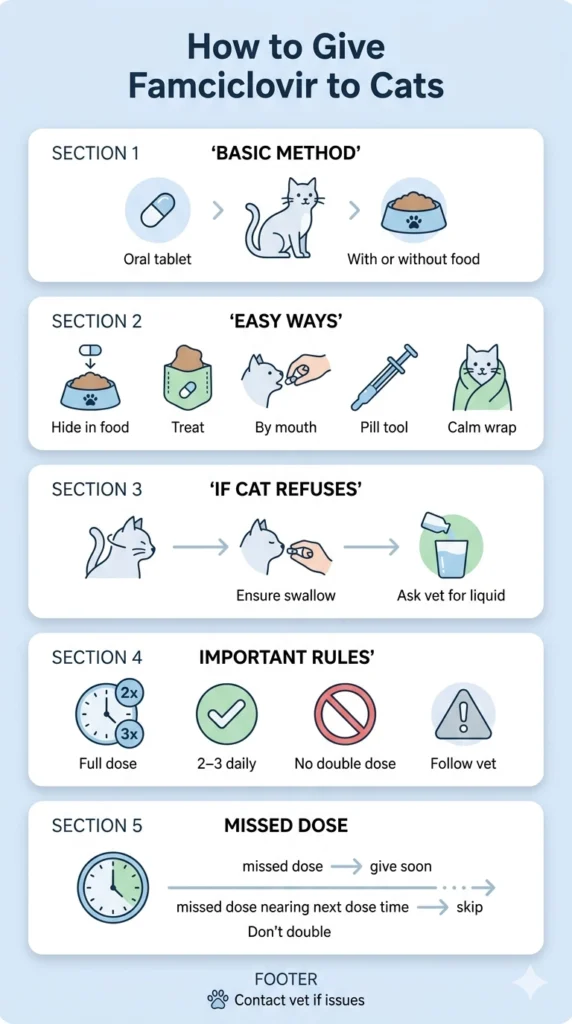
Famciclovir is given to cats as an oral tablet, usually available in 125 mg, 250 mg, and 500 mg strengths. It can be given with or without food, depending on what your cat tolerates best.
Easy Ways to Give Famciclovir
You can try these simple methods:
- Hide the tablet in a small amount of food
- Use a pill pocket treat
- Give it directly by mouth (hand pilling)
- Use a pill pusher device if needed
- Wrap your cat in a towel to keep them calm (if necessary)
Most cats accept the medicine better when it is hidden in food or treats.
If Your Cat Refuses the Tablet
If your cat refuses food or keeps spitting out the tablet:
- Give the tablet gently by hand
- Make sure the cat swallows the full dose
- Ask your vet about liquid famciclovir (compounded form)
Important Instructions
- Always give the full dose every time
- Follow vet instructions (usually 2–3 times daily)
- Do not crush or change dosage without vet advice
- Watch your cat after giving medicine for vomiting or discomfort
Missed Dose Rule
- Give the dose when you remember
- If next dose is near, skip the missed one
- Never double the dose
If your cat has difficulty taking the medicine, always contact your veterinarian for safer alternatives or dosing advice.
Side Effects of Famciclovir for Cats
Famciclovir is generally well tolerated in most cats, and many do not experience serious problems while taking it. However, like any medication, it can still cause some side effects in certain cats.
Common Side Effects
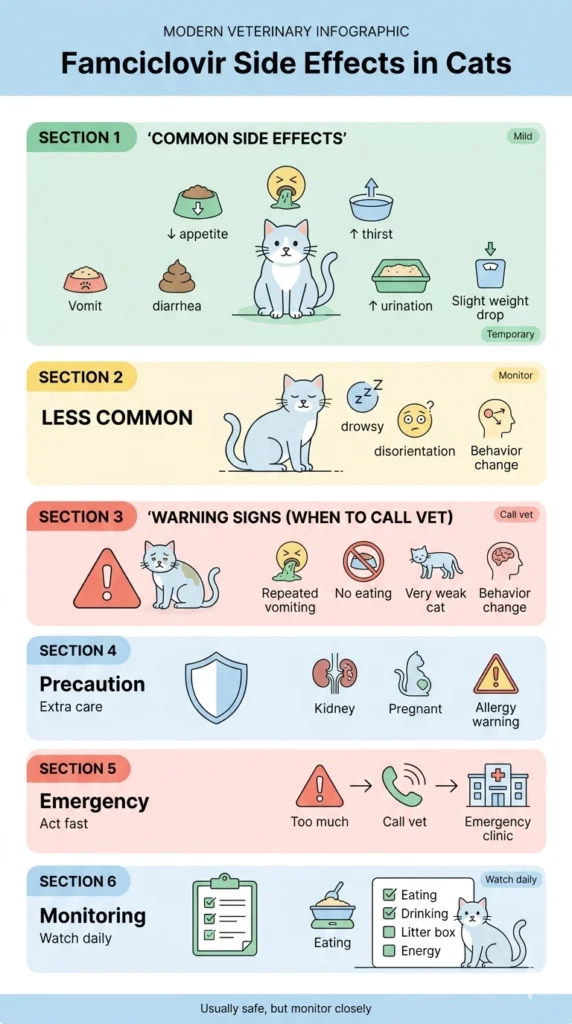
The most commonly reported side effects include:
- Decreased or loss of appetite
- Vomiting
- Diarrhea
- Increased drinking (thirst)
- Increased urination
- Mild nausea
- Weight loss
These effects are usually mild and temporary, and may improve as the cat adjusts to the medication.
Less Common but Possible Effects
Some cats may also show:
- Drowsiness or tiredness
- Mild disorientation
- Behavioral changes
These are less common but should still be monitored closely.
When to Contact a Vet
You should contact your veterinarian immediately if your cat shows:
- Persistent vomiting or diarrhea
- Severe loss of appetite
- Extreme lethargy (very weak or inactive)
- Noticeable behavior changes
- Worsening condition instead of improvement
In some cases, the vet may adjust the dose or stop the medication if side effects are significant.
Precautions Before Use
Famciclovir should be used carefully in:
- Cats with kidney disease
- Pregnant or nursing cats
- Cats allergic or sensitive to famciclovir or related drugs
In these cases, side effects may be stronger, so veterinary supervision is very important.
Overdose & Emergency
If you think your cat has taken too much famciclovir:
- Contact your veterinarian immediately
- Visit an emergency animal clinic if needed
- You may also contact pet poison support services for guidance
Important Monitoring Tip
During treatment, watch your cat closely:
- Eating and drinking habits
- Litter box changes
- Energy level and behavior
Early monitoring helps detect side effects quickly and keeps your cat safe during treatment.
Potential Drug Interactions With Famciclovir in Cats
Famciclovir does not have many well-known drug interactions in cats, but caution is still important because some medications used in humans can interact with it. While most of these drugs are not commonly used in veterinary care, your veterinarian will always check whether famciclovir is safe to use alongside any other treatments your cat may be receiving.
Before starting famciclovir, it is very important to inform your vet about:
- Any other prescription medications your cat is taking
- Vitamins or dietary supplements
- Any over-the-counter products or herbal treatments
This helps the veterinarian avoid possible interactions and ensure the treatment is safe and effective for your cat.
How to Store Famciclovir for Cats
Proper storage of famciclovir is important to keep the medicine effective and safe.
Basic Storage Guidelines
- Store at room temperature (68–77°F / 20–25°C)
- Keep away from direct sunlight and moisture
- Keep the container tightly closed
- Store in a child-proof and pet-safe location
- Always check the expiration date and discard expired medicine
Additional Important Notes
- Short exposure to temperatures between 59–86°F (15–30°C) is usually acceptable
- Always follow the storage instructions on the medication label
- If using a compounded form, follow the pharmacy’s specific storage instructions
Safety Reminder
Keep famciclovir out of reach of children and pets at all times to prevent accidental ingestion.
Is Famciclovir FDA-Approved for Cats?
Famciclovir is FDA-approved for human use, but it is not FDA-approved specifically for veterinary use in cats. Even so, veterinarians commonly prescribe it because it has been shown to be effective in managing feline herpesvirus (FHV-1) infections.
When a human medicine is used in animals, it is called extra-label or off-label use. This means the medication is not officially labeled for cats, but veterinarians are legally allowed to prescribe it when they believe it is beneficial and safe for the patient.
Because it is not officially approved for cats, treatment decisions such as dosage, duration, and safety monitoring are based on veterinary experience, clinical studies, and the cat’s individual condition.
Compounded Famciclovir for Cats
In some cases, veterinarians may recommend a compounded form of famciclovir. This means the medication is specially prepared by a pharmacy or veterinarian to better suit a cat’s specific needs.
Compounded famciclovir may be used when:
- A cat cannot easily take standard tablet forms
- The required dosage strength is not commercially available
- The cat is allergic or sensitive to ingredients in regular tablets
- A liquid or easier-to-give form is needed for better compliance
It is important to know that compounded medications are not FDA-approved, but they are prepared individually to meet a specific patient’s requirements.
Your veterinarian will decide whether standard famciclovir or a compounded version is best based on your cat’s health condition and treatment needs.
You May Also Like To Read:
- Cyclosporine (Atopica®) Dosage for Cats: Chart, Safe Use & More
- Terramycin Dosage for Cats: Safe Use, Eye Ointment Guide & Vet Advice
FAQs About Famciclovir for Cats
How long can a cat stay on famciclovir?
Famciclovir is generally well tolerated and is often given for several weeks at a time, depending on the cat’s condition. The exact duration should always be decided by your veterinarian based on diagnosis and response to treatment.
How long does it take for famciclovir to work in cats?
Famciclovir begins working within a few hours after dosing, but visible improvement may take several days. In some cats, full improvement may take 1–3 weeks, depending on the severity of the infection.
Can famciclovir cause vomiting in cats?
Yes, in some cats famciclovir may cause mild digestive upset, including vomiting. Giving the medication with food can help reduce the chance of stomach irritation.
Is famciclovir safe for cats?
Yes, famciclovir is generally considered safe and well tolerated in cats when used correctly. However, some cats may experience mild side effects like:
Vomiting
Reduced appetite
Increased drinking
Always contact your veterinarian if you notice any unusual symptoms.
What if I miss a dose of famciclovir?
If you miss a dose, contact your veterinarian for advice. In most cases:
Give the dose when you remember (if not too close to the next dose)
Skip it if it is almost time for the next dose
Never double dose or overdose
How long do cats usually take famciclovir?
Most cats take famciclovir for about 2–3 weeks, although treatment may be extended in more severe or chronic cases.
Should cats take famciclovir with food?
Famciclovir can be given with or without food. If your cat has a sensitive stomach, giving it with a small meal or treat may help reduce the risk of vomiting.
Final Thoughts
Famciclovir is an important antiviral medication for cats, mainly used to manage feline herpesvirus (FHV-1), a common cause of upper respiratory infections. While it does not completely cure the virus, it helps slow viral replication, reduce symptoms like sneezing, eye discharge, and fever, and improve overall comfort and quality of life.
Correct use of this medication depends on following the right famciclovir dosage for cats, which is always determined by a veterinarian based on your cat’s weight, age, and health condition. It is usually given in tablet form and can be administered with food or directly by mouth, depending on what your cat tolerates best.
Like any medication, famciclovir may cause mild side effects such as vomiting, diarrhea, or changes in appetite, but most cats tolerate it well when properly prescribed and monitored. Regular veterinary guidance is essential to ensure safe and effective treatment, especially in cats with underlying health issues.
Overall, famciclovir is a valuable supportive treatment that helps control feline herpesvirus flare-ups and improves the long-term wellbeing of infected cats when used correctly under veterinary supervision.