When an animal stops eating, it can quickly become a serious health concern in the cat. Understanding the appropriate dosage of mirtazapine for cats is crucial as it is commonly used by veterinarians to help stimulate appetite, reduce nausea, and promote weight gain – particularly in cats with other underlying diseases, such as kidney or digestive diseases. Originally developed for nausea, mirtazapine has been further developed to be available in both oral and transdermal (ear ointment) forms, making them easier to administer.
While it is relatively safe and effective, correct dosing for Cats and veterinary advice are important to prevent adverse reactions or overdose.
In This We Will Discover the safe mirtazapine dosage for cats, its benefits, uses, side effects, and precautions. Learn how this appetite stimulant supports weight gain and overall feline health.
Disclaimer: This article is for informational purposes only. Always consult a veterinarian before giving mirtazapine or any medication to your cat.


In this Guide, We Will Cover All These Topics
- What is mirtazapine for cats?
- What Does Mirtazapine Do for Cats?
- How Does Mirtazapine Work in Cats?
- Uses of mirtazapine in cats
- Benefits of Mirtazapine for Cats
- Mirtazapine for Cats: Safe Anxiety Treatment Guide
- Mirtazapine dosage for cats
- Dosage Chart
- Side Effects of Mirtazapine in Cats
- Concerns and Precautions When Using Mirtazapine for Cats
- Signs of Mirtazapine Toxicity in Cats
- How to Give Mirtazapine to Cats Safely
- Alternatives to Mirtazapine for Cats
- Frequently Asked Questions (FAQs)
- Final thoughts
Key Takeaways: Mirtazapine Dosing for Cats
- Mirtazapine is a veterinarian allotted medication for boosting appetite, reducing nausea, and weight gain in cats.
- The appropriate dosage of mirtazapine for cats is based on factors such as weight, age, and underlying health conditions.
- It comes in oral tablets as well as transdermal (ear ointment) forms for easy administration.
- Mirtazapine is often prescribed to cats with kidney disease, liver problems, infections or loss of appetite (anorexia).
- Proper dosing is critical– overdosing can cause some serious side effects or toxicity.
- Common side effects are increased vocalization, restlessness and mild digestive upset.
- More serious reactions, but rare, may include increased heart rate, agitation or tremors.
- The medication normally works within a few hours to a day, which helps improve the appetite in a short period of time.
- It should only be used under veterinary supervision and particularly for senior or medically compromised cats.
- Always adhere to vet-recommended dosage and never vary the dosage without professional advice.
1. What is Mirtazapine for Cats?
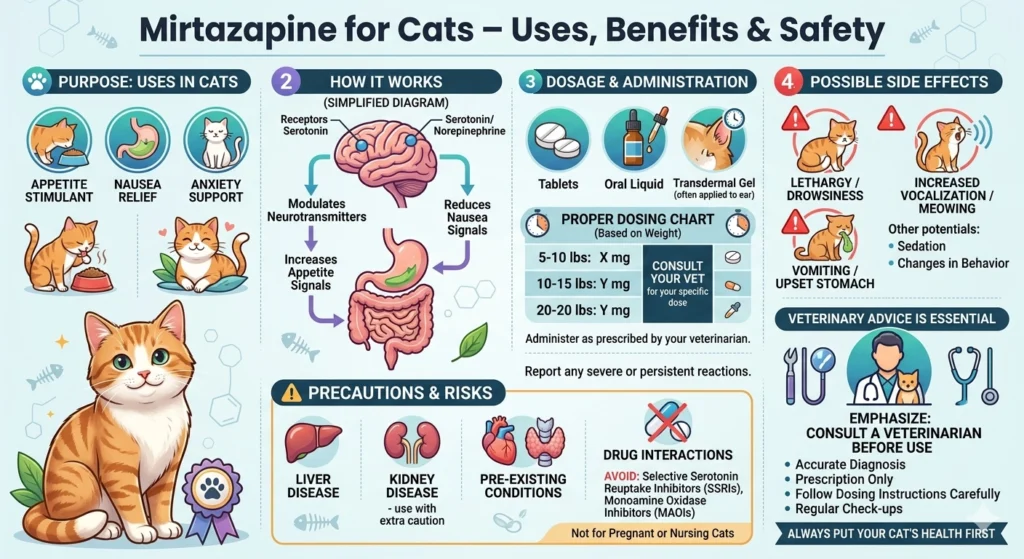
Mirtazapine is a prescription drug that was developed as an antidepressant, but is used in veterinary medicine generally as an excellent appetite stimulant for cats. It is most commonly prescribed to the cat that has stopped eating (anorexia), which helps to restore appetite, reduce nausea and gain weight during illness or recovery.
This medication works by influencing the important chemicals in the body. Mirtazapine boosts the levels of a substance called norepinephrine that serves as both a neurotransmitter and a stress hormone. It is involved in the body’s “fight or flight” response, which results in increased heart rate, better blood flow to the muscles, release of glucose for energy, and increased supply of oxygen to the brain. These effects are responsible for stimulating appetite and activity levels in cats in general.
Mirtazapine is also a tetracyclic, which works by blocking certain receptors in the brain. It blocks the presynaptic alpha 2 receptors, which in turn promotes the release of norepinephrine and epinephrine. In addition, it influences serotonin by blocking certain receptors (5HT2 and 5HT3), which are involved in mood, digestion and appetite control. This combination action assists in helping to reduce nausea and increase a cat’s desire to eat.
Another important feature of mirtazapine is that it has an antihistamine action, because it blocks the H1 receptors. This can result in mild sedative effects in some cats. The medication may also promote weight gain through the effect on factors such as tumor necrosis factor (TNF) and leptin, which are related to appetite and metabolism – which means that it is important to carefully monitor weight gain and prevent excessive weight gain or obesity.


Veterinarians commonly prescribe mirtazapine to cats suffering from problems such as:
- Chronic kidney disease
- Liver disease
- Digestive disorders
- Infections or other illnesses that result in a loss of appetite
It is available in oral tablet form as well as a transdermal ointment which is applied into the ear and is, therefore, more easily administered depending on the cat’s needs.
While mirtazapine is generally regarded to be safe and effective, it should only be used under veterinary care. The right dosage is essential considering the cat’s weight, age, and general health condition, so as to ensure safety and effectiveness in the treatment.
2. What Does Mirtazapine Do to Cats?
Mirtazapine: Mirtazapine is widely used by veterinarians to stimulate appetite and reduce nausea in cats, and thus is particularly helpful in those that are not eating enough, or are losing weight. Its main function is to stimulate food intake, so that cats can keep their weight at a healthy level or regain it.
This is especially important for cats suffering from chronic kidney disease (CKD) or other health problems that cause loss of appetite and weight loss. By enhancing appetite and alleviating nausea, mirtazapine aids with calorie intake, which contributes towards overall health and recovery.
In simple terms mirtazapine assists cats to consume more food, feel less nauseous and maintain gain or weight hence is a useful treatment option in controlling appetite related problems in feline care.
3. How Does Mirtazapine Work in Cats?
Mirtazapine works by affecting several brain chemicals (neurotransmitters) responsible for controlling appetite, nausea, and well-being of a cat. It’s its unique multi-action mechanism that makes it so effective for cats that are not eating properly, due to illness or side effects of treatment.
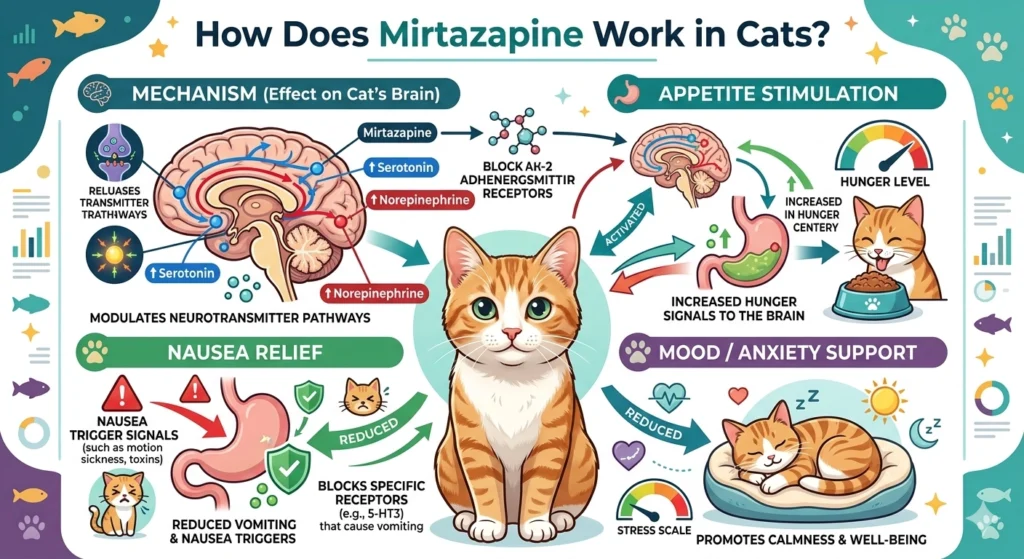
One of its important activities is as an anti-nausea. Mirtazapine works by stimulating the intestinal neuroreceptors and blocking the signals that would normally stimulate the 5-HT3 receptors in the brain that are responsible for the reflex vomiting mechanism. By interrupting this pathway it helps to reduce nausea and vomiting.
At the same time, mirtazapine boosts the activity and release of neurotransmitters such as norepinephrine and serotonin, which are important. Norepinephrine is involved in emotions, sleep, dreaming and learning; serotonin helps to control mood, relaxation and appetite. This increase is helpful to increase the appetite and improve the general condition of the cat.
Additionally, mirtazapine inhibits some of the actions of serotonin in the gastrointestinal (GI) tract, which is further evidence of its role as an appetite stimulant. It also affects receptors that are associated with hunger signals, so cats also get an urge to eat more.
In simple terms, mirtazapine acts on the brain and body to minimize nausea, stop vomiting, and boost hunger, so that cats will feel less sick and more inclined to eat, especially when they are struggling with appetite loss as a result of medical conditions.
4. Uses of Mirtazapine in Cats
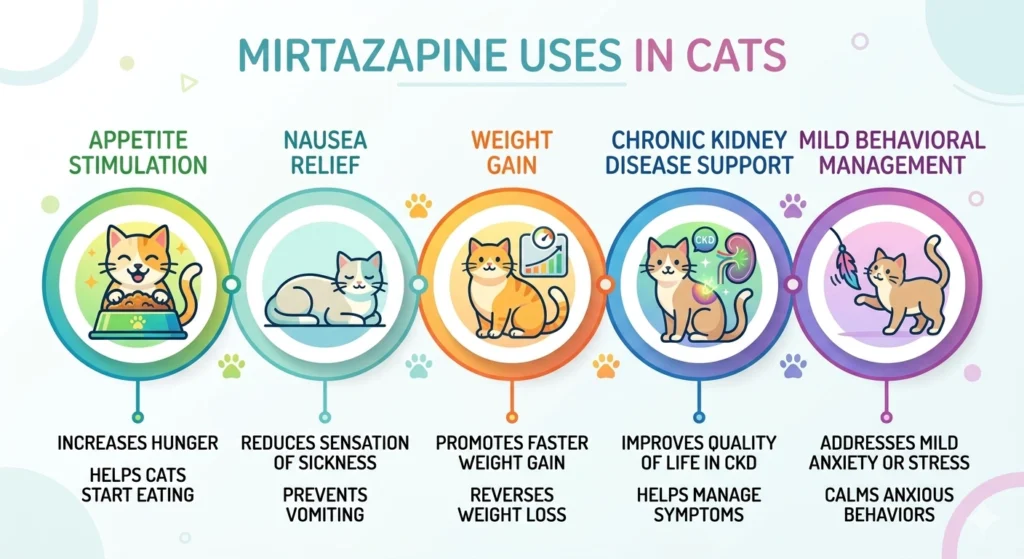
Mirtazapine is a prescription drug commonly used in cats to help address appetite loss, nausea, and some supportive care requirements, especially during illness or the healing process. Veterinarians often prescribe it to cats not eating because of medical conditions, stress or post procedures and it helps to manage the level of comfort and general health.
The main indication of treatment of cats with mirtazapine is to stimulate the appetite, especially in case of anorexia or inappetence. It helps to encourage cats to begin eating again which is critical to try and maintain energy levels, aid in recovery and prevent further weight loss.
In addition to stimulating the appetite, mirtazapine is used to:
- Reduce nausea and vomiting, ease the ability of cats to tolerate food
- Support weight gain, particularly for underweight or sick cats
- Assist cats with chronic illnesses (such as kidney disease) which often cause poor appetite
Mirtazapine may also be used in relieves of mild anxiety for illness or veterinary procedures. In some circumstances, veterinarians may consider it for behaviour problems such as anxiety-related problems or obsessive grooming, although these uses are less established and may vary depending on the individual cat.
Overall, mirtazapine is an important component in supportive feline care, but the use of mirtazapine should always be guided by a veterinarian. Understanding its uses, proper dosing, potential side effects and safety considerations helps to ensure the best outcomes for a cat’s health and well-being.
5. Benefits of Mirtazapine for Cats
- Improves appetite → helps cats start eating again
- Reduces nausea → makes them feel less sick
- Supports weight gain → useful for underweight or ill cats
- Enhances recovery → helps sick or post-surgery cats regain strength
- Easy to give → available as tablets or ear ointment (transdermal)
Overall, it helps cats feel better and eat more, which is key for recovery and health.
6. Mirtazapine for Cats Safe Anxiety Treatment Guide
Mirtazapine is occasionally used in anxious cats, but it is not an anxiety medication. Its primary function is to stimulate the appetite; however, it may show some slight calming effect in some cases. It is most useful when you have a loss of appetite associated with anxiety (versus the main problem of the anxiety).
Is it Safe for Anxiety in Cats?
Mirtazapine is usually a safe medication when prescribed by a veterinarian, but it is not usually the first drug of choice for the treatment of anxiety alone. Vets may consider it when anxiety is causing a cat to stop eating or if stress is impacting the overall health.
How It Affects Anxiety
Mirtazapine works by affecting chemicals in the brain or brain chemicals such as serotonin and norepinephrine, which can:
- Slightly improve mood
- Occasionally take some mild stress down
- Most importantly, restore appetite to stressed cats
However, responses can vary. In some cats it may have the opposite effect such as:
- Restlessness
- Increased vocalization
When Vets May Use It for Anxious Cats
Veterinarians may prescribe mirtazapine in cases of:
- Anxiety causes loss of appetite
- Illness and stress combined to exacerbate eating problems
- Cats are both nauseous and experience stress
When It’s Not Ideal
Mirtazapine is not the best choice for primary anxiety problems such as the presence of severe fear, aggression, or extreme stress. In these situations, veterinarians typically want to use other types of medications or behavioural treatments.
Safety Tips
Always under veterinary guidance
Strictly follow the dosage
Watch your cat for any changes in its behaviour that are unusual
Mirtazapine has limited (indirect) use in treating anxious cats by helping to increase appetite and comfort, but is not a specific treatment for anxiety.
7. Mirtazapine Dosage for Cats
The appropriate correct mirtazapine dosage in cats depends on the type of the drug, the weight and health status of the cat and how well it tolerates the drug. Because of this, dosing should always be determined and monitored by a veterinarian in order to ensure both safety and effectiveness.
Oral Tablet Dosage
Mirtazapine is usually administered as a tablet form to act as an appetite stimulant and an anti-nausea drug.
- Typical dose: 1.88 mg to 3.75 mg per cat
- Frequency: typically 24 to 48 hours, but also as long as 72 hours
- The lower dose (1.88 mg) is often preferred in the beginning, as it has a lower risk of side effects
- Tablets are usually available in the doses of 7.5 mg and 15 mg, so dosages are accordingly modified
The exact interval of dosing time may vary, and a cat’s appetite and response needs to be closely followed in order to determine the optimal schedule.
Transdermal (Topical) Dosage
Mirtazapine is also available in the form of a transdermal ointment which is applied to the inner surface of the ear (pinna) and is therefore easier for cats that resist oral medication.
- Standard dose: 2 mg per cat
- Application: approx. 0.1g of ointment (approx. 3.8cm/1.5 inch ribbon)
- Frequency: usually 1 time once every 24 hours for 14 days
- Designed for cats that weigh around 2 to 7kg
A frequently used product, Mirataz, is approved by the FDA for weight loss control in cats using this dosing method.
Important Safety Instructions
- Always follow veterinary instructions – dosage is specific to your cat’s needs
- Never human dose as overdose can be toxic
- Cats with kidney or liver disease may need to have their doses adjusted
- Monitor for side effects such as vocalization, restlessness, vomiting or agitation
- Precautions Used During Application (Transdermal)
Application Precautions (Transdermal)
- Wear gloves to avoid its absorption through human skin by accident
- Apply to inner ear flap (pinna) by using a finger or thumb
- Avoid direct skin contact, as the medication may be absorbed by humans
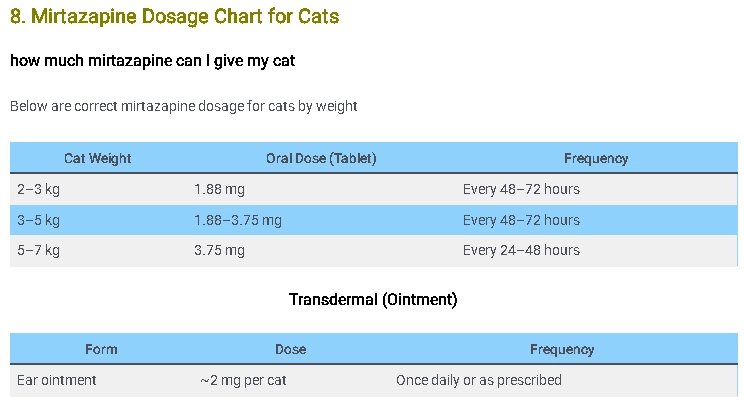
8. Mirtazapine Dosage Chart for Cats
how much mirtazapine can I give my cat
Below are correct mirtazapine dosage for cats by weight
| Cat Weight | Oral Dose (Tablet) | Frequency |
|---|---|---|
| 2–3 kg | 1.88 mg | Every 48–72 hours |
| 3–5 kg | 1.88–3.75 mg | Every 48–72 hours |
| 5–7 kg | 3.75 mg | Every 24–48 hours |
Transdermal (Ointment)
| Form | Dose | Frequency |
|---|---|---|
| Ear ointment | ~2 mg per cat | Once daily or as prescribed |
9. Side Effects of Mirtazapine in Cats
Mirtazapine is usually safe and well tolerable in cats, especially when administered in the proper dose. However, like any other medication, it may cause side effects. Most are mild and temporary but some may require veterinary attention.
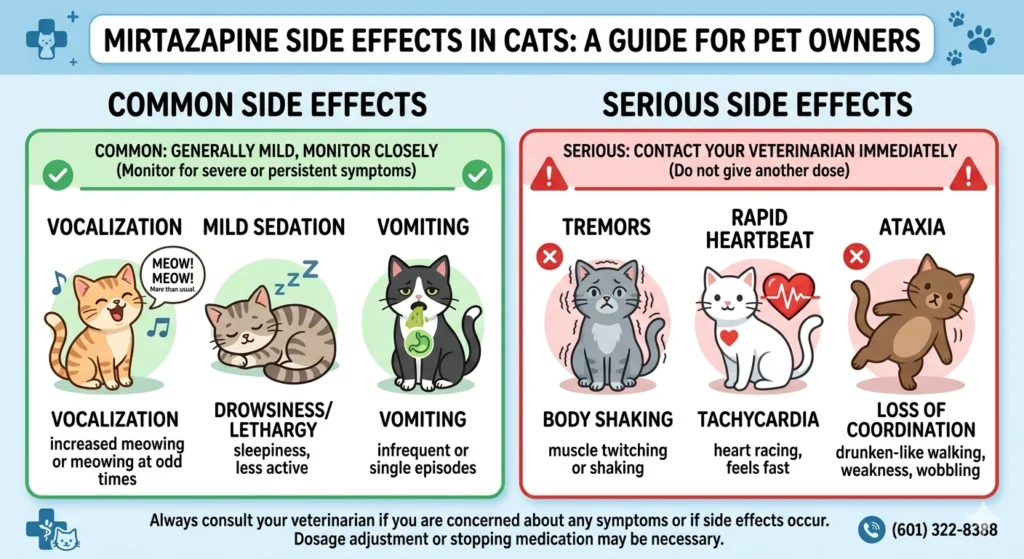
Common Side Effects
These are the most reported effects, particularly orally:
- Increased vocalization (increased meowing compared to usual)
- Inability to stay still or hyperactivity
- Mild sedation or sleepiness
- Vomiting or drooling (salivation)
- Increased Appetite – Weight Gain (Expected Effect)
Less Common or Serious Side Effects
Some cats may have stronger reactions including:
- Tremors or shaking
- Increased heart rate (tachycardia)
- Low blood pressure
- Lethargy or extreme fatigue
- Agitation or abnormal behavior
- Aggression or more attention seeking behavior
- Increased liver enzymes
- Abnormal walking or co-ordination problems (ataxia)
- Dehydration and increased urination (polyuria)
- Rapid breathing (tachypnea)
Side Effects of Transdermal (Topical) Mirtazapine
When applied to the ear additional side effects may include:
- Skin irritation (redness, dryness, flaking at the site of application)
- Lethargy or hyperactivity
- Vomiting
10. Concerns and Precautions When Using Mirtazapine for Cats
Mirtazapine can be very effective for cats, but it requires careful use to avoid risks.
Key Concerns
- Overdose risk: Too much can cause tremors, rapid heart rate, severe lethargy, or neurological problems.
- Pre-existing conditions: Cats with kidney or liver disease may need lower doses.
- Behavioral changes: Some cats may become restless, hyperactive, or more vocal.
- Drug interactions: Avoid combining with medications affecting serotonin or norepinephrine without veterinary advice.
- Appetite changes: Excessive eating may lead to weight gain.
Important Precautions
- Veterinary supervision only: Never use human mirtazapine or change the dose on your own.
- Correct dosing: Follow your vet’s instructions for oral tablets or transdermal ointment.
- Monitoring: Watch for vomiting, drooling, agitation, or lethargy.
- Gradual introduction: Start at the lowest effective dose, especially in sensitive cats.
- Prevent accidental ingestion: Keep medication out of reach of children and other pets.
With proper dosing, monitoring, and veterinary guidance, mirtazapine is generally safe and effective. Misuse or lack of supervision, however, can lead to serious complications.
11. Signs of Mirtazapine Toxicity in Cats
- Tremors or shaking
- Severe restlessness or hyperactivity
- Rapid or irregular heart rate
- Lethargy or extreme fatigue
- Vomiting or diarrhea
- Unusual vocalization or agitation
- Seizures (in severe cases)
- Loss of coordination
What to Do
- Stop administration immediately
- Contact your veterinarian or an emergency clinic
- Bring medication details (dose, frequency, formulation)
Important: Even small overdoses can cause significant effects in cats due to their sensitivity to mirtazapine. Always follow veterinary dosing and monitor closely.
12. Steps to Give Mirtazapine To Cat Safely
- Follow the Veterinarian’s Instructions
- Use the exact dose, frequency, and form prescribed (oral tablet or transdermal ointment).
- Choose the Appropriate Form
- Oral tablets: Give with food if recommended; hide in a treat if needed.
- Transdermal ointment: Apply inside the ear (pinna) as instructed; do not let the cat lick it.
- Start Low and Monitor
- Begin with the lowest effective dose to reduce side effects.
- Watch for restlessness, vocalization, vomiting, or lethargy.
- Avoid Overdosing
- Never give human mirtazapine tablets.
- Do not give more frequently than prescribed.
- Special Considerations
- Cats with kidney or liver disease may need adjusted doses.
- Store medication safely away from children and other pets.
- Regular Check-ins with Vet
- Report side effects or unusual behavior promptly.
- Follow up to assess appetite, weight, and overall response.
Key Point: Safe administration relies on accurate dosing, careful monitoring, and veterinary supervision.
13. Alternatives to Mirtazapine for Cats
Mirtazapine is commonly used for appetite stimulation, nausea, and mild calming effects in cats, but there are alternatives depending on the cat’s needs.
Appetite Stimulants
- Cyproheptadine – antihistamine that increases appetite in cats
- Capromorelin (Entyce) – ghrelin receptor agonist, stimulates hunger and weight gain
Anti-Nausea / Anti-Vomiting
- Maropitant (Cerenia) – effective for nausea and vomiting
- Ondansetron – used for severe vomiting, often in chemotherapy or kidney disease
Anxiety / Behavior Support
- Gabapentin – for stress-related behaviors, mild calming effect
- Fluoxetine (Prozac) – SSRI used for chronic anxiety or compulsive behaviors
- Behavioral enrichment – pheromone diffusers, environmental modification
Important Notes
- Choice depends on the primary problem (appetite loss, nausea, anxiety, or combination)
- All medications should be prescribed and dosed by a veterinarian
- Some alternatives may be safer in cats with kidney or liver disease
Mirtazapine is often chosen for dual effects (appetite + nausea), but alternatives can target specific issues with potentially fewer side effects.
You May Also Like To Read:
FAQs
What is mirtazapine used for in cats?
Primarily as an appetite stimulant and anti-nausea medication.
Can help cats with weight loss, chronic illness, or post-surgery recovery.
Sometimes has mild calming effects but is not a primary anxiety medication.
How quickly does it work?
Appetite stimulation: usually within 24 hours.
Nausea relief: may take 1–2 days.
Weight gain: several days of consistent use.
How is it given to cats?
Oral tablets: given by mouth, sometimes with food.
Transdermal ointment: applied inside the ear (pinna).
What is the safe dosage?
Oral tablets: 1.88–3.75 mg per cat, every 24–72 hours (depending on weight and vet recommendation).
Transdermal ointment: ~2 mg per cat, applied 2–3 times per week.
Always follow veterinary instructions.
What are common side effects?
Increased vocalization
Restlessness or hyperactivity
Mild sedation
Vomiting or drooling
Weight gain (usually intended)
Can mirtazapine treat anxiety in cats?
Not as a primary treatment.
May help indirectly if anxiety causes poor appetite.
How to give it safely?
Follow vet’s dose and schedule
Monitor for side effects
Start with the lowest effective dose
Avoid accidental ingestion by children or other pets
Final Thoughts
Mirtazapine is a very efficient appetite stimulant for cats, which helps to increase weight gain mainly due to increased food intake. It is particularly helpful for cats with poor appetite, weight loss or chronic illnesses.
Key Points
Starting doses:
1.88 mg orally 24 hours apart for healthy adult cats
orally 1.88 mg every 48 hours for elderly cats, or cats with kidney or liver disease
Side effects: Mostly dose-related – less likely at lower doses; most cats tolerate mirtazapine well.
Transdermal administration: Products such as Mirataz provide dosing by ear, thus making it easier for cats who resist oral medication. The labelled dose is 2 mg once daily and can be effective at promoting weight gain.
Veterinary guidance: Always seek veterinary advice before initiating, modifying or combining medications. Do not give humans doses to pets without professional supervision.
Mirtazapine is a good and safe therapeutic option to support cats that are experiencing problems with appetite loss or weight loss. When administered at appropriate doses and under veterinary supervision it is well-tolerated and can make a big difference to the cat’s nutrition and overall health.