If your cat is struggling with ongoing gastrointestinal problems, chronic diarrhea, or certain respiratory and skin infections, finding the right treatment can feel overwhelming. Many pet owners try vitamins, supplements, or specialized nutrition to ease their cat’s discomfort, but when these interventions don’t work, it may be time to consider antibiotic therapy.
Tylosin is a veterinary-prescribed antibiotic that can help manage these persistent issues and, in some cases, reduce inflammation in cats.
This guide Learn about Tylosin Dosage for cats, including its uses, how it works, safe dosages, administration tips, side effects, and precautions. Ensure your cat’s digestive health with expert guidance.
Keep in mind that a prescription from your veterinarian is required to obtain tylosin, and proper dosing is essential to ensure effectiveness and prevent potential side effects.
Disclaimer: This content is for informational purposes only and should not replace veterinary advice. Always consult your veterinarian before giving Tylosin or adjusting your cat’s dosage.


Key Takeaways
- Tylosin (brand name Tylan®): is a prescription antibiotic with anti-inflammatory properties that is used mainly for chronic diarrhea, colitis, inflammatory bowel disease (IBD), and some infections in cats.
- It is frequently used off-label in cats, which means it can be used even though it may not have been approved for use in that species or condition.
- How it works: Tylosin is a bacteriostatic antibiotic, preventing bacteria from reproducing, and it also decreases the inflammation in order to aid the recovery.
- Administration: Mostly administered orally as a powder or capsule, occasionally injectable. Can be administered with or without food but always follow your veterinarian’s instructions.
- Onset of action: Starts working in 1 – 2 hours but full effects may take 24 hours to 3 days.
- Side effects: Rare, can include diarrhea, lack of appetite, itching at injection site, or itching of the skin. Allergic reactions are rare but possible.
- Precautions: Avoid in horses, dogs allergic to them and pregnant / lactating cats. Be careful in case of some medications and pets that have been treated with erythromycin.
- Consult your veterinarian: Always consult your vet before starting any medication such as tylosin to ensure proper dosage, duration, and safety.
What is Tylosin for Cats?
Tylosin (brand name Tylan®) is a prescription anti-inflammatory antibiotic used in cats, dogs, and small mammals. It is primarily prescribed for chronic diarrhea, colitis (inflammation of the colon), inflammatory bowel disease (IBD), and exocrine pancreatic insufficiency (EPI).
In cats, tylosin is frequently used off-label, which means that it is effective even though it is not specifically approved for that use. Its anti-inflammatory properties can also be beneficial in some cases of respiratory and skin infections.
Tylosin is a member of the macrolide family of antibiotics, like erythromycin. To ensure safety and effectiveness, it is important to follow your veterinarian’s instructions carefully when giving tylosin to your cat.


Uses of Tylosin for Cats
Tylosin is a multi-purpose antibiotic that is useful for the control of a number of conditions in cats. Its main uses include:
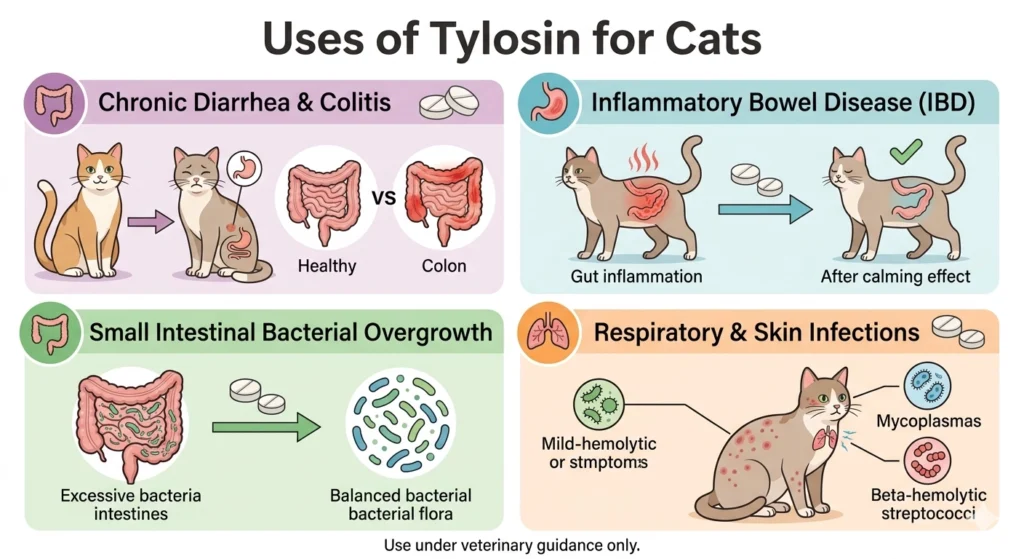
- Chronic diarrhea and colitis – commonly used clients with inflammation of the colon and chronic digestive problems.
- Inflammatory bowel disease (IBD) – helps reduce the inflammation in the intestine in cats suffering chronic gut issues.
- Small intestinal bacterial overgrowth – this may assist in balancing the bad bacteria in the intestines.
- Certain respiratory and skin infections – used for infections caused by bacteria such as mycoplasmas or group beta-hemolytic streptococci.
Tylosin works best against mycoplasmas and has a similar antibacterial range to erythromycin, though it is generally less strong against other bacteria. In cats, it is usually given orally under veterinary guidance.
How Does Tylosin Work?
Tylosin is a bacteriostatic (as opposed to bactericidal) antibiotic, meaning it inhibits reproductive ability in bacteria, as opposed to killing them outright. By preventing the bacterial growth, it gives your cat’s natural defense time to clear up the infection.
Tylosin also works by preventing the bacteria from producing proteins, which further slows the growth rate of the bacteria. In addition, it also has anti-inflammatory properties that help to reduce swelling and inflammation, providing your cat with relief and supporting recovery.
Tylosin Dosage for Cats
Tylosin Dosage for Cats is dependent upon the condition being treated, your cat’s weight and response to treatment. Always consult your veterinarian and finish the total prescription, even when your cat seems to feel better, so they do not relapse.
Typical Cat Dosages:
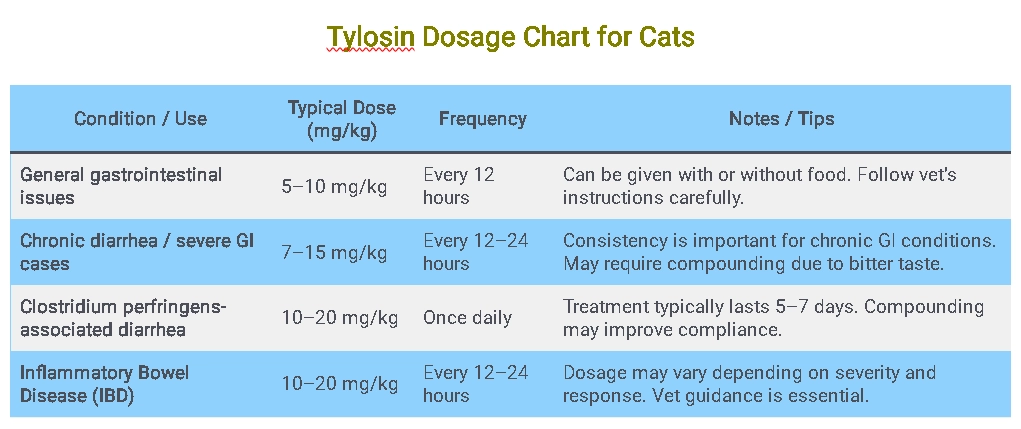
General gastrointestinal problems: 2.5-5 mg /lbs (5 – 10 mg /kgs) every 12 hours.
Chronic GI or severe diarrhea cases: 7 – 15 mg/kg orally every 12 – 24 hours.
Clostridium perfringens-associated diarrhea: 10 to 20 milligrams per kilogram of body weight orally once every day for 5 to 7 days.
Practical Tips to Administration:
- Can be administered with or without food.
- Due to its bitter flavor, tylosin may have to be compounded in capsules or food for easier administration.
- If a dose is missed, administer the next dose due – do not double up unless you are instructed to do so by your veterinarian.
- Consistency is important with chronic gastrointestinal conditions.
Very Important: Always follow the instructions of your veterinarian for safe and effective dosing.
Tylosin Dosage Chart for Cats
| Condition / Use | Typical Dose (mg/kg) | Frequency | Notes / Tips |
|---|---|---|---|
| General gastrointestinal issues | 5–10 mg/kg | Every 12 hours | Can be given with or without food. Follow vet’s instructions carefully. |
| Chronic diarrhea / severe GI cases | 7–15 mg/kg | Every 12–24 hours | Consistency is important for chronic GI conditions. May require compounding due to bitter taste. |
| Clostridium perfringens-associated diarrhea | 10–20 mg/kg | Once daily | Treatment typically lasts 5–7 days. Compounding may improve compliance. |
| Inflammatory Bowel Disease (IBD) | 10–20 mg/kg | Every 12–24 hours | Dosage may vary depending on severity and response. Vet guidance is essential. |
How Do I Give My Pet Tylosin?
Tylosin Dosage for Cats is typically administered by mouth and is usually in a powdered form that can be added to your cat’s food or put into a gelatin capsule for easier administration as the powder form is very bitter.
It can be administered with or without food, but if your cat vomits or appears to feel unwell when administered on an empty stomach, try feeding it with a meal or treat. Tylosin is also available in liquid form as an injectable but this is less common and usually done by a veterinarian in small mammals or in hospitalized pets.
Always administer tylosin as directed by your veterinarian. If a dose is missed, take it as soon as possible. If too much time has passed skip the missed dose – do not give a double dose to make up for it.
Tylosin usually starts to work after 1-2 hours but appreciable results, particularly in the case of chronic diarrhea or inflammation, may take a few days to show.
How Long Does It Take for Tylosin to Work?
Tylosin can begin working within 1–2 hours of the first dose, but it may take 24 hours to 3 days for your cat to show noticeable improvement and for symptoms like diarrhea to start resolving.
Tylosin Side Effects In Cats
Tylosin is usually well tolerated in cats, and side effects are rare. However, possible signs of some cats can include:
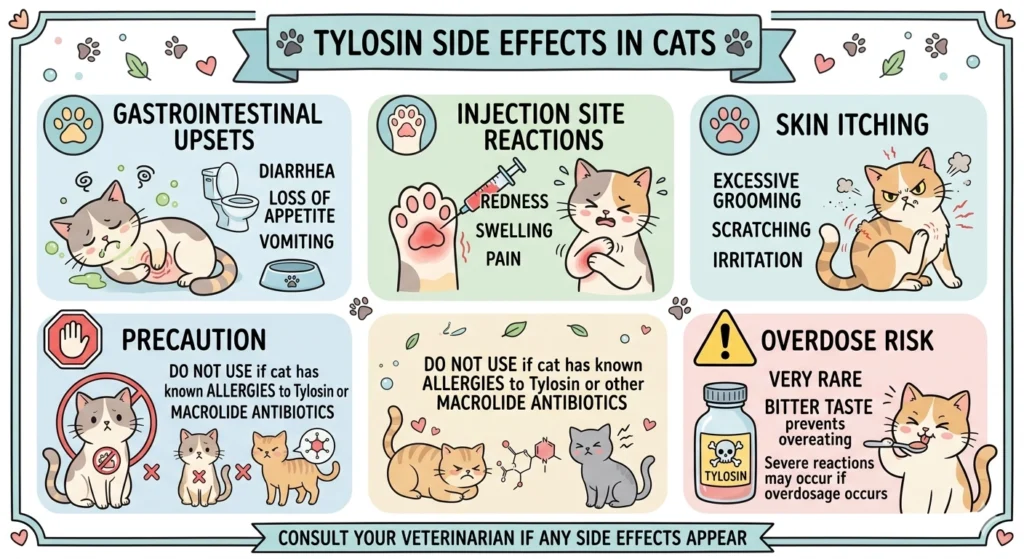
- Gastrointestinal upsets, such as diarrhea or loss of appetite.
- Injection site reactions i.e. redness, swelling, pain or irritation if given by muscle or under the skin of your skin
- Skin itching in some cases.
Overdoses are rare, partly because the bitter taste of tylosin tends to discourage cats from eating too much.
Important precaution: Tylosin should not be used in cats who have known allergies or hypersensitivity to tylosin or other macrolide antibiotics.
If you observe any of these side effects or unusual reactions please talk to your veterinarian right away.
What Pets Shouldn’t Take Tylosin?
Tylosin should not be administered to horses or any pets having known allergies to antibiotics. Use with caution in pregnant, lactating or breeding cats.
It may also interact with certain medications, including:
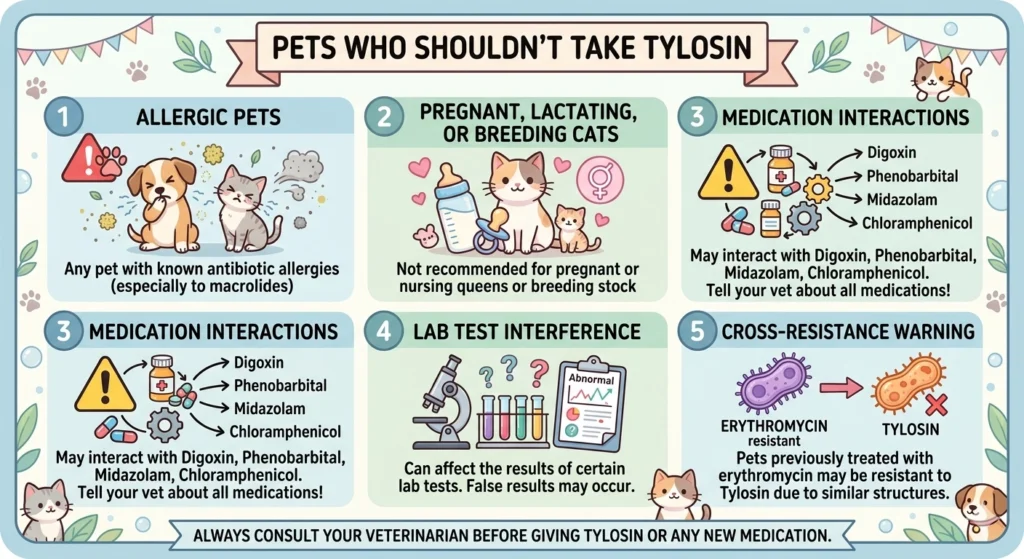
Tylosin may occasionally produce false results in lab tests. Also, pets that have been treated with erythromycin may also be resistant to tylosin.
Because of these dangers, it is important to speak to your veterinarian before you begin tylosin or any new medication.
You May Also Like To Read:
FAQs about Tylosin in Cats
What is Cat Tylosin Used for?
Tylosin is an anti-inflammatory antibiotic that is used to treat chronic diarrhea, colitis, inflammatory bowel disease (IBD), and occasionally respiratory or skin infections in cats.
How does tylosin work?
Tylosin is a bacteriostatic antibiotic, this means it stops bacteria from reproducing. It will also help reduce inflammation, which will give your cat’s body time to heal.
How do I give tylosin to my cat?
It is normally administered orally in the form of a powder or in capsule form and may be mixed with food. In rare cases, it may be administered as an injectable by the veterinary doctor. Always follow the dosing instructions of your vet.
How long does it take for tylosin to work?
Tylosin may begin to work in 1-2 hours, however, you will not see any noticeable improvements in diarrhea or inflammation for 24 hours up to 3 days.
What are the side effects of tylosin?
Side effects are uncommon but may be diarrhea, loss of appetite, injection site reactions, or skin itching. Overdose is rare because of the bitter taste of tylosin.
Can all pets take tylosin?
No. Horses and pets who have allergies to antibiotics should not take it. Use caution in pregnant or lactating or breeding cats, and pets on certain medications, such as digoxin, phenobarbital, midazolam or chloramphenicol. Resistance may be present to pets previously treated with erythromycin.
Is tylosin safe to take on a long-term basis?
Long term use should only be under veterinary supervision with care to avoid resistance, side effects or interactions with other medications.
Final Thoughts
Tylosin is a multi-action antibiotic which has both a bacterial control and anti-inflammatory effect in cats with chronic diarrhea, colitis, and inflammatory bowel disease (IBD). While it is often used off-label, when prescribed and given correctly under veterinary guidance it has been proven to be effective.
Understanding how tylosin works, proper Tylosin Dosage for Cats, methods of administration, and whether or not there are any side effects is important to ensure your cat’s safety and better recovery. Always follow your veterinarian’s instructions and watch your cat for any unusual reactions and consult with your vet about any concerns.
With proper care, tylosin can greatly enhance your cat’s digestive system and overall health, making it a valuable choice in the management of chronic gastrointestinal problems.