If your cat is scratching its ears, shaking its head, or showing signs of irritation, it could be dealing with an ear infection, ear mites, or a skin issue that needs treatment. In many cases, veterinarians prescribe Tresaderm to help relieve these problems quickly and effectively.
Tresaderm is a topical medication made specifically for cats that contains three key ingredients: thiabendazole (fights fungi), dexamethasone (reduces inflammation), and neomycin (kills bacteria). It is commonly used to treat ear infections, ear mites, and certain skin conditions in cats.
Understanding the correct Tresaderm dosage for cats is very important. Giving the right dose helps your cat recover faster and prevents side effects. In this guide, you’ll learn the proper dosage, how to use it safely, and what to watch for during treatment.
Learn everything about Tresaderm dosage for cats, including uses, benefits, side effects, and step-by-step application for ear and skin infections. Ensure safe and effective treatment for your cat with this complete guide.
Disclaimer: This content is for informational purposes only and should not replace veterinary advice. Always consult your veterinarian before giving Tresaderm or adjusting your cat’s dosage.


Key Takeaways
- Tresaderm for Cats is a triple-action topical medication: antibiotic (neomycin), antifungal (thiabendazole), and anti-inflammatory (dexamethasone).
- Treats ear infections, yeast overgrowth, ear mites, and small skin infections.
- Proper use: Clean area, prevent licking (E-collar if needed), refrigerate before application.
- Side effects are rare: Usually minor redness or irritation.
- Always follow your veterinarian’s instructions.
What Is Tresaderm For Cats?
Tresaderm is a topical prescription drug prescribed by veterinarians to treat a wide range of ear and skin infections in cats. It is specifically designed as a triple-action solution that incorporates an antibiotic, antifungal and anti-inflammatory ingredient to effectively treat infections and also alleviate discomfort.
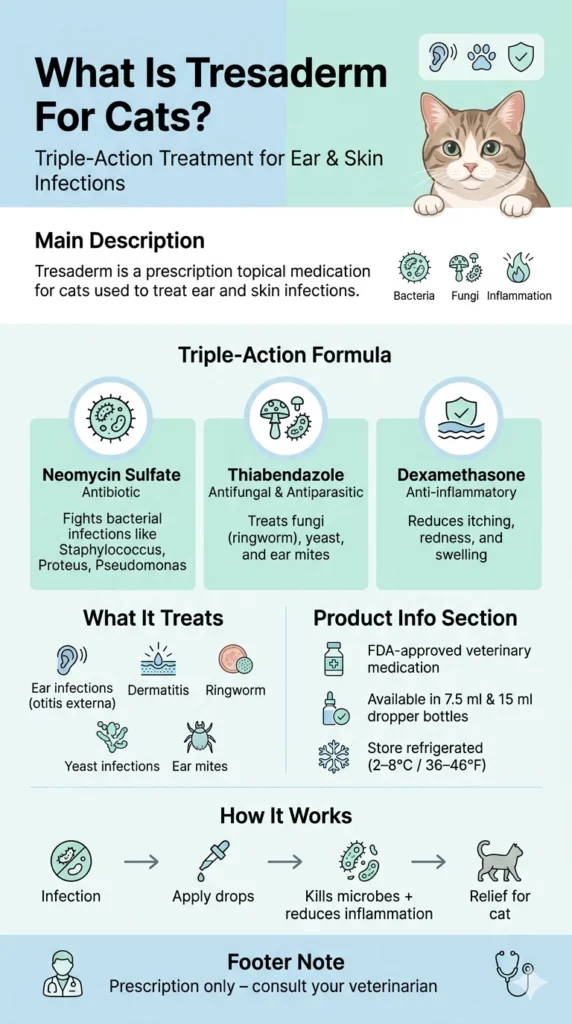
This drug has three active ingredients that act in combination: Neomycin sulfate, Thiabendazole, Dexamethasone
- Neomycin sulfate – This is a broad-spectrum antibiotic used to treat bacterial infections, such as Staphylococcus, Proteus, and Pseudomonas.
- Thiabendazole – antifungal and antiparasitic that is used to treat fungi such as Microsporum and Trichophyton (ringworm), yeast such as Malassezia and ear mites.
- Dexamethasone – a corticosteroid that assists in decreasing inflammation, redness, swelling, and itching, which makes your cat feel more comfortable.
Due to such an effective combination, Tresaderm is capable of dealing with several problems simultaneously, such as bacterial infections, fungal infections, inflammation, and parasitic infestations of the ears and skin.


It is a FDA-approved drug used in cats and produced by Boehringer Ingelheim (previously Merial). It comes in 7.5 ml and 15 ml dropper bottles and should be kept in a refrigerator (36–46°F) to ensure its efficacy.
An FDA-approved generic form is also available, manufactured by Putney Inc., and has the same active ingredients, and is labeled as thiabendazole, dexamethasone, neomycin sulfate solution.
In general, Tresaderm is a commonly used medication in cats to treat ear infections (otitis externa), dermatitis, ringworm, yeast infections, and ear mites, which makes it a flexible and effective remedy to the ear and skin health of cats.
What Is Tresaderm Used for In Cats?
Tresaderm is also FDA-approved in the treatment of various ear and skin diseases in cats. It is usually prescribed by veterinarians since it is able to address various issues simultaneously.
It is generally used in the treatment of:
- Bacterial ear infections
- Yeast (fungal) ear infections.
- Ear mites
- Skin infections
This is why it is a flexible choice in case your cat experiences such symptoms as itching, discharge, redness, or irritation of the ears or the skin.
What Does Tresaderm Do for In Cats?
Tresaderm is used to treat the infection and inflammation of the ears, skin and even the anal glands of the cats.
Treatment of yeast overgrowth in ears, which may be very itchy and painful, is one of its most common applications. This condition can occur as a result of allergies or even in some cases as a consequence of ear mites.
In cats with ear mites, thiabendazole, which is an ingredient, is effective in that it kills the eggs of the mites, thus preventing the hatching of new mites and the infestation is thus controlled, particularly in kittens where ear mites are very prevalent.
Besides ear issues, Tresaderm may also be applied to small, local skin infections, such as fungal infections such as ringworm and other places with mild inflammation. It is most appropriate in small localities as opposed to the bigger parts of the skin.
The next thing to be noted is that, although there are numerous ear drugs on the market, there are not many drugs that are specifically tested to be used in cats and Tresaderm is one of the reliable drugs that are trusted by the veterinarians.
How Does Tresaderm Work?
Tresaderm is a blend of three active ingredients and each has a different effect on cats, which is to attack the cause of infection or irritation. This is a multi-action method that is very effective in the treatment of ear and skin issues simultaneously.
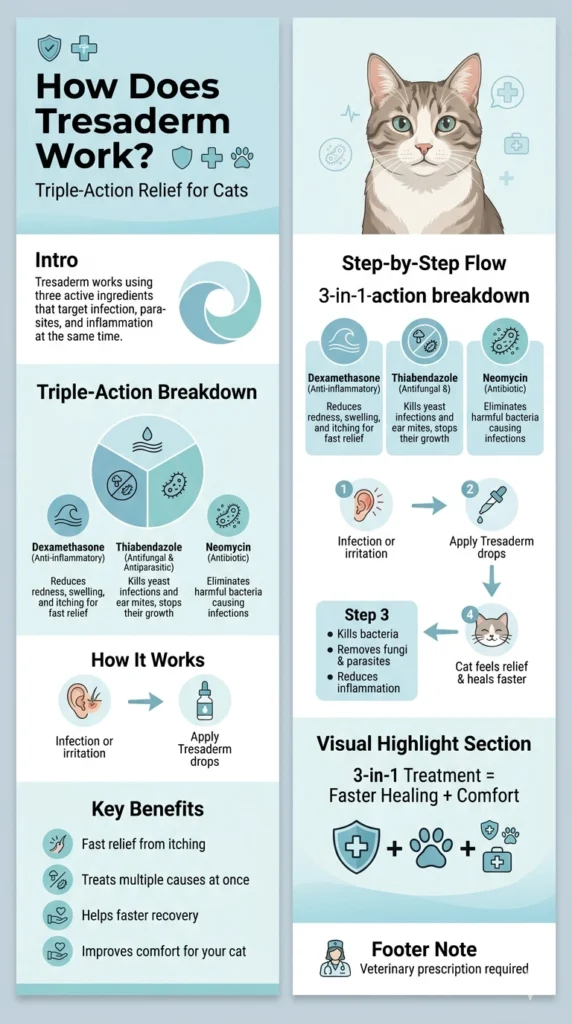
- Dexamethasone – a corticosteroid, which decreases inflammation and itching, and makes your cat feel relieved of redness, swelling, and irritation.
- Thiabendazole – antifungal and antiparasitic that is used to treat yeast infections and kill ear mites to prevent their growth and transmission.
- Neomycin – an antibiotic that destroys pathogenic bacteria that are usually present in ear and skin infections.
Tresaderm can be used to treat the infection, as well as prevent itching and inflammation, which is why a combination of these three actions will help your cat recover more quickly and feel comfortable during the treatment.
Tresaderm Dosage for Cats
The exact dosage of Tresaderm for cats depends on your cat’s size, the type of infection, and its severity. Because every cat and condition is different, it’s essential to follow your veterinarian’s instructions carefully and complete the full course of treatment, even if your cat seems better before the medication is finished. Completing the course ensures the infection is fully cleared and reduces the risk of recurrence.
Dosage for Ear Infections
- Ensure the ear is clean and free of debris or discharge before applying drops.
- 5–15 drops should be instilled into the ear canal every 12 hours, depending on the severity of the condition.
- The dropper bottle is designed to fit comfortably in the outer ear opening.
Dosage for Skin Infections
- Make sure the affected area is well-moistened with the solution.
- Use roughly 2–4 drops per square inch of affected skin every 12 hours.
Treatment Duration
- Most ear and skin infections require 10–14 days of treatment.
- For ringworm or other fungal infections, treatment may need 4–6 weeks.
- Follow-up with your veterinarian is crucial, as some conditions may require longer courses or re-evaluation with testing like cytology, culture, or polymerase chain reaction (PCR) to ensure the infection is fully resolved.
Storage Instructions
Unlike most topical medications, Tresaderm must be stored in the refrigerator to maintain its effectiveness.
By following the proper dosage, application, and duration, you can ensure your cat receives the full benefits of Tresaderm while minimizing risks and side effects.
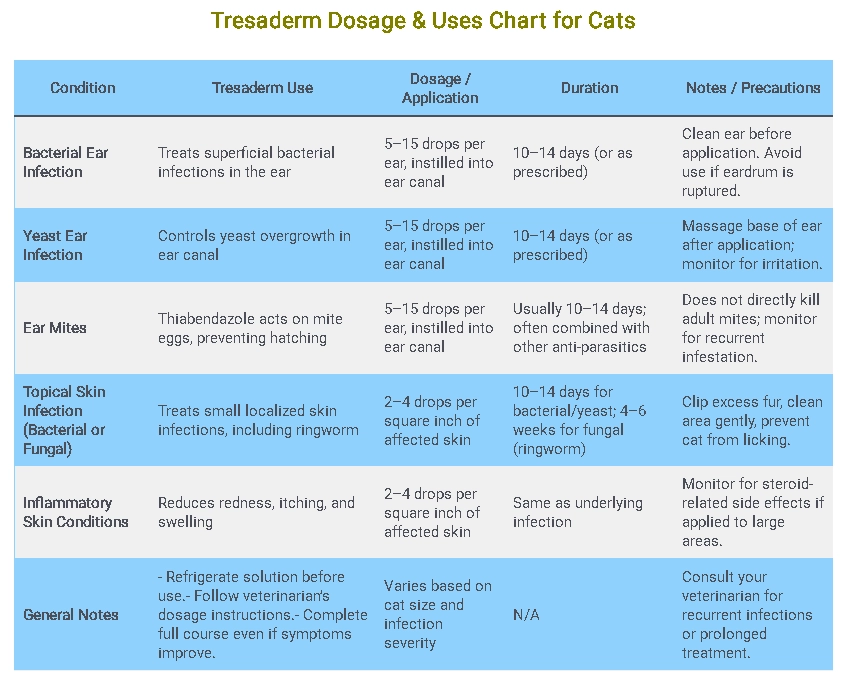
Tresaderm Dosage & Uses Chart for Cats
| Condition | Tresaderm Use | Dosage / Application | Duration | Notes / Precautions |
|---|---|---|---|---|
| Bacterial Ear Infection | Treats superficial bacterial infections in the ear | 5–15 drops per ear, instilled into ear canal | 10–14 days (or as prescribed) | Clean ear before application. Avoid use if eardrum is ruptured. |
| Yeast Ear Infection | Controls yeast overgrowth in ear canal | 5–15 drops per ear, instilled into ear canal | 10–14 days (or as prescribed) | Massage base of ear after application; monitor for irritation. |
| Ear Mites | Thiabendazole acts on mite eggs, preventing hatching | 5–15 drops per ear, instilled into ear canal | Usually 10–14 days; often combined with other anti-parasitics | Does not directly kill adult mites; monitor for recurrent infestation. |
| Topical Skin Infection (Bacterial or Fungal) | Treats small localized skin infections, including ringworm | 2–4 drops per square inch of affected skin | 10–14 days for bacterial/yeast; 4–6 weeks for fungal (ringworm) | Clip excess fur, clean area gently, prevent cat from licking. |
| Inflammatory Skin Conditions | Reduces redness, itching, and swelling | 2–4 drops per square inch of affected skin | Same as underlying infection | Monitor for steroid-related side effects if applied to large areas. |
| General Notes | – Refrigerate solution before use.- Follow veterinarian’s dosage instructions.- Complete full course even if symptoms improve. | Varies based on cat size and infection severity | N/A | Consult your veterinarian for recurrent infections or prolonged treatment. |
How to Use Tresaderm for Cats
Proper application of Tresaderm is essential for effectiveness and your cat’s safety. Always follow your veterinarian’s instructions, as dosage and frequency depend on your cat’s size, condition, and the severity of the infection.
Otic Use (Ear Infections)
- Clean the Ear: Gently remove debris, wax, or discharge using a vet-recommended ear cleaner.
- Shake the Bottle: Mix the solution well before use.
- Apply Drops: Instill 5–15 drops into the affected ear canal as directed. Massage the base of the ear to distribute the medication.
- Frequency: Administer twice daily for the prescribed duration.
Tips & Safety:
- Allow your cat to shake its head afterward—this is normal.
- Monitor for signs like worsening ear pain, head tilt, or hearing issues; these could indicate eardrum problems.
- Tresaderm is not intended for use if the eardrum is compromised.
Topical Use (Skin Infections)
- Prepare the Area: Clip excess fur and clean the skin gently with a mild antiseptic wipe.
- Apply Drops: Use 2–4 drops per square inch and spread gently over the affected area.
- Frequency: Apply twice daily, or as directed, for no longer than prescribed.
Tips & Safety:
- Prevent your cat from licking the treated area; use a protective collar if needed.
- Wash hands after application.
- Avoid applying near eyes or mucous membranes.
General Application Steps
- Prepare the Area: Ensure cleanliness of hands and the affected site.
- Apply a Thin Layer: Use only the recommended amount; thicker layers may hinder absorption.
- Avoid Contamination: Do not touch the tip of the dropper to your cat’s skin or fur; recap after use.
- Prevent Licking: Use an Elizabethan Collar (E-Collar) or restrict access as advised by your veterinarian.
- Monitor for Reactions: While adverse effects are uncommon, watch for redness, irritation, or signs of steroid sensitivity (increased drinking, urination, or appetite).
Safety Notes
- Tresaderm must be stored in the refrigerator, which may feel cold during application.
- Some cats may be sensitive to the coldness or to the neomycin component.
- Prolonged or excessive use of topical steroids may rarely cause systemic side effects such as diabetes or heart issues.
By following these precise steps and precautions, you ensure that your cat receives the full benefit of Tresaderm safely and effectively.
Benefits of Tresaderm for Cats
Using Tresaderm for cats provides multiple advantages that make it a trusted choice for treating ear and skin problems:
- Multi-Action Formula: Combines antibiotic, antifungal, and anti-inflammatory properties, reducing the need for multiple medications.
- Fast-Acting Relief: Many cats show improvement within 1–2 days, with full resolution often achieved within a week.
- Ease of Use: The dropper bottle design simplifies application for both ear and skin treatments, making it less stressful for you and your cat.
- FDA-Approved: Tresaderm is safe when used as directed, with minimal side effects in most cases.
- Versatility: Effective for a wide range of conditions, including ear mites, bacterial infections, yeast infections, and small skin infections.
By treating both the root cause and symptoms at the same time, Tresaderm helps your cat feel comfortable faster, improving overall quality of life.
Side Effects and Precautions of Tresaderm for Cats
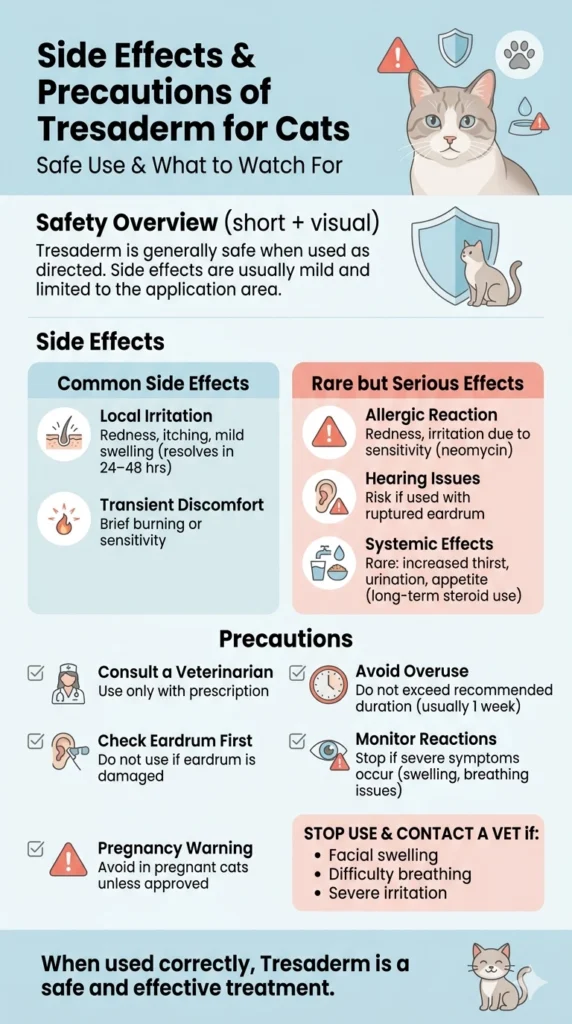
Tresaderm is generally safe for cats when used as directed, and most cats experience few or no side effects. Because it is applied topically, systemic absorption is minimal, so side effects are usually limited to the area of application.
Common and Rare Side Effects
While uncommon, some cats may experience:
- Local Irritation: Redness, itching, or mild swelling at the site of application, often resolving within 24–48 hours.
- Transient Discomfort: Brief burning or sensitivity, especially if applied to broken or irritated skin.
- Allergic Reactions: Rarely, cats may be hypersensitive to neomycin, causing redness, irritation, or discomfort.
- Hearing Issues: If applied to cats with a ruptured eardrum, there is a risk of hearing loss or inner ear damage.
- Systemic Effects: Prolonged use of corticosteroids may rarely cause increased thirst, urination, or appetite. Long-term steroid use is generally discouraged unless explicitly directed by a veterinarian.
Precautions When Using Tresaderm
To ensure safe use, follow these guidelines:
- Consult Your Veterinarian: Only use Tresaderm with a prescription and follow the dosage instructions exactly.
- Avoid Overuse: Do not exceed the recommended duration (usually one week) unless advised. Prolonged use can suppress the immune system or encourage resistant microbes.
- Check Eardrum Integrity: Do not use in cats with suspected eardrum perforation to prevent inner ear damage.
- Monitor Reactions: Stop using Tresaderm immediately if severe reactions occur, such as facial swelling, difficulty breathing, or worsening skin irritation.
- Pregnancy Caution: Avoid use in pregnant cats unless approved by a veterinarian.
By following these precautions and monitoring your cat during treatment, Tresaderm remains a safe and effective solution for ear and skin infections.
You May Also Like To Read:
FAQs About Tresaderm for Cats
Can Cats Be Left in Tresaderm?
Yes, Tresaderm is safe when used topically in cats when used as directed. The side effects are few or mild in most cats including temporary redness or irritation at the site of application. Tresaderm is a prescription drug and thus should be acquired by the owners of the pets via their veterinarian.
Why Choose Tresaderm for Cats?
The triple-action formula is the only one that makes Tresaderm special in comparison to other treatments. It has both antibiotic, antifungal, and anti-inflammatory effects, which means that it can be used to address several issues at the same time. As an example, a cat with a yeast ear infection can also be infected with inflammation and secondary bacteria- Tresaderm can treat all of these in a single application and it is faster and easier to treat.
What is your duration of use of Tresaderm on Cats?
Skin or ear infections: Typically 1014 days in the first place.
Fungal infections (such as ringworm): 4-6 weeks often.
You should re-examine the condition of your cat at the expiry of the prescribed time. There are those infections that might take more time to cure and recurring problems might be a sign of some underlying condition that should be re-examined by a veterinarian.
What If My Cat Forgets a Dose of Tresaderm?
In case of a dose omission, administer it as soon as possible.
Do not take twice in case the following dose is imminent.
In case of several doses being missed, consult your veterinarian.
Does Tresaderm contain an Antibiotic?
Yes, Tresaderm does have neomycin, which is a type of antibiotic that works against bacteria that are the most common causes of superficial skin and ear infections such as Staphylococcus and Pseudomonas.
Does Tresaderm treat Ear Mites?
Yes, Tresaderm will assist in the treatment of ear mites since the antifungal ingredient of the product, thiabendazole, has an effect on the eggs of ear mites, and new mites will not be able to hatch. Although it does not kill adult mites directly, it helps to control the infestations.
Often, veterinarians also use other medications, such as ivermectin, selamectin (Revolution), or milbemycins (Advantage Multi, Milbemite), to target adult ear mites directly.
Final Thoughts on Tresaderm for Cats
Tresaderm is a very useful topical agent in the management of a wide range of infectious and inflammatory diseases of the ears and skin of cats. It is a triple-action formula (antibiotic, antifungal, and anti-inflammatory) and can be used to treat bacterial infections, yeast overgrowth, ear mites, and localized skin irritations.
It is important to note:
- Application Considerations: Tresaderm should be refrigerated which can be cold and can irritate sensitive cats especially when using it in the ear.
- Allergic Sensitivity: Few cats are sensitive to neomycin and this may result in temporary redness or irritation. Always keep an eye on your cat and visit your veterinarian in case the symptoms increase.
- Treatment Areas: Tresaderm is used on smaller and focused areas as opposed to large areas of skin.
- Veterinarian Advice: It is always important to take the right dosage and time as advised by your veterinarian. Do not administer human medications or change doses of pets without medical advice.
Drug Dosing Disclaimer
Labeling of dosages is only based on FDA-approved cat dosages. When using off-label, a licensed veterinarian should only provide guidance and safety as he or she can decide on safe and appropriate dosing to use on your cat in that particular condition.
Treating your cat with your veterinarian will help to make sure that the treatment is safe and effective and the side effects are minimal and the recovery is quicker. Tresaderm can be used to a great effect in enhancing the comfort and life of your cat with proper use and observation.