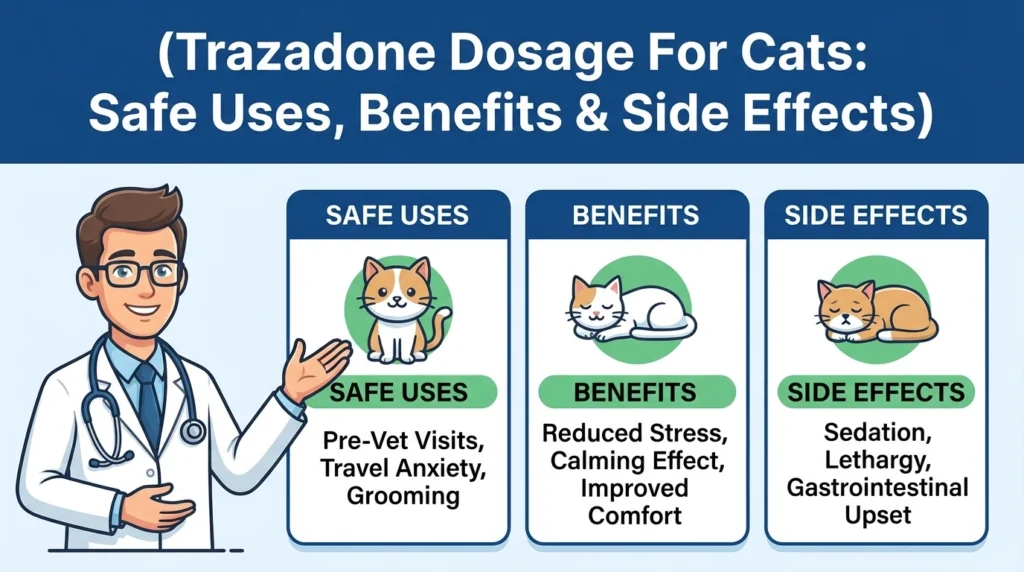
Trazadone Dosage For Cats is a prescription medication originally developed as an antidepressant for humans, but veterinarians now commonly use it in cats to help manage situational anxiety and stress. This includes fear of car rides, veterinary visits, unfamiliar people, or changes in their routine. By acting as a sedative, trazodone can help cats feel calmer, more relaxed, and safer in stressful situations.
Situational anxiety in cats can have a significant impact on their behavior, health, and well-being. An anxious cat may hide, refuse food, pant, or show aggression. Seeing your cat stressed or fearful can be difficult for pet parents, but trazodone offers a safe, effective, and relatively affordable option to reduce anxiety when used under veterinary guidance.
While trazodone is generally well-tolerated in cats, it can cause side effects such as sleepiness, nausea, or watery eyes. Proper dosing and careful monitoring are essential to ensure your cat’s safety and comfort.
In this guide, you’ll Learn everything about Trazadone Dosage For Cats—how it works, proper dosage, uses for anxiety, side effects, risks, and FAQs. Keep your cat calm safely during vet visits, travel, or stressful situations with expert guidance.
Disclaimer: This content is for informational purposes only and should not replace veterinary advice. Always consult your veterinarian before giving Trazadone or adjusting your cat’s dosage.
Key Takeaways
- Purpose: Trazodone is used to manage situational anxiety in cats, such as vet visits, travel, noise phobias, or post-surgery recovery.
- How it Works: It is a serotonin antagonist and reuptake inhibitor (SARI) that helps regulate mood and promote calm behavior.
- Dosage: Typical doses range from 25–100 mg, given 90 minutes to 2 hours before a stressful event.
- Administration: Can be given orally in tablet, liquid, or compounded forms; often with food to reduce nausea.
- Common Side Effects: Drowsiness, nausea, drooling, wobbly movement, or paradoxical excitement in rare cases.
- Serious Risks: Rare but possible serotonin syndrome, arrhythmias, or aggression; caution in cats with heart, liver, kidney issues, or on interacting medications.
- Short-Term vs Long-Term Use: Best for short-term anxiety; long-term anxiety often managed with SSRIs or tricyclic antidepressants.
- Veterinary Guidance: Always consult a veterinarian, follow instructions, and monitor your cat for any adverse reactions.
What is Trazadone Dosage For Cats, and How Does It Work?
Trazodone is a prescription medication originally developed as an antidepressant for humans, but veterinarians often prescribe it for cats to manage anxiety and stress. It belongs to a class of drugs called serotonin antagonists and reuptake inhibitors (SARIs). Trazodone works by modifying serotonin levels in the brain, a key neurotransmitter that helps regulate mood, anxiety, and sleep. By increasing serotonin, trazodone can help cats feel calmer and less stressed during challenging situations.
In veterinary medicine, trazodone is used off-label in cats. This means it is not officially FDA-approved for feline use, but prescribing it for anxiety is a common and considered safe practice when done under a veterinarian’s guidance. Off-label use is routine in veterinary care and allows veterinarians to tailor treatments to the specific needs of cats.
Trazodone is typically prescribed for situational anxiety rather than long-term daily use. Common scenarios where trazodone can help include:
- Separation anxiety when a cat is left alone
- Noise phobias, such as fireworks or thunderstorms
- Stress from veterinary visits or travel
- Post-operative confinement anxiety
- Generalized anxiety or aggression
By reducing anxiety in these situations, trazodone can help cats remain calm, reduce stress-related behaviors, and make handling and treatment safer for both the cat and the owner. While generally well-tolerated, veterinary guidance is essential to determine the correct dose and monitor for any side effects.
What is Trazodone Used for in Cats?
Trazodone is a prescription medication used to help cats stay calm in situations that would normally cause anxiety or stress. It is particularly useful for situational anxiety, meaning it is most effective for short-term events rather than daily long-term use. Veterinarians often prescribe trazodone to help cats remain relaxed and safe during events like:
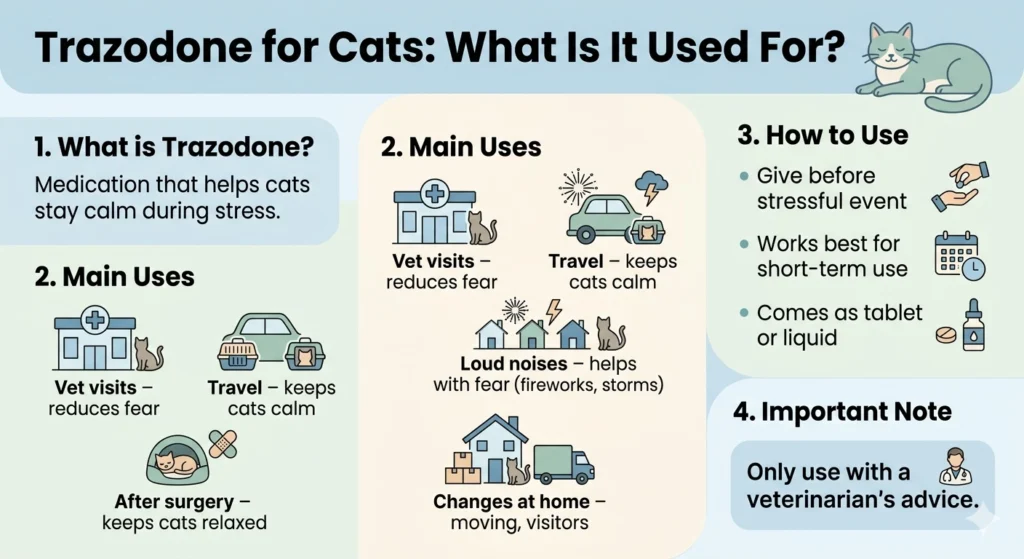
- Veterinary visits – Many cats experience anxiety or fractious behavior (quarrelsome or uncooperative) at the vet. A single dose of trazodone given about two hours before the visit can reduce stress, improve cooperation, and make the appointment safer and less stressful for both the cat and owner. Studies, including those cited by the American Veterinary Medical Association (AVMA), show that pre-visit trazodone can effectively lower anxiety and is well-tolerated.
- Travel and car rides – Cats that are nervous during transportation can benefit from trazodone to remain calm during long or short trips.
- Noise phobias – Situations like fireworks, thunderstorms, or loud construction can trigger anxiety in cats, and trazodone can help mitigate stress-related reactions.
- Post-surgery or hospitalization – After surgery, cats are often required to limit activity. Trazodone can act as a post-operative sedative, helping cats remain calm, prevent excessive activity, and support a smoother recovery.
- Other situational stressors – This includes separation anxiety, home renovations, moving, or visitors in the home.
While trazodone is commonly prescribed for short-term situational anxiety, it is less commonly used for long-term daily anxiety management in cats, as research on chronic use is limited. For long-term treatment of anxiety, veterinarians often prefer selective serotonin reuptake inhibitors (SSRIs) like fluoxetine (Reconcile®) or tricyclic antidepressants such as amitriptyline, clomipramine, imipramine, or doxepin, which have established dosage guidelines for cats.
Trazodone can be given in tablet form or as a liquid solution for easier administration, depending on what works best for the cat. Timing is key: for situational anxiety, giving the medication about two hours before the stressful event ensures optimal effectiveness. In some cases, trazodone is combined with other medications, such as gabapentin, when additional sedation is needed.
Trazodone Dosage for Cats
Trazodone for cats is typically administered orally in tablet form, although liquid solutions, transdermal gels, or flavored compounding options are available for cats that refuse pills. The usual Trazadone Dosage For Cats ranges from 25 mg to 100 mg, but your veterinarian will determine the exact dose based on your cat’s weight, health status, and the situation requiring sedation or anxiety relief.
For situational anxiety, trazodone should be given approximately 90 minutes to 2 hours before the stressful event, such as a veterinary visit, grooming session, travel, or exposure to loud noises. After administration, most cats begin to show reduced anxiety within 1 hour, though in some cases it may take up to 3 hours for the full effect.
When trazodone is used as a sedative, it may be prescribed every 8 to 24 hours, depending on your cat’s needs. In healthy cats, the medication typically remains active in the system for 6 to 12 hours. Cats with liver or kidney disease may metabolize the drug more slowly, so dosing adjustments are essential.
Trazodone Dosage Chart for Cats By Weight
| Cat’s Weight in Pounds | Trazodone Dosage | Cat Breeds Include |
|---|---|---|
| 0-5 | 3.5-34.5 mg per dose | Singapura, Bambino |
| 6-10 | 21-69 mg per dose | Siamese, Cornish Rex |
| 11-20 | 38.5-138 mg per dose | Bengal, Ragdoll |
| Over 20 | consult your vet | Maine Coon, Savannah |
How to Give Trazodone Dosage to Cats
Trazodone has a bitter taste, and some cats may gag or drool after taking it. These tips can make administration easier:
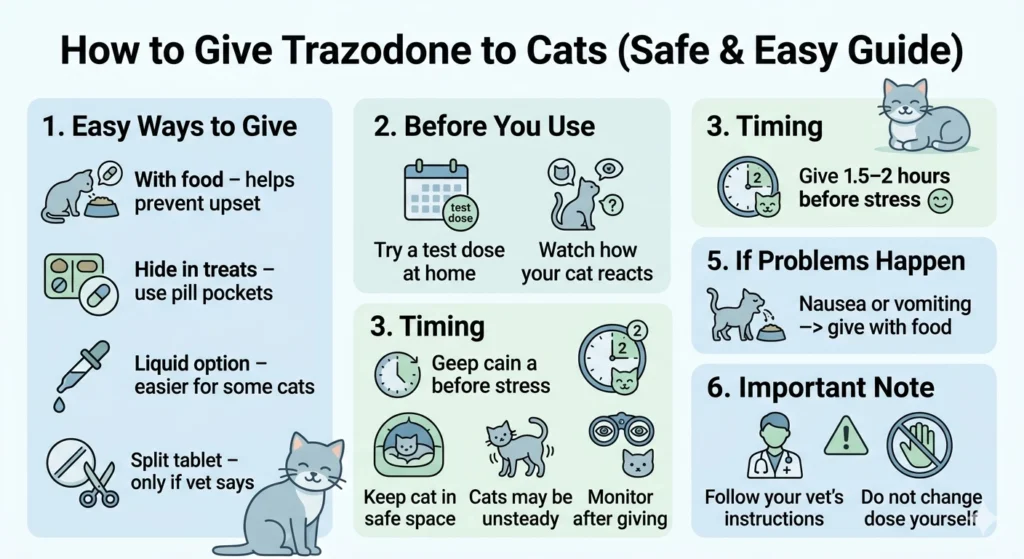
- With food or treats – Reduces gastrointestinal upset and improves tolerance.
- Use pill pockets or compounding options – Tablets can be hidden in a favorite treat or converted to liquid/flavored forms.
- Split tablets if needed – For smaller doses as prescribed by your veterinarian.
- Trial run at home – Give a test dose before an important event to observe your cat’s response.
Some cats may experience mild gastrointestinal upset. If nausea or vomiting occurs, try giving trazodone with a small meal or treat. Always follow your veterinarian’s instructions and never adjust the dose without consulting them.
Tips for Safe and Effective Use
- Time it right – Administer 90 minutes to 2 hours before the anxiety-inducing event.
- Keep cats confined – Sedated cats can be unsteady; ensure they are in a safe space or carrier.
- Monitor at home – Watch for unusual reactions, especially during the first hour after dosing.
- Combination therapy – Occasionally, veterinarians may combine trazodone with gabapentin for enhanced sedation in particularly anxious cats.
Following these guidelines ensures that trazodone is both safe and effective for calming cats during stressful situations while minimizing side effects.
What Are the Side Effects of Trazodone in Cats?
Trazodone is generally well-tolerated in cats, especially when used at appropriate doses for situational anxiety or post-surgery sedation. Most side effects are mild and temporary, but it’s important for cat owners to monitor their pets and consult a veterinarian if any unusual reactions occur.
Common Side Effects
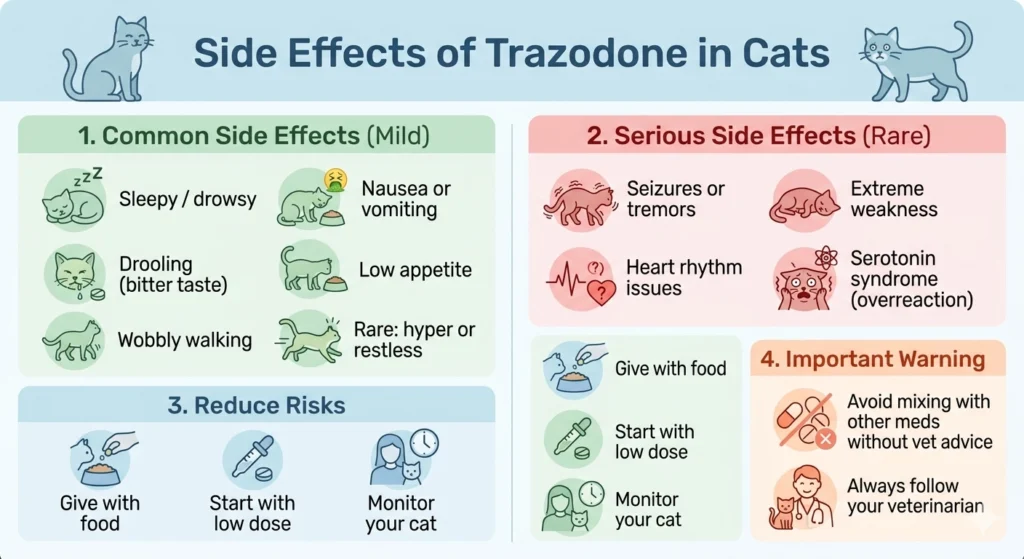
The most frequently observed effects of trazodone in cats include:
- Drowsiness or sedation – This is often a desired effect for calming anxious cats.
- Gagging, drooling, or hypersalivation – Usually due to the bitter taste of the tablet.
- Nausea or vomiting – Can often be reduced by giving the medication with a small meal or treat.
- Loss of appetite – Typically mild and resolves on its own.
- Diarrhea or colitis – Rare, usually transient.
- Ataxia (wobbly or unbalanced walking) – More common when a cat is drowsy.
- Paradoxical excitement or behavioral disinhibition – Occasionally, some cats may become agitated or hyperactive instead of calm.
Most cats experience relief from anxiety without serious complications, and side effects usually diminish within a few hours. Veterinarians often start cats on a lower dose to evaluate their response before adjusting the dosage.
Serious or Rare Side Effects
Though uncommon, more serious reactions may occur, particularly if trazodone is combined with certain other medications or if the cat has underlying health conditions. Possible serious effects include:
- Seizures or tremors
- Coma or extreme lethargy
- Serotonin syndrome – Occurs if trazodone is used alongside other serotonergic drugs. Signs include vomiting, diarrhea, seizures, hyperthermia, excessive salivation, disorientation, and difficulty breathing.
- Heart rhythm disturbances (arrhythmias) – Possible if used with drugs like cisapride or certain antibiotics.
- Hypotension (low blood pressure) – May occur if used with drugs like amlodipine or telmisartan.
Pets with liver, kidney, or heart disease or those taking multiple medications should be closely monitored. Always disclose your cat’s full medical history to your veterinarian before starting trazodone.
Minimizing Risks and Monitoring
- Start low and go slow – Begin with a small dose and monitor your cat’s response.
- Give with food if necessary – Reduces nausea and improves tolerance.
- Observe your cat – Watch for unusual behaviors, unsteady walking, or persistent vomiting.
- Avoid drug interactions – Trazodone should be used cautiously with SSRIs, tramadol, tricyclic antidepressants, mirtazapine, or other serotonergic drugs.
By understanding these potential side effects and following your veterinarian’s instructions, trazodone can be a safe and effective tool to manage situational anxiety in cats, helping them remain calm and stress-free during challenging situations.
What Are the Most Serious Risks of Trazodone for Cats?
While trazodone is generally well-tolerated by cats, there are some serious risks and potential adverse effects that cat owners should be aware of. Most reactions are temporary and mild, but vigilance is important to ensure your cat’s safety.
Potential Serious Reactions
Some cats may experience the following after taking trazodone:
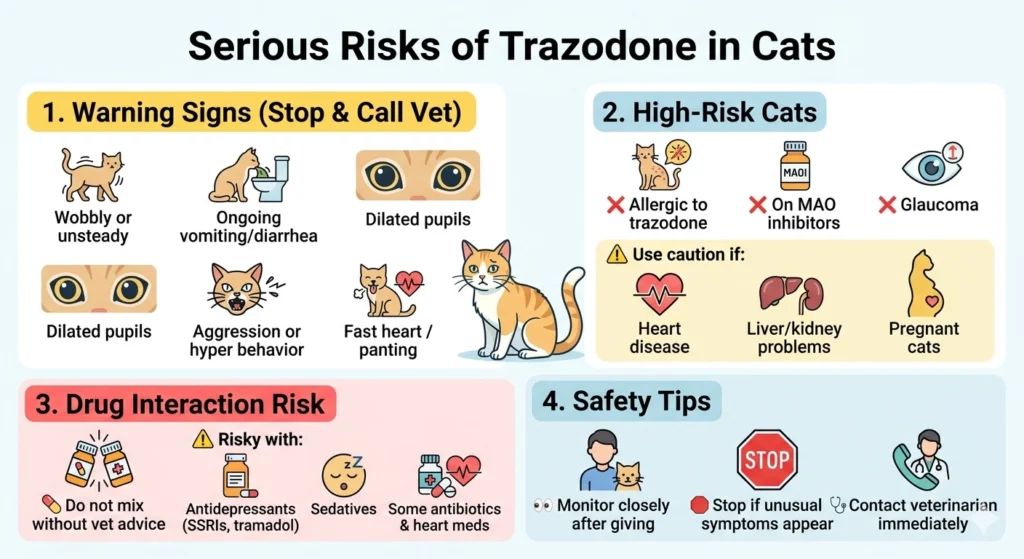
- Incoordination or wobbly walking (ataxia) – Often occurs when the cat is sedated.
- Vomiting or diarrhea – Usually mild, but persistent symptoms should be reported.
- Changes in appetite – Either decreased or increased food intake.
- Dilated pupils – May indicate stress or overstimulation.
- Paradoxical behavior – Some cats may show aggression, irritability, or hyperactivity instead of calming effects.
- Racing heart or panting – Signs of overstimulation or stress.
If you notice any of these side effects, stop giving trazodone immediately and contact your veterinarian or a pet poison hotline. In most cases, these reactions are temporary and subside within a few hours.
Risk Factors for Trazodone Use
Certain cats may be at higher risk for complications:
Do Not Use Trazodone If Your Cat:
- Is hypersensitive or allergic to trazodone
- Is taking monoamine oxidase (MAO) inhibitors
- Has angle-closure glaucoma
Use Caution in Cats With:
- Severe heart disease
- Liver or kidney impairment
- Pregnancy – Animal studies show potential adverse effects on the developing fetus at high doses, so veterinarians weigh the risks versus benefits carefully.
Drug Interactions
Trazodone may interact with several medications, potentially increasing the risk of adverse effects. Always inform your veterinarian of any drugs, supplements, or herbal remedies your cat is taking. Medications to use with caution include:
- Acepromazine, CNS depressants
- Antihypertensive drugs, diuretics, NSAIDs, aspirin
- Azole antifungals, fluoroquinolone or macrolide antibiotics
- Cisapride, metoclopramide, ondansetron
- SSRIs, tramadol, monoamine oxidase inhibitors (MAOIs)
By carefully monitoring your cat, disclosing all medications to your veterinarian, and following dosing instructions, trazodone can remain a safe and effective option for managing situational anxiety in cats.
You May Also Like To Read:
FAQs About Trazodone for Cats
Is trazodone available over the counter?
No, trazodone is only available with a veterinarian’s prescription. Some veterinary clinics may keep a supply and dispense it directly.
What should I do if I miss a dose?
If you remember shortly after the scheduled dose, give it as soon as possible.
If it’s near the next scheduled dose, skip the missed dose and continue normally.
Do not double the dose or give extra doses to compensate.
How should I store trazodone?
Keep in an airtight container at 77–86°F (25–30°C).
Store away from light and moisture.
What should I do in case of an emergency or overdose?
Contact your veterinarian immediately if your cat shows signs of serotonin syndrome, which can occur with an overdose or when combined with SSRIs. Symptoms include: Rapid breathing
Trembling or seizures
Difficulty walking
Confusion or hyperactivity
Fever
Rapid heartbeat
Always seek veterinary care if an overdose occurs, even without symptoms.
Does trazodone interact with other medications?
Yes. Trazodone may interact with several medications, including:
SSRIs (e.g., fluoxetine)
MAO inhibitors
Azole antifungals (e.g., ketoconazole, itraconazole)
Heart medications
Tramadol
Cisapride, metoclopramide, mirtazapine
Blood pressure medications (e.g., amlodipine, telmisartan)
Macrolide or fluoroquinolone antibiotics
NSAIDs (e.g., meloxicam)
Other sedatives
Always inform your veterinarian about all medications, supplements, or herbal therapies your cat is taking before starting trazodone.
Is trazodone safe for cats?
Trazodone is generally considered safe for short-term situational use, though it’s not well-studied in cats.
Studies using 50 mg, 75 mg, and 100 mg doses for calming cats during vet visits found them effective with minimal concerning side effects.
What are the common side effects of trazodone in cats?
Most side effects are mild and temporary, including:
Sleepiness or drowsiness
Poor coordination or wobbly walking
Nausea, vomiting, or diarrhea
Appetite changes
Agitation or mild behavioral changes
Final Thoughts
Trazodone is a safe and effective medication for cats to manage situational anxiety, such as vet visits, travel, noise phobias, or post-surgery recovery. It works as a serotonin antagonist and reuptake inhibitor (SARI) to promote calm behavior.
Typical doses range from 25–100 mg, given 90 minutes to 2 hours before a stressful event. Side effects are usually mild—drowsiness, nausea, drooling, or temporary unsteadiness—while serious risks are rare but require veterinary supervision.
razodone is most effective for short-term use, with long-term anxiety often managed with SSRIs or tricyclic antidepressants. Always consult your veterinarian, follow dosing instructions, and monitor your cat to ensure safety and optimal results.