Tramadol For Cats is a pain medication that veterinarians occasionally prescribe to cats as a means of relieving pain due to injury, surgery, arthritis, or illness. Depending on the condition of the cat, it can be administered in both short-term (acute) and long-term (chronic) pain.
This is a kind of opioid pain medication, which acts by decreasing the sensation of pain in the brain. Tramadol is an off-label drug in cats, which is not approved to treat cats, but is still widely used by veterinarians when necessary. It should be prescribed by a veterinarian.
The use of Tramadol is typically done in cases where other pain medications are inadequate or in combination therapy. It can take a couple of days of daily use to have full effect and therefore proper and consistent dosing is essential.
Tramadol can be well tolerated by most cats when administered in the appropriate dose, however, not all cats can be treated with this drug, particularly those with some health issues or those taking other drugs. This is the reason why it should be guided by a veterinarian.
This drug is available in tablet, liquid, or chewable, thus making it easier to administer by the owners of the pets depending on the needs of the cat. Liquid or flavored forms are preferred by many vets since tablets are bitter.
To make sure that you provide your cat with safe pain relief and to make your cat feel comfortable during the recovery or due to the ongoing health problems, it is highly important to understand the appropriate dosage of tramadol to give to cats.
Learn every thing about tramadol dosage for cats including uses, side effects, risks, drug interactions, alternatives, and safety tips. Learn how veterinarians use tramadol for feline pain management.
Disclaimer: This content is for informational purposes only and should not replace veterinary advice. Always consult your veterinarian before giving Tramadol or adjusting your cat’s dosage.
Key Takeaways
- Tramadol is a prescription pain relief medication for cats used to manage acute and chronic pain, including arthritis, injury, and illness-related discomfort.
- It works by blocking pain signals in the brain and also affects brain chemicals like serotonin and norepinephrine to help reduce pain and improve comfort.
- It is commonly used in veterinary medicine as an off-label drug, meaning it is not FDA-approved for cats but is still widely prescribed by veterinarians.
- The correct tramadol dosage for cats varies widely and must always be determined by a veterinarian based on weight, condition, and overall health.
- Tramadol can be used as a short-term or long-term pain management option, but full effects for chronic pain may take time to develop.
- Common side effects include sedation, vomiting, dilated pupils, constipation, and behavioral changes, while serious reactions are rare but possible.
- Risks such as serotonin syndrome, seizures, and drug interactions make veterinary supervision essential.
- Tramadol may not be suitable for all cats, especially those with liver/kidney disease, seizure history, or certain medication combinations.
- There are several alternatives to tramadol, including NSAIDs, gabapentin, buprenorphine, Solensia, and supportive therapies like weight control and physical therapy.
- Safe and effective use always depends on proper veterinary guidance, correct dosing, and careful monitoring.
What is tramadol for cats and how does it work?
Tramadol is an opioid medication used to manage both acute and chronic pain in cats, including pain from osteoarthritis. It is FDA-approved for use in people, but it is not FDA-approved for animals. However, veterinarians can still prescribe tramadol to cats as an “off-label” or “extra-label” medication, which is common in veterinary medicine. Many drugs are used this way in animals, and veterinary instructions should always be followed carefully because they may differ from human label directions.
Tramadol works as an opioid pain reliever by binding to opioid receptors on nerve cells in the body. It specifically attaches to the mu-opioid receptor, which helps control pain signals. When it binds to these receptors, it triggers chemical changes that block pain signals from reaching the brain, reducing the sensation of pain in cats.
In addition to this opioid action, tramadol also has a mild effect on brain chemicals. It can help increase the levels of the neurotransmitters serotonin and norepinephrine, which are “feel-good” chemical messengers involved in mood and pain control. This additional effect may also contribute to pain relief.
Tramadol is considered safe for cats when prescribed appropriately, but in the United States it is classified as a Schedule IV controlled substance by the U.S. Drug Enforcement Administration (DEA) due to its potential for misuse and dependence in humans. Because of this classification, veterinary prescribing may be subject to certain restrictions.
Tramadol is widely used in veterinary medicine for pain control in cats, but it remains an off-label medication, meaning it is not officially approved for use in animals, even though it is commonly prescribed by veterinarians for pain management.
What is tramadol used for in cats?
Veterinarians use tramadol in cats as a painkiller to help manage acute and chronic pain, especially when used as an alternative or add-on treatment for cats experiencing ongoing discomfort.
Chronic pain in cats
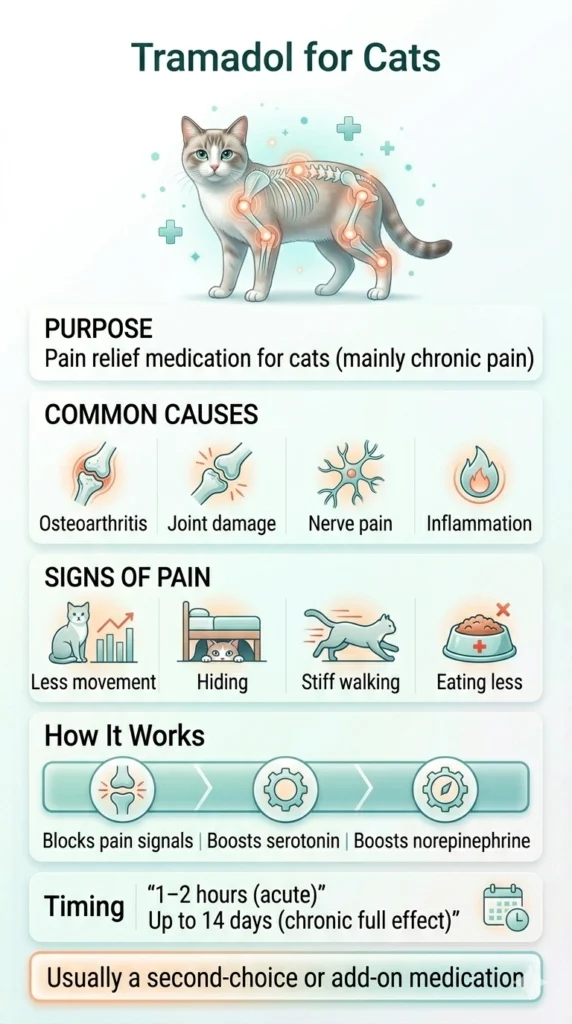
Cats commonly suffer from long-term (chronic) pain caused by conditions such as osteoarthritis, joint damage, nerve damage, inflammatory diseases, and cancer. These conditions are more common than many pet owners realize. Studies show that up to 9 out of 10 cats may have some form of degenerative joint disease, with research finding that 61% of cats have at least one osteoarthritic joint and 48% have multiple affected joints, especially in older cats.
However, recognizing pain in cats can be difficult because symptoms are often subtle. Instead of obvious signs, a cat may simply:
- Move less or become less active
- Sleep more than usual
- Hide from people
- Avoid using the litter box
- Refuse to lie down comfortably
- Avoid stairs or jumping
- Walk stiffly
- Change grooming habits
- Eat less than normal
Because these signs can also look like normal aging, diagnosing pain requires careful veterinary evaluation to find the exact cause. Once diagnosed, treatment focuses on both the underlying condition and pain relief, often using a multi-treatment approach where painkillers like tramadol may be included. However, tramadol is usually used as a second-choice or add-on medication rather than the first option.
Tramadol works through three main mechanisms:
- It is converted into an active metabolite called O-desmethyl tramadol, which is more powerful at binding opioid receptors and blocking pain signals.
- It acts as a serotonin reuptake inhibitor, similar to antidepressants, helping reduce pain and anxiety since both can worsen each other.
- It also works as a norepinephrine reuptake inhibitor, which helps reduce pain in a way similar to certain muscle relaxant-like medications such as clonidine.
For chronic pain, the full pain-relieving effect of tramadol may take up to 14 days of continuous use to reach its peak effectiveness.
Acute pain
For acute pain, tramadol is generally considered less effective in modern veterinary practice. It may still be used for perioperative or postoperative pain, but other pain medications are often preferred.
What does tramadol do for cats?
Tramadol may help relieve both short-term and long-term pain. In acute cases, it may start working within 1–2 hours, while chronic conditions like osteoarthritis may require up to two weeks for full effect.
Although studies suggest tramadol may provide limited pain relief in dogs, cats appear to respond more positively to it. However, even in cats, there are other medications that may be preferred. For example, buprenorphine can provide faster pain relief, while gabapentin may offer better calming and sedative effects.
Tramadol dosage for cats
The tramadol dosage for cats can vary widely depending on the cat’s condition, pain level, and individual response. In veterinary literature, several dosage ranges are recommended, and tramadol should always be given only under the guidance of a licensed veterinarian.
Reported dosing ranges include:
- 1 to 4 mg per dose, given every 8 to 12 hours
- Some recommendations go as high as 10 mg every 12 hours
- Other guidelines suggest 1 to 2 mg/kg every 12 hours, depending on the case
Because of this variation, dosing is not fixed and is adjusted based on how each cat responds to treatment.
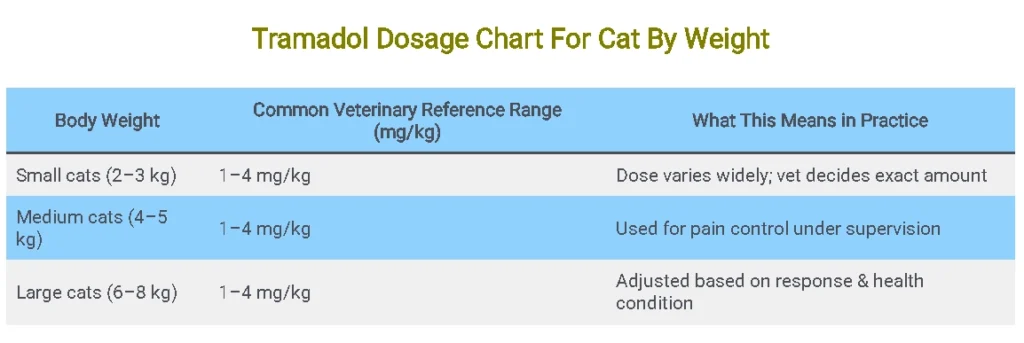
Tramadol Dosage Chart For Cat By Weight
| Body Weight | Common Veterinary Reference Range (mg/kg) | What This Means in Practice |
|---|---|---|
| Small cats (2–3 kg) | 1–4 mg/kg | Dose varies widely; vet decides exact amount |
| Medium cats (4–5 kg) | 1–4 mg/kg | Used for pain control under supervision |
| Large cats (6–8 kg) | 1–4 mg/kg | Adjusted based on response & health condition |
Common veterinary dosage recommendations
Typical published guidelines include:
- Starting dosage: 1–2 mg/kg every 12–24 hours
- Chronic pain management: 1–4 mg/kg by mouth every 8–24 hours
- Most veterinarians often start around: 2 mg/kg every 12 hours
- Dose adjustment: may increase to 3–4 mg/kg if needed under veterinary supervision
Safety and tablet strength concerns
Tramadol dosing must be handled carefully because concentration matters. Many human tablets are 50 mg, which is usually too strong for cats. Even when split, 25 mg can still be excessive for many cats.
Veterinary guidance often limits dosing to about ¼ of a 50 mg tablet (around 12.5 mg) for most cats. Research also shows that side effects may appear at doses as low as 2 mg/kg (1 mg per pound) in some cases.
For example, a 10–12 lb cat given a full 50 mg tablet would receive a dose that is significantly higher than commonly considered safe, highlighting the risk of using human medication without veterinary direction.
Because of this, veterinarians often prefer cat-specific formulations or compounded oral suspensions to ensure accurate and safe dosing.
Determining the proper dosage
The correct tramadol dosage for cats usually falls within:
- 1–4 mg/kg body weight depending on pain severity
- Adjusted carefully based on response and condition
- Always guided by veterinary evaluation
General dosing structure includes:
- Initial dose: 2 mg/kg every 12 hours
- Adjustment range: may increase to 3–4 mg/kg if required
- Maximum caution: total daily dose should be strictly controlled by a vet
Because every cat reacts differently, the safest approach is individualized dosing under veterinary supervision.
How to Give Tramadol to Cats
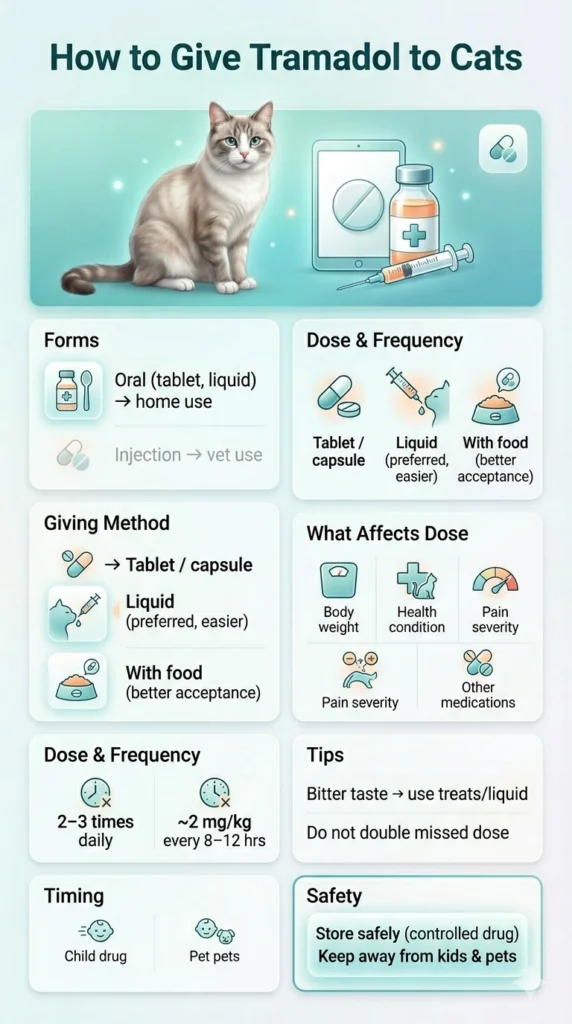
Tramadol for cats is available in oral and injectable forms. The oral form is commonly given at home, while the injectable form is usually used in veterinary hospitals, especially for surgical or post-operative pain management.
At home, tramadol is most often given as a tablet, capsule, or liquid solution. It usually comes in 50 mg tablets, but these tablets are very bitter in taste, making them difficult for cats to accept. Because of this, veterinarians often recommend flavored liquid tramadol or compounded treat formulations, which are easier to administer.
Cats are typically given tramadol two to three times daily, depending on the veterinarian’s prescription. The usual starting dose is around 2 mg per kilogram of body weight every 8 to 12 hours, but the exact dosage always depends on the cat’s condition.
The correct dose is determined based on several important factors:
- The cat’s body weight
- Any existing health conditions
- The type and severity of pain being treated
- Any other medications the cat is taking
In some cases, veterinarians may combine tramadol with other medications such as gabapentin or muscle relaxants to improve pain control, but this should only be done under professional guidance.
Tramadol can be given with or without food, although giving it with food may help reduce stomach upset and mask the bitter taste. If your cat refuses tablets, options like pill pockets, treats, or switching to liquid form can help make administration easier.
If a dose is missed, it is usually recommended to skip the missed dose and continue with the next scheduled dose rather than doubling it.
For safety, tramadol tablets should be stored at room temperature and kept away from moisture, while liquid formulations should be stored according to pharmacy instructions. Since tramadol is a controlled substance, it must always be kept securely away from children and other pets.
Side Effects of Tramadol in Cats
Tramadol is generally considered safe for cats when used as prescribed, but it can still cause side effects in some animals.
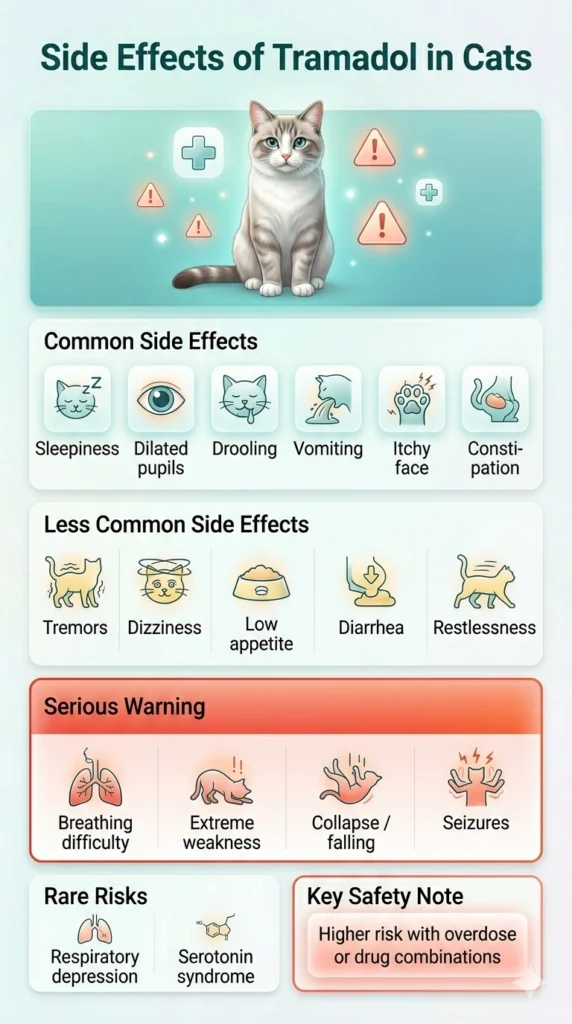
Common side effects
The most common side effects of tramadol in cats include:
- Dilated pupils (mydriasis)
- Sleepiness or sedation
- Euphoria (unusual friendliness or increased playfulness)
- Increased salivation or drooling
- Vomiting
- Itchy face
- Dysphoria (hiding, anxiety, or lethargy)
- Constipation and other gastrointestinal issues
Some cats may also show gagging or drooling due to the bitter taste of tablets.
Less common side effects
Less frequently, cats may experience:
- Heavy sedation
- Tremors
- Incoordination or dizziness
- Loss of appetite
- Diarrhea
- Slowed heart rate
- Restlessness or feeling uneasy
Serious side effects (require veterinary attention)
Stop the medication and contact a veterinarian immediately if you notice:
- Slow or difficult breathing
- Extreme sedation or weakness
- Falling or lack of coordination
- Fast heartbeat or agitation
- Tremors or seizures
These signs may indicate an overdose or severe reaction.
Rare but dangerous reactions
In rare cases, tramadol may lead to:
- Respiratory depression (very slow breathing)
- Serotonin syndrome (a dangerous increase of serotonin in the brain)
- Seizures, especially in cats with a history of seizures or when combined with certain medications
Safety note
Side effects are more likely when tramadol is overdosed or combined with other drugs that affect the nervous system. Always inform your veterinarian about any other medications or supplements your cat is taking.
Most serious risks of tramadol for cats
Although uncommon, the most serious risk associated with tramadol in cats is serotonin syndrome. This condition occurs when serotonin levels become too high in the body, leading to dangerous neurological effects.
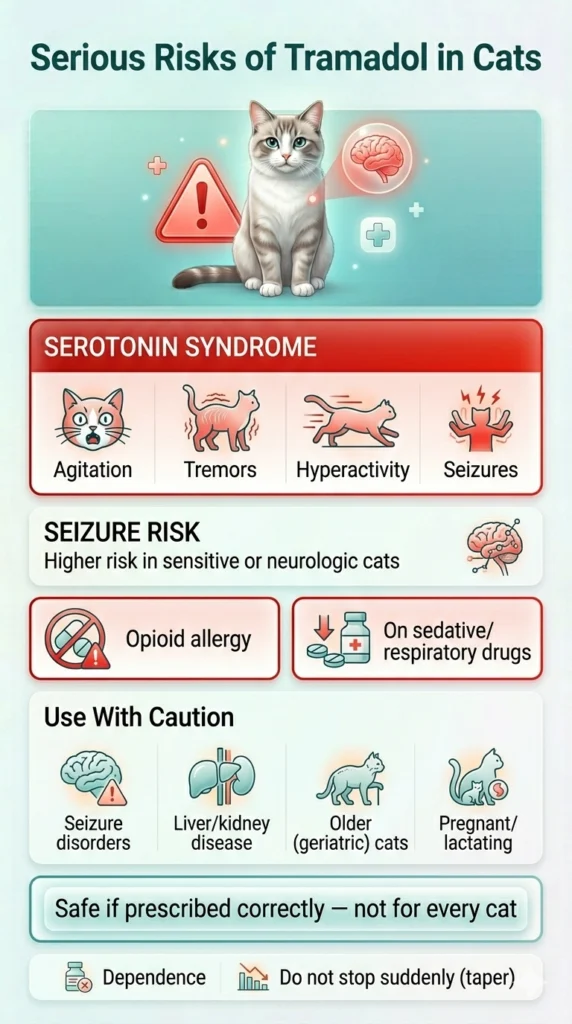
Symptoms of serotonin syndrome may include:
- Agitation
- Restlessness
- Hyperactivity
- Tremors
- Seizures
If a cat shows abnormal behavior after taking tramadol, it is important to contact a veterinarian immediately or seek emergency pet poison guidance.
In some cases, tramadol has also been associated with seizure risk, particularly in animals that are sensitive to opioids or have underlying neurological conditions. Because of this, tramadol is generally not recommended for cats with a history of seizures or brain disease.
Risk factors for tramadol use in cats
Tramadol should NOT be used in:
- Cats that are hypersensitive or allergic to opioids
- Cats receiving medications that depress brain or lung function
It should be used with extra caution in cats that are:
- Affected by seizure disorders
- Suffering from liver or kidney disease
- Geriatric or medically debilitated
- Pregnant or lactating
Is tramadol safe for cats?
Tramadol is a well-studied and commonly used medication for chronic pain in cats, and when it is given exactly as prescribed by a veterinarian, it is generally considered safe.
However, it is not safe for every cat. Cats that have previously had an allergic reaction to opioids should not receive tramadol. Cats with liver or kidney disease may also require lower doses or careful monitoring.
With long-term use, cats may become physically dependent on tramadol, and its effectiveness may decrease over time. If the medication has been used for an extended period, it should not be stopped suddenly, as this may lead to withdrawal symptoms unless the dose is gradually reduced (tapered).
Drug interactions of tramadol in cats
Yes, tramadol can interact with several other medications in cats, so it is very important to inform your veterinarian about all medicines, vitamins, supplements, or herbal products your cat is taking.
Certain medications should be used with caution when combined with tramadol, including:
- Some antifungal medications
- Metoclopramide
- Ondansetron
- Other opioid pain medications
- SAMe supplements
- Some antidepressants
Does tramadol interact with other cat medications?
Tramadol may also interact with several specific drugs, including:
- Antifungals ending in “-azole” (such as ketoconazole)
- Cimetidine
- Cyproheptadine
- Ketamine
- Mirtazapine
- Monoamine oxidase inhibitors (MAOIs) such as selegiline
- Selective serotonin reuptake inhibitors (SSRIs)
- Tricyclic antidepressants
- Other opioid medications
- SAMe or liver-support supplements
- Certain heart medications
- Macrolide antibiotics such as erythromycin
Important safety warning
Never give cats Ultracet, as this contains acetaminophen, which is extremely toxic to cats.
Extra caution is also needed if the cat is:
- Pregnant or nursing
- Has heart, liver, or kidney disease
Always inform your veterinarian about any health conditions and all medications your cat is receiving before tramadol is prescribed.
Tramadol alternatives for cats
Tramadol is not the only option for managing chronic pain in cats, and in some cases, other treatments may be more effective or better tolerated.
Other medication options
Veterinarians may prescribe other pain-relief medicines, including:
- Nonsteroidal anti-inflammatory drugs (NSAIDs) such as robenacoxib or meloxicam
- Other opioid analgesics such as buprenorphine
- Amitriptyline (an antidepressant used for pain control)
- Gabapentin (used for nerve-related pain)
- Amantadine
- Corticosteroids
A newer option is a biologic drug called Solensia (frunevetmab), which is a monoclonal antibody nerve growth factor inhibitor. It works by preventing pain signals from being transmitted by nerves. It is given as a once-monthly injection, and treatment can cost about $1,000 per year.
Natural and supportive alternatives
Non-drug approaches can also help improve comfort and mobility in cats, such as:
- Weight loss to reduce joint stress
- Environmental changes like ramps, padded or heated beds, larger litter boxes, and raised food bowls
- Physical therapy, massage, or joint manipulation
- Dietary supplements such as glucosamine-chondroitin
Advanced treatment options
In more severe cases, veterinarians may recommend medical procedures such as:
- Surgery
- Stem cell therapy
- Platelet-rich plasma (PRP) injections
You May Also Like To Read:
- Doxycycline Dosage for Cats: Chart, Safe Use, Benefits & More
- L-lysine Dosage for Cats: Safe Uses, Benefits, Risks & More
FAQs About Tramadol Dosage for Cats
What is the appropriate dosage of tramadol for cats?
Dosage depends on the cat’s individual health needs and condition. Common recommendations range from 1 to 4 mg/kg every 8 to 12 hours, but the exact dosage should always be determined by a veterinarian based on the cat’s specific situation.
Can tramadol cause foaming at the mouth in cats?
Foaming at the mouth is not a common side effect of tramadol. However, if it occurs, you should contact your veterinarian immediately, as it may indicate a reaction, difficulty swallowing, or another underlying issue.
Is it safe to give my cat both tramadol and gabapentin?
Yes, in many cases veterinarians may prescribe tramadol and gabapentin together to provide better pain control. This combination can create a more complete pain management plan, but it should only be used under veterinary supervision.
Can cats overdose on tramadol?
Yes, cats can overdose on tramadol. Signs of overdose include:
Dilated pupils
Drooling (hypersalivation)
Rapid heart rate
Poor coordination
Extreme lethargy or agitation
Slow or shallow breathing
If overdose is suspected, contact a veterinarian or emergency clinic immediately.
Can I give my cat tramadol every day?
Yes, when prescribed for chronic pain, tramadol may be given daily, usually two to three times per day. Long-term use may lead to dependence or tolerance, so it must always be monitored by a veterinarian.
Are tramadol dosages for dogs and cats different?
Yes, dosages are different. Cats usually require a lower dose than dogs due to differences in metabolism and drug processing. Always follow your veterinarian’s exact instructions.
Is tramadol 50mg available over the counter?
No. Tramadol is a Schedule IV controlled substance in the United States and is only available with a veterinary prescription. Additional rules such as limited refills or regular exams may apply.
How do I store tramadol for cats?
Tramadol should be stored at around 77°F (25°C), with short tolerance between 59°F and 86°F. It must be kept away from moisture, heat, and light. Liquid forms may require refrigeration depending on pharmacy instructions.
How quickly does tramadol work?
Acute pain: may work within 1–2 hours after oral dosing
Chronic pain: may take up to 2 weeks to show full effects
Final Thoughts
Tramadol is a commonly used pain relief medication for cats, especially for managing acute and chronic pain caused by conditions such as arthritis, injury, or other long-term health issues. It works by reducing how pain signals are processed in the brain and may also influence brain chemicals involved in mood and discomfort.
While tramadol can be effective, it is not the only option for feline pain management, and in some cases, other medications or supportive therapies may work better depending on the cat’s condition. It is often used as part of a broader treatment plan that may include other pain relievers, lifestyle adjustments, or veterinary procedures.
Like all medications, tramadol must be used carefully. Correct dosing, proper monitoring, and awareness of possible side effects, drug interactions, and health risks are essential to ensure safety. Cats with certain health conditions or those taking other medications may require special attention or alternative treatments.
Ultimately, the safest and most effective way to use tramadol is under the guidance of a licensed veterinarian, who can tailor the treatment based on the cat’s specific needs and overall health. With proper use, it can help improve comfort, mobility, and quality of life in cats dealing with pain.