When your cat develops an eye infection, knowing the right Terramycin dosage for cats is important to help them heal quickly and safely. Terramycin is a commonly used eye ointment for cats that contains antibiotics called oxytetracycline and polymyxin B. It is mainly used to treat bacterial eye problems like conjunctivitis, redness, discharge, and corneal ulcers. The ointment is applied directly to your cat’s eye, where it works to kill bacteria and reduce infection.
Many cat owners use Terramycin for cats because it is effective and easy to apply, but using the correct amount and frequency is very important. Giving too little may not clear the infection, while using too much or too often can cause irritation or other problems. That’s why understanding the proper terramycin dosage instructions for cats and following your vet’s advice is essential for your cat’s health.
In this guide, you will Learn the correct Terramycin dosage for cats with a clear dosage chart, including safe application, frequency, kitten and adult dosing, treatment duration, and vet-approved guidance for eye infections.
Disclaimer: This content is for informational purposes only and should not replace veterinary advice. Always consult your veterinarian before giving Terramycin or adjusting your cat’s dosage.
Key Takeaways
- Terramycin for cats is an antibiotic eye ointment used to treat bacterial infections, especially eye conditions like conjunctivitis and corneal ulcers
- The correct Terramycin dosage for cats usually involves applying a thin strip of ointment 2–4 times daily, as directed by a veterinarian
- It contains oxytetracycline and polymyxin B, which work together to kill bacteria effectively
- Terramycin is not effective against viral or fungal infections, so proper diagnosis is important
- Always follow terrmycin dosage instructions for cats given by your vet to ensure safe and effective treatment
- Most cats tolerate it well, but mild irritation or rare allergic reactions can occur
- Avoid use in cats with tetracycline allergies, pregnancy, or certain health conditions unless approved by a vet
- Applying the ointment correctly and consistently helps speed up recovery
- There are alternatives to terramycin for cats if this medication is not suitable
- Always consult a veterinarian before starting, stopping, or changing treatment
What is Terramycin for Cats
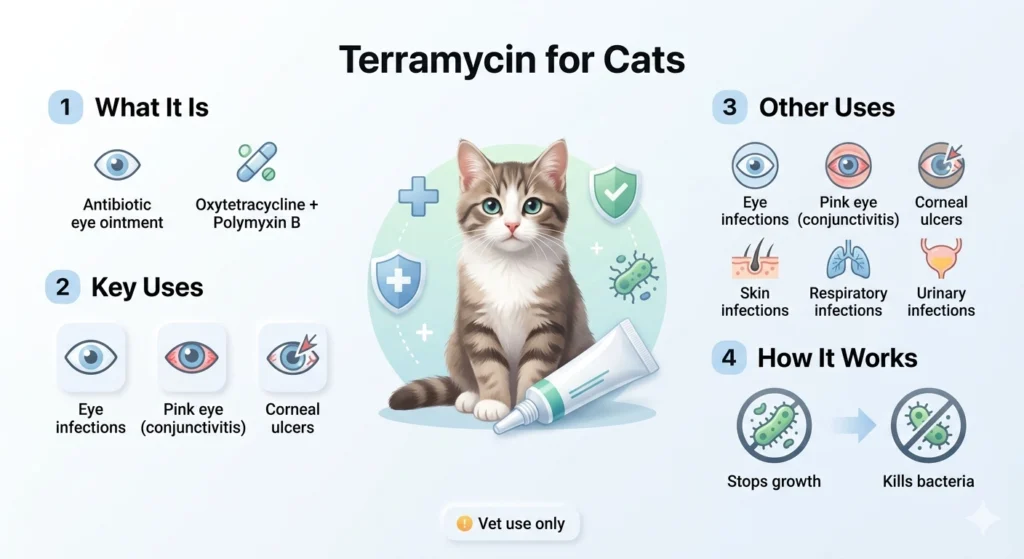
Terramycin is a prescription ophthalmic (eye) antibiotic ointment for cats that contains two active ingredients: oxytetracycline and polymyxin B. It is manufactured by Zoetis Animal Health and is commonly used in veterinary medicine to treat bacterial infections, especially those affecting the eyes.
Oxytetracycline belongs to the tetracycline class of antibiotics and is known for its broad-spectrum activity, meaning it works against both gram-positive and gram-negative bacteria. It kills bacteria by disrupting their ability to produce proteins.
This makes it effective against organisms such as Chlamydia and Mycoplasma, which are known to cause conjunctivitis (pink eye) in cats.
Polymyxin B is derived from the bacterium Bacillus polymyxa and works by damaging the bacterial cell membrane, making it more permeable and leading to rapid bacterial death. Together, these two antibiotics provide effective treatment against a wide range of bacterial infections.
What is Terramycin used for in cats
Terramycin is a topical antibiotic eye ointment for cats used to treat bacterial eye infections and other bacterial diseases. It is mainly used for eye problems caused by gram-positive and gram-negative bacteria, especially conditions like conjunctivitis, pink eye, keratitis, and corneal ulcers. In some cases, a veterinarian may also use it for certain fungal-related eye conditions if needed.
In cats, Terramycin is commonly prescribed to treat bacterial infections caused by harmful germs such as Escherichia coli and Staphylococcus aureus. It is often used when the infection is strong or when other treatments are not effective.
Terramycin for cats is also used for different health problems, including:
- Eye infections like conjunctivitis and corneal ulcers
- Skin infections such as wounds and abscesses
- Respiratory infections like bacterial pneumonia
- Urinary tract infections caused by bacteria
- Chlamydia infections in cats, especially Chlamydia felis that affects the eyes
It is also used in kittens and adult cats for treating bacterial infections when needed under veterinary care.
Overall, Terramycin is mainly used in cats to treat bacterial infections affecting the eyes, skin, breathing system, and urinary system, and it should always be used under a vet’s guidance.
Terramycin dosage for cats
The Terramycin dosage for cats depends on the type of infection and your veterinarian’s recommendation, but it is most commonly used as an ophthalmic (eye) ointment. For eye infections, the usual dose is a thin strip of ointment applied directly across the surface of the affected eye.
Standard Dosage (Eye Ointment)
- Apply a thin film or strip of ointment to the eye
- Typically given 2 to 4 times a day (every 6 to 12 hours)
- The amount is usually enough to cover the eye surface (around 1 cm strip)
- Kittens may require a slightly smaller amount due to smaller eye size
Your veterinarian will guide you on whether to treat one or both eyes and how long to continue treatment.
General Dosage (Other Infections)
In some cases where Terramycin is used beyond eye conditions, the dosage may be:
- 5 to 10 mg per pound of body weight, usually twice daily
However, this type of dosing varies depending on the condition and should only be given under veterinary supervision.
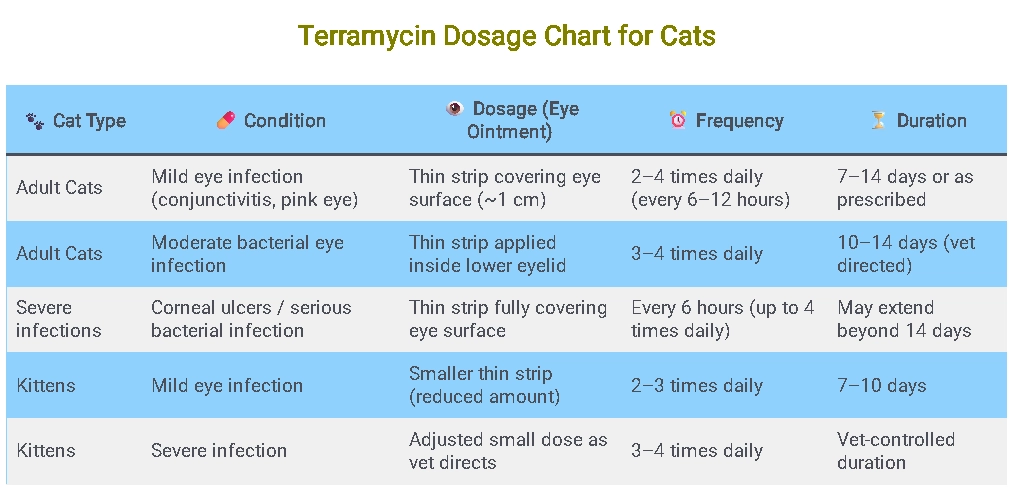
Terramycin Dosage Chart for Cats
| 🐾 Cat Type | 💊 Condition | 👁️ Dosage (Eye Ointment) | ⏰ Frequency | ⏳ Duration |
|---|---|---|---|---|
| Adult Cats | Mild eye infection (conjunctivitis, pink eye) | Thin strip covering eye surface (~1 cm) | 2–4 times daily (every 6–12 hours) | 7–14 days or as prescribed |
| Adult Cats | Moderate bacterial eye infection | Thin strip applied inside lower eyelid | 3–4 times daily | 10–14 days (vet directed) |
| Severe infections | Corneal ulcers / serious bacterial infection | Thin strip fully covering eye surface | Every 6 hours (up to 4 times daily) | May extend beyond 14 days |
| Kittens | Mild eye infection | Smaller thin strip (reduced amount) | 2–3 times daily | 7–10 days |
| Kittens | Severe infection | Adjusted small dose as vet directs | 3–4 times daily | Vet-controlled duration |
Important Application Notes
- Apply inside the lower eyelid, not directly onto the eyeball
- Do not touch tube tip to eye or skin
- Clean eye gently with warm water before application
- Always complete full treatment even if symptoms improve early
- Follow vet instructions for exact dose adjustments
- Follow exact dosage instructions given for your cat’s condition
- Apply consistently at the same times each day
- Monitor your cat’s response and watch for any side effects
- Contact your vet if there is no improvement or any reaction
Proper dosing is essential for effective treatment. Using too little may not clear the infection, while incorrect use can delay healing. Always rely on your vet’s advice to ensure safe and successful treatment.
How To Administer Terramycin to Cats
Giving Terramycin for cats is simple once you know the correct method. Since it is an ophthalmic ointment, it must be applied directly to the surface of your cat’s eye with care.
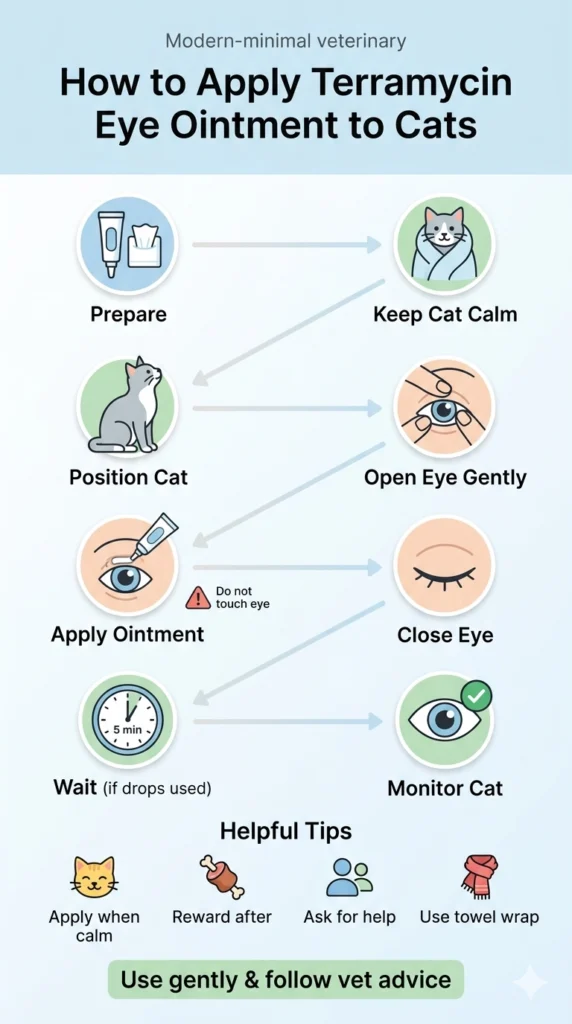
Step-by-Step Application
- Prepare everything first: Keep the Terramycin ophthalmic ointment and a clean tissue nearby.
- Keep your cat calm: Make sure your cat is relaxed. You can gently wrap them in a towel to prevent sudden movement.
- Position your cat properly: Sit your cat on your lap facing away from you, or place them on a stable surface. Gently tilt their head upward so you can clearly see the eye.
- Open the eye gently: Use your thumb to lift the upper eyelid and your finger to lower the bottom eyelid.
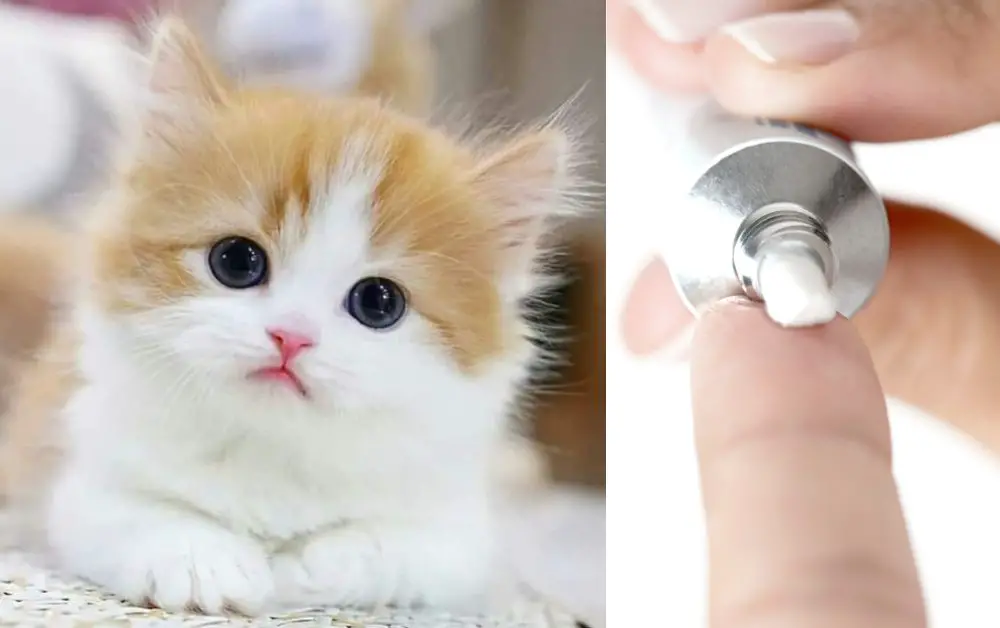
- Apply the ointment: Squeeze a small strip of ointment onto the surface of the eye.
Do not let the tube touch the eye. - Close the eye gently: After applying, softly close your cat’s eyelids. This helps spread the medication evenly across the eye surface. Blinking will also help distribute it.
- Wait if using other medications: If you are using eye drops along with Terramycin, apply the drops first. Wait about 5 minutes before applying the ointment so it does not block the liquid medicine.
- Monitor your cat: Watch for any discomfort or unusual reaction after applying the medication.
Helpful Administration Tips
- Avoid applying the ointment while facing your cat, as they may back away
- Apply the medicine when your cat is calm or sleepy
- Reward your cat with a treat or food afterward
- Wrapping your cat in a towel can make the process easier and safer
- Ask someone to help hold your cat if needed
- If ointment is difficult to use, ask your vet about eye drop alternatives
Applying Terramycin eye ointment for cats correctly ensures the medicine spreads properly and works effectively. Following these steps will help make the process easier and less stressful for both you and your cat.
Side Effects of Terramycin for Cats
Most cats tolerate Terramycin for cats very well, and serious side effects are rare. The active ingredients, oxytetracycline and polymyxin B, are generally safe for the eye. However, like any medication, some cats may experience mild to rare reactions.
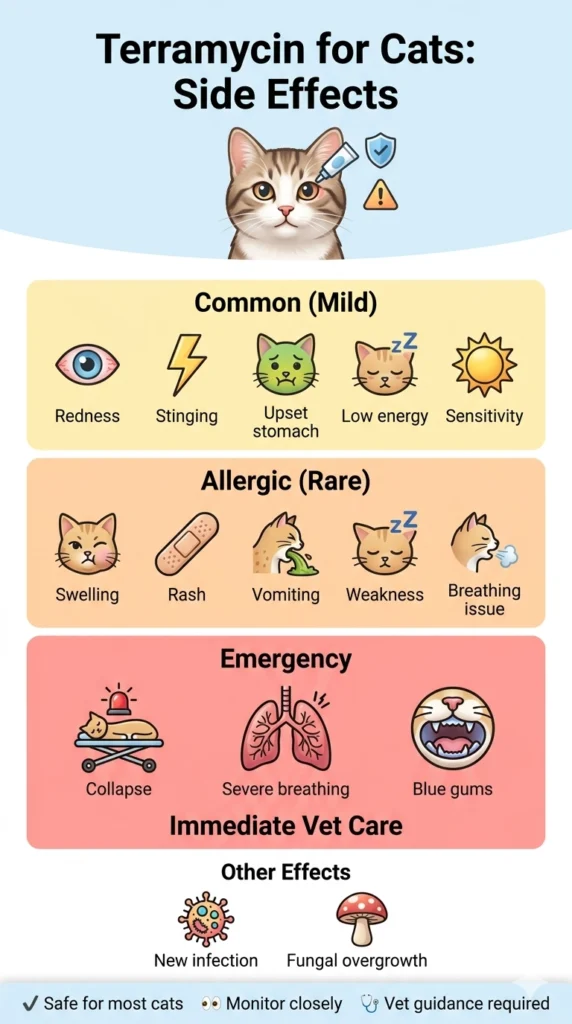
Common Side Effects
The most common side effects are usually mild and may include:
- Slight eye irritation or redness after application
- Stinging or discomfort in or around the eye
- Gastrointestinal upset, such as vomiting or diarrhea
- Drowsiness or low energy
- Sensitivity to sunlight, which may cause skin irritation
These effects are usually temporary, but it’s important to monitor your cat for any changes in behavior or condition.
Allergic Reactions (Rare but Serious)
Some cats may have an allergy or sensitivity to Terramycin, especially to polymyxin B or tetracycline antibiotics. Signs of an allergic reaction may include:
- Facial swelling
- Itching, rash, or hives
- Vomiting
- Lethargy or weakness
- Difficulty breathing
In very rare cases, a severe reaction called anaphylaxis can occur. This may lead to:
- Collapse or unconsciousness
- Heavy or labored breathing
- Bluish discoloration of the gums or skin
These symptoms can appear within minutes to up to 4 hours after application and require immediate veterinary attention. Thankfully, such severe reactions are extremely rare.
Other Possible Effects
- Use of antibiotics like Terramycin may sometimes lead to an overgrowth of non-susceptible organisms, such as certain fungi or resistant bacteria
- If a new infection develops during treatment, contact your veterinarian immediately
Important Note
Some symptoms like redness, irritation, or discomfort may already be part of your cat’s eye condition. It’s important not to confuse these with medication side effects. Always observe carefully and consult your vet if you are unsure.
Overall, Terramycin eye ointment for cats is considered safe, but careful monitoring ensures early detection of any side effects and helps keep your cat healthy during treatment.
Alternatives To Terramycin
If Terramycin for cats is not suitable or effective, there are several alternatives available to treat bacterial infections. The right option depends on the type and severity of your cat’s condition, so it’s always important to consult your veterinarian before switching medications.
Common Alternatives
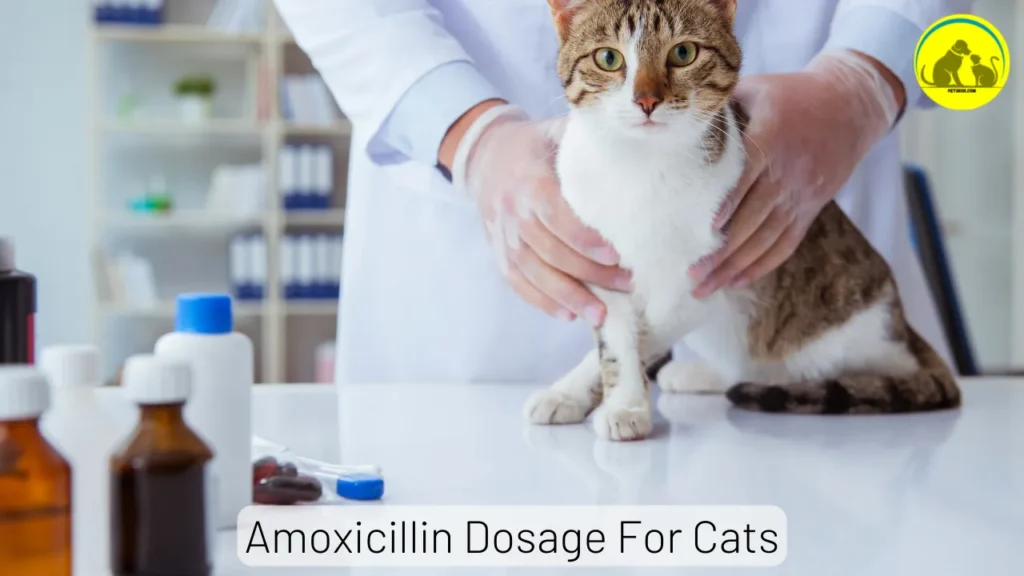
- Amoxicillin
Amoxicillin is a widely used antibiotic for cats that treats respiratory infections and urinary tract infections. It is generally well-tolerated, with a typical dosage of 5 to 10 mg per pound every 12 hours. It has shown good effectiveness in treating bacterial infections in cats.
Clavamox
Clavamox combines amoxicillin with clavulanate potassium, making it more effective against resistant bacteria. It is commonly used for more complicated infections. The usual dosage is 6.25 to 12.5 mg per cat every 12 hours, and it is considered highly effective in many cases.
- Cefovecin (Convenia)
Cefovecin is a long-acting injectable antibiotic. A single injection can last up to 14 days, making it a good option for cats that are difficult to medicate with pills or ointments. It is often used for skin and soft tissue infections.
Other Options
Some pet owners consider herbal remedies like licorice root or goldenseal because of their natural antibacterial properties. However, these should only be used with veterinary guidance, as not all herbal treatments are safe for cats.
Important Note
Alternatives like Amoxicillin or Clavamox may be used depending on the infection, but you should never change or start a new medication without your veterinarian’s advice. Each treatment has its own benefits and possible side effects, and the best choice depends on your cat’s specific needs.
When not to apply Terramycin to your cat
Although Terramycin for cats is generally safe, there are certain situations where it should be used with caution or avoided completely.
When to Avoid Use
Do not use Terramycin in the following cases unless your veterinarian advises otherwise:
- Allergy to tetracycline antibiotics
- Pregnant cats, as it may cause liver-related problems
- Cats already taking oral antacids, due to possible drug interactions
Use With Caution
Terramycin should be used carefully in cats with:
- Kidney disease
- Liver disease
In these cases, your vet may adjust treatment or recommend an alternative.
Important Safety Advice
- Always inform your veterinarian about any existing health conditions
- Tell your vet about all medications your cat is currently taking
- Follow the recommended dosage and application instructions carefully
Safety and Effectiveness of Terramycin for Cats
Terramycin is both safe and effective for treating bacterial infections in cats when used properly. However:
- Some cats may experience mild side effects like stomach upset or allergic reactions
- Proper use and veterinary guidance are essential for best results
- Keeping the treated area clean and dry supports faster healing
Overall, Terramycin for cats is a reliable treatment, but it should always be used responsibly and under veterinary supervision to ensure safety and effectiveness.
Overdose and Emergencies
When using Terramycin for cats, overdose is not likely because it is an ophthalmic (eye) ointment applied externally. However, applying it more frequently than every 6 hours (more than 4 times a day) will not improve results and may cause eye irritation or discomfort.
Emergency Situations
If your cat shows signs of an allergic reaction, especially a severe (anaphylactic) reaction, seek immediate veterinary care. Watch for:
- Swelling
- Difficulty breathing
- Weakness or unusual behavior
In such cases, contact your veterinarian immediately or go to the nearest emergency clinic.
How to Store Terramycin
Proper storage helps maintain the effectiveness of Terramycin eye ointment for cats:
- Store at room temperature (20–25°C / 68–77°F)
- Short-term variation between 15–30°C (59–86°F) is acceptable
- Keep the tube away from moisture and direct sunlight
- Do not freeze
Important Safety Disclaimer
- Always use Terramycin dosage for cats exactly as prescribed
- Do not adjust or change the dose without veterinary advice
- Only use medications approved or recommended by a veterinarian
- Avoid using human medications on cats unless directed by a vet
Working closely with your veterinarian ensures safe and effective treatment for your cat.
You May Also Like To Read:
- Azithromycin Dosage for Cats: Chart, Safe Use & More
- Gabapentin Dosage for Cats: Chart, Safe Use, Benefits & More
FAQs About Terramycin Dosage for Cats
What if I miss a dose of Terramycin?
If you miss a dose of Terramycin for cats, wait until the next scheduled dose and continue as normal. Do not double the dose. Terramycin eye ointment can often be given multiple times a day, sometimes as frequently as every 6 hours, but always follow your veterinarian’s instructions for correct timing.
How should I store Terramycin?
Store Terramycin eye ointment for cats at room temperature between 68–77°F (20–25°C). Short exposure to 59–86°F (15–30°C) is acceptable. Keep the tube tightly closed, away from sunlight, moisture, children, and pets. Always follow the storage instructions on the product label.
What does Terramycin treat in cats?
Terramycin contains oxytetracycline and polymyxin B, which are used to treat bacterial eye infections in cats, especially conjunctivitis caused by Chlamydia and Mycoplasma. It is not effective against viral infections, which are also common in cats, so it should only be used when a bacterial infection is suspected or confirmed by a veterinarian.
How long does Terramycin take to work in cats?
It may take a few doses before improvement is seen. In many cases, Terramycin for cats is prescribed for about 7–14 days, depending on the infection. Some cases may require longer treatment, and follow-up veterinary visits may be needed to confirm recovery.
Can I inject Terramycin into my pet?
No. Terramycin should never be injected unless specifically instructed by a veterinarian. Injectable forms are intended for large food animals and require professional administration. Incorrect use can lead to serious overdose or severe side effects.
How do I apply Terramycin to my cat?
To apply Terramycin eye ointment for cats, gently position your cat so they cannot back away. Lift the head to expose the eye, and carefully pull down the lower eyelid. Apply a small amount of ointment onto the eye surface without touching the tube tip to the eye. Close the eyelids gently so the medication spreads evenly. It is often easier with two people or by wrapping the cat in a towel. Reward your cat afterward to reduce stress.
How long should I give Terramycin to my cat?
You should give Terramycin for cats for the full duration prescribed by your veterinarian, even if symptoms improve earlier. Treatment length depends on the type and severity of infection. In most cases, vets recommend continuing treatment for a few days after the infection signs have resolved to prevent recurrence.
Is Terramycin safe for cats
Terramycin is FDA-approved for external use in cats and dogs and is generally considered safe when used correctly. Most cats tolerate it well, especially when it is applied as directed by a veterinarian.
Potential Drug Interactions With Terramycin
There are no known drug interactions between Terramycin and other eye medications. However, you should still inform your veterinarian about all medications your cat is receiving to ensure safe treatment.
Final Thoughts
Using the correct Terramycin dosage for cats is key to treating infections safely and effectively. This antibiotic eye ointment is a reliable option for managing bacterial eye conditions in cats, especially when used exactly as directed. From understanding what Terramycin for cats is used for, to applying it properly and monitoring for side effects, every step plays an important role in your cat’s recovery.
While Terramycin is generally safe and well-tolerated, it should always be used under veterinary guidance. Correct dosage, proper application, and awareness of possible reactions help prevent complications and ensure the best results. If your cat’s condition does not improve or worsens, it’s important to seek veterinary advice promptly.
In the end, responsible use of Terramycin eye ointment for cats can make a significant difference in treating infections and keeping your cat healthy. Always follow professional advice and give your cat the care and attention they need during treatment.