Managing pain in cats can be challenging, which is why understanding the correct Onsior dosage for cats is so important. Onsior is a veterinary medication containing robenacoxib, a non-steroidal anti-inflammatory drug (NSAID) specifically approved for use in cats. It is commonly prescribed by veterinarians to relieve pain and inflammation, especially after surgery, dental procedures, or sudden injuries.
Since cats are very sensitive to medications, giving the right Onsior for cats dosage is essential to avoid serious side effects. The dosage is usually based on your cat’s weight and health condition, and it should only be given under a veterinarian’s guidance.
In this guide, you’ll learn everything About Onsior dosage for cats complete guide with weight-based dosing chart, safety information, uses, side effects, and proper administration for safe short-term pain relief after surgery or injury.
Disclaimer: This content is for informational purposes only and should not replace veterinary advice. Always consult your veterinarian before giving Onsior or adjusting your cat’s dosage.
Key Takeaways
- Onsior is a short-term NSAID used in cats to control pain and inflammation, mainly after surgery or injury.
- It is the first NSAID approved specifically for cats and is commonly used for spay, neuter, and orthopedic procedures.
- Onsior works by blocking COX-2 enzymes, which reduces pain and inflammation while sparing COX-1 to lower side effects risk.
- The medication is generally prescribed for up to 3 days only, and dosage must always be determined by a veterinarian.
- The correct Onsior dosage for cats depends on weight, health condition, and clinical need—self-medication is dangerous.
- Common side effects may include vomiting, diarrhea, decreased appetite, and lethargy.
- Serious risks can include kidney damage, stomach ulcers, liver issues, and bleeding disorders, especially in high-risk cats.
- Onsior should not be combined with other NSAIDs or steroids, as this greatly increases toxicity risk.
- Always inform your veterinarian about any medications or health conditions before starting treatment.
What is Onsior for cats, and how does it work?
Onsior is the brand name for robenacoxib, a non-steroidal anti-inflammatory drug (NSAID) produced by Elanco Animal Health. It is FDA-approved for use in cats to relieve pain and inflammation, particularly in cats undergoing spay, neuter, or orthopedic surgical procedures. It is also recognized as the first NSAID approved specifically for cats.
Onsior belongs to the COX-2 selective (coxib) class of NSAIDs. In the body, there are two cyclooxygenase pathways:
- COX-1, which supports normal functions like the stomach, kidneys, and blood clotting
- COX-2, which is mainly responsible for inflammation and pain
NSAID (Non-Steroidal Anti-Inflammatory Drug) work by blocking these pathways to reduce inflammation. However, blocking COX-1 can lead to side effects such as stomach ulceration, kidney damage, and blood clotting issues, which is a major concern in cats because they are especially sensitive to NSAIDs.
Onsior works by selectively targeting the COX-2 enzyme while sparing COX-1, making it a safer option compared to traditional NSAIDs. In fact, it is about 500 times more selective for COX-2 than COX-1, helping reduce pain and inflammation while lowering the risk of common NSAID-related side effects.
This medication is used as:
- An anti-inflammatory
- An analgesic (pain reliever)
- An antipyretic (fever reducer)
Onsior is commonly used for short-term treatment (up to 3 days) and is especially effective in managing post-operative pain and inflammation. It is available in:
- 6 mg tablets
- Injectable solution
Its effects typically begin within about 30 minutes after administration, making it a fast-acting option for pain relief in cats.
What Is Onsior Used for in Cats?
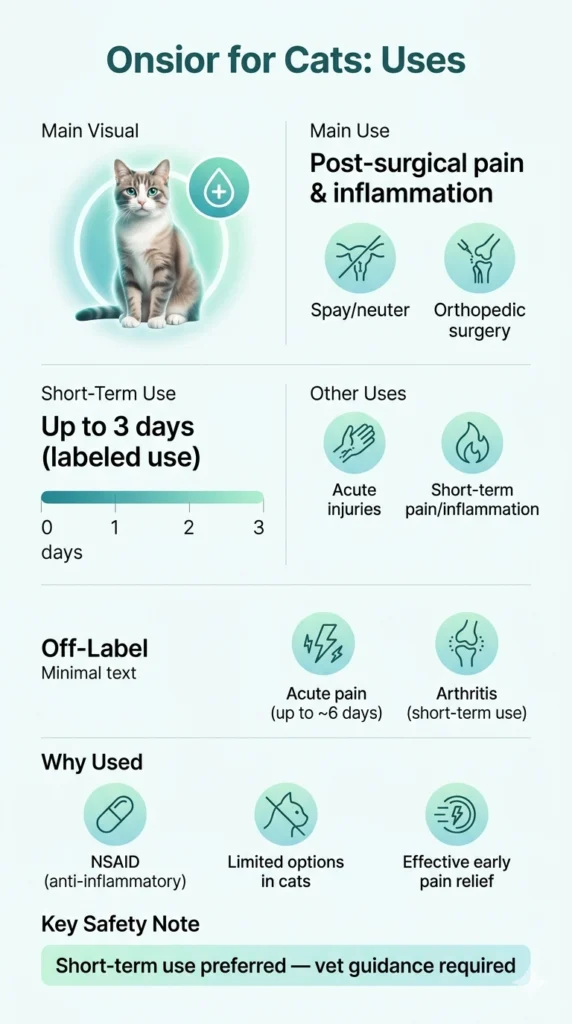
Onsior is used in cats for the control of postoperative pain and inflammation, especially after orthopedic surgery, ovariohysterectomy (spay), and castration (neuter). It is labeled for use for up to 3 days after these surgical procedures, making it a short-term treatment option for recovery-related pain.
In clinical use, Onsior is commonly chosen because pain management options in cats are limited. It is the only NSAID approved for use in cats, and is often considered one of the safest choices for short-term pain conditions such as broken bones and other acute injuries. In studies, Onsior has also shown better pain relief during the first 8 hours after surgery compared to buprenorphine.
Beyond its labeled use, veterinarians may prescribe Onsior for other pain and inflammation conditions. These include:
- Acute pain management for up to 6 days (off-label use)
- Chronic arthritis pain management for up to 1 month in some cases
Research has shown that cats with arthritis tolerated a 1-month course well, including some cats with chronic kidney disease, with no significant changes in liver or kidney values or negative side effects observed in those studies. However, long-term use should always be carefully evaluated by a veterinarian, as risks and benefits vary depending on the individual cat.
Common Uses for Onsior in Cats
- Post-surgical pain: spay, neuter, dental extractions, and orthopedic surgery (often started as an injection during surgery, followed by tablets at home)
- Acute injuries: falls, bites from other cats, sprains, and strains
- Musculoskeletal pain: short-term soft tissue inflammation (not recommended for long-term arthritis management due to the 3-day labeled limit)
As with all NSAIDs, any extended or off-label use should be guided strictly by a veterinarian.
Onsior Dosage for Cats
Onsior is prescribed for cats at a recommended dose of 1 mg per kg of body weight, although this may range from 1 to 2.4 mg/kg depending on the cat’s condition. Because dosage varies, only a veterinarian can determine the exact amount required for safe and effective treatment. Self-medication should be avoided, as incorrect dosing can lead to serious health complications.
It is important to note that overdosing Onsior in cats can cause severe issues, including renal failure and gastrointestinal ulcers, making strict adherence to veterinary instructions essential.
Approved Dosage Guidelines
Onsior is FDA-approved only for cats 4 months of age or older and weighing at least 5.5 pounds (2.5 kg). The oral tablets cannot be accurately divided, so they are not suitable for cats under this weight.
Manufacturer-recommended dosing:
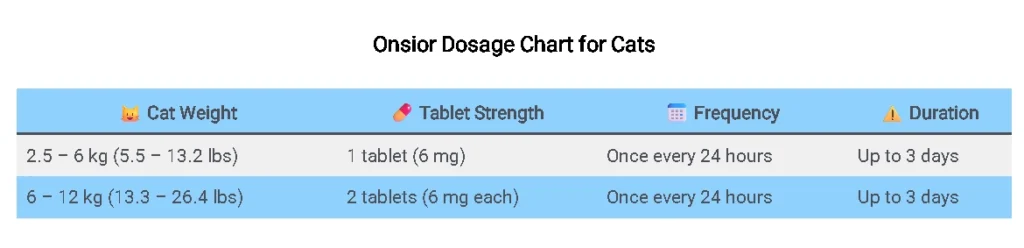
- Cats 5.5 to 13.2 lbs (2.5–6 kg): 1 tablet (6 mg) once daily
- Cats 13.3 to 26.4 lbs (6–12 kg): 2 tablets once daily
- Frequency: Once every 24 hours
- Maximum duration: Up to 3 consecutive days (FDA-approved use)
Tablets are available in 6 mg strength, typically packaged in blister packs of three tablets to match the short treatment duration. They may be given with or without food, although giving without food may improve absorption.
Onsior Dosage Chart for Cats
| 🐱 Cat Weight | 💊 Tablet Strength | 📅 Frequency | ⚠️ Duration |
|---|---|---|---|
| 2.5 – 6 kg (5.5 – 13.2 lbs) | 1 tablet (6 mg) | Once every 24 hours | Up to 3 days |
| 6 – 12 kg (13.3 – 26.4 lbs) | 2 tablets (6 mg each) | Once every 24 hours | Up to 3 days |
Injectable Use
An injectable form is also available and is commonly administered by veterinarians before or during surgery to provide early pain control during recovery.
Administration Instructions
- Tablets must be given whole (do not split or crush)
- Can be given with or without food
- Usually started around surgery time, with doses spaced 24 hours apart
- Typical schedule: day 1 (before surgery), day 2, and day 3
- Do not combine with other NSAIDs or corticosteroids unless directed by a veterinarian
Duration and Special Cases
Onsior is officially approved for short-term use only (maximum 3 days). However, in some off-label veterinary cases, it may be used for:
- Up to 6 days for acute pain
- Up to 28 days for chronic conditions like arthritis
Studies have shown some cats tolerated extended use, including those with chronic kidney disease, without noticeable lab abnormalities. However, long-term use must always be carefully evaluated by a veterinarian based on individual risk and benefit.
Comparison Note (Onsior vs Metacam)
Compared to other NSAIDs like meloxicam, Onsior is:
- Highly COX-2 selective
- Approved for short-term 3-day use in cats
- Considered lower risk for kidney issues in short duration use
- Best suited for post-surgical and acute injury pain
Safety Reminder
Onsior should always be used exactly as prescribed. Veterinary guidance is essential to ensure safe dosing and to avoid dangerous interactions or overdose risks.
Onsior Injection for Cats
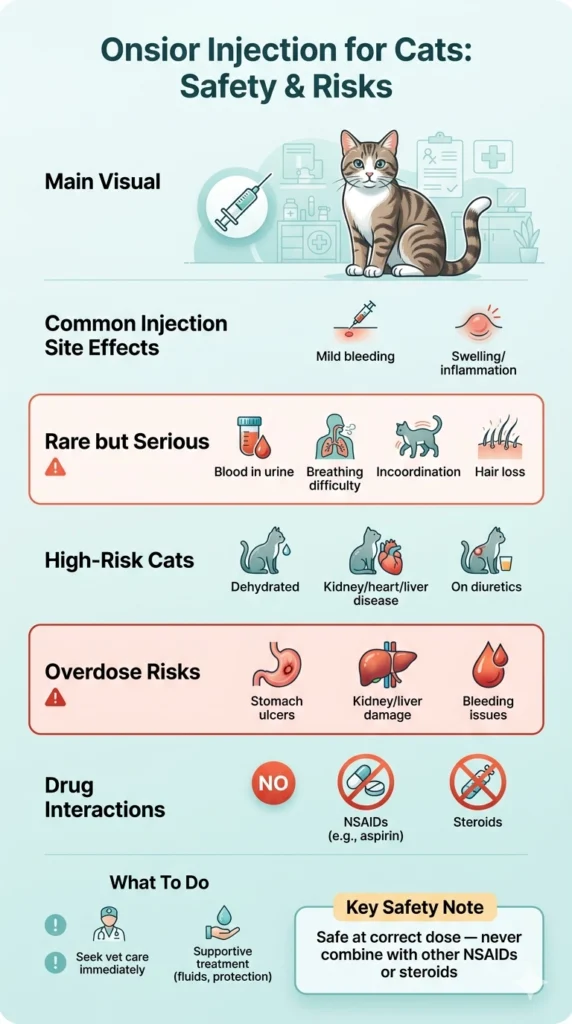
Onsior injection may cause local complications at the surgical or injection site, including bleeding and inflammation. However, in a controlled field study involving over 160 cats, only about 3 to 4 cats on average showed these side effects, suggesting that Onsior is generally well tolerated when used at the correct dose.
Some rare but serious side effects reported with injectable Onsior include:
- Blood in urine
- Hair loss
- Respiratory distress
- Incoordination
- Death (most commonly linked to kidney failure)
These adverse effects were mainly observed in healthy cats, but the risk may increase in cats that are:
- Dehydrated
- Receiving diuretics (such as furosemide for heart disease)
- Already affected by kidney, heart, or liver disease
Overdose and Safety Risks
Overdosing any NSAID, including Onsior, can significantly increase the risk of:
- Gastrointestinal ulceration
- Kidney and liver damage
- Abnormal bleeding due to platelet effects
Safety studies in healthy young cats showed that even 2 to 5 times the labeled injectable dose, or 5 times the dose for up to 30 days, did not produce significant clinical or laboratory abnormalities. However, this does not eliminate risk in real-world cases, especially in cats with underlying disease.
Treatment of Toxicity
If toxicity or overdose is suspected, treatment may include:
- Gastroprotective medications to prevent or treat ulcers
- Intravenous fluids to support kidney function
- Hospitalization and supportive care in severe cases
Drug Interaction Warnings
Onsior must never be combined with:
- Other NSAIDs (including aspirin)
- Corticosteroids (such as prednisolone or budesonide)
Combining these medications greatly increases the risk of severe gastrointestinal and systemic toxicity.
Important Safety Advice
Owners should always inform the veterinarian about any medications their cat is receiving before starting Onsior. If any side effects, overdose suspicion, or drug interaction concerns arise, immediate veterinary attention or contacting poison control services is essential.
Side Effects of Onsior for Cats
Onsior is a COX-2 selective NSAID, which means the risk of side effects is lower compared to many other NSAIDs, but it is not completely risk-free.
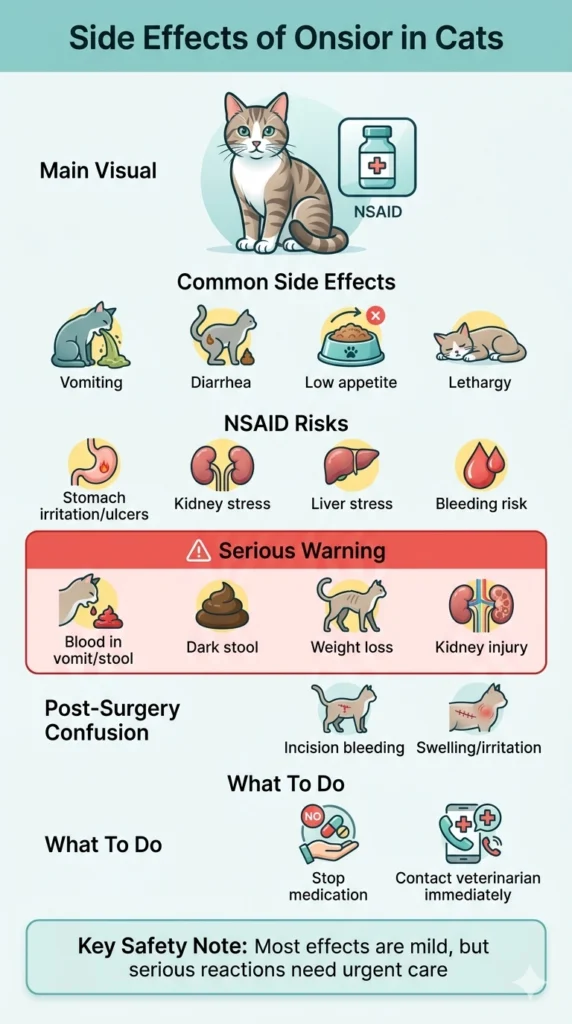
Like all NSAID medications, possible adverse effects can include:
- Gastrointestinal upset
- Stomach ulceration
- Kidney toxicity
- Liver toxicity
- Bleeding disorders due to effects on blood clotting
Common Side Effects in Cats
According to manufacturer reports, the most frequently observed side effects of Onsior in cats are generally mild and temporary, including:
- Diarrhea or soft stool (sometimes with mild changes in stool color)
- Vomiting
- Decreased appetite
- Lethargy
- Depression
- Restlessness
These effects are usually related to digestive sensitivity and may appear shortly after administration.
Less Common but Serious Side Effects
In rare cases, more serious reactions may occur, such as:
- Blood in vomit or stool
- Dark or tarry stool
- Weight loss
- Kidney injury
Some signs may also be confused with post-surgical effects rather than the medication itself, including:
- Bleeding at the incision site
- Irritation or infection at the surgical site
- Increased bruising
Important Warning
If a cat shows any of these side effects or unusual behavioral changes, Onsior should be stopped and a veterinarian should be contacted immediately. Keeping a record of symptoms helps the veterinarian evaluate the cat’s response to treatment more accurately.
As with all NSAIDs, more serious complications—though uncommon—may involve kidney damage, liver issues, and impaired blood clotting, which require immediate veterinary attention.
Safety Information of Onsior for Cats
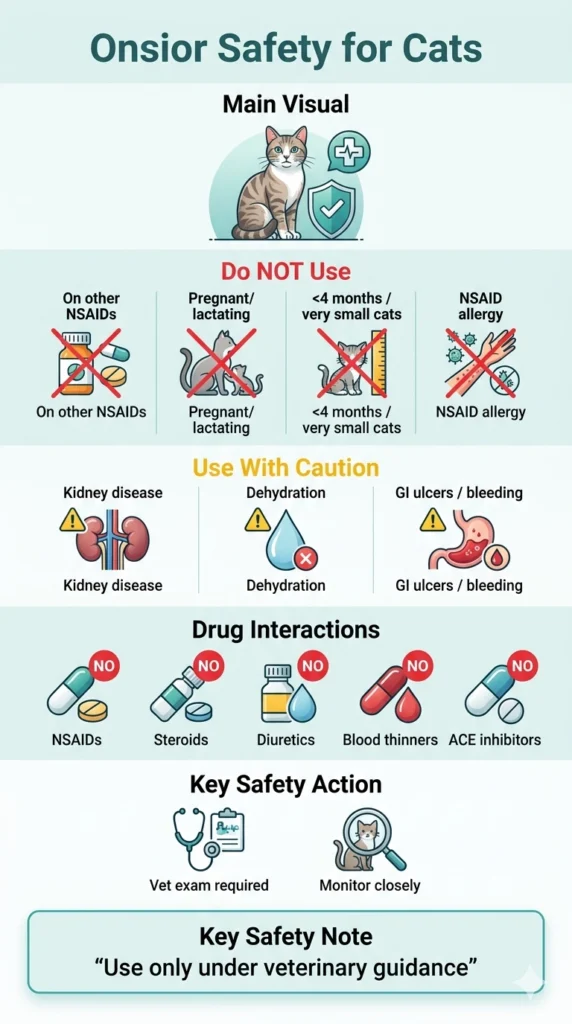
Onsior should only be used in cats after a proper veterinary examination, as it is not suitable for every cat and may cause serious adverse effects in certain conditions.
Cats That Should NOT Receive Onsior
Onsior is not recommended in the following cases:
- Cats already taking another NSAID, as combining NSAIDs can increase toxicity risk
- Cats receiving other medications that may interact and cause adverse effects
- Pregnant or lactating cats, as safety has not been established
- Kittens under 4 months of age or cats weighing less than 2.5 kg, since safety is not confirmed
- Cats with hypersensitivity to robenacoxib or NSAID intolerance (allergic reactions)
Medical Conditions Requiring Caution
Onsior should be avoided or carefully evaluated in cats with:
- Kidney disease, as NSAIDs may worsen kidney function
- Dehydration, which should be corrected before use
- Gastrointestinal ulcers or bleeding disorders, due to increased bleeding risk
Drug Interactions
Before starting Onsior, veterinarians must be informed if the cat is taking:
- Other NSAIDs (such as meloxicam or aspirin) — never combine
- Corticosteroids (such as prednisolone) — greatly increases risk of gastrointestinal ulcers
- Diuretics (such as furosemide) — may affect kidney function
- Blood thinners — increases bleeding risk
- ACE inhibitors — commonly used in heart disease cats, may affect kidney function
Important Safety Advice
A veterinarian must always determine whether Onsior is appropriate for a cat based on its health status. During treatment, cats should be closely monitored, and any side effects or unusual behavior should be reported immediately to ensure safe use.
What are the most serious risks of Onsior for cats?
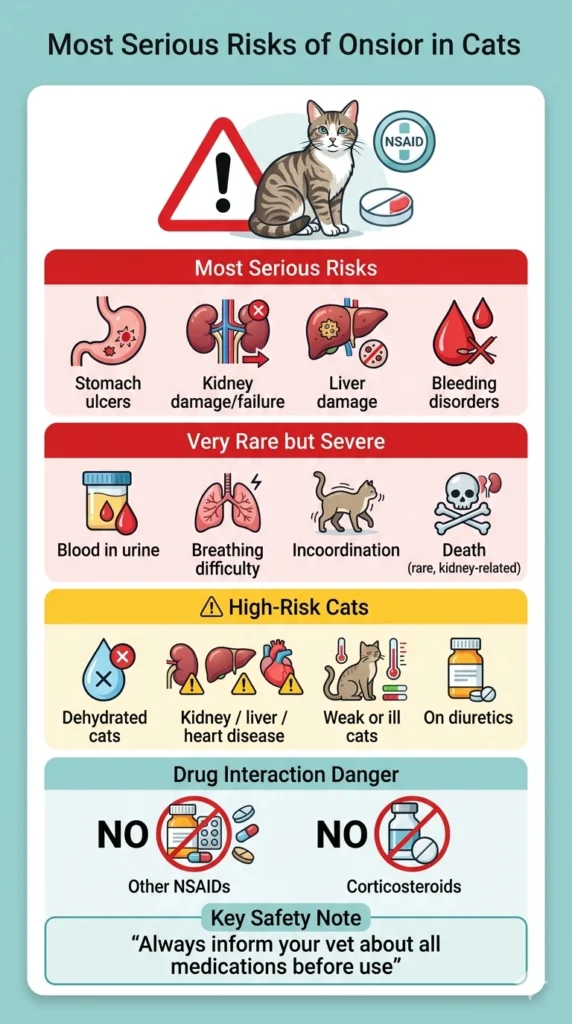
Onsior is generally considered safer for short-term use in cats compared with many other NSAIDs, but it can still cause serious and potentially life-threatening side effects in some cases.
Serious adverse risks
The most commonly reported serious adverse effects associated with Onsior and other NSAIDs include:
- Stomach upset
- Stomach ulcers
- Kidney damage
- Liver damage
- Bleeding disorders
Very rare but severe risks
Although uncommon, some cats may develop more severe reactions, including:
- Bloody urine
- Breathing difficulties
- Incoordination
- Death (most often linked to kidney failure)
These severe outcomes are generally associated with underlying kidney failure or worsening renal function.
Higher-risk cats
Side effects are more likely in cats that are:
- Already sick or weakened
- Dehydrated
- Receiving diuretics
- Diagnosed with pre-existing kidney, liver, or heart disease
Drug interactions and safety concerns
Onsior should not be combined with certain medications, especially:
- Other NSAIDs (such as meloxicam or baby aspirin)
- Corticosteroids (such as prednisolone, budesonide, or Depo-Medrol injections)
It may also interact with:
- ACE inhibitors (such as enalapril)
- Diuretics
- Fluconazole
- Methotrexate
Because of these risks, it is essential to inform your veterinarian about all medications and supplements your cat is taking before starting Onsior.
You May Also Like To Read:
- Tramadol Dosage for Cats: Chart, Safe uses, Benefits & More
- Doxycycline Dosage for Cats: Chart, Safe Use, Benefits & More
FAQs About Onsior Dosage for Cats
What does Onsior do for cats?
Onsior is a non-steroidal anti-inflammatory drug (NSAID) used in cats to reduce pain and inflammation. It is mainly used for short-term pain relief around surgical procedures, though veterinarians may prescribe it for other inflammatory conditions.
How long does it take for Onsior to kick in?
Onsior (especially the injectable form used around surgery) typically begins working within about 30 minutes. It may act faster when given without food.
Why can you give Onsior for only 3 days?
Cats process NSAIDs differently and are more sensitive to their side effects. Research shows that limiting Onsior use to a maximum of 3 days helps reduce the risk of serious problems like kidney and gastrointestinal damage.
How does Onsior work in cats?
Onsior reduces pain and swelling by blocking chemical messengers that cause inflammation, especially after surgery. It helps improve comfort when used exactly as prescribed for a short duration.
Why can cats only take Onsior for 3 days?
The 3-day limit is set to reduce the risk of kidney and gastrointestinal side effects, as cats are highly sensitive to NSAIDs.
Is Onsior a steroid?
No. Onsior is an NSAID, not a steroid. It works differently, but it must not be combined with steroids because this increases the risk of serious side effects.
Is Onsior safe for long-term use in cats?
No. Onsior is not recommended for long-term use. It is approved only for up to 3 days to treat short-term post-surgical pain and swelling.
Does Onsior make cats sleepy?
Onsior does not directly cause sleepiness. However, mild lethargy or low energy may occur as a side effect in some cats.
Final Thoughts
Onsior is a short-term NSAID medication for cats that is widely used to control pain and inflammation, especially after surgery or injury. As the first NSAID approved specifically for cats, it offers an important option for managing post-operative discomfort when used correctly under veterinary supervision.
Although it is generally considered safer than many other NSAIDs due to its COX-2 selectivity, Onsior still carries potential risks, including gastrointestinal, kidney, and liver-related side effects—especially if the dose is incorrect or if it is used in cats with underlying health issues.
For this reason, the correct Onsior dosage for cats must always be determined by a veterinarian based on the cat’s weight, condition, and treatment duration. Never self-medicate, and always follow prescribed instructions carefully to ensure safe and effective pain relief.
When used properly, Onsior can be a valuable part of feline pain management, helping cats recover more comfortably while minimizing risk.