If your cat is dealing with nausea or vomiting, knowing the correct ondansetron dosage for cats is important for safe and effective relief. Ondansetron is a strong anti-nausea medicine that veterinarians sometimes use when other treatments don’t work.
It works by blocking signals in the brain that cause vomiting, helping your cat feel better quickly. Because of this, it is often used in more serious cases, such as ongoing vomiting or illness.
Ondansetron is not officially approved for cats, but vets can safely prescribe it as an off-label medication. It is usually available in tablet or injectable form and is generally well tolerated when given at the right dose.
In this guide, you will Learn the safe ondansetron dosage for cats, including IV and oral options, uses for severe vomiting, chemotherapy, and pancreatitis. Discover side effects, precautions, and tips for administering this anti-nausea medication effectively at home under veterinary guidance.
Disclaimer: This content is for informational purposes only and should not replace veterinary advice. Always consult your veterinarian before giving Ondansetron or adjusting your cat’s dosage.


Key Takeaways
- Ondansetron is a strong anti-nausea medication used in cats for severe or persistent vomiting.
- It blocks serotonin (5-HT3) receptors in the gut and brain, preventing nausea signals from triggering vomiting.
- Common uses include chemotherapy-induced nausea, drug-related vomiting, pancreatitis, and postoperative nausea.
- Forms available: injectable (clinic use), tablets, orally disintegrating tablets (ODT), liquid, and compounded solutions.
- Safe when used under veterinary guidance, but should not be given to cats with allergies to ondansetron or similar drugs, or those with certain GI issues.
- Side effects are rare but can include constipation, drowsiness, involuntary movements, low blood pressure, or abnormal heart rhythms.
- Drug interactions may occur with heart medications, serotonergic drugs, or rifampin; always inform your vet about all medications or supplements your cat is taking.
- Ondansetron works quickly, often relieving vomiting within 1–2 hours when given intravenously.
- Always consult your veterinarian for personalized dosing, monitoring, and guidance to ensure safe and effective treatment.
What Is Ondansetron?
Ondansetron (also called Zofran®) is a prescription anti-nausea medicine for cats. It is used to stop vomiting and nausea, especially in more serious cases.
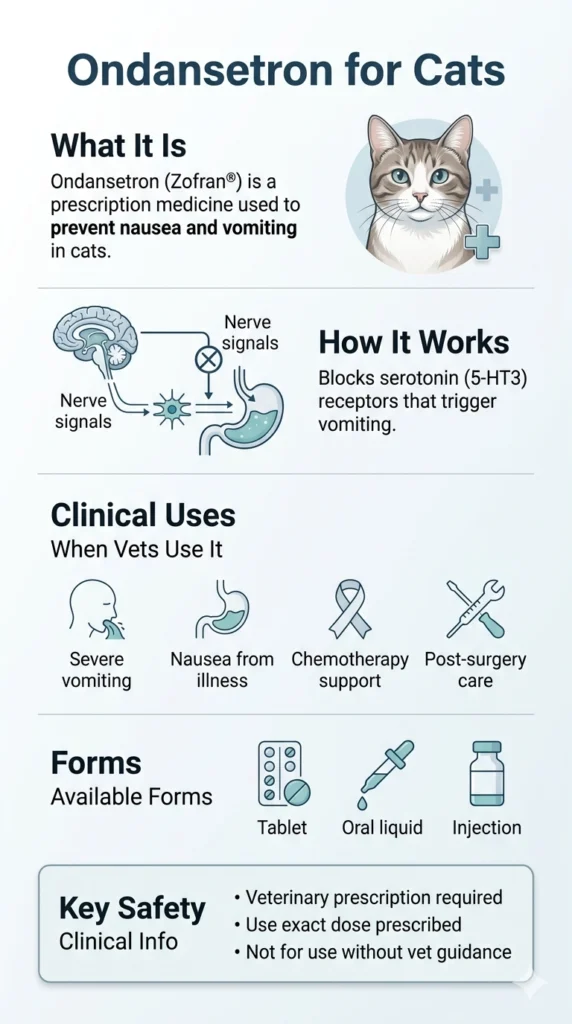
It works by blocking signals in the body and brain that cause vomiting, helping your cat feel better quickly.
Why Do Vets Use Ondansetron for Cats?
Veterinarians may prescribe ondansetron for:


- Severe or ongoing vomiting
- Nausea from illness or stomach problems
- Chemotherapy-related nausea
- After surgery (postoperative nausea)
- Before anesthesia to prevent vomiting
It is often used when other medications do not work well.
Forms of Ondansetron
Ondansetron comes in:
- Tablets
- Dissolving tablets (ODT)
- Liquid form
- Injection (given by a vet)
Sometimes, a custom (compounded) version is made if your cat needs a special dose or has trouble taking pills.
Important to Know
- Ondansetron is not officially approved for cats, but vets can safely prescribe it.
- Always use the correct ondansetron dosage for cats given by your vet.
- Never give human medicine to your cat without veterinary advice.
What Is the Use of Ondansetron?
Ondansetron is primarily applied in cats as a treatment of severe nausea and vomiting, particularly when other drugs fail to perform their task. It aids in enhancing comfort and avoids persistent vomiting which may pose a threat to the health of a cat.
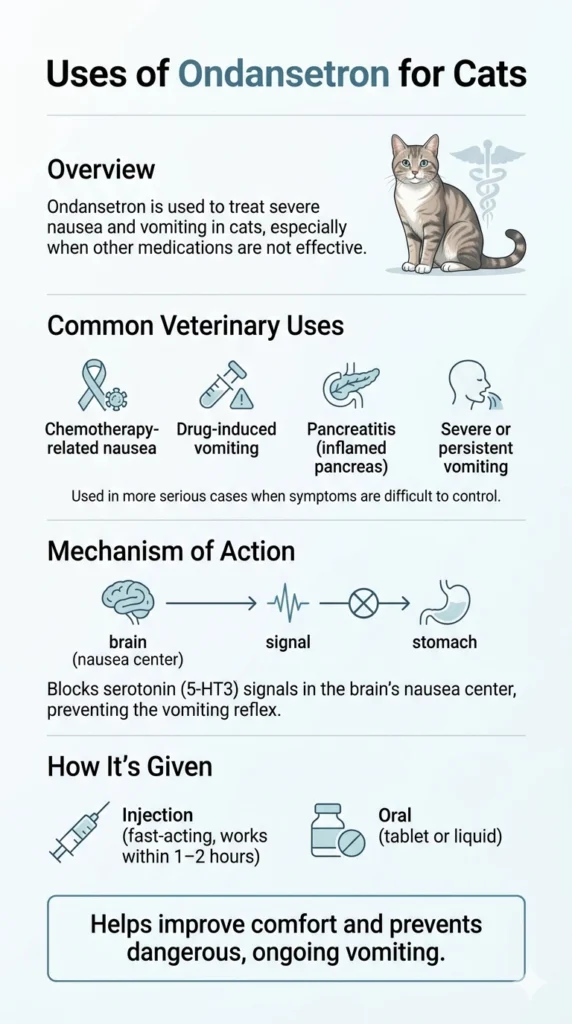
Veterinarians commonly prescribe ondansetron for:
- Nausea and vomiting as a result of chemotherapy.
Cats undergoing chemotherapy are also very nauseous. Ondansetron is also commonly used to manage this and can be administered prior to or following treatment as required. - Drug-induced vomiting
Certain drugs may displease the stomach of a cat. Ondansetron works to decrease vomiting that occurs as a result of these treatments. - Pancreatitis (inflamed pancreas)
In more severe instances of pancreatitis, cats might develop chronic nausea and vomiting. Ondansetron is commonly administered together with other therapies to manage these symptoms. - Violent or persistent vomiting due to sickness.
Ondansetron can be employed as a more potent alternative when the vomiting is persistent and hard to manage. It is not the first option in most cases unless the condition is more severe.
Ondansetron works by blocking serotonin signals in the brain’s “nausea center” (chemoreceptor trigger zone). This prevents the brain from triggering the vomiting reflex.
Ondansetron can also be administered as an injection in most instances particularly in veterinary clinics and this can assist in preventing vomiting in 1-2 hours. It may also be administered orally, depending on the case.
Is Ondansetron Safe for Cats?
Ondansetron is considered to be safe in cats when administered in a few doses in case of severe nausea or vomiting. It has a relatively small number of side effects when administered under veterinary care.
However, it should not be used in cats that:
- Suffered an allergic reaction to ondansetron or other drugs such as dolasetron or granisetron.
- Have a non-contracting large intestine (ileus)
- Have an enlarged stomach (gastric distention)
In cats, the specific adjustment of dose in veterinarians with liver issues may be done, but the guidelines are not clearly defined. Cats having kidney disease or chronic kidney disease (CKD) are generally able to tolerate normal doses.
Never go against the instructions of your veterinarian since he will prescribe the safest dose and route of administration to your cat.
How Ondansetron Works in Cats
Ondansetron works by blocking serotonin (5-HT3) receptors, which play a key role in triggering nausea and vomiting in cats. These receptors are located in several parts of the body:
- On vagal nerve endings in the gastrointestinal (GI) tract
- Within the enteric nervous system of the gut
- In the chemoreceptor trigger zone (CTZ) of the brain, also called the “nausea center”
By blocking serotonin, ondansetron stops the neurotransmitter from sending nausea signals from the gut to the brain. This prevents the brain from activating the vomiting reflex, reducing both vomiting and associated abdominal discomfort.
This mechanism makes ondansetron especially useful in cats experiencing:
- Chemotherapy-related nausea
- Vomiting due to toxins or medications
- Gastrointestinal disorders
- Post-surgical nausea
In addition to controlling vomiting, ondansetron can also help alleviate abdominal pain and discomfort linked to GI issues. Its targeted action allows veterinarians to manage severe symptoms more effectively, improving your cat’s comfort and quality of life.
Ondansetron Dosage for Cats
The ondansetron dosage for cats varies depending on the reason it is being used, the severity of vomiting, and your cat’s health. Because ondansetron is a prescription medication, it should always be given under veterinary guidance.
Standard Dosage
- 0.5 mg per kilogram of body weight, given twice daily (every 12 hours)
- Typically administered intravenously in a veterinary clinic for the most accurate dosing
Other Recommended Dosages
- Severe vomiting: 0.1–1.0 mg/kg IV every 6–12 hours as needed
- Vomiting due to severe pancreatitis: 0.1–1 mg/kg orally or IV every 12–24 hours
- As a general antiemetic: 0.1–0.2 mg/kg orally every 12–24 hours
Oral Administration at Home
Some veterinarians may provide oral ondansetron for use at home. Options include:
- Human versions such as Zofran tablets, orally disintegrating tablets (ODT), or liquid solutions
- Compounded formulations made by a pharmacy, customized in dosage or flavor for easier administration
Determining the Correct Dose
Your veterinarian will calculate the correct dose based on factors such as:
- Your cat’s weight
- Kidney function, since ondansetron is processed by the kidneys
- Liver health, which may require closer monitoring or dose adjustments
A general guideline is 0.5–1 mg/kg every 6–8 hours as needed, but this can vary for each cat. Regular follow-ups with your veterinarian are important to monitor your cat’s response and adjust the dose safely.
Always never give human medication without veterinary approval and follow the exact instructions provided for your cat.
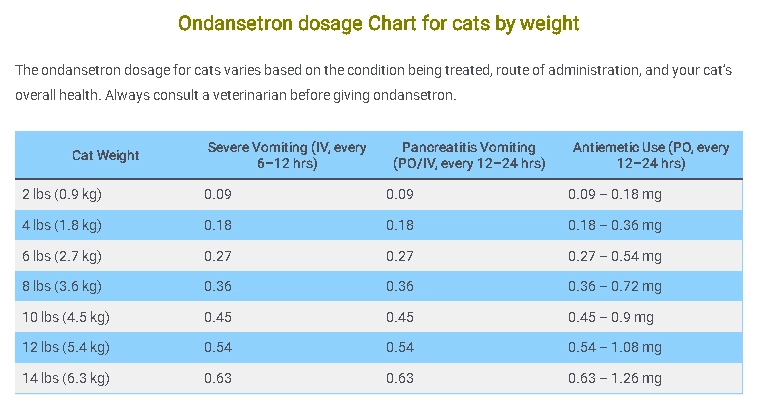
Ondansetron dosage Chart for cats by weight
The ondansetron dosage for cats varies based on the condition being treated, route of administration, and your cat’s overall health. Always consult a veterinarian before giving ondansetron.
| Cat Weight | Severe Vomiting (IV, every 6–12 hrs) | Pancreatitis Vomiting (PO/IV, every 12–24 hrs) | Antiemetic Use (PO, every 12–24 hrs) |
|---|---|---|---|
| 2 lbs (0.9 kg) | 0.09 | 0.09 | 0.09 – 0.18 mg |
| 4 lbs (1.8 kg) | 0.18 | 0.18 | 0.18 – 0.36 mg |
| 6 lbs (2.7 kg) | 0.27 | 0.27 | 0.27 – 0.54 mg |
| 8 lbs (3.6 kg) | 0.36 | 0.36 | 0.36 – 0.72 mg |
| 10 lbs (4.5 kg) | 0.45 | 0.45 | 0.45 – 0.9 mg |
| 12 lbs (5.4 kg) | 0.54 | 0.54 | 0.54 – 1.08 mg |
| 14 lbs (6.3 kg) | 0.63 | 0.63 | 0.63 – 1.26 mg |
Notes:
- Standard dosing: 0.5 mg/kg twice daily (12 hours apart) is common for general antiemetic use.
- IV administration is preferred for cats with severe vomiting and should be given in a clinic.
- Oral dosing at home can include human tablets, orally disintegrating tablets, liquid solutions, or compounded flavored formulations.
- Cats with kidney or liver issues may need adjusted doses.
- Follow up with your veterinarian regularly to monitor your cat’s response and adjust doses safely.
How to give ondansetron to your cat
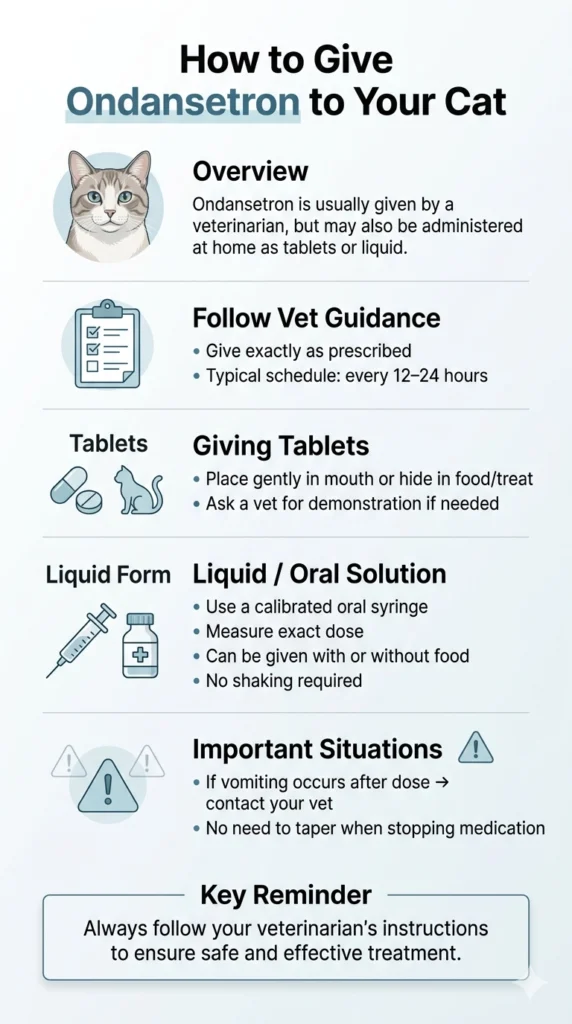
Most cats receive ondansetron directly from a veterinarian in a clinic via injection, especially for severe nausea or vomiting. However, if your veterinarian provides a prescription for home use, you may need to give your cat tablets, liquid, or a compounded oral solution.
Tips for Giving Ondansetron at Home
- Follow your veterinarian’s instructions carefully
Always stick to the prescribed dose and schedule, usually every 12 or 24 hours. - Giving tablets
- If you are unsure how to give a pill, ask your veterinarian or a vet technician to demonstrate.
- Pills can sometimes be hidden in food or a treat to make administration easier.
- Using oral liquid or compounded solution
- Use a calibrated oral syringe for accurate measurement.
- No need to shake the bottle before use.
- Tablets or liquid can be given with or without food.
- Vomiting after a dose
Since ondansetron is often given to cats who are already vomiting, it’s possible your cat may vomit the medication. Ask your veterinarian for guidance on what to do if this happens. - Discontinuing ondansetron
There is no need to taper the dose when stopping this medication.
By following these steps, you can safely give your cat ondansetron at home while ensuring it remains effective.
Are There Any Potential Side Effects of Ondansetron in Cats?
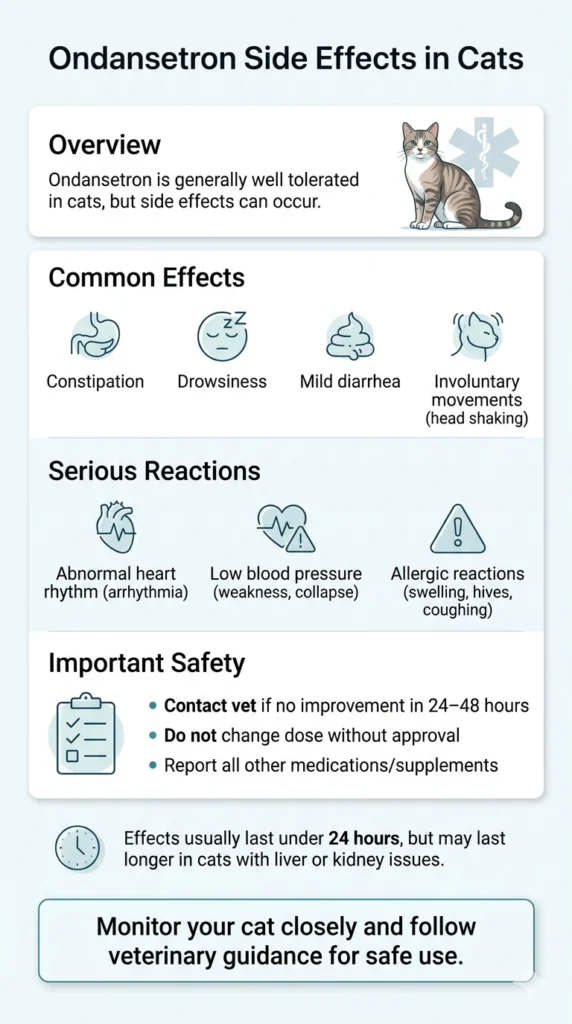
Ondansetron is generally well tolerated in cats, but, like all medications, it can sometimes cause side effects. Most are mild and short-lived, but serious reactions are rare and require immediate veterinary attention.
Common and Mild Side Effects
- Constipation
- Sleepiness or drowsiness
- Transient diarrhea
- Involuntary movements, such as head shaking
Rare but Serious Side Effects
- Abnormal heart rhythms (arrhythmias)
- Low blood pressure (hypotension), which may cause fainting, collapse, dizziness, or extreme lethargy
- Allergic reactions, such as facial swelling, hives, or coughing
Safety Tips
- If your cat shows no improvement in vomiting within 24–48 hours, or vomiting worsens, contact your veterinarian immediately.
- Do not adjust the dose without veterinary approval.
- Inform your veterinarian about all other medications and supplements your cat is taking, as interactions can affect safety and effectiveness.
- Ondansetron effects usually last less than 24 hours, but may be longer in cats with liver or kidney problems.
By monitoring your cat carefully and following your veterinarian’s instructions, ondansetron can be used safely and effectively.
Safety, Precautions, and Drug Interactions of Ondansetron in Cats
Ondansetron is generally well tolerated in cats, with limited effects on heart rate, blood pressure, or gastrointestinal function. However, it should never be used in cats with known allergies or hypersensitivity to the drug.
Important Precautions
- Liver or kidney disease: Cats with liver or kidney problems may need careful monitoring or dose adjustments.
- Electrolyte imbalances or heart problems: Use caution, as these conditions can affect the way ondansetron works.
- Pregnant or breastfeeding cats: Consult a veterinarian before use.
Key Drug Interactions
While ondansetron has relatively few major interactions, certain medications require caution:
- Heart medications (e.g., amiodarone, cisapride, sotalol) – risk of abnormal heart rhythms
- Serotonergic or CNS drugs (e.g., tramadol, phenobarbital, opioids) – vet supervision required
- Rifampin – may lower ondansetron effectiveness
- Other antiemetics, sedatives, or drugs affecting heart rhythm – adjustments may be needed
Other medications to mention to your vet include apomorphine, cyclophosphamide, ketoconazole, and fentanyl.
Best Practices
- Always provide your veterinarian with a complete list of medications, supplements, or herbal products your cat is taking.
- Follow dosing instructions carefully; do not exceed prescribed amounts.
- Regular veterinary monitoring helps ensure safe and effective use, especially if your cat is taking multiple medications or has pre-existing health conditions.
By taking these precautions and working closely with your veterinarian, ondansetron can be used safely to manage severe nausea and vomiting in cats.
You May Also Like To Read”
FAQs About Ondansetron for Cats
How quickly does ondansetron work?
Some cats show improvement within a few hours, but the response can vary depending on the cause of vomiting. Do not change the dose without consulting your veterinarian.
Is ondansetron safe with food?
Yes, ondansetron can be given with or without food. Giving it with a small meal may help some cats tolerate the medication better.
What if I miss a dose?
Give the missed dose as soon as you remember, unless it is close to the next scheduled dose. Never double up on doses unless your veterinarian specifically advises it.
Is any monitoring needed while my cat is taking ondansetron?
No special monitoring is required for most cats. Your veterinarian may check your cat occasionally to ensure the medication is working effectively and safely.
How should I store ondansetron?
Keep at room temperature between 2°C and 30°C (36°F and 86°F)
Store in a tight container
Protect from light and moisture
Can cats overdose on ondansetron?
Yes, an overdose can be serious. Possible effects include severe constipation, low blood pressure, or other serious reactions. If an overdose is suspected, contact your veterinarian immediately or take your cat to a veterinary hospital.
Can I give my cat ondansetron every day?
Ondansetron is usually given on an as-needed basis to stop severe vomiting. When used as directed by a veterinarian, it is generally safe and well tolerated.
Can I give ondansetron to my cat long-term?
Ondansetron is generally prescribed only as needed for severe vomiting. Long-term or daily use is not recommended unless specifically advised by a veterinarian, as prolonged use may increase the risk of side effects or mask underlying health issues. Always follow your vet’s guidance for safe, effective use.
Final Thoughts
Ondansetron is a powerful and effective anti-nausea medication for cats, especially in cases of severe or persistent vomiting caused by chemotherapy, pancreatitis, surgery, or other medical conditions. While it is not FDA-approved for cats, veterinarians commonly prescribe it under extra-label use, and it is generally well tolerated with few side effects.
Its effectiveness comes from blocking serotonin (5-HT3) receptors in the gut and brain, preventing nausea signals from triggering the vomiting reflex. Ondansetron can be given intravenously in a clinic or orally at home under veterinary guidance, with careful attention to dosing and administration.
Although side effects are rare, they may include constipation, drowsiness, or mild involuntary movements, and serious reactions such as low blood pressure or abnormal heart rhythms require immediate veterinary attention. It is also important to consider drug interactions and pre-existing health conditions before giving ondansetron to your cat.
With proper veterinary supervision, ondansetron can provide safe, rapid relief from nausea and vomiting, improving your cat’s comfort and quality of life. Always consult your veterinarian for personalized dosing, administration instructions, and monitoring to ensure the best results.