
Marbofloxacin, commonly known by its brand name Zeniquin®, is a broad-spectrum antibiotic used in veterinary medicine to treat bacterial infections in cats. It belongs to the fluoroquinolone class of antibiotics and works by inhibiting bacterial enzymes, which effectively kills the bacteria causing the infection.
This antibiotic is typically reserved for serious infections and should only be used under the guidance of a veterinarian, as it is a prescription-only medication. In this guide, we will cover everything you need to know about marbofloxacin for cats, including safe dosage based on weight, potential side effects, precautions, and answers to frequently asked questions.
In this guide Learn everything about Marbofloxacin Dosage for Cats, including safe dosage, uses, side effects, precautions, and how it treats skin, urinary tract, and soft tissue infections. Expert guidance for kittens and adult cats to ensure safe and effective treatment.
Disclaimer: This content is for informational purposes only and should not replace veterinary advice. Always consult your veterinarian before giving Marbofloxacin or adjusting your cat’s dosage.
Key Takeaways
- Marbofloxacin for cats is a broad-spectrum, bactericidal fluoroquinolone antibiotic used to treat serious bacterial infections, including skin, soft tissue, and urinary tract infections.
- The recommended dosage for cats is generally 2.75–5.5 mg/kg once daily, but the exact dose and duration of treatment depend on the infection type and severity.
- Always follow your veterinarian’s instructions and complete the full course to ensure effective treatment and prevent antibiotic resistance.
- Common side effects include vomiting, diarrhea, decreased appetite, and drooling, but serious side effects are rare when used responsibly.
- Young cats, cats with liver or kidney issues, or those on other medications require careful monitoring and potential dosage adjustments.
- Marbofloxacin should not be used in cats with hypersensitivity to the drug and is not recommended for kittens under 16 weeks of age.
- Veterinary guidance is essential to determine whether marbofloxacin is the right antibiotic for your cat’s specific infection.
- Proper administration and monitoring help ensure safe and effective treatment, promoting fast recovery and overall feline health.
About Marbofloxacin for Cats
Marbofloxacin is a third-generation, concentration-dependent, bactericidal antibiotic in the fluoroquinolone class, specifically used to treat bacterial infections in cats. Being concentration-dependent means that marbofloxacin must reach a sufficiently high concentration in the infected tissue—such as the skin, lungs, or urinary tract—to effectively kill bacteria.
As a bactericidal antibiotic, marbofloxacin actively kills bacteria by inhibiting bacterial DNA synthesis, causing bacterial death within approximately 20-30 minutes. This mechanism distinguishes it from bacteriostatic antibiotics, which only suppress bacterial growth rather than killing the bacteria outright.
Marbofloxacin is a broad-spectrum antibiotic, capable of targeting many types of bacteria. However, it is less effective against certain bacteria, such as Streptococcus species and anaerobic bacteria (bacteria that do not require oxygen to survive, like Clostridia species). It is also ineffective against viral, protozoal, and fungal infections, so it should only be used for confirmed bacterial infections in cats.
Because of its high-end antibiotic status, marbofloxacin is generally reserved for cases where other antibiotics have failed. For broader antimicrobial coverage, veterinarians may sometimes combine marbofloxacin with other antibiotics—such as clindamycin or amoxicillin—to effectively target bacteria that marbofloxacin is less potent against.
In summary, marbofloxacin for cats is a powerful tool in veterinary medicine, designed to actively kill a wide range of bacteria in serious infections while being used responsibly under the guidance of a veterinarian.
What Does Marbofloxacin Do for Cats?
Marbofloxacin for cats is used to treat a variety of bacterial infections, including infections of the skin, respiratory tract, and urinary tract. As a broad-spectrum antibiotic, it effectively targets many types of bacteria, though it is less effective against Streptococcus species and anaerobic bacteria.
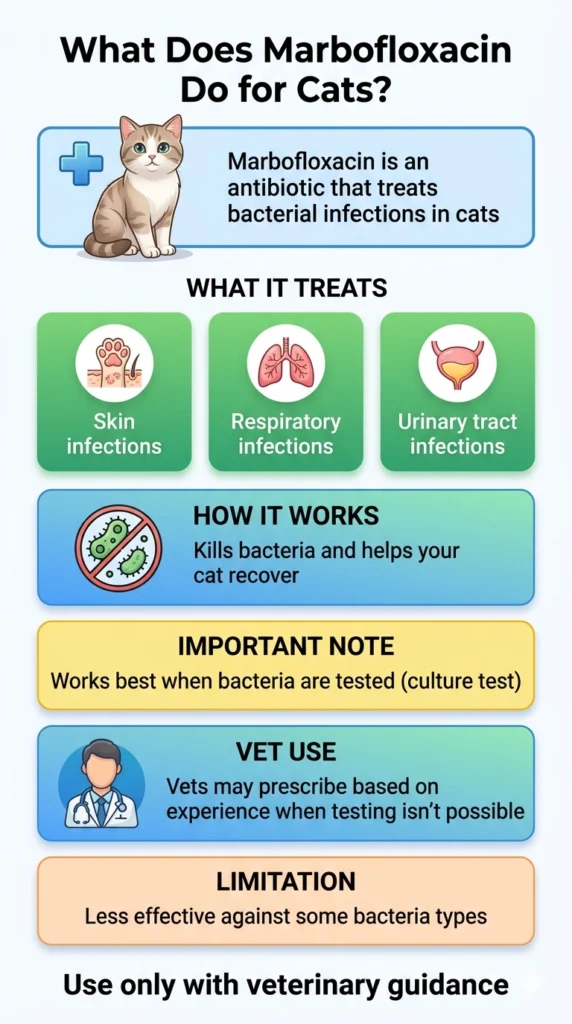
In such cases, veterinarians may consider pradofloxacin, a closely related antibiotic with enhanced activity against these bacteria.
Marbofloxacin is FDA-approved for treating infections that are susceptible to it. Ideally, a bacterial culture and sensitivity test should be performed before treatment, particularly for urinary tract infections and skin infections, as samples from these sites are easier to collect and analyze.
In many cases, veterinarians may prescribe marbofloxacin based on clinical experience, using their knowledge of the bacteria most likely present in a particular tissue or body system and the antibiotic classes those bacteria are most susceptible to. This ensures that cats receive effective treatment even when a culture is not feasible.
By targeting bacterial infections with precision, marbofloxacin for cats helps resolve infections efficiently while minimizing the risk of antibiotic resistance.
Marbofloxacin Dosage for Cats
The FDA-approved uses of marbofloxacin for cats primarily include skin and soft tissue infections as well as urinary tract infections. The recommended dosage is typically 2.75–5.5 mg per kilogram of body weight, administered once every 24 hours.
The duration of treatment can vary significantly depending on the type and severity of the infection. Some infections may only require 5 days of treatment, while others—especially more resistant infections—may require up to 30 days or longer. It is essential to follow your veterinarian’s instructions closely and never stop marbofloxacin early, even if your cat appears fully recovered. Completing the full course helps prevent relapse and antibiotic resistance.
For practical dosing, marbofloxacin is often administered at 2 mg/kg via intravenous (i.v.), subcutaneous (s.c.), or oral (p.o.) routes once daily. Depending on the infection’s severity or the presence of highly resistant bacteria, veterinarians may adjust the dose.
For urinary tract infections, the antibiotic is usually prescribed for at least 10 days, while skin and soft tissue infections may require up to 30 days of treatment. The exact length of therapy depends on the cat’s response to the medication and the development of any side effects.
Remember, marbofloxacin for cats should never be administered without veterinary guidance. Your veterinarian will determine the most effective dosage and treatment duration for your cat’s specific condition, ensuring both safety and effectiveness.
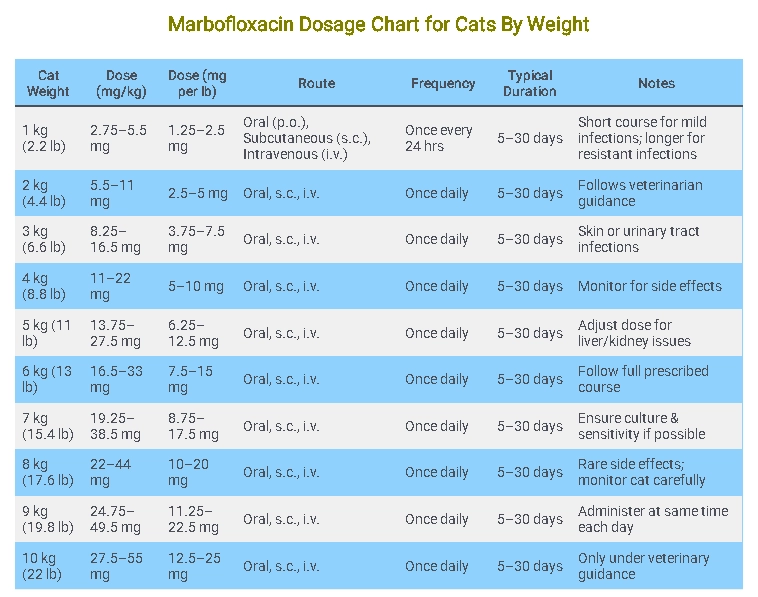
Marbofloxacin Dosage Chart for Cats By Weight
| Cat Weight | Dose (mg/kg) | Dose (mg per lb) | Route | Frequency | Typical Duration | Notes |
|---|---|---|---|---|---|---|
| 1 kg (2.2 lb) | 2.75–5.5 mg | 1.25–2.5 mg | Oral (p.o.), Subcutaneous (s.c.), Intravenous (i.v.) | Once every 24 hrs | 5–30 days | Short course for mild infections; longer for resistant infections |
| 2 kg (4.4 lb) | 5.5–11 mg | 2.5–5 mg | Oral, s.c., i.v. | Once daily | 5–30 days | Follows veterinarian guidance |
| 3 kg (6.6 lb) | 8.25–16.5 mg | 3.75–7.5 mg | Oral, s.c., i.v. | Once daily | 5–30 days | Skin or urinary tract infections |
| 4 kg (8.8 lb) | 11–22 mg | 5–10 mg | Oral, s.c., i.v. | Once daily | 5–30 days | Monitor for side effects |
| 5 kg (11 lb) | 13.75–27.5 mg | 6.25–12.5 mg | Oral, s.c., i.v. | Once daily | 5–30 days | Adjust dose for liver/kidney issues |
| 6 kg (13 lb) | 16.5–33 mg | 7.5–15 mg | Oral, s.c., i.v. | Once daily | 5–30 days | Follow full prescribed course |
| 7 kg (15.4 lb) | 19.25–38.5 mg | 8.75–17.5 mg | Oral, s.c., i.v. | Once daily | 5–30 days | Ensure culture & sensitivity if possible |
| 8 kg (17.6 lb) | 22–44 mg | 10–20 mg | Oral, s.c., i.v. | Once daily | 5–30 days | Rare side effects; monitor cat carefully |
| 9 kg (19.8 lb) | 24.75–49.5 mg | 11.25–22.5 mg | Oral, s.c., i.v. | Once daily | 5–30 days | Administer at same time each day |
| 10 kg (22 lb) | 27.5–55 mg | 12.5–25 mg | Oral, s.c., i.v. | Once daily | 5–30 days | Only under veterinary guidance |
Notes & Precautions:
- Always consult a veterinarian before starting marbofloxacin.
- Duration varies: urinary tract infections may require 10+ days, skin or soft tissue infections may require up to 30 days.
- Do not stop treatment early even if your cat seems better.
- Cats with liver or kidney issues may require dose adjustments or longer intervals.
- Not recommended for kittens under 16 weeks; pradofloxacin may be safer for younger kittens.
- Watch for side effects: vomiting, diarrhea, decreased appetite, drooling, CNS overstimulation.
Side Effects of Marbofloxacin for Cats
While marbofloxacin for cats is generally safe and effective when prescribed by a veterinarian, it can occasionally cause side effects, most commonly related to the gastrointestinal system. Cats may experience vomiting, diarrhea, decreased appetite, drooling, or weight loss. These symptoms are not unique to marbofloxacin and can occur with many antibiotics.
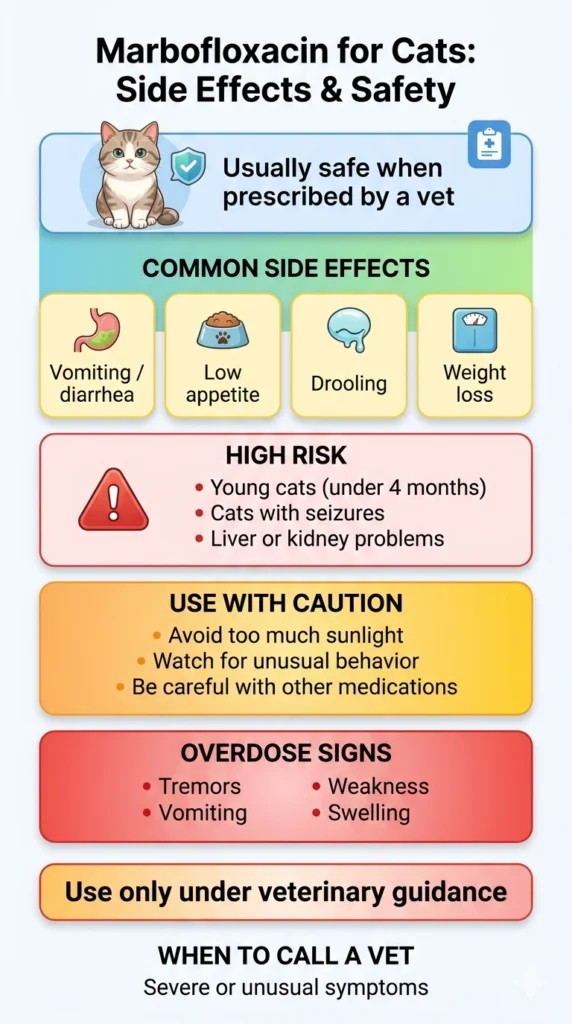
Young cats (under 1 year old or less than 16 weeks) are particularly sensitive because fluoroquinolones can damage cartilage in weight-bearing joints, potentially leading to lameness. For very young cats, veterinarians may recommend pradofloxacin, which is approved for cats over 12 weeks of age and may be safer.
In rare cases, marbofloxacin may overstimulate the central nervous system, so it should be used cautiously in cats with seizure disorders or other neurological conditions.
Because marbofloxacin is metabolized by the liver and kidneys, cats with liver or kidney dysfunction may require dosage adjustments or extended intervals between doses to prevent drug accumulation.
Other precautions include:
- Avoiding prolonged sun exposure, especially on bare or thinly-haired skin, as fluoroquinolones can increase the risk of sunburn.
- Monitoring for signs of ocular issues, since high doses of fluoroquinolones (like enrofloxacin) have been linked to retinal damage in cats, though marbofloxacin has not been directly proven to cause blindness.
- Being cautious when combining marbofloxacin with other medications, as drug interactions are possible. Always inform your veterinarian about any medications your cat is currently taking.
Overdose signs may include increased salivation, vomiting, redness of ear tips (pinnae), tremors, facial swelling, dehydration, or decreased activity. If any severe side effects or overdose are suspected, contact your veterinarian, the ASPCA Animal Poison Control Center (1-888-426-4435), or the Pet Poison Helpline (1-855-764-7661) immediately.
Finally, marbofloxacin should not be used in cats with known hypersensitivity to the drug, and it is not recommended for cats younger than 16 weeks. When used responsibly under veterinary guidance, side effects are uncommon, making marbofloxacin a reliable choice for treating bacterial infections in cats.
You May Also Like To Read:
FAQs About Marbofloxacin for Cats
What is Marbofloxacin used for in cats?
Marbofloxacin for cats is a broad-spectrum antibiotic used to treat bacterial infections, primarily affecting the skin, urinary tract, and soft tissues. It is effective only against bacterial infections and cannot be used for viral, fungal, or protozoal infections.
How much Marbofloxacin should I give my cat?
The recommended dosage for cats is generally 2.75–5.5 mg/kg once daily, depending on the infection type and severity. Your veterinarian will determine the exact dose based on your cat’s weight, age, and health status. Always complete the full course of treatment, even if your cat appears to feel better.
How long should Marbofloxacin be given to cats?
The duration of treatment varies:
Urinary tract infections: at least 10 day.
Skin and soft tissue infections: up to 30 days
Your veterinarian will adjust the length of treatment based on response to therapy and any side effects.
Can kittens take Marbofloxacin?
Marbofloxacin is not recommended for kittens under 16 weeks of age, as fluoroquinolones may cause damage to growing cartilage. For younger cats, veterinarians may consider pradofloxacin, which is approved for kittens over 12 weeks old.
Is Marbofloxacin safe for adult cats?
Yes, when prescribed and dosed properly, marbofloxacin is generally safe and effective for adult cats. Special caution should still be used for cats with pre-existing liver or kidney problems or those taking other medications.
Final Thoughts
Marbofloxacin for cats is a powerful, broad-spectrum fluoroquinolone antibiotic designed to treat serious bacterial infections, including skin, soft tissue, and urinary tract infections. When used under the guidance of a veterinarian, it is generally safe and highly effective.
It is important to remember that dosage and duration must be tailored to each cat’s condition. Following your veterinarian’s instructions and completing the full course of treatment is essential to ensure the infection is fully resolved and to prevent antibiotic resistance.
While side effects are uncommon, cat owners should watch for gastrointestinal issues, CNS overstimulation, or signs of overdose. Special caution is needed for young cats, cats with liver or kidney problems, or those taking other medications. Always communicate with your veterinarian if any unusual signs appear.
By understanding how marbofloxacin works, its proper dosage, and potential side effects, cat owners can provide safe, effective care for their feline companions and help their cats recover from bacterial infections quickly and safely.