Loratadine, widely known by brand names like Claritin® and Alavert®, is an over-the-counter human antihistamine commonly used to treat allergy symptoms. While it is designed for people, it is sometimes prescribed off-label for cats to help manage allergic reactions, including itchy skin, sneezing, watery or red eyes, congestion, coughing, and inflammation of the skin (cat dermatitis).
Cats, just like humans, can develop seasonal allergies, insect bite reactions, or other mild allergic symptoms. In such cases, loratadine may help reduce discomfort and improve their overall quality of life. However, it is important to understand that loratadine has not been extensively studied in cats, and its use should always be supervised by a veterinarian. Giving the correct loratadine dosage for cats is essential to ensure their safety and prevent possible side effects.
This guide will explain how loratadine can help an allergic cat, the recommended dosages based on weight and age, potential side effects to watch for, and important tips for administering it safely. Whether your cat is experiencing mild allergy symptoms, seasonal reactions, or irritation from insect bites, understanding how to use loratadine safely and effectively can make a real difference in their comfort and well-being.
Learn the safe loratadine dosage for cats, including proper dosing, benefits, side effects, and vet-approved tips to treat cat allergies safely.
Disclaimer: This content is for informational purposes only and should not replace veterinary advice. Always consult your veterinarian before giving Loratadine or adjusting your cat’s dosage.


Key Takeaways
- Loratadine for cats is sometimes used to treat allergies, but it is an off-label medication and should only be given with veterinary advice.
- The typical loratadine dosage for cats is based on body weight and is usually given once daily.
- Always use plain loratadine—avoid products with decongestants, as they are toxic to cats.
- It can help relieve symptoms like itchy skin, sneezing, and mild allergic reactions, but it does not cure allergies.
- Possible side effects include drowsiness, vomiting, diarrhea, and dry mouth—monitor your cat closely.
- Correct dosing is critical—giving too much can lead to serious health risks.
- Tablets or properly measured liquid (safe formulation only) should be used carefully.
- Never give loratadine to your cat without consulting a veterinarian first.
What is Loratadine?
Loratadine is an antihistamine medication commonly used to treat allergies. It works by blocking histamine, a chemical in the body that causes symptoms like itching, sneezing, runny nose, and watery eyes during an allergic reaction.
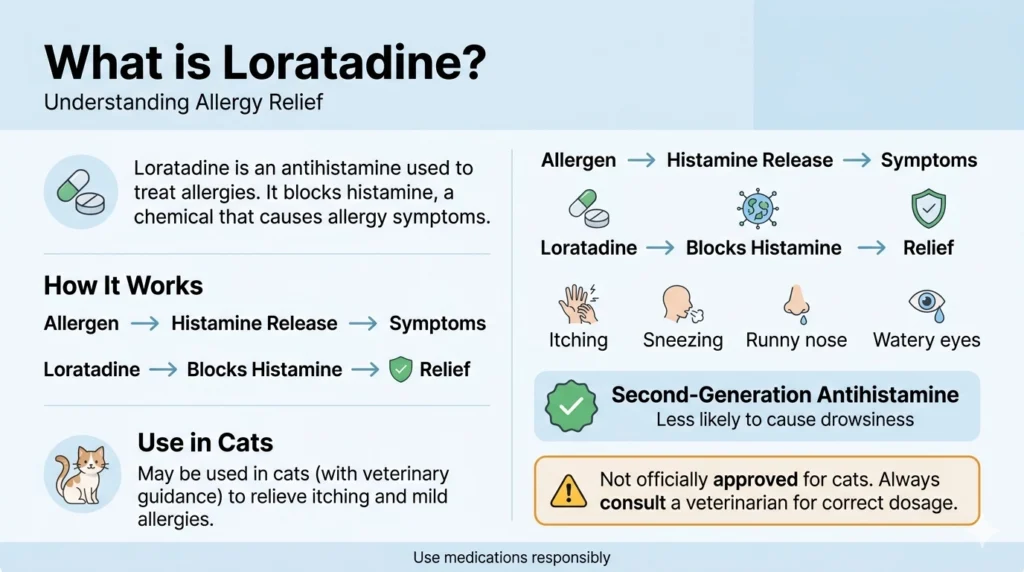
For cats, loratadine may be used (under veterinary guidance) to help relieve allergy symptoms such as itchy skin, irritation, and mild allergicb reactions. It belongs to a group of second-generation antihistamines, which means it is less likely to cause drowsiness compared to older allergy medications.
Although it can be helpful, loratadine is not specifically approved for cats, so it should only be used with the correct loratadine dosage for cats recommended by a veterinarian to ensure safety.


Is it Safe to Give Loratadine to My Cat?
Many cat owners wonder if loratadine—a common human allergy medicine—can be given to their cats. While it helps humans with sneezing, itching, watery eyes, and runny nose, cats process medicines differently, so what’s safe for people may not be safe for cats.
Loratadine works by blocking histamine, which causes allergy symptoms. In cats, it could help with itchy skin, sneezing, and mild allergic reactions. However, it is not approved for cats and there is limited research on its safety.
Some cats may experience side effects like drowsiness, drooling, vomiting, diarrhea, or changes in appetite. Giving the wrong dose can be dangerous, because human tablets are made for adults, not small animals.
Always consult a veterinarian before giving loratadine. Your vet can check your cat’s health, recommend the right dose, or suggest safer cat-specific antihistamines in liquid or chewable form.
In short: Loratadine can sometimes help cats with allergies, but never give it without veterinary guidance. Using it correctly keeps your cat safe and comfortable.
What is the Recommended Loratadine Dosage for Cats?
Determining the correct loratadine dosage for cats is crucial for both safety and effectiveness. Loratadine is a human antihistamine sometimes prescribed off-label for cats to help manage allergy symptoms such as itchy skin, sneezing, watery eyes, and mild respiratory issues.
However, cats process medications differently than humans, so the dosage must be carefully calculated based on weight, age, and overall health.
General Dosage Guidelines
- A commonly cited starting dosage is 0.25 mg per pound of body weight once every 24 hours.
- Example: A 10-pound cat would receive approximately 2.5 mg once daily.
- Some veterinarians may prescribe 0.5 mg per pound, but this depends on the cat’s individual needs, severity of allergy symptoms, and overall health.
- Dosage may be adjusted over time depending on the cat’s response to the medication.
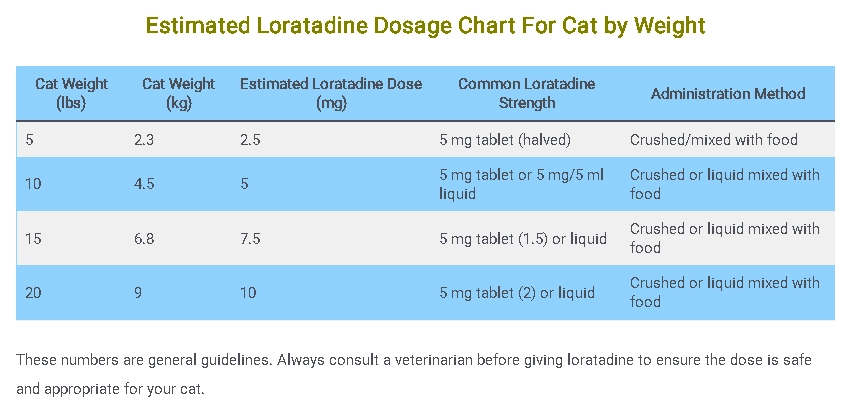
Estimated Loratadine Dosage Chart For Cat by Weight
| Cat Weight (lbs) | Cat Weight (kg) | Estimated Loratadine Dose (mg) | Common Loratadine Strength | Administration Method |
|---|---|---|---|---|
| 5 lbs | 2.3 kg | 2.5 mg | 5 mg tablet (halved) | Crushed/mixed with food |
| 10 lbs | 4.5 kg | 5 mg | 5 mg tablet or 5 mg/5 ml liquid | Crushed or liquid mixed with food |
| 15 lbs | 6.8 kg | 7.5 mg | 5 mg tablet (1.5) or liquid | Crushed or liquid mixed with food |
| 20 lbs | 9 kg | 10 mg | 5 mg tablet (2) or liquid | Crushed or liquid mixed with food |
These numbers are general guidelines. Always consult a veterinarian before giving loratadine to ensure the dose is safe and appropriate for your cat.
Important Considerations for Dosage
- Do not use extended-release formulations, as they can cause unpredictable absorption and overdose.
- Avoid loratadine formulations with decongestants such as pseudoephedrine or phenylephrine—they are toxic to cats.
- Plain, non-drowsy loratadine is recommended.
- Tablet splitting may be necessary for smaller cats—use a pill splitter for accuracy.
- Liquid formulations can make dosing easier but require careful measurement. Only use plain loratadine liquid.
Other Tips
- Loratadine is not a cure for allergies—it helps alleviate symptoms, but addressing the underlying cause of the allergy is important.
- Cats should be monitored for side effects such as drowsiness, increased heart rate, or digestive upset.
- Alternative medications like cat-specific antihistamines, corticosteroids, or immune-modulating drugs may be recommended depending on the severity of allergies.
In summary: Loratadine can be effective for cats with allergies if dosed correctly under veterinary supervision. Always check your cat’s weight, follow the veterinarian-recommended dosage, and monitor for any side effects to keep your feline companion safe and comfortable.
How Loratadine May Help an Allergic Cat
Loratadine is a second-generation antihistamine that helps cats manage allergic reactions by blocking histamine, a chemical the cat’s immune system releases in response to allergens. Common feline allergens include flea saliva, house dust mites, and certain foods, which can trigger symptoms like itchy or swollen skin, irritation, and discomfort.
In more severe allergic reactions, cats may develop hives, and in extreme cases, they could experience anaphylactic shock, a life-threatening reaction that can cause difficulty breathing. This makes recognizing allergy signs early very important.
Signs your cat may need loratadine include:
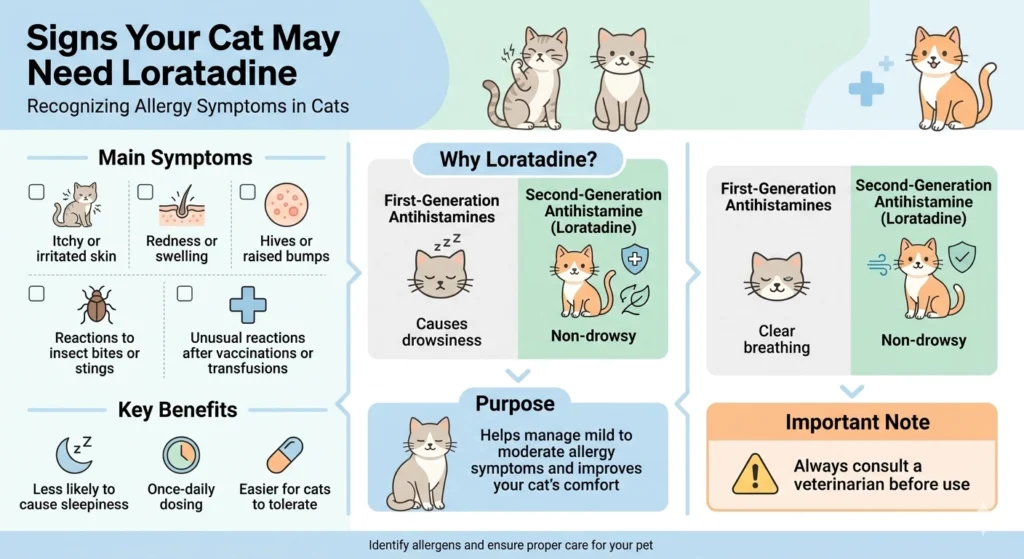
- Persistent itchy or irritated skin
- Swelling or redness on the skin
- Hives or raised bumps
- Reactions to insect bites or stings
- Unusual reactions after vaccinations or blood transfusions
Unlike first-generation antihistamines, which can cause drowsiness, loratadine is a second-generation antihistamine, meaning it can relieve allergy symptoms without making your cat sleepy. Another advantage is that it often requires only once-daily dosing, which can make administration easier for cats that are reluctant to take pills.
Overall, loratadine can help cats manage mild to moderate allergy symptoms, improving their comfort while you and your veterinarian work to identify and reduce exposure to allergens.
Tips for Successfully Using Loratadine
Using loratadine for cats can be helpful for managing allergy symptoms, but it must be done carefully to keep your cat safe and get the best results.
- Choose the right form: Loratadine is available in tablets and syrup, but do not use the syrup form for cats because it may contain propylene glycol, which is toxic to cats.
- Avoid combination products: Only use plain antihistamine loratadine. Human medications that include decongestants can be harmful to your cat’s health.
- Use before vaccinations (if advised): If your vet recommends loratadine to reduce allergic reactions to vaccinations, it may work best when given before the vaccine.
- Support skin health: When treating itchy skin in cats, loratadine may work better when combined with fatty acid supplements, as advised by your veterinarian.
In short: Always use the correct form of loratadine, avoid harmful ingredients, and follow your vet’s guidance to safely improve your cat’s comfort.
Loratadine Side Effects for Cats
What Are the Potential Side Effects of Giving Loratadine to Cats?
While loratadine is sometimes used to treat allergies in cats, it can still cause side effects, even when given at the correct dose. Most reactions are mild and temporary, but it’s important to monitor your cat closely.
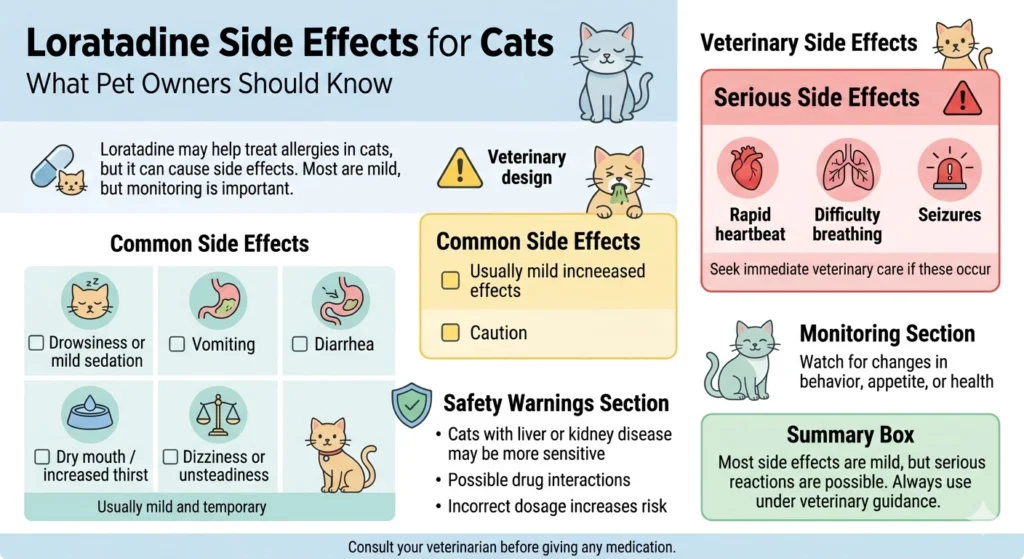
Common Side Effects
- Drowsiness or mild sedation (your cat may seem less active)
- Vomiting
- Diarrhea
- Dry mouth, which may lead to increased thirst
- Dizziness or unsteadiness
These side effects usually improve on their own. However, if they persist or worsen, you should contact your veterinarian.
Less Common but Serious Side Effects
In rare cases, more serious reactions can occur, including:
- Rapid heartbeat
- Difficulty breathing
- Seizures
If you notice any of these symptoms, seek immediate veterinary care.
Important Safety Warnings
- Cats with liver or kidney disease may be more sensitive to loratadine.
- The medication may interact with other drugs, so always inform your vet about any treatments your cat is already receiving.
- Giving the wrong dose increases the risk of side effects and may reduce effectiveness.
In summary: Most side effects of loratadine in cats are mild, such as drowsiness or digestive upset, but serious reactions can happen in rare cases. Always use it under veterinary guidance and watch for any changes in your cat’s behavior, appetite, or health.
You May Also Like To Read:
FAQs
What is the safe dose of loratadine for a cat?
The general guideline is 5 mg per 10 lbs of body weight, given once daily. However, this is only an estimate. The exact loratadine dosage for cats should always be determined by a veterinarian based on your cat’s weight, health, and condition.
Can I give my cat Claritin-D?
No, you should never give Claritin-D or any loratadine product that contains decongestants like pseudoephedrine or phenylephrine. These ingredients are toxic to cats. Only use plain loratadine if recommended by your vet.
Can I give my cat loratadine for allergies?
Yes, loratadine can sometimes be used to help relieve allergy symptoms in cats, such as itching or sneezing. However, you should always consult your veterinarian first to confirm the cause of the allergy and ensure the correct treatment and dosage.
How often can I give loratadine to my cat?
Loratadine is usually given once every 24 hours, but the exact frequency depends on your cat’s condition and your vet’s advice. Never adjust the loratadine dosage for cats on your own.
Can kittens take loratadine?
Loratadine is not commonly recommended for kittens unless specifically prescribed by a veterinarian. Kittens are more sensitive to medications, so proper dosing and safety checks are very important.
How long does loratadine take to work in cats?
Loratadine may start showing effects within a few hours, but noticeable improvement in allergy symptoms like itchy skin or sneezing may take a bit longer. Response can vary from cat to cat.
Are there alternatives to loratadine for cats?
Yes, veterinarians may recommend other antihistamines or allergy treatments that are specifically formulated for cats. The best option depends on your cat’s symptoms and health condition.
Final Thoughts
Loratadine can help cats with allergy symptoms, but it must be used carefully and correctly. The most important factor is giving the right loratadine dosage for cats, based on your cat’s weight and health condition, to avoid risks.
Always use plain loratadine only, avoid harmful ingredients, and remember that it relieves symptoms but does not cure allergies. Because cats react differently to medications, even small mistakes in dosing can cause side effects or complications.
The safest approach is always to consult your veterinarian before giving loratadine. With proper guidance, monitoring, and correct use, you can help keep your cat comfortable, safe, and free from allergy discomfort.