If your cat struggles with sneezing, congestion, or eye infections, these may be signs of feline herpesvirus (FHV), a common and contagious viral infection in cats. L-lysine is an essential amino acid often given as a supplement to help support your cat’s immune system and manage symptoms of FHV.
L-lysine for cats comes in various forms and brands, including Enisyl-F, Felisyl, Incremin, Optixcare, and Viralys. While some studies suggest it may help reduce symptoms, research is mixed — it may not always prevent flare-ups. Still, it is generally considered safe, inexpensive, and has few side effects when given in the correct dosage.
Beyond viral support, lysine also helps with overall health, including supporting immune function and aiding in nutrient absorption. Knowing the right L-lysine dosage for cats is key to ensuring it is effective and safe.
In this guide, we will cover the safe and effective L-lysine dosage for cats to support immune health and reduce feline herpesvirus (FHV-1) symptoms. Learn recommended daily doses, administration tips, benefits, potential side effects, and expert advice to keep your cat healthy and happy.
Key Takeaways
- L-lysine is an essential amino acid that supports your cat’s immune system and overall health.
- It is often used to help manage feline herpesvirus (FHV-1) symptoms, including eye infections and respiratory flare-ups.
- Recommended dosage: Typically 250 mg for kittens and 500 mg for adult cats, given once or twice daily. Always follow your veterinarian’s guidance.
- Forms available: Powder, gel, and chewable treats, which help reduce stress during administration.
- Side effects are rare, but may include mild digestive upset, vomiting, or diarrhea. Serious risks are uncommon at standard doses.
- Lysine may reduce viral flare-ups, promote a healthy coat and skin, and support overall well-being.
- Always consult your veterinarian before starting supplementation, especially for cats with existing health issues or on other medications.
- Consistent daily administration provides the most preventive benefit, particularly for cats with chronic FHV-1 symptoms.
What is Lysine for Cats?
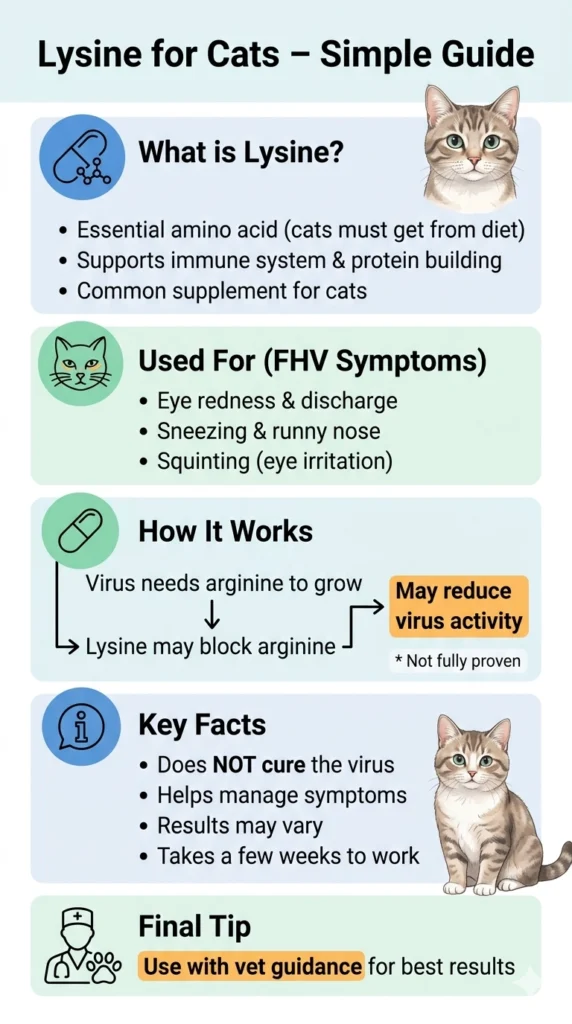
Lysine is an amino acid and a nutritional supplement commonly used in cats. It may help reduce symptoms of feline herpesvirus (FHV), including eye infections, redness, squinting, and discharge. FHV can also cause upper respiratory issues such as sneezing, nasal discharge, and, in rare cases, skin ulcers. In severe cases, it may lead to loss of vision.
The exact way lysine works in cats is not fully understood. It is believed to interfere with arginine, another amino acid that the herpes virus needs to reproduce. By counteracting arginine, lysine may reduce the virus’s ability to infect cells. However, some research shows that lysine supplementation does not always affect arginine levels or stop viral replication.
Lysine is considered an essential amino acid, which means cats need it from their diet or supplements because their bodies cannot produce it naturally. Amino acids like lysine are crucial for many body processes, including the production of proteins, hormones, and neurotransmitters.
Lysine is available over-the-counter and does not require a prescription, though its use in cats is considered off-label since it is not FDA-approved for feline treatment.
How Does L-lysine Work in Cats?
L-lysine is a supplement often used to help cats with feline herpesvirus (FHV-1), a virus that can cause eye problems like redness, discharge, and conjunctivitis, as well as sneezing and nasal congestion. Cats with FHV may have flare-ups throughout their life, especially during stress, and the virus can make them more prone to secondary infections.
L-lysine is thought to work by reducing arginine, an amino acid the virus needs to reproduce. When cats take L-lysine, it may lower arginine levels, which could reduce the virus’s ability to make more copies. Full effects usually take a few weeks.
Research on lysine is mixed. Some studies show it can reduce viral shedding and eye inflammation, but in shelter cats, it does not always prevent respiratory infections. Despite this, many veterinarians and cat owners report improvements in cats with chronic herpesvirus, especially in a calm home environment.
Important: L-lysine does not cure FHV, but it may help manage symptoms and reduce flare-ups for some cats. Its use should be guided by observation and vet advice.
L-lysine Dosage for Cats
There are many L-lysine products designed for cats, but it is important to note that no product is FDA-approved to treat or cure feline herpesvirus (FHV), and all doses are considered off-label. L-lysine is available in several forms:
- Gel: Commonly 250 mg per 1.25 ml (e.g., Viralys)
- Powder: 250 mg per rounded scoop (Viralys and generics)
- Chews: 500 mg per soft treat (Optixcare)
- Tablets or paste: Available in some formulations
Recommended Dosage
- Kittens: Around 205–250 mg once or twice daily
- Adult cats: 500 mg up to 1,000 mg per day, given once or twice daily
- General guidance: Smaller cats should receive the lower end of the dosage range, while larger adults can take the higher end. There is no strict dose based on weight.
The full daily dose should ideally be consumed at once. For example:
- The gel should be given entirely in one sitting.
- Chews should be eaten as a treat.
- Powder can be mixed with food but should not be spread out over the day.
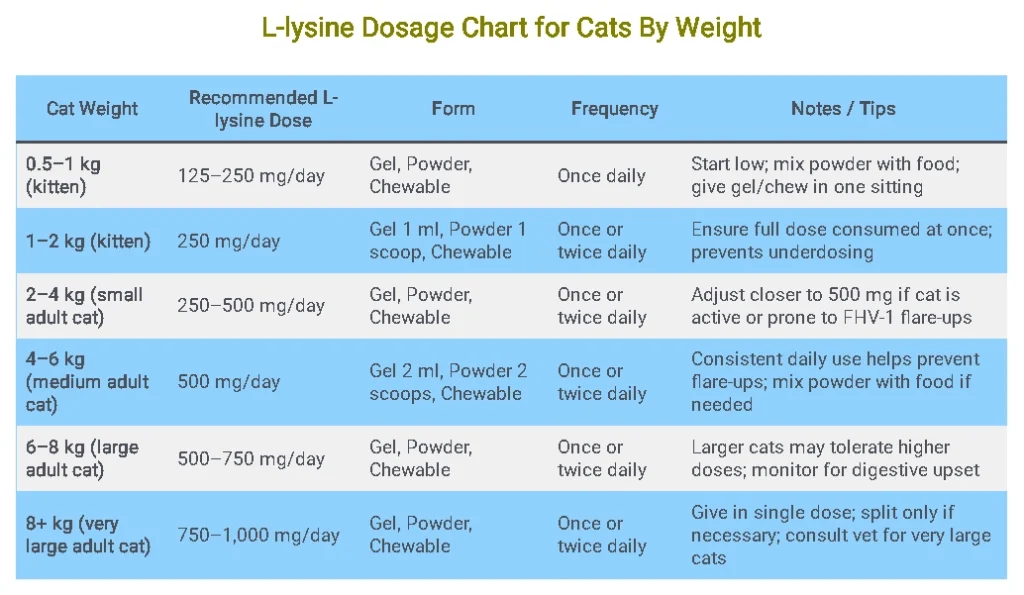
L-lysine Dosage Chart for Cats By Weight
| Cat Weight | Recommended L-lysine Dose | Form | Frequency | Notes / Tips |
|---|---|---|---|---|
| 0.5–1 kg (kitten) | 125–250 mg/day | Gel, Powder, Chewable | Once daily | Start low; mix powder with food; give gel/chew in one sitting |
| 1–2 kg (kitten) | 250 mg/day | Gel 1 ml, Powder 1 scoop, Chewable | Once or twice daily | Ensure full dose consumed at once; prevents underdosing |
| 2–4 kg (small adult cat) | 250–500 mg/day | Gel, Powder, Chewable | Once or twice daily | Adjust closer to 500 mg if cat is active or prone to FHV-1 flare-ups |
| 4–6 kg (medium adult cat) | 500 mg/day | Gel 2 ml, Powder 2 scoops, Chewable | Once or twice daily | Consistent daily use helps prevent flare-ups; mix powder with food if needed |
| 6–8 kg (large adult cat) | 500–750 mg/day | Gel, Powder, Chewable | Once or twice daily | Larger cats may tolerate higher doses; monitor for digestive upset |
| 8+ kg (very large adult cat) | 750–1,000 mg/day | Gel, Powder, Chewable | Once or twice daily | Give in single dose; split only if necessary; consult vet for very large cats |
How to Administer L-lysine
- Powder: Mix with a small amount of food.
- Chewable treats: Offer directly as a treat.
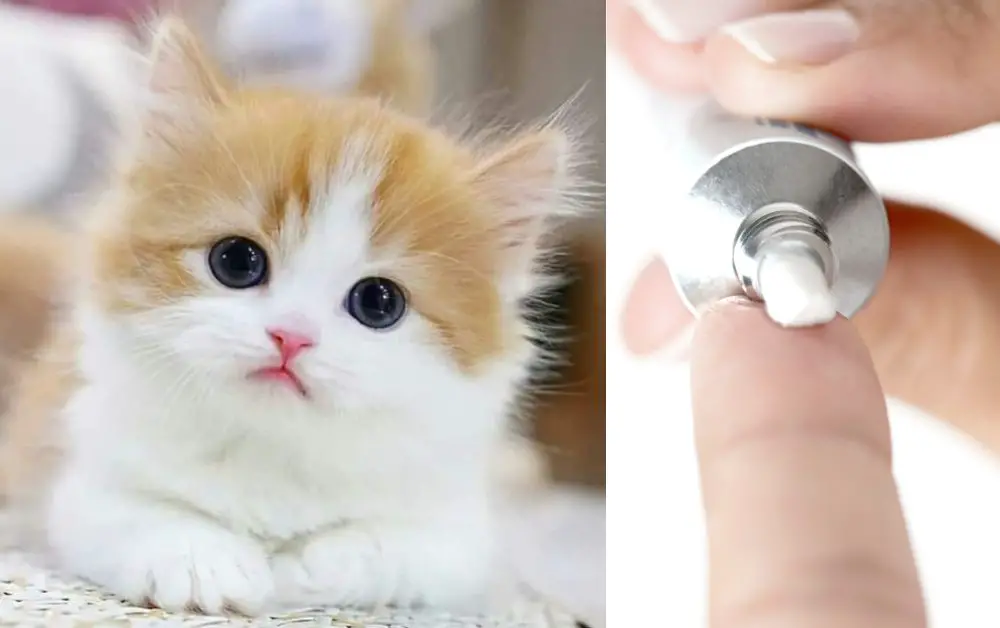
- Gel or paste: Apply to paw or mix with a meal.
Tips for administration:
- Make supplementation a pleasant experience for your cat. Stress from forced administration may counteract potential benefits.
- Start with a lower dose and gradually increase if needed.
- Observe your cat for any adverse reactions and adjust as necessary.
Key Points
- L-lysine is available over-the-counter.
- Consult your veterinarian before starting supplementation to determine the correct dosage for your cat’s age, size, and health condition.
- Daily consistency helps maintain optimal lysine levels.
Benefits of L-lysine for Cats
Supplementing your cat’s diet with L-lysine can offer several important health benefits, especially for cats affected by feline herpesvirus (FHV). Key advantages include:
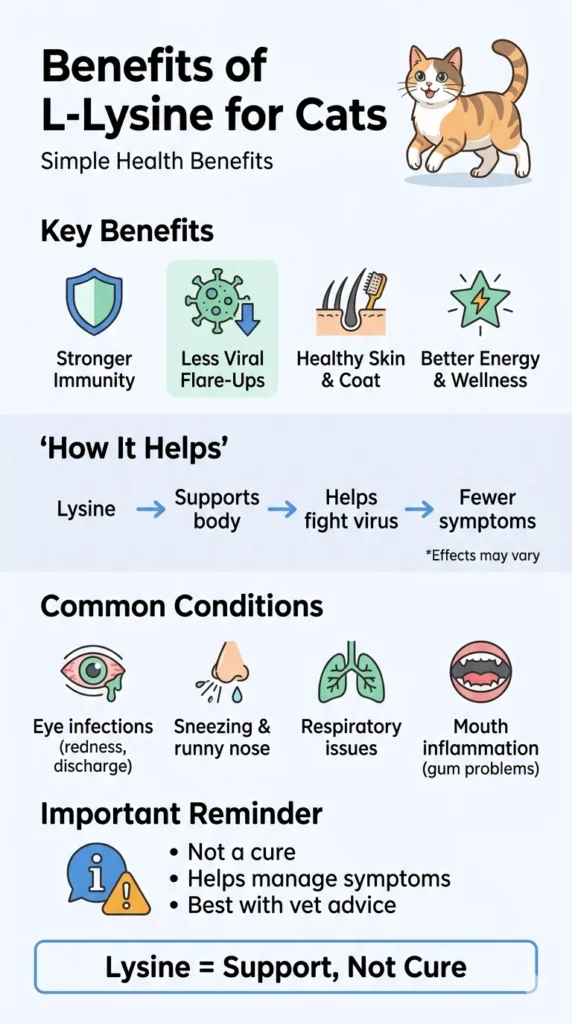
- Supports Immune Function: Lysine helps strengthen your cat’s immune system, making it easier for them to fight off infections and illnesses.
- Reduces Viral Shedding: For cats with herpesvirus, lysine may lower the viral load, which can lead to fewer flare-ups and less severe symptoms.
- Promotes Healthy Skin and Coat: Adequate lysine levels support a shiny, healthy coat and may help prevent skin issues linked to viral infections.
- Enhances Overall Well-Being: By improving nutritional balance, lysine contributes to your cat’s energy, vitality, and overall health.
In summary, adding lysine for cats to their diet can help manage viral symptoms, support the immune system, and improve skin and coat condition, making it a valuable addition to your cat’s wellness routine.
Common Conditions Treated with Lysine for Cats
Lysine is a helpful supplement for managing several health conditions in cats, especially those related to viral infections. Some common conditions where lysine may be beneficial include:
- Feline Herpesvirus (FHV-1): Lysine supplementation can reduce the severity and frequency of flare-ups, helping cats manage eye and respiratory symptoms.
- Upper Respiratory Infections: Cats with recurring sneezing, nasal discharge, or congestion may benefit from lysine, which can help alleviate symptoms and shorten infection duration.
- Chronic Gingivostomatitis: Lysine may support oral health management as part of a broader treatment plan for this inflammatory mouth condition.
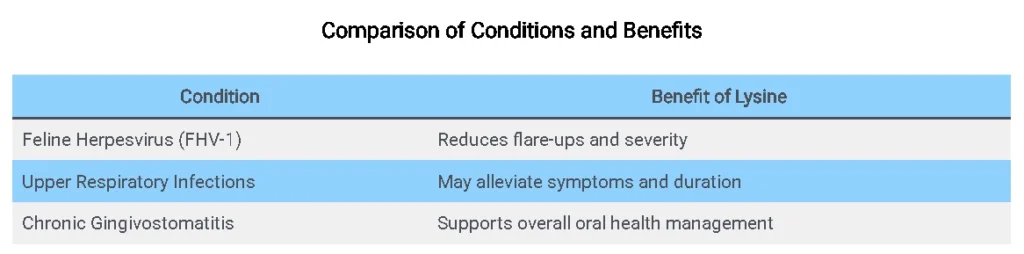
Comparison of Conditions and Benefits
| Condition | Benefit of Lysine |
|---|---|
| Feline Herpesvirus (FHV-1) | Reduces flare-ups and severity |
| Upper Respiratory Infections | May alleviate symptoms and duration |
| Chronic Gingivostomatitis | Supports overall oral health management |
In summary, lysine for cats not only strengthens the immune system but also provides targeted support for managing viral infections, respiratory issues, and oral health. Always consult your veterinarian to determine the best dosage and supplementation strategy for your cat.
Side Effects of L-lysine for Cats
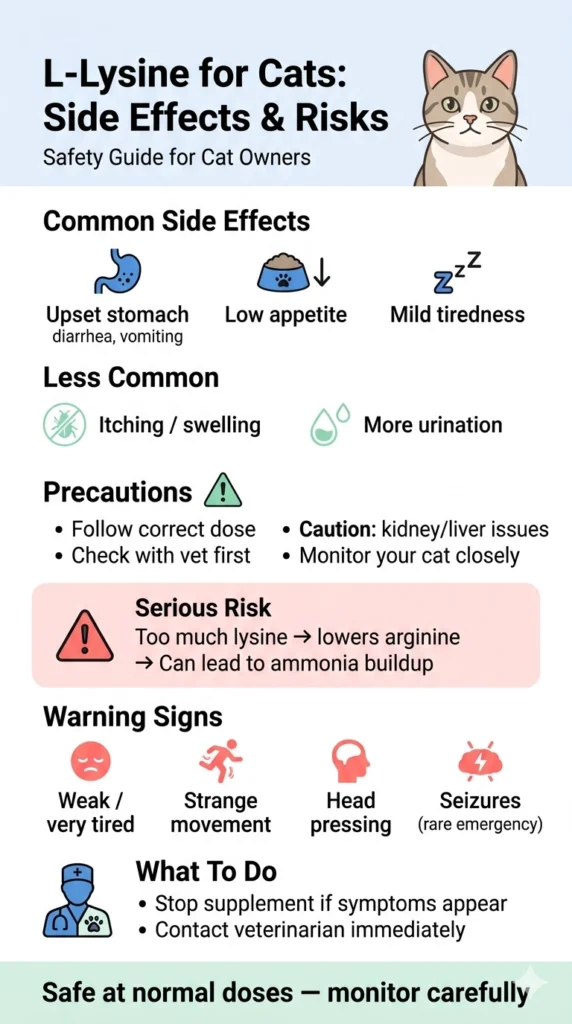
L-lysine is generally considered safe for cats, and side effects are rare when given at the recommended dose. However, some cats may experience mild reactions, especially if they consume too much.
Common Side Effects
- Gastrointestinal issues: Diarrhea, vomiting, or nausea
- Loss of appetite or mild lethargy
Less Common Side Effects
- Allergic reactions, such as itching or swelling
- Increased urination in rare cases
Precautions
- Always consult your veterinarian before starting lysine, especially if your cat has existing health conditions or is taking other medications.
- Monitor dosage carefully. Stick to the recommended amounts for your cat’s age, size, and health.
- Cats with kidney or liver disease may have difficulty processing very high doses of lysine.
- Lysine can increase calcium absorption, so cats with metabolic conditions should use it cautiously.
Important: If your cat experiences vomiting, diarrhea, or stress while taking lysine, stop supplementation and contact your veterinarian. Overdose toxicity is very unlikely at normal doses.
Most Serious Risks of L-lysine for Cats
While L-lysine is generally safe for cats at recommended doses, there are some potential serious risks, primarily related to its effect on arginine, another essential amino acid.
- Lowering Arginine Levels: High lysine intake may reduce arginine in your cat’s body. Arginine is critical for normal health, and too little can lead to a dangerous condition called hyperammonemia, where ammonia builds up in the blood.
Symptoms of Hyperammonemia
- Lethargy
- Circling or unusual movement
- Head pressing
- Blindness
- Seizures
- Coma
Important: Serious risks are uncommon when lysine is given at standard doses. Always follow veterinarian guidance and monitor your cat for unusual symptoms.
You May Also Like To Read:
FAQs About L-lysine for Cats
How much L-lysine should I give my cat?
Kittens: Up to 250 mg once or twice daily
Adult cats: Up to 500 mg once or twice daily
Forms: About 1 ml of gel, one chew, or one scoop of powder
Always follow the product instructions and your veterinarian’s guidance.
Can I give my cat L-lysine every day?
Yes. Daily administration helps prevent flare-ups of feline herpesvirus (FHV-1).
It can also be given during flare-ups, but consistent use is more preventive.
What if my cat misses a dose?
Give the missed dose as soon as you remember.
If it’s close to the next scheduled dose, skip the missed dose and continue normally.
What is lysine and why is it beneficial for cats?
Lysine is an essential amino acid that supports protein synthesis, enzyme production, and the immune system.
For cats with FHV-1, lysine may reduce the severity and frequency of symptoms.
It also helps overall health, tissue growth, and well-being.
How should I administer lysine to my cat?
Available in powder, treats, chewables, or gel
Powder can be mixed into food; treats and gel can be given directly
Choose a form your cat likes to reduce stress, as stress can reduce lysine’s effectiveness
Are there any side effects of lysine for cats?
Generally safe when given at recommended doses
Possible mild side effects: digestive upset, diarrhea, nausea
Rarely, excessive doses may affect other amino acids
Can you give cats L-lysine safely?
Yes, but use products labeled for cats only
Avoid human supplements; feline-specific forms are easier to give and less stressful
Are there alternative treatments for FHV-1 in cats?
Probiotics for gut health
Antiviral medications like Famciclovir
Environmental management and stress reduction are also important
Should I consult my veterinarian before giving my cat lysine?
Absolutely. Your veterinarian can tailor the dosage and determine if lysine is appropriate based on your cat’s health and medications.
Final Thoughts
L-lysine can be a valuable supplement for cats, especially those affected by feline herpesvirus (FHV-1) or chronic upper respiratory issues. When used correctly, lysine may help support immune function, reduce viral flare-ups, and improve overall well-being.
It’s important to remember:
- Dosage matters: Stick to recommended amounts—typically 250 mg for kittens and 500 mg for adult cats, once or twice daily.
- Forms of administration: Powders, gels, and chewable treats make giving lysine easier and less stressful for your cat.
- Safety first: Side effects are rare but may include mild digestive upset. Serious risks are uncommon when lysine is given at standard doses.
- Consult your veterinarian: Always seek professional guidance to ensure your cat’s health and to tailor supplementation to their individual needs.
While lysine is not a cure for herpesvirus, consistent use as part of a well-planned wellness routine can provide meaningful support for your feline friend. By carefully managing dosage, administration, and monitoring for side effects, you can help your cat stay healthier and more comfortable.