When your cat has diarrhea, it can be worrying and uncomfortable for your pet. Many owners consider Imodium (loperamide), an over-the-counter medicine to treat diarrhea in humans. It works by slowing down the movement of the bowel movement and helps make the stool firm.
However, the use of Imodium for cats is controversial – while some veterinarians may recommend it for short term use, it can have a higher risk of side effects and is not always the safest choice.
The Imodium dosage for cats right depends on factors such as weight, health, and the cause of diarrhea, so it should be given only under veterinary guidance.
In this guide, Learn everything about Imodium Dosage for Cats – its uses, safe dosage, side effects, precautions, and alternatives. Ensure your cat’s digestive health with expert tips and veterinarian guidance.
Disclaimer: This content is for informational purposes only and should not replace veterinary advice. Always consult your veterinarian before giving Imodium or adjusting your cat’s dosage.


Key Takeaways
- Imodium (loperamide) is not for cats and should only be used on veterinary advice.
- Potential side effects include hyperexcitability, agitation, constipation, respiratory depression and pancreatitis.
Not all cats are good candidates, kittens, senior cats, pregnant or nursing cats, liver, kidney and hormonal problems. - Safer alternatives include cat specific anti diarraea supplements, probiotics and a bland diet.
- Never adjust doses or give human medications without the consultation of a veterinarian.
- Veterinary consultation is essential to determine whether Imodium or any other treatment is the appropriate one for your cat.
What Is Imodium and How Does It Work in Cats?
Imodium or its generic name loperamide is an anti-diarrheal medication that is often used in humans, and is sometimes prescribed off-label for cats as a way of controlling diarrhea. It works by slowing down bowel movements so that more water and nutrients can be absorbed from the intestines which will help firm up loose stools.
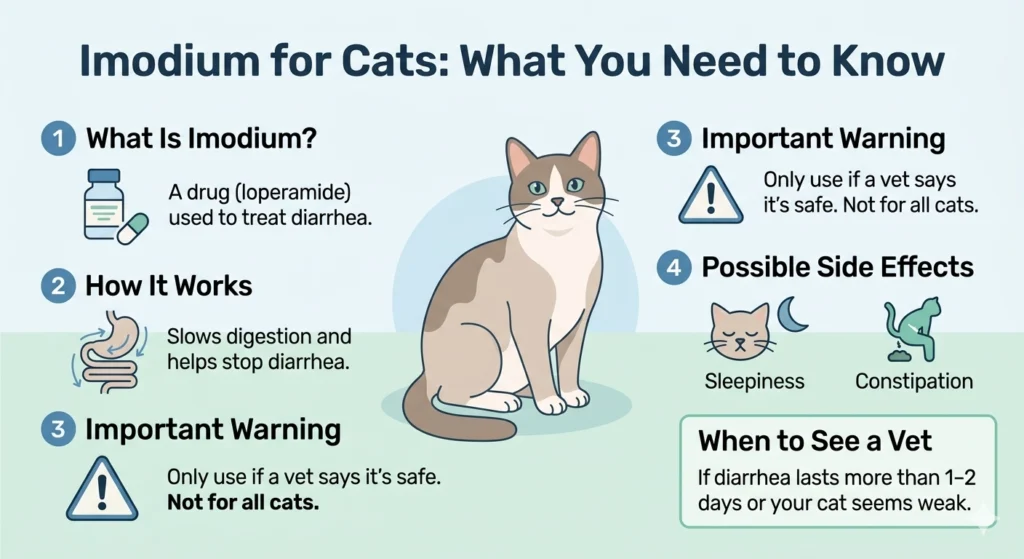
Additionally, Imodium helps to improve muscles in the gastrointestinal tract, enhancing the overall digestion control. While it can result in quick relief from acute diarrhea caused by dietary changes, food intolerance or mild gastrointestinal upset, its use in cats is controversial since not all cats tolerate it well, and dosing must be carefully monitored.
Because Imodium is broken down by the liver and eliminated in bile, cats with liver disease, kidney issues or other underlying health conditions need special care. Always consult a veterinarian before giving Imodium to your cat to ensure safe and effective use of the medication.


Is it Safe to Give Imodium to Cats?
When given in the correct fashion (i.e. Imodium, loperamide), it can be safe for cats in some cases, but only with your vet’s guidance. It is considered an off-label medication in veterinary medicine, which means that it is not specifically approved for cats which makes professional advice very important before giving it.
While some vets may recommend its use for short term relief of diarrhea, its use is controversial as there is a risk of side effects and it can be difficult to dose correctly. Even small amounts of a regular 2 mg tablet can be too much for a cat, which is why the exact dose should always be based on the weight and health condition of your cat.
There are also certain safety issues to be aware of. Cats with the MDR1 gene mutation should never be given Imodium because this is a condition affecting the way their body processes certain drugs and it can cause them to have dangerous reactions.
Additionally, Imodium is not indicated for use in cats that are allergic to loperamide, or in diarrhea that is caused by toxins or bacterial infections.
It must also be used with caution in cats that have any diseases such as hypothyroidism or kidney disease or Addison’s disease or in old and weak cats.
In terms of how it works, loperamide is a man-made drug that works by slowing the passage of bowel movements and is involved in firming the stool by enhancing muscle tone in the digestive tract. While this may offer relief, it may also cause side effects such as constipation or bizarre behaviour such as excitability in some cats.
Overall, Imodium can be effective when consumed in small and vet-approved doses but it’s not the right thing to use in every situation.
Consulting with a veterinarian is important to make sure it is being used safely and determining if a better treatment method may be needed.
Uses of Imodium for Cats
Imodium for Cats is used mainly to treat diarrhea and control bowel movements. It works by slowing down the frequency and rate of bowel movements. bowl movements slow down, allowing food to pass more slowly through the intestines. This can help to firm up loose stools and improve the absorption of nutrients and water.
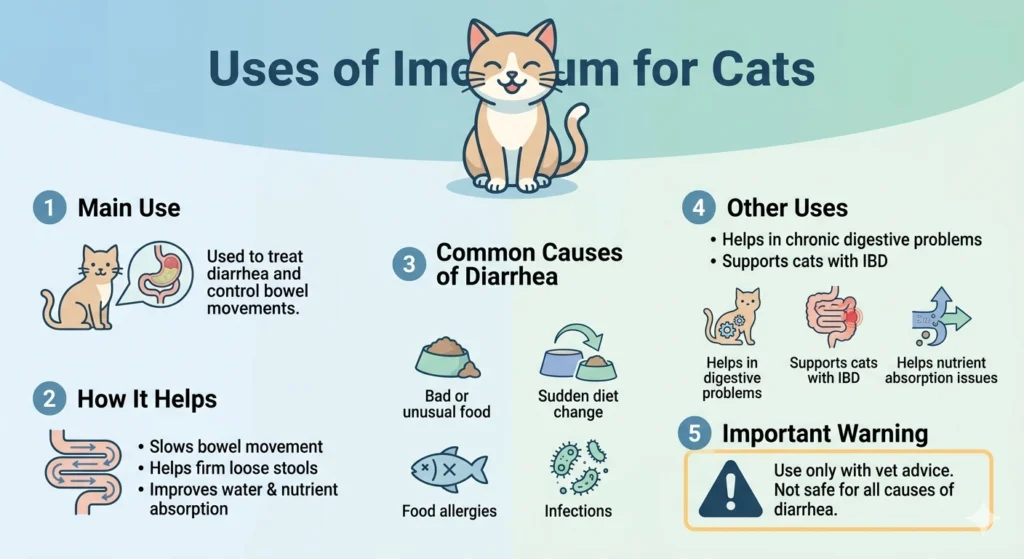
Its effects on the digestive tract make it useful not only for short term relief, but as part of management strategies for certain chronic conditions.
Veterinary advice is crucial before using Imodium since the cause of diarrhea is critical as to whether the medicine is suitable. For instance, blood poisoning and infections of the urinary tract, if diarrhea is caused by ingested toxins or bacterial infections then the use of Imodium may stop the body from naturally disposing of harmful substances, which may worsen the situation.
Imodium is usually taken in the case of acute gastrointestinal (GI) inflammation that is characterized by loose stools or diarrhea. This inflammation can be caused by:
- Dietary indiscretions (eating something unusual or spoiled food)
- Sudden diet changes
- Low-quality cat food
Food intolerances or allergies - Bacterial infections
In addition to the treatment of acute diarrhea, Imodium can be used for cats with chronic digestive problems:
- Inflammatory Bowel Disease (IBD): Imodium can be used as part of a multimodal plan to help control diarrhea and increase comfort.
- Maldigestion and malabsorption syndromes: By slowing the movement of food through the intestines, Imodium helps to ensure more nutrients and water can be absorbed from food which helps to promote better overall nutrition.
Because the exact cause of the diarrhea is often hard to determine, consultation with a veterinarian before giving Imodium is critical. This helps to ensure that the diarrhea is used safely, and prevents potential complications from treating the wrong type of diarrhea.
Imodium Dosage for Cats
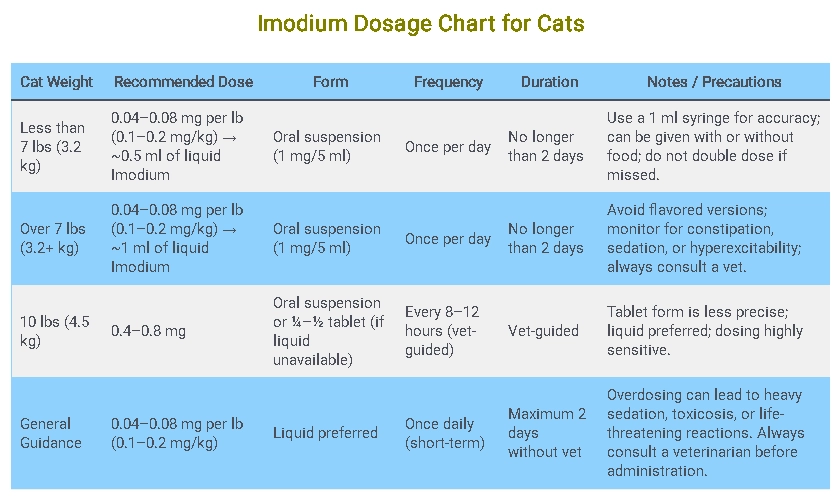
Administering Imodium (loperamide) to cats requires extreme caution, as cats are highly sensitive to the medication and even a small overdose can be life-threatening. Because of this, dosage should always be determined by a veterinarian, taking into account your cat’s weight, age, health condition, and the severity of diarrhea.
For accurate dosing, the liquid form of Imodium is preferred, as tablets are difficult to divide and may easily lead to overdoses. The typical concentration of liquid Imodium is 1 mg per 5 ml (0.2 mg/ml).
General Dosing Guidelines Using Liquid Imodium:
- Cats weighing less than 7 lbs (3.2 kg): 0.5 ml orally once a day, for no longer than two days.
- Cats weighing more than 7 lbs (3.2 kg): 1 ml orally once a day, for no longer than two days.
Some veterinarians may adjust the dose based on individual needs, sometimes using slightly different amounts, but doses should never exceed 1–1.5 ml without veterinary guidance.
Important Safety Notes:
- Never double-dose if you miss a dose; either give it as soon as you remember or skip it and continue the schedule.
- Avoid flavored versions, such as mint, which can be toxic to cats.
- Continuous use beyond two days should be avoided unless specifically approved by a vet, as prolonged use can lead to constipation, dependency, or adverse reactions.
- Imodium toxicosis can cause heavy sedation and neurological effects, which are potentially life-threatening.
Because side effects are real and dosing is highly sensitive, always consult your veterinarian before giving Imodium to your cat. Many vets may recommend safer alternatives if they are more appropriate for your cat’s condition.
Imodium Dosage Chart for Cats
| Cat Weight | Recommended Dose | Form | Frequency | Duration | Notes / Precautions |
|---|---|---|---|---|---|
| Less than 7 lbs (3.2 kg) | 0.04–0.08 mg per lb (0.1–0.2 mg/kg) → ~0.5 ml of liquid Imodium | Oral suspension (1 mg/5 ml) | Once per day | No longer than 2 days | Use a 1 ml syringe for accuracy; can be given with or without food; do not double dose if missed. |
| Over 7 lbs (3.2+ kg) | 0.04–0.08 mg per lb (0.1–0.2 mg/kg) → ~1 ml of liquid Imodium | Oral suspension (1 mg/5 ml) | Once per day | No longer than 2 days | Avoid flavored versions; monitor for constipation, sedation, or hyperexcitability; always consult a vet. |
| 10 lbs (4.5 kg) | 0.4–0.8 mg | Oral suspension or ¼–½ tablet (if liquid unavailable) | Every 8–12 hours (vet-guided) | Vet-guided | Tablet form is less precise; liquid preferred; dosing highly sensitive. |
| General Guidance | 0.04–0.08 mg per lb (0.1–0.2 mg/kg) | Liquid preferred | Once daily (short-term) | Maximum 2 days without vet | Overdosing can lead to heavy sedation, toxicosis, or life-threatening reactions. Always consult a veterinarian before administration. |
How To Give Imodium To Cat
Imodium is available in three different forms – tablets, capsules and oral suspension. If using liquid Imodium (which is most convenient) to ensure accurate dosing, we would recommend getting a 1ml syringe (readily accessible in pharmacies). Cats require small doses of Imodium and doses can be given using other measuring techniques can result in an overdose (one tablespoon is 15 ml).
In cats Imodium may be administered with or without food. Food administration may be helpful for cats with sensitive tummies. If the cat is not likely to experience digestive problems then you can give the medications on an empty stomach as well.
Like all other medications, Imodium might interact with other medicines by increasing or decreasing their effects. The following is a list of the medications that have known interactions with Imodium:
- Antihistamines (Diphenhydramine, Cetirizine)
- Sedation inducing medications (diazepam, naloxone)
- Some antibiotics (erythromycin, trimethoprim, sulfamethoxazole)
- Ceratain Antifungals (ketoconazole, itraconazole)
- Heart medications (propranolol, quinidine, verapamil, amiodarone, carvedilol)
- Monoamine oxidase inhibitors (selegiline, rasagiline)
- Anti-parasitic drugs (amitraz).
As a general rule of thumb, if your cat is taking any kind of dietary supplements, vitamins or herbal remedies, you should inform your veterinarian before beginning a new treatment.
Step-by-Step Guide to Giving Imodium to Your Cat
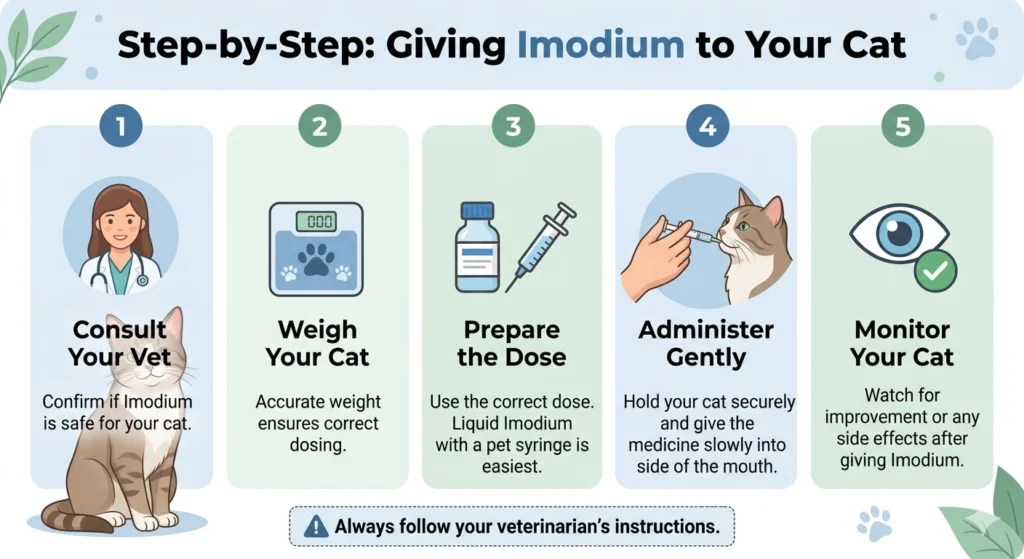
- Consult your vet: Confirm if Imodium for cats is appropriate.
- Weigh your cat: Accurate weight ensures proper dosing.
- Prepare the dose: Use a pet syringe for liquid Imodium for cats.
- Administer gently: Hold your cat securely and squirt the medication into the side of the mouth.
- Monitor: Watch for improvements or side effects after giving Imodium.
Alternatives for Imodium for Cats
While Imodium can be effective in the management of diarrhea in cats, it is not appropriate for every feline and has some risk to it. Fortunately, there are a number of safer and often more cat-friendly alternatives that can be used to help restore digestive health and handle loose stools. As with any treatment, including these alternatives, it is always crucial to consult a veterinarian before beginning any treatment.
1. Anti-Diarrheal Medications
Some over-the-counter anti-diaretics used in humans or dogs such as Pepto Bismol, Pepcid or Kaopectate may be considered in some cases. However, not all these are safe for cats. For example:
- Pepto Bismol which must be used with extreme care, due to potential toxicity
Newer formulas of Kaopectate can have aspirin which is so toxic to cats
Because of these dangers, only a veterinarian can decide which ones are safe to give to your particular cat.
2. Anti-Diarrhea Supplements Designed for Cats
A much safer alternative is the use of anti-diarrhea supplements specifically made for cats. These often contain ingredients such as:
- Kaolin
- Pectin
- Fiber sources such as pumpkin extract
These supplements help to absorb toxins, firm stools, and soothe the digestive tract and are considered to be safe when given in accordance with the instructions.
Some veterinary-recommended options include:
- NaturVet Anti-Diarrhea Liquid Pet Supplement – helps to improve cramping and irritation
- Under the Weather Anti-Diarrhea Liquid for Cats – firms stools quickly
- Nutri-Vet Anti-Diarrhea Liquid for Cats – calms upset stomachs
- PetAg Pet Pectillin Anti-Diarrheal – replaces the electrolytes and relieves loose stools
3. Probiotics for Cats
Probiotics are an easy and highly effective way of restoring gut health. They not only help with diarrhea but they also support the immune system and overall digestive function. Some of the popular types of probiotics are:
- FortiFlora
- Proviable
- Pet Ultimates Probiotics for Cats – a 20 species powder for digestive support
Regular use of probiotics can even help you prevent diarrhea before it starts, which can promote long-term gut health.
4. Bland Diet for Cats
Giving your cat’s digestive system a break with a bland diet is a natural, effective way to attack diarrhea. A simple formula is:
- Two-thirds plain boiled white rice
- One third boiled Chicken meat
This can be used alone or with supplements and probiotics to aid in the healing of the GI tract.
Bottom Line
There are several safe and effective alternatives to Imodium for cats, including cat-specific anti-diarrhea supplements, probiotics and bland diets. Over-the-counter manmade human or dog medications should only be used under veterinary supervision due to potential toxicity. Always speak to your vet first before trying any new treatment because they will be able to advise on the safest and most effective solution for your cat’s diarrhea.
What Are the Side Effects of Imodium in Cats
While Imodium may be useful in the treatment of diarrhea in cats, it is not without risks. Understanding the possible side effects and determining which cats should not take the medication is important in order to use it safely.
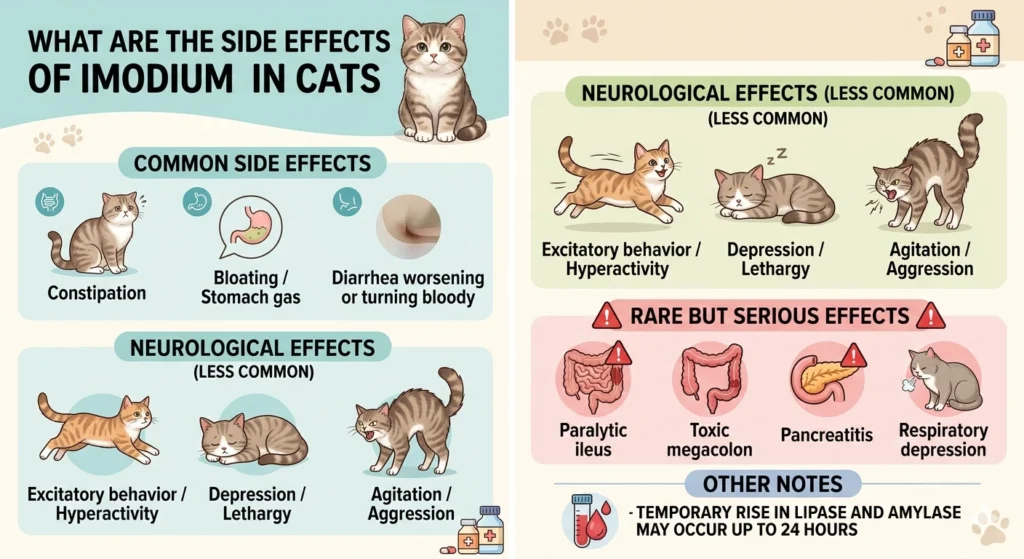
Common Side Effects
Most side effects of Imodium are associated with the gastrointestinal (GI) tract including:
- Constipation – the most commonly reported effect
- Bloating or stomach gas
- Diarrhea that gets worse or that turns bloody
Neurological effects are also possible, but less common. These may include:
Excitatory behavior or Hyperactivity
- Depression or lethargy
- Agitation or being aggressive in some cases
Other rare, but serious, adverse effects include:
- Paralytic ileus – a complete cessation of the intestines
- Toxic megacolon – impacted colon with possible secondary infection
- Pancreatitis
- Respiratory depression in case of severe overdose cases
It’s also important to say that loperamide can cause a temporary raise in lipase and amylase blood levels for up to 24 hours. This is not usually clinically significant but may be relevant if your veterinarian is running blood tests after giving the drug.
Cats That Should Avoid Imodium
Some cats are more likely to develop side effects and should not receive Imodium including:
- Cats that are allergic or sensitive to loperamide
- Cats that are carriers of the MDR1 gene mutation that causes severe neurological effects at even normal doses
- Cats with diarrhea caused by toxins, infections, or profuse explosive diarrhea
- Cats that have bloody stools (red, dark or tarry)
- Severely ill/dehydrated/debilitated cats
- Cats who are fevering, vomiting, or depressed
- Cats taking medications that interact with loperamide
- Less than 6 months old kittens, pregnant or nursing cats, and senior cats
Even cats that do not have these risk factors may need extra care if they have:
- Kidney or liver disease
- Severe head injuries
- Hormonal disorders (thyroid or adrenals e.g. hypothyroidism or Addison’s disease)
Key takeaway: Consult your veterinarian before giving Imodium, monitor your cat closely for any unusual symptoms, and avoid using it in situations where diarrhea is a protective response or the cat has underlying health risks.
You May Also Like To Read:
FAQs
Imodium used in cats, what is it used for?
Imodium is used mainly in the treatment of diarrhea to reduce the rate of bowel movements so that more water and nutrients are absorbed. It can also help to manage chronic digestive problems such as Inflammatory Bowel Disease (IBD) or malabsorption syndromes.
What are the Common Imodium Side Effects in Cats?
The most common side effects are constipation, bloating, gas and sometimes loose or bloody stools. There may also be neurological effects such as excitability, agitation, or lethargy, particularly in sensitive cats. Rare but serious reactions include toxic megacolon, pancreas inflammation and paralyzed intestines.
Which Cats Need to Avoid Imodium?
Cats that are allergic to loperamide, which have the MDR1 gene mutation, are very young or senior, pregnant or nursing, who are severely ill, or who are suffering from diarrhea caused by toxins or infections should not take Imodium. Extra care is required with cats that have kidney, liver or hormonal problems.
How do I administer Imodium to my cat safely?
Always follow the instructions of your veterinarian. Dosing is based on your cat’s weight and health condition. Do not use human dosages, and never take more than the recommended dose.
Can Imodium be used in cats?
Yes. Safer alternatives include cat-specific anti diarrhea supplements (kaolin-pectin or pumpkin-based), probiotics (FortiFlora, Proviable, Pet Ultimates) and a bland diet of boiled rice and chicken. Some over the counter medications may be used with the supervision of a veterinarian.
Can I give Imodium to Kittens or Pregnant Cats?
No. Kittens under six months, pregnant or nursing cats and very senior cats are more likely to experience side effects and should not be given Imodium unless specifically approved by their veterinarian.
Can Imodium have serious problems?
Yes. In rare cases, particularly in cats with the MDR1 mutation or underlying liver/kidney disease, Imodium may result in neurological problems, respiratory depression, or severe constipation. Always watch your cat for abnormal symptoms following administration.
Final Thoughts
Imodium is a brand name for loperamide, an antidiarrheal drug that can be used in the cat but the use of this medication is controversial and carries risks. Potential side effects include hypersensitivities, increased agitation, constipation, respiratory depression and pancreatitis and careful monitoring is important.
Because Imodium is off-label for cats it is impossible to be certain of the correct dosing without veterinary guidance, and administration of human dosing without veterinary advice can be hazardous.
Some veterinarians may give it safely but others may suggest using safer alternatives such as cat specific anti-diarrhea supplements, probiotics or a bland diet to control diarrhea.
The safest thing to do is to work closely with your veterinarian, follow instructions, and avoid attempting to change doses on your own in order to ensure the health and well-being of your cat.