Cats are very good at hiding pain and stress, so it can be hard for owners to know when something is wrong. Changes in behavior, appetite, or activity may be the only signs your cat needs help. In these situations, veterinarians often use gabapentin for cats to manage pain, anxiety, and certain medical conditions.
Gabapentin is a medication that helps calm nerve activity in the body. It is commonly used in cats to treat chronic pain (especially nerve pain), control seizures, and reduce anxiety during stressful events like vet visits or travel. Because of its calming effect, it is also used to make handling easier and less stressful for your cat.
Understanding the correct gabapentin dosage for cats is very important. The right dose depends on your cat’s weight and the reason for treatment. Giving the wrong amount can be unsafe or less effective, so gabapentin should always be given with veterinary advice.
This guide will Discover gabapentin for cats, including its uses for pain, seizures, and anxiety. Learn the safe gabapentin dosage for cats, side effects, and vet-approved guidelines in this complete guide.
Disclaimer: This content is for informational purposes only and should not replace veterinary advice. Always consult your veterinarian before giving Gabapentin or adjusting your cat’s dosage.
Key Takeaways
- Gabapentin for cats is a veterinary medication commonly used to manage pain, seizures, and anxiety in cats.
- It works by calming overactive nerve signals, which helps reduce pain perception, stress, and seizure activity.
- The correct gabapentin dosage for cats depends on the cat’s weight, age, health condition, and treatment purpose, so veterinary guidance is essential.
- It is often used for chronic pain (like arthritis), seizure control, and stress reduction during vet visits or travel.
- Common side effects include drowsiness, lethargy, incoordination, and mild digestive upset, which are usually temporary.
- Serious risks are rare but may occur in cats with kidney/liver disease or incorrect dosing.
- Gabapentin may interact with other medications, so full medical history should always be shared with a vet.
- In cases where gabapentin is not suitable, veterinarians may recommend safe alternatives for pain or anxiety management.
What is Gabapentin for Cats?
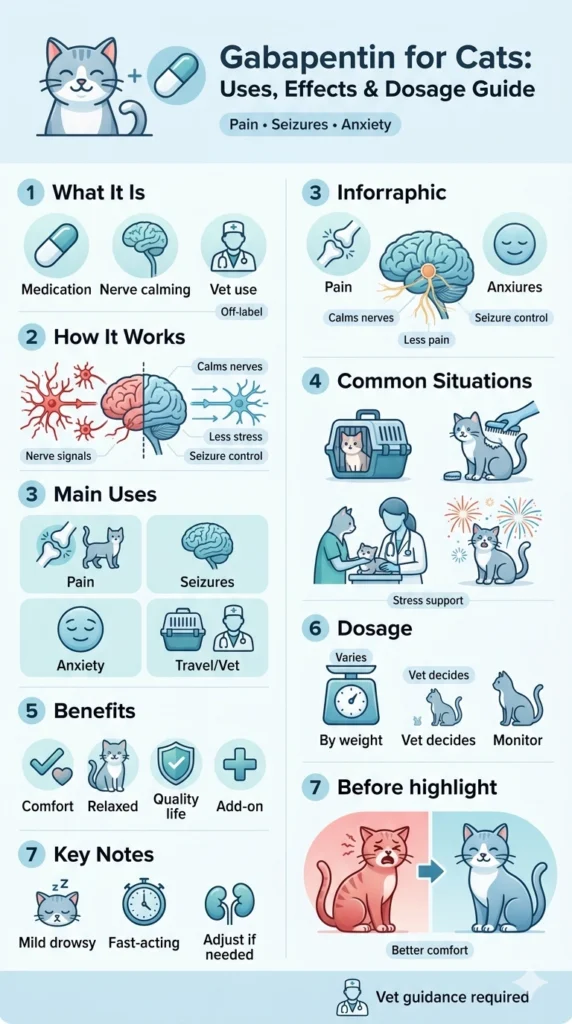
Gabapentin for cats is a medication originally developed for humans to treat seizures and nerve pain, but it is now widely used in veterinary medicine due to its safety and effectiveness in cats.
It is considered a versatile drug because it helps manage multiple conditions by calming overactive nerve signals. Veterinarians commonly prescribe it for:
- Pain relief: Especially for chronic and nerve-related pain, including arthritis
- Seizure control: Helps manage epilepsy and abnormal nerve activity
- Anxiety and stress: Used to calm cats during vet visits, grooming, or travel
Although gabapentin is not FDA-approved for pets, it is frequently used off-label by veterinarians because of its proven results and fast-acting effects.
When using gabapentin, it is important to follow proper veterinary guidance, as the gabapentin dosage for cats can vary depending on the cat’s condition, weight, and specific needs.
How Does Gabapentin Work?
Gabapentin for cats works differently from typical pain medications. Instead of directly blocking pain like standard painkillers, it targets the nervous system to reduce discomfort, stress, and seizures.
It works by blocking specific brain receptors and calming overactive nerve signals, which are responsible for sending pain messages throughout the body. By doing this, your cat feels less pain and reduced stress.
Although the exact mechanism is not fully understood, gabapentin is believed to:
- Reduce calcium flow into nerve cells, which limits the release of chemicals (neurotransmitters) that cause pain and excitement
- Calm overactive nerves, lowering pain perception
- Relax the brain, helping reduce anxiety and stress
- Prevent excessive nerve firing, which helps control seizures
This targeted approach allows cats to feel more comfortable without heavy sedation, although mild calming effects are common.
Gabapentin is generally considered safe for cats when used correctly, with few side effects. The most common ones include drowsiness or lethargy, which usually wear off after some time.
It’s important to note that gabapentin is FDA-approved for humans but not for pets. In cats, it is used off-label, which is very common in veterinary medicine. In some regions, it may also be classified as a Schedule V controlled substance, meaning there could be restrictions on how it is prescribed or refilled.
What is Gabapentin Used for in Cats?
Gabapentin for cats is mainly used in veterinary medicine to manage several important health conditions, especially those involving pain, anxiety, and seizures. It provides supportive relief beyond its original human use, helping improve comfort and quality of life in cats.
One of its most important roles is in managing neuropathic and chronic pain, particularly conditions like arthritis or post-surgical recovery. In some cases, it is used after procedures such as declawing to help improve comfort and support recovery by enhancing the effects of other pain medications.
Gabapentin is also used as part of seizure management, where it is typically given alongside other anticonvulsant medications. While it does have anti-seizure properties, it is generally not considered the first-choice treatment, but rather an add-on therapy for better seizure control.
Another major use is in reducing anxiety and stress in cats. It is especially helpful during stressful situations such as:
- Car or plane travel
- Veterinary examinations
- Grooming visits
- Loud or stressful environments like fireworks, construction, or parties
Clinical research has shown that gabapentin can significantly reduce fear and improve cooperation in cats during vet visits. For example, a study involving hyperthyroid cats found that a 20 mg/kg dose helped cats become more relaxed during transport and more compliant during veterinary procedures, highlighting its strong calming effect in clinical settings.
In terms of pain control, gabapentin is more effective for chronic pain (like arthritis or back pain) rather than sudden acute pain, where other medications are usually preferred.
Overall, gabapentin is widely used because it helps manage long-term pain, supports seizure control, and reduces stress and anxiety, making difficult situations easier for both cats and veterinarians.
Gabapentin Dosage for Cats
Determining the correct gabapentin dosage for cats is very important and should always be guided by a veterinarian. The dose is not the same for every cat because it depends on the condition being treated, such as pain, seizures, or anxiety, as well as the cat’s weight, size, and overall health condition.
Proper dosing and monitoring are essential to ensure safety. Adjustments may be needed based on how the cat responds, making gabapentin an effective but carefully managed medication for feline health.
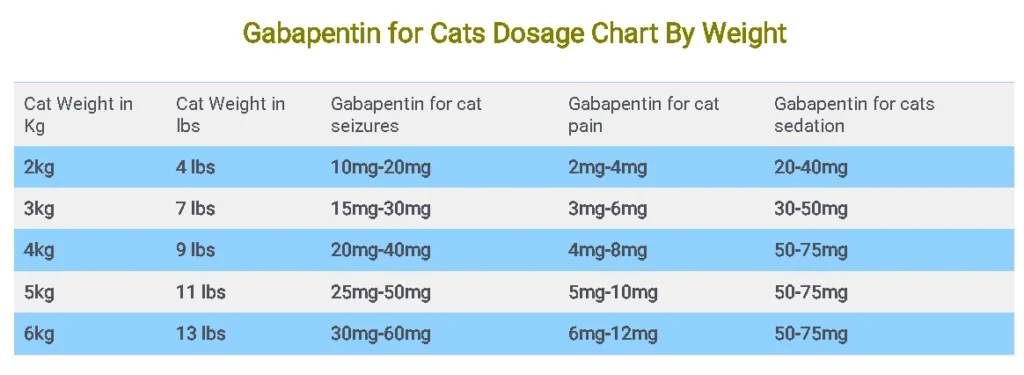
Gabapentin for Cats Dosage Chart By Weight
| Cat Weight in Kg | Cat Weight in lbs | Gabapentin for cat seizures | Gabapentin for cat pain | Gabapentin for cats sedation |
| 2kg | 4 lbs | 10mg-20mg | 2mg-4mg | 20-40mg |
| 3kg | 7 lbs | 15mg-30mg | 3mg-6mg | 30-50mg |
| 4kg | 9 lbs | 20mg-40mg | 4mg-8mg | 50-75mg |
| 5kg | 11 lbs | 25mg-50mg | 5mg-10mg | 50-75mg |
| 6kg | 13 lbs | 30mg-60mg | 6mg-12mg | 50-75mg |
The above Gabapentin Dosage Chart for Cats is prepared with a low dose for the safety precautions. For the newborn kitty and old or sick cat, first, contact your veterinarian before offering any medication.
Dosage Guidelines by Condition
1. Seizure Management
For controlling seizures, the gabapentin dose for cats is typically:
- 2.5 to 5 mg per pound every 8 to 12 hours
- In more severe cases, it may increase up to 10 mg per pound
- Some guidelines also suggest 5–10 mg/kg every 8–12 hours
Gabapentin is not usually the first-choice seizure medication but is often used alongside other anticonvulsants.
2. Pain Relief
For pain management (such as arthritis or cancer-related pain):
- Starting dose: 1.5 to 5 mg per pound every 12 hours
- In more severe pain cases: doses may be increased, sometimes up to 50 mg up to three times daily
- Another guideline includes 1.25 to 2 mg/kg every 12 hours
3. Anxiety and Sedation
For stress and anxiety (vet visits, travel, or procedures):
- A single dose of 20 mg/kg given 1–2 hours before stressful events
- Common sedative dosing ranges from 40–70 mg for smaller or older cats
- 75–90 mg for adult cats, given 2–3 hours before travel or vet visits
- In some cases, dosing may be 50–200 mg as a single pre-event dose
- Maximum dose is generally not more than 200 mg at one time
How Is Gabapentin Given to Cats?
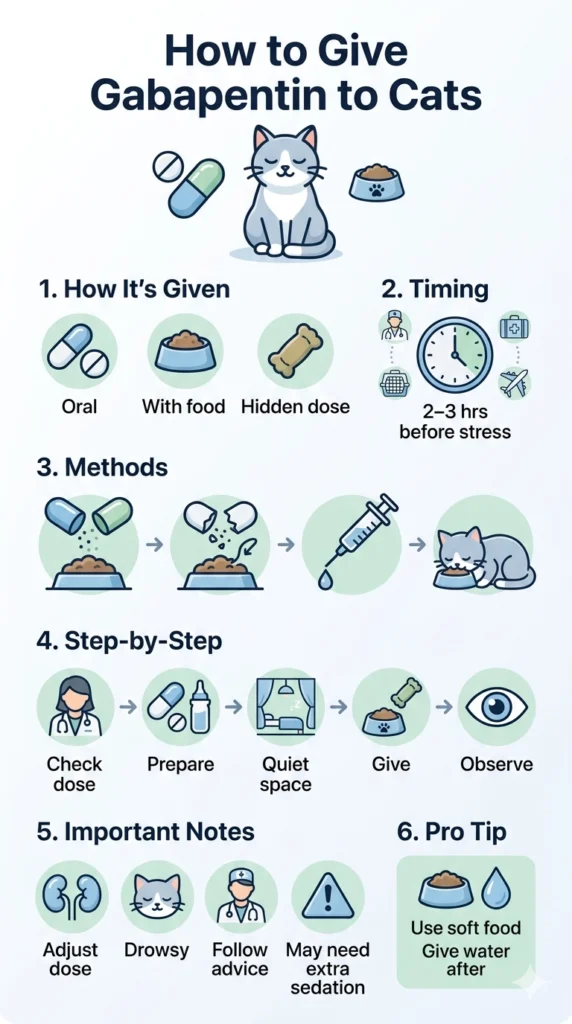
Gabapentin for cats is usually given orally, either on its own or mixed with food. Many cats accept it more easily when it is hidden in a small amount of soft food or a treat. If a cat refuses to take it, the capsule can be opened and the powder may be sprinkled over food, or the tablet may be crushed as advised by a veterinarian.
In some cases, gabapentin is recommended 2–3 hours before a vet visit or other stressful situation to help reduce anxiety and make the experience easier for the cat. The timing and dosage depend on the condition being treated and the cat’s age, weight, and kidney function, since the medication is eliminated through the kidneys. In cats with kidney or liver disease, the effects may last longer than usual.
For anxious or aggressive cats, veterinarians often suggest scheduling appointments earlier in the day to allow enough time for the medication to take effect. However, in some situations, gabapentin alone may not provide enough calming effect, and additional sedation may be required at the clinic to safely complete the examination or treatment.
Simple Home Administration Steps
- Consult your veterinarian for the correct dose and safety
- Choose the form: capsule or liquid (oral solution)
- Prepare the dose properly (capsule or measured syringe)
- Give it in a calm, quiet environment
- Administer orally or mix with soft food/treat
- Observe your cat after giving the medication
- Store the medicine safely
- Follow up with your veterinarian if needed
Giving gabapentin in soft food or treats is often preferred because it helps prevent the capsule from getting stuck in the mouth or throat. If given directly, a small amount of water can be offered afterward to help swallowing.
Types of Gabapentin
There are four main types of gabapentin that are commonly available in human medicine, and these may also be referenced when understanding how the drug works in veterinary use.
1. Neurontin
Neurontin (gabapentin) is commonly used to help relieve post-herpetic nerve pain (shingles-related pain). It is also prescribed as an additional treatment for partial-onset seizures in people aged three years and older, usually alongside other anti-seizure medications.
2. Gralise
Gralise (gabapentin) is a formulation specifically prescribed for post-herpetic nerve pain that develops after shingles. It is not intended for use in other medical conditions.
3. Horizant
Horizant (gabapentin enacarbil) is an extended-release form of gabapentin. It is used to treat shingles-related pain and restless legs syndrome.
4. Generic Gabapentin
Generic gabapentin is a widely used version of the medication that may be prescribed for post-herpetic neuralgia and as an adjunct treatment for partial-onset seizures in individuals aged three years and older.
These different forms vary mainly in their release type and approved human uses, but all belong to the same class of medication that affects nerve activity.
Gabapentin Benefits For Cats
Gabapentin for cats provides several important benefits in managing common feline health and behavior issues. It is widely used in veterinary medicine because it supports both physical comfort and emotional well-being in cats.
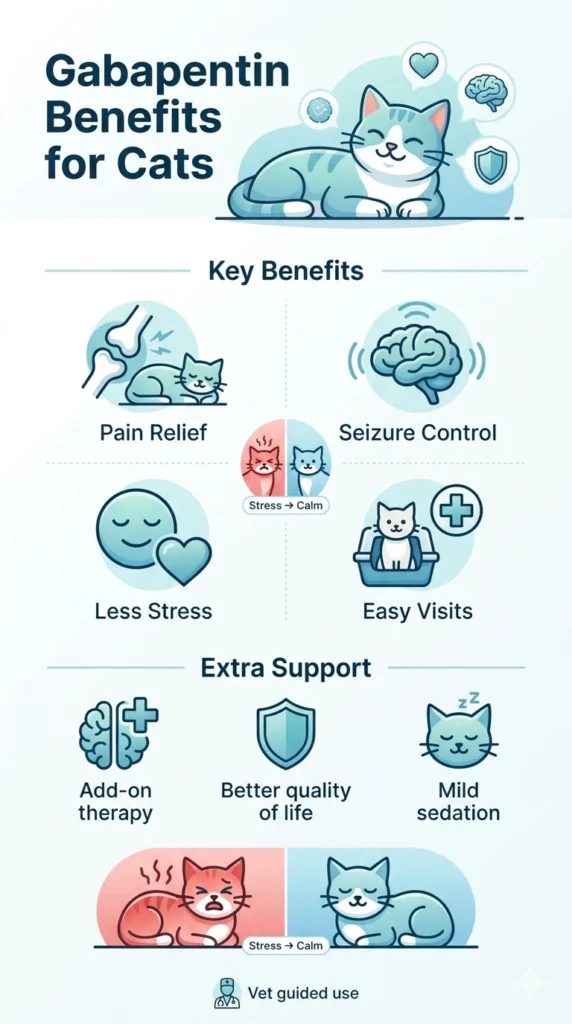
Key Benefits of Gabapentin
- It helps manage seizures, mild to chronic pain, and anxiety in cats, improving overall comfort and quality of life.
- It can be used as an adjunct therapy for idiopathic refractory epilepsy, supporting cats that need additional seizure control alongside other medications.
- Gabapentin works as an anti-anxiety and mild sedative, helping reduce stress and calm cats during difficult situations.
- It significantly helps reduce travel stress and vet visit anxiety, making transportation and clinical examinations easier and less distressing for cats.
Gabapentin Side Effects in Cats
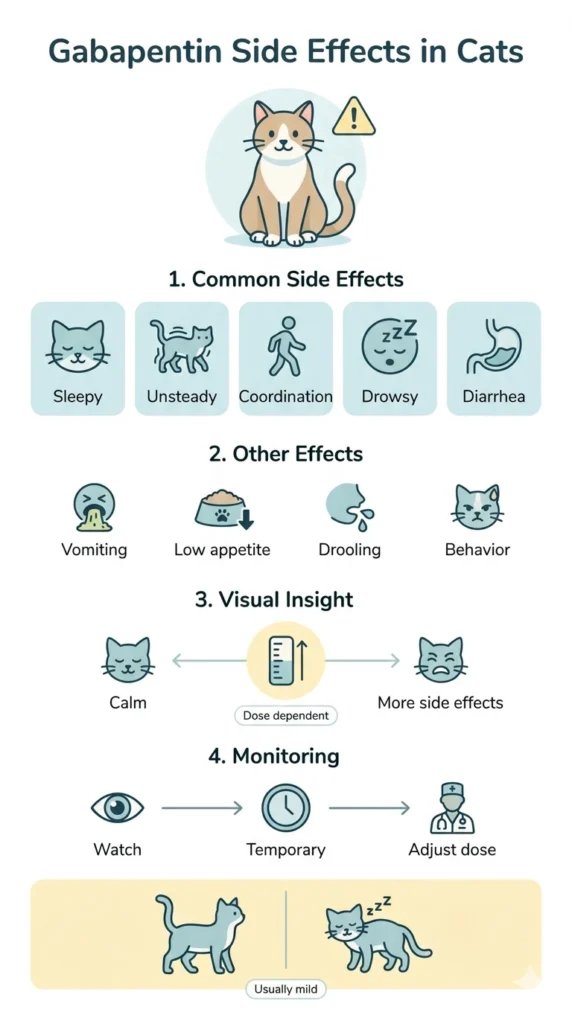
While gabapentin for cats is generally well tolerated and considered safe when used correctly, it can still cause some side effects. These effects are usually dose-dependent, meaning higher doses may increase the chances or severity of symptoms.
Most cats handle the medication well, but owners should still be aware of possible reactions and monitor their cat closely after administration.
Common Side Effects of Gabapentin in Cats
The most frequently reported side effects include:
- Lethargy / sleepiness – Cats may become unusually tired, sleep more than normal, or show low energy and reduced activity
- Ataxia (wobbliness) – Loss of balance and coordination, making walking unsteady or shaky
- Incoordination / difficulty walking – Trouble moving normally or controlling body movements
- Excessive sleepiness (sedation) – Increased drowsiness due to the calming effect of the drug
- Occasional diarrhea – Some cats may develop mild digestive upset
These effects are often expected when gabapentin is used for sedation or anxiety relief, but they may be concerning if the medication is being used for long-term pain or seizure control.
Other Possible Side Effects
In some cats, additional reactions may include:
- Vomiting
- Decreased appetite
- Excessive drooling (rare)
- Behavioral changes such as unusual meowing or mild aggression
These side effects are less common but may occur, especially at higher doses.
Important Notes
- Side effects are usually temporary and may improve as the cat adjusts to the medication
- Most cats tolerate gabapentin well compared to many other medications
- If side effects become severe or persistent, a veterinarian may adjust the gabapentin dosage for cats or change the treatment plan
What are the most serious risks of gabapentin for cats?
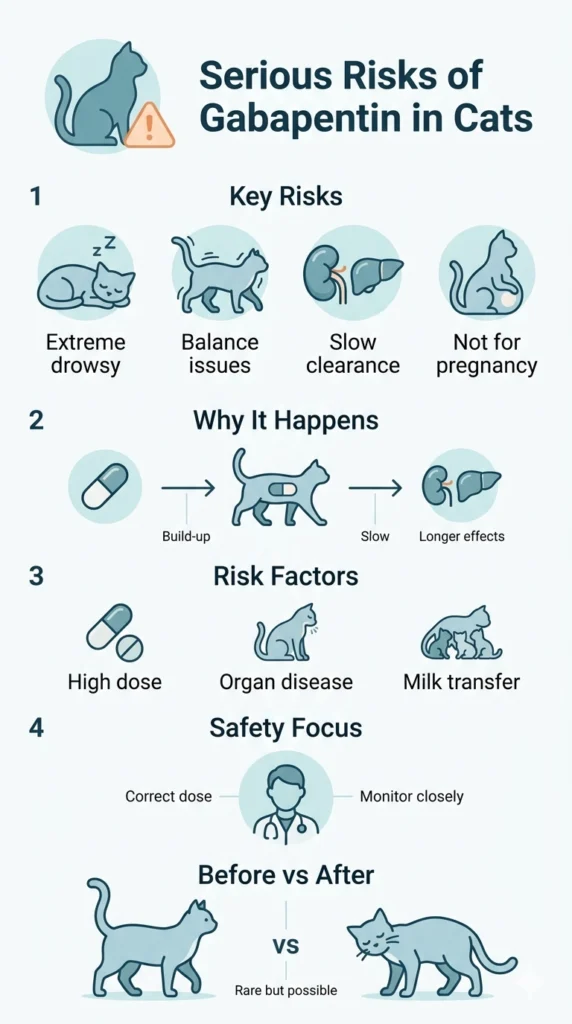
Serious risks of gabapentin for cats are uncommon, especially when the medication is used at the correct dose prescribed by a veterinarian. However, there are still a few important risks that cat owners should be aware of.
Higher doses of gabapentin can sometimes lead to more noticeable lethargy, along with stronger walking and balance problems, making cats appear very drowsy or unsteady.
Gabapentin should also be used with caution in cats that have significant liver or kidney disease, because the medication may take longer to clear from the body, causing its effects to last longer than expected.
In addition, gabapentin is generally not recommended for pregnant or nursing cats, as it can cross the placenta and may also pass into the mother’s milk, which could affect kittens.
Overall, while serious complications are rare, careful veterinary guidance is essential to ensure safe use.
Safety Precautions
When using gabapentin for cats, safety precautions are very important to ensure the medication works effectively and does not cause harm. It should always be given under veterinary guidance, especially in young kittens, senior cats, and cats with existing health problems.
Gabapentin may interact with certain medications, including hydrocodone, antacids, morphine, and other NSAIDs, so it is essential to consult your veterinarian before combining it with any other drugs.
Some of the most common side effects include sedation, occasional diarrhea, and incoordination. If these effects become severe or continue for a long time, you should contact your veterinarian immediately.
It is also important to remember that overdosing any medication can lead to serious complications, so the correct gabapentin dosage for cats must always be followed carefully as prescribed.
Which Cats Should Not Take Gabapentin?
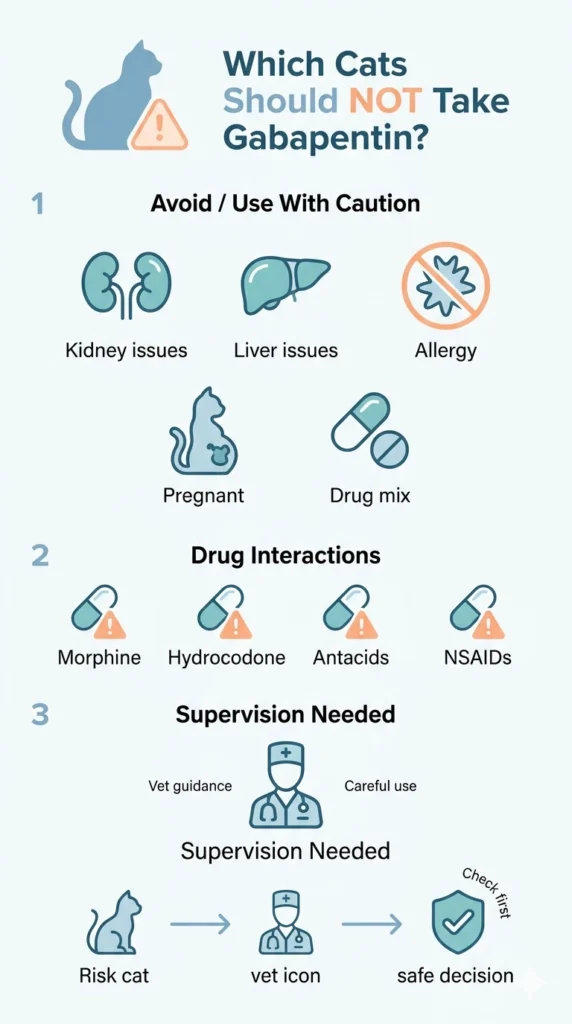
Gabapentin for cats is not suitable for every feline, and in some cases it should only be used with strict veterinary supervision. Certain health conditions and situations can make its use unsafe or risky.
Cats with liver or kidney problems should only receive gabapentin under a veterinarian’s guidance, as these conditions can affect how the medication is processed in the body. Felines with hypersensitivity or allergies to gabapentin should also avoid it unless specifically directed by a vet.
In addition, pregnant cats (queen cats) should not be given gabapentin, as it may not be safe during pregnancy.
Gabapentin may also interact with several medications, including morphine, hydrocodone, antacids, and other NSAIDs, so it should never be combined with other drugs without veterinary approval.
Overall, gabapentin should only be used when it is appropriate for the cat’s health condition and always under professional supervision.
Does Gabapentin Interact With Any Other Cat Medications?
Yes, gabapentin for cats can interact with some other medications. However, these drugs are not always completely unsafe to use together. In most cases, they can still be given, but only with careful veterinary supervision to ensure safety and proper dosing.
Certain medications may affect how gabapentin works or increase its sedative effects. These include:
- Products containing aluminum, magnesium, or calcium (such as antacids)
- If antacids are used, they should be given at least 2 hours apart from gabapentin
- Central nervous system (CNS) depressants, which may increase drowsiness
- Examples include mirtazapine (Remeron), phenobarbital, and CBD (cannabidiol)
- Opioid pain medications, which may also enhance sedation
- Examples include buprenorphine (Buprenex) and tramadol
It is very important that your veterinarian knows about all medications and supplements your cat is taking before prescribing gabapentin. This helps avoid unwanted interactions and ensures safe treatment.
Alternatives to Gabapentin for Cats
If gabapentin for cats is not suitable for your feline, there are several alternative options that may help manage pain, anxiety, or stress. These alternatives should always be used under veterinary guidance to ensure safety and proper dosing.
1. Benadryl (Diphenhydramine)
Benadryl (diphenhydramine) is one of the few over-the-counter options sometimes used for mild, short-term anxiety in cats, especially travel-related stress. It is not meant for long-term anxiety treatment.
- Commonly used for temporary anxiety situations like travel
- Dosage is typically based on body weight (around 1 mg per pound)
- Must be carefully measured to avoid dosing errors
- Always consult a veterinarian before use
2. CBD (Cannabidiol)
CBD is sometimes used in cats for relaxation, pain support, mobility issues, and anxiety relief. However, scientific research on its safety and effectiveness in cats is still limited.
- Available in oils, treats, and topical products
- Some pet owners and veterinarians report positive results for anxiety, pain, and appetite support
- Should only be introduced with veterinary guidance
- Proper dosage, product choice, and monitoring are very important
3. Tramadol
Tramadol for cats is commonly used to manage both acute and chronic pain, including conditions like:
- Arthritis (osteoarthritis)
- Post-surgical pain
- Injury or trauma-related pain
- Often given as a liquid due to its bitter taste
- Can be mixed with food or flavored preparations
- Administered orally using a syringe as directed by a vet
4. Buprenorphine
Buprenorphine is an opioid pain medication commonly used in veterinary medicine, especially in clinical settings.
- Used for moderate to severe pain control
- Also used as a pre-anesthetic medication
- Often prescribed off-label in veterinary care
- Typically given as a liquid placed inside the cheek or under the tongue for absorption
- Must always be administered exactly as instructed by a veterinarian
Important Note
Each alternative works differently, and not every option is suitable for every cat. Your veterinarian will determine the best treatment based on your cat’s condition, age, and health status.
You May Also Like To Read:
- Onsior Dosage for Cats: Chart, Safe Use, Side Effects & More
- Tramadol Dosage for Cats: Chart, Safe uses, Benefits & More
FAQs About Gabapentin Dosage for Cats
Can you just stop gabapentin in cats?
No, you should not suddenly stop gabapentin for cats, especially if it is used for epilepsy or long-term treatment. Abrupt stopping may lead to withdrawal seizures. Always taper the dose under veterinary guidance.
How long do the effects of gabapentin last in cats?
The effects typically last around 6–12 hours. In cats with kidney or liver disease, the effects may last longer.
Is gabapentin safe for cats?
Yes, when prescribed by a veterinarian. Safety depends on correct gabapentin dosage for cats, age, weight, and health condition.
Can I give human gabapentin to my cat?
No. Human formulations may contain ingredients that are unsafe for cats. Always use veterinarian-prescribed gabapentin for cats.
Does gabapentin need to be refrigerated?
Capsules can be stored at room temperature. However, liquid gabapentin for cats should usually be kept in the refrigerator after opening.
How long can a cat stay on gabapentin?
Cats can stay on gabapentin for cats long-term if needed, especially for chronic pain like arthritis. Regular veterinary monitoring is important to adjust dosage if required.
How long does it take for gabapentin to kick in?
For anxiety or pain relief, gabapentin usually starts working within 1–2 hours. For stressful events, many vets recommend giving it 90 minutes to 3 hours before the situation.
Final Thoughts
Gabapentin for cats is a widely used veterinary medication that plays an important role in managing pain, seizures, and anxiety in felines. When used correctly under veterinary supervision, it can significantly improve a cat’s comfort and quality of life, especially in situations involving chronic pain, neurological conditions, or stressful events like travel and vet visits.
However, the effectiveness and safety of gabapentin depend greatly on the correct gabapentin dosage for cats, which varies based on the cat’s weight, health condition, and treatment purpose. Because of this, it should never be given without professional guidance.
While side effects such as drowsiness, incoordination, or mild digestive upset may occur, they are usually temporary and manageable. In most cases, cats tolerate gabapentin well when it is properly prescribed and monitored.
It is also important to remember that gabapentin may not be suitable for every cat, especially those with certain health conditions or those taking interacting medications. In such cases, veterinarians may recommend suitable alternatives to gabapentin for cats to ensure safe and effective treatment.
Overall, gabapentin remains a valuable and commonly trusted option in feline medicine when used responsibly and with proper veterinary care.