Doxycycline is a common antibiotic that vets prescribe for bacterial infections in cats. It is a prescription-only drug — never give your cat human doxycycline.
Getting the doxycycline dosage for cats right is very important. Too much can be harmful. Too little won’t work. Your vet will tell you how much to give and how often.
Doxycycline comes as pills, capsules, or liquid. Pills and capsules can hurt your cat’s throat, so always give them with food or water. Liquid forms are easier for some cats.
In this article, you will learn Doxycycline Dosage for Cats, how to give it safely, side effects to watch for, and answers to common questions, Includes chart, esophagitis risk, liquid vs tablets, side effects, and FAQs.
Disclaimer: This content is for informational purposes only and should not replace veterinary advice. Always consult your veterinarian before giving Doxycycline or adjusting your cat’s dosage.
Key Takeaways
- Doxycycline (Vibramycin) is a broad-spectrum antibiotic used to treat bacterial infections in cats.
- It is a prescription-only drug — never give your cat human doxycycline.
- The general dosage is about 10 mg per kg of body weight once daily, but always follow your vet’s instructions.
- Dosage varies by condition: feline chlamydiosis requires twice-daily doses for 3 weeks; bartonellosis requires 5-10 mg per kg daily for up to 1 month.
- Doxycycline is well absorbed when taken orally, and kibble in the stomach has no impact on absorption.
- The liquid form is generally preferred. Tablets and capsules carry a high risk of esophagitis and esophageal stricture in cats.
- If using tablets, always follow with at least 5-6 mL of water to ensure the pill reaches the stomach.
- Always give doxycycline with food to reduce digestive upset.
- Most common side effects: decreased appetite, nausea, vomiting, diarrhea, and lethargy.
- Doxycycline can permanently discolor developing teeth in pregnant cats (last 2-3 weeks of pregnancy) and young kittens.
- It may affect bone growth, but this is reversible when treatment stops.
- Doxycycline is the safest tetracycline for cats with kidney disease, but use cautiously in cats with liver disease.
- Never self-medicate. Using the wrong antibiotic causes side effects, doesn’t work, and creates bacterial resistance.
- Always complete the full course of antibiotics — do not stop early even if your cat looks better.
- If you miss a dose, give the next dose when due. Never give two doses at once.
- Improvements should be seen within 2-3 days, but full resolution takes longer.
- Alternatives include amoxicillin, clindamycin, enrofloxacin, and orbifloxacin — all require a vet prescription.
- For chlamydophila felis infections, doxycycline is the drug of choice. Vaccination (Nobivac) can help prevent it.
What is Doxycycline?
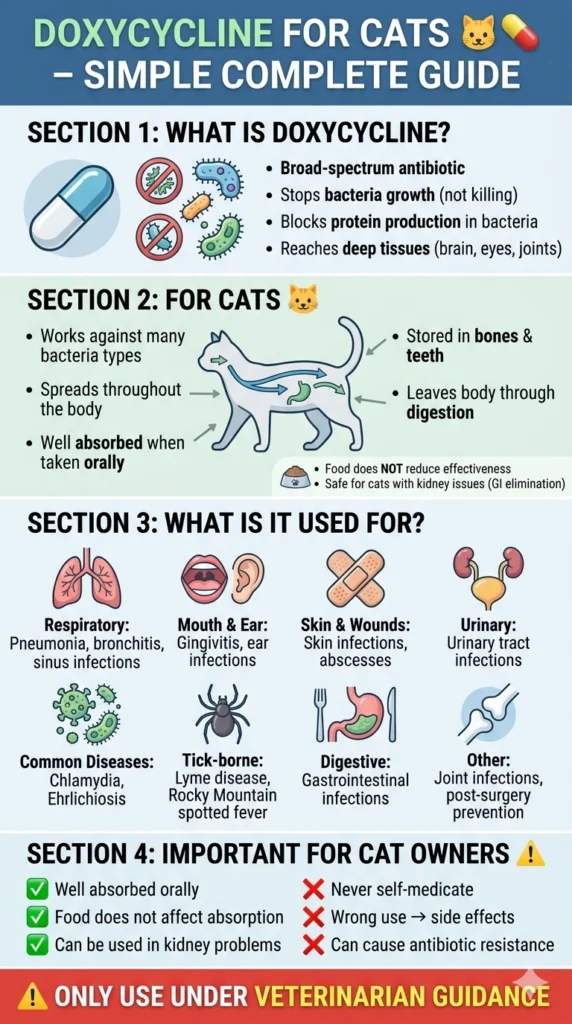
Doxycycline is a semi-synthetic tetracycline antibiotic produced from oxytetracycline. It can be administered intravenously or orally, depending on the animal. Tetracycline antibiotics have a broad spectrum and are bacteriostatic.
Their mode of action involves preventing protein synthesis and changing how permeable the cytoplasmic membrane is in the sensitive organism. Doxycycline is more lipid-soluble compared to other tetracycline antibiotics, so it may be more effective in hard-to-reach places including synovial fluid, the prostate, the nervous system, and the eyes.
What is doxycycline for cats?
Doxycycline for cats comes in salt forms: doxycycline monohydrate or hyclate. It is a broad-spectrum antibiotic that acts against gram-positive and gram-negative bacteria. It belongs to the second generation of tetracyclines and is a derivative of oxytetracycline.
The effect of doxycycline for cats is bacteriostatic — it does not kill bacteria but prevents reproduction. After oral administration, it is distributed throughout the body and deposited in active bone tissue and teeth. It is mainly eliminated through bowel movements.
What is Doxycycline Used For?
Doxycycline is used to treat bacterial infections in cats. It acts as an antibiotic for infections of the mouth, urinary system, and respiratory tract — including periodontal disease and typical feline colds.
It is also used for tick-borne infections like Lyme disease, and can be used with other drugs for autoimmune illnesses.
Doxycycline treats these conditions in cats:
| Category | Specific Conditions |
|---|---|
| Common infections | Chlamydia, Lyme disease, Ehrlichiosis, Rocky Mountain spotted fever |
| Respiratory | Pneumonia, Bronchopneumonia, Pharyngitis, Tracheitis, Bronchitis, Sinusitis |
| Ear & mouth | Otitis, Gingivitis |
| Skin & wounds | Skin infections, Abscesses, Infected wounds, Footpad dermatitis |
| Urinary | Urinary tract infections, Genito-urinary infections |
| Stomach | Gastrointestinal infections |
| Other | Bartonellosis, Leptospirosis, Borreliosis, Joint infections, Postoperative prevention |
Important for cat owners to know:
- Doxycycline is well absorbed when taken orally
- Kibble in the stomach has no impact on absorption
- It may be given to cats with kidney problems (removed through GI system)
- Never self-medicate — only a vet should prescribe doxycycline
- Using the wrong antibiotic causes side effects, doesn’t work, and creates resistance
Benefits of Doxycycline to Cats
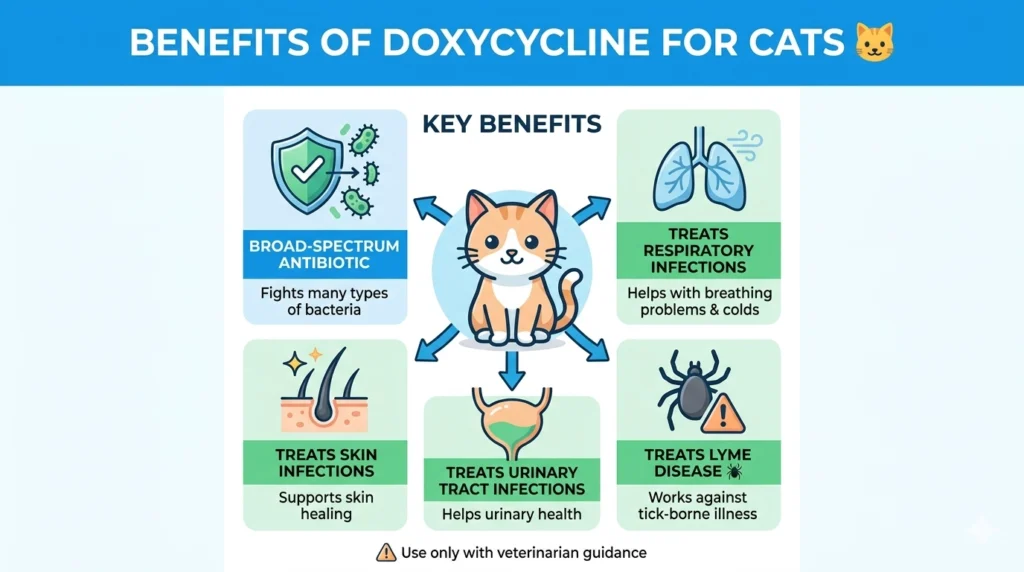
Doxycycline is a broad-spectrum antibiotic, which means it can be used to treat a variety of cat infections.
It is often used to treat:
- Respiratory infections
- Skin infections
- Urinary tract infections
It can also be used to treat certain types of Lyme disease.
In some cases, doxycycline may also be used as a preventative measure to protect kitties from infections after they have been exposed to potentially contaminated areas.
Doxycycline Dosage For Cats
The weight-based doxycycline dose for cats means that two cats living in the same home may require varying doses. If one cat weighs more than another, their doses will be different. Always abide by the veterinarian’s advice on dosage and usage.
Doxycycline is an antibiotic, so you must give it to your cat for the full recommended course of treatment once you begin. If you don’t, your cat can develop antibiotic resistance and remain sick.
General Dosage Guideline
The general doxycycline dosage for cats is about 10 mg per kg of body weight once a day and is best taken with food.
Dosage Variations by Condition
| Condition | Dosage | Duration |
|---|---|---|
| Feline chlamydiosis | Divided into two doses each day | 3 weeks |
| Bartonellosis | 5 to 10 mg per kg of weight daily | Up to 1 month |
Because the use of doxycycline is off-label when treating infections in pets, there is no labeled dosage. Some veterinarians may differ on prescribing once a day, twice a day, or for how long. Always follow your veterinarian’s instructions.
Liquid vs Pill Form
The liquid form of doxycycline should generally be administered to cats when available.
If the vet recommends a pill or capsule, give 5mL (1 teaspoon) of water after every dose.
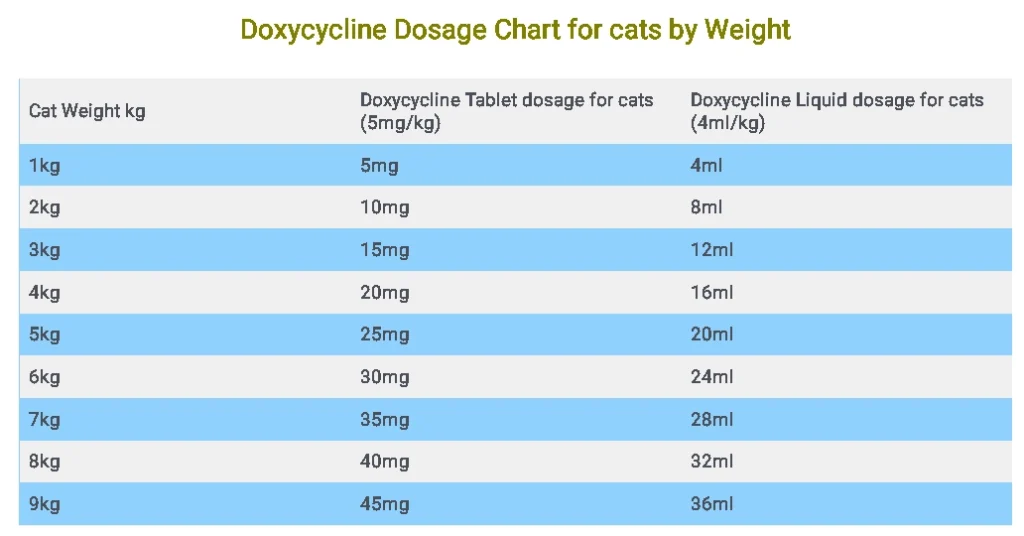
Doxycycline Dosage Chart for cats by Weight
| Cat Weight kg | Doxycycline Tablet dosage for cats (5mg/kg) | Doxycycline Liquid dosage for cats (4ml/kg) |
| 1kg | 5mg | 4ml |
| 2kg | 10mg | 8ml |
| 3kg | 15mg | 12ml |
| 4kg | 20mg | 16ml |
| 5kg | 25mg | 20ml |
| 6kg | 30mg | 24ml |
| 7kg | 35mg | 28ml |
| 8kg | 40mg | 32ml |
| 9kg | 45mg | 36ml |
Important Safety Note for Cats
There is a high risk for cats developing:
- Irritation and ulceration of the esophagus (esophagitis)
- Narrowing/tightening of the esophagus (esophageal stricture)
For this reason, many veterinarians will prefer to have doxycycline compounded into a flavored liquid preparation for their feline patients.
If tablets must be used:
- Direct administration should be followed by at least 6ml (roughly a teaspoon) of water to ensure the tablet reaches the stomach
- Doxycycline should be given with food to offset digestive upset
Administering a pill to a cat and then syringing water can be difficult. A liquid form from a compounding pharmacy is easier and more successful to use.
Missed Dose Instructions
If you forget to give your cat a dose, resume taking the medication when it is time for the next dose. Contact the vet if you skip more than one dose. Never give your cat multiple doses at one time.
How to Give Doxycycline to Cats
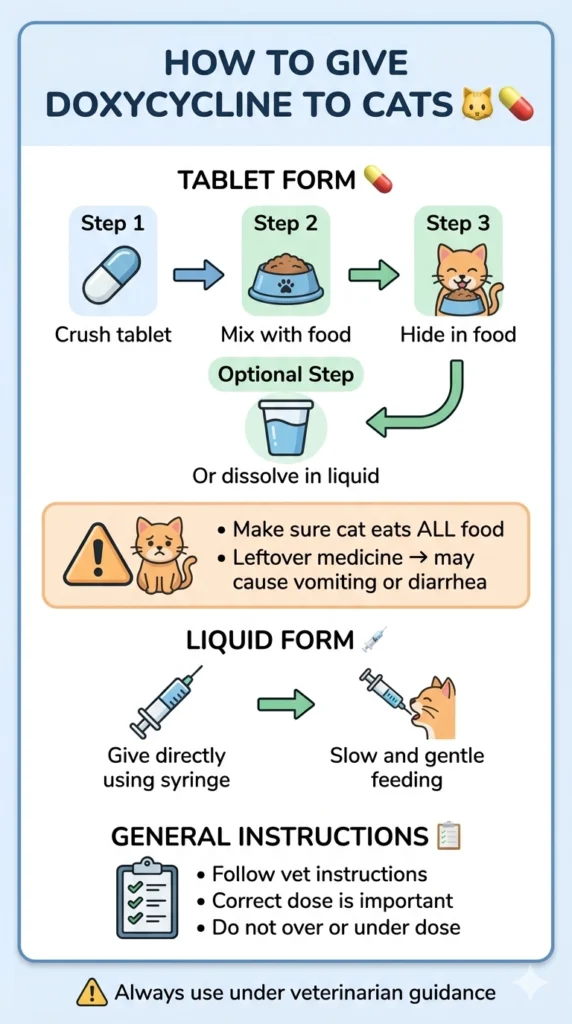
Doxycycline can be given to cats in either tablet or liquid form.
Tablet Form
If you are using the tablet form, you will need to crush the tablet and mix it with food.
The easiest way to give a cat doxycycline is to hide the tablet in their food.
If the vet prescribes tablets and it is not easy for the cat to swallow them, you can crush them and dissolve them in liquids so that they are better accepted.
Important Warning for Tablet Form
It is important to make sure that your cat eats all of the food, as leaving any doxycycline behind could cause them to vomit or have diarrhea.
Liquid Form
If you are using the liquid form, you can simply give it to your cat directly from the syringe.
General Instructions
It is important to follow the instructions on the medication label carefully, as giving too much or too little could have negative consequences.
Side Effects of Doxycycline in Cats
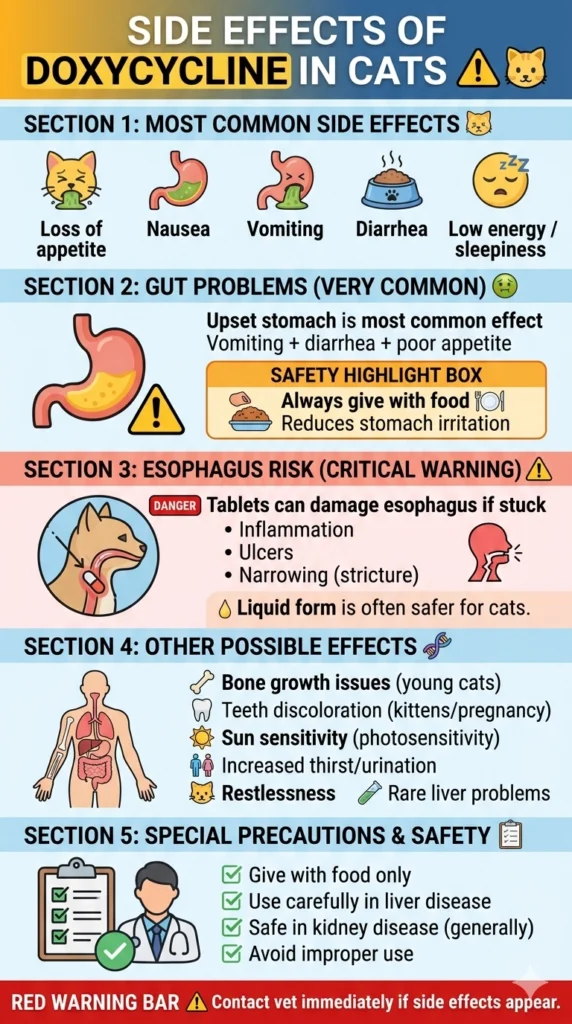
Most Common Side Effects
Cats often handle doxycycline nicely. The most frequent adverse reactions are:
- Decrease in appetite
- Nausea
- Vomiting
- Diarrhea
- Decrease in energy (sleeping more)
Gastrointestinal Upset
The main side effect of doxycycline in cats, as with many antibiotics, is gastrointestinal upset, including vomiting, regurgitation, diarrhea, and decrease in appetite.
Doxycycline should always be given with food, as this can help reduce the chance of digestive upset.
Esophagus Problems (Very Important for Cats)
In cats, administration of plain doxycycline tablets on their own carries a very high risk for:
- Esophagitis (inflammation of the esophagus)
- Ulcerations
- Esophageal stricture (narrowing/tightening of the esophagus)
A stricture (esophageal scarring or constriction) can occur if the pill or capsule becomes stuck in the esophagus. This is one of the reasons administration with food is recommended.
The risk for cats is considered so high that many veterinarians will avoid using tablets in cats and opt for a compounded liquid form.
Bone and Teeth Effects
Doxycycline and tetracyclines in general can affect bone development and growth. This is a reversible situation when treatment is stopped.
It also permanently colors developing teeth when administered to:
- Pregnant cats during the last 2-3 weeks prior to delivery
- Kittens in their first weeks of life
This effect is not as pronounced in doxycycline as in other tetracyclines.
Doxycycline in high doses may prevent cats from growing long bones like the femur and humerus.
Doxycycline is the tetracycline antibiotic with the lowest risk of contributing to darker pigmentation of growing teeth.
Photosensitivity (Sun Sensitivity)
Photosensitivity reactions (abnormal reactions of the skin to sun exposure) can also be observed as an adverse effect. They are more common in kittens than in adult cats, and special care is needed with hairless cat breeds.
Other Side Effects to Watch For
Other potential side effects include:
- Increased thirst and urination
- Restlessness
- Liver failure (if noticed, contact vet right away)
Special Precautions
It is recommended to administer doxycycline carefully to cats with swallowing or vomiting problems.
Unlike other tetracycline antibiotics, doxycycline can be used in pets with kidney disease. However, it should be used cautiously in cats with liver disease or elevated liver values on lab work.
When to Contact Your Vet
If you notice any side effects in your cat, it is important to speak to your veterinarian right away.
Alternatives to Doxycycline
Other Antibiotics
Instead of doxycycline, alternative broad-spectrum antibiotics can be utilized. These may include additional tetracyclines and the following:
- Amoxicillin
- Clindamycin
- Enrofloxacin
- Orbifloxacin
For cat use, each of these antibiotics needs a prescription from a veterinarian. They are the most qualified person to make an accurate diagnosis and recommend treatments for any illness.
For Chlamydophila Felis Infections
For chlamydophila felis infections (which result in eye-watering, swelling, partial closure, and finally producing colored discharge or muck that resembles pus), doxycycline is the drug of choice.
One way to manage this condition is to avoid it with a vaccination by the name Nobivac.
Natural Alternatives
There aren’t many natural alternatives to antibiotics. Nevertheless, there are natural remedies that can reduce uncomfortable symptoms, based on the kind of infection.
These are meant only to alleviate discomfort and distress as a component of a professionally-guided integrative treatment plan. They should not be used in place of receiving veterinary treatment or antibiotics.
You May Also Like To Read:
- L-lysine Dosage for Cats: Safe Uses, Benefits, Risks & More
- Albuterol Sulfate Dosage for Cats: Uses Guide, Safety & More
FAQs About Doxycycline Dosage for Cats
How long does it take doxycycline to work in cats?
With most antibiotics treating susceptible organisms, improvements should be seen within 2-3 days, although the full resolution of signs often takes longer. This is why it is very important to finish out all of an antibiotic prescribed by your veterinarian. Do not stop using doxycycline or any other antibiotic based on your cat looking or feeling better.
Is doxycycline toxic to cats?
No, doxycycline is not toxic to cats. However, it is important to give your cat the correct dosage of doxycycline, as giving too much or too little can have negative consequences. If you are considering using doxycycline to treat your cat’s illness, speak to your veterinarian about the correct dosage for your cat.
Can you crush doxycycline for cats?
Yes, you can crush doxycycline tablets and mix them with food for your cat. It is important to make sure that your kitty eats all of the food. If you are using the liquid form of doxycycline, you can simply give it to your cat directly from the syringe. It is important to follow the instructions on the medication label carefully, as giving too much or too little could have negative consequences.
How long will doxycycline liquid suspension work?
The liquid suspension of doxycycline will work for 2 weeks if it is kept refrigerated. Once mixed, the suspension should be thrown away after 2-3 weeks even if it is not all used.
Final Thoughts
Doxycycline is a broad-spectrum antibiotic commonly used to treat bacterial infections in cats, including respiratory infections, skin infections, urinary tract infections, and tick-borne diseases like Lyme disease. It is effective against conditions such as chlamydia, bartonellosis, and mycoplasma.
Getting the doxycycline dosage for cats right is essential. The general guideline is about 10 mg per kg of body weight once daily, but always follow your veterinarian’s instructions. Dosage and duration vary depending on the infection — for example, feline chlamydiosis may require twice-daily doses for three weeks, while bartonellosis can need daily doses for up to a month.
Always give doxycycline with food to reduce digestive upset. Tablets and capsules carry a high risk of esophagitis and esophageal stricture in cats, which is why many vets prefer a compounded liquid form. If you use tablets, always follow with at least 5-6 mL of water to ensure the pill reaches the stomach.
Side effects are usually mild — nausea, vomiting, diarrhea, and decreased appetite. However, doxycycline can permanently discolor developing teeth in pregnant cats (last 2-3 weeks of pregnancy) and young kittens. It may also affect bone growth, though this is reversible.
Never self-medicate your cat. Doxycycline is a prescription-only drug. Using the wrong antibiotic can cause side effects, fail to treat the infection, and create bacterial resistance.
If you miss a dose, give the next dose when due — never give two doses at once. Contact your vet if you miss more than one dose.
For most infections, you should see improvement within 2-3 days, but always complete the full course of antibiotics even if your cat looks better.
Alternatives like amoxicillin, clindamycin, enrofloxacin, and orbifloxacin are available, but your vet will choose the right antibiotic based on the specific infection.
Always consult your veterinarian for an accurate diagnosis and treatment plan.