Understanding the correct dimenhydrinate dosage for cats is important when managing nausea, vomiting, or motion sickness in felines. Dimenhydrinate (commonly known as Dramamine®) is an antihistamine that helps reduce symptoms caused by disturbances in the inner ear’s vestibular system, which controls balance and motion. When this system is overstimulated—such as during travel—cats may experience drooling, dizziness, or vomiting.
In veterinary practice, dimenhydrinate is sometimes used to help control motion sickness and nausea in cats. However, its use is considered off-label (extra-label), meaning it is not specifically approved for cats but may be recommended by veterinarians based on clinical judgment.
Although dimenhydrinate is available over the counter, it should only be given under veterinary guidance. The correct dosage for cats depends on factors like body weight, health condition, and the reason for use, so professional advice is essential to ensure safety and effectiveness.
Learn the safe Dimenhydrinate dosage for cats, including proper dosing, administration tips, side effects, precautions, and how to prevent motion sickness. Expert guidance for cat owners.
Disclaimer: This content is for informational purposes only and should not replace veterinary advice. Always consult your veterinarian before giving Dimenhydrinate or adjusting your cat’s dosage.


Key Takeaways: Dimenhydrinate Dosage for Cats
- Dimenhydrinate is an antihistamine used to prevent nausea, vomiting, and motion sickness in cats. Its use in cats is off-label, so veterinary guidance is essential.
- Typical dose for cats: 12–12.5 mg per cat, up to three times daily. Dose may vary based on weight, health, and condition.
- Dosage by weight: Small cats (up to 5 lbs) may need 6–12 mg; average cats (5–10 lbs) 12–12.5 mg; larger cats may require 12–25 mg with veterinarian supervision.
- Forms of administration: Oral tablets, chewables, compounded liquid, or injectable in veterinary clinics. Can be given with or without food.
- Timing for motion sickness: Give 30–60 minutes before travel for best results.
- Safety precautions: Avoid use in cats with allergies, glaucoma, seizure disorders, urinary/GI blockages, heart disease, high blood pressure, or overactive thyroid. Older and pregnant/nursing cats are generally safe with vet approval.
- Common side effects: Sedation, sleepiness, dry mouth, vomiting, diarrhea, constipation, decreased appetite. Rarely, some cats may show excitation or aggression.
What Is Dimenhydrinate?
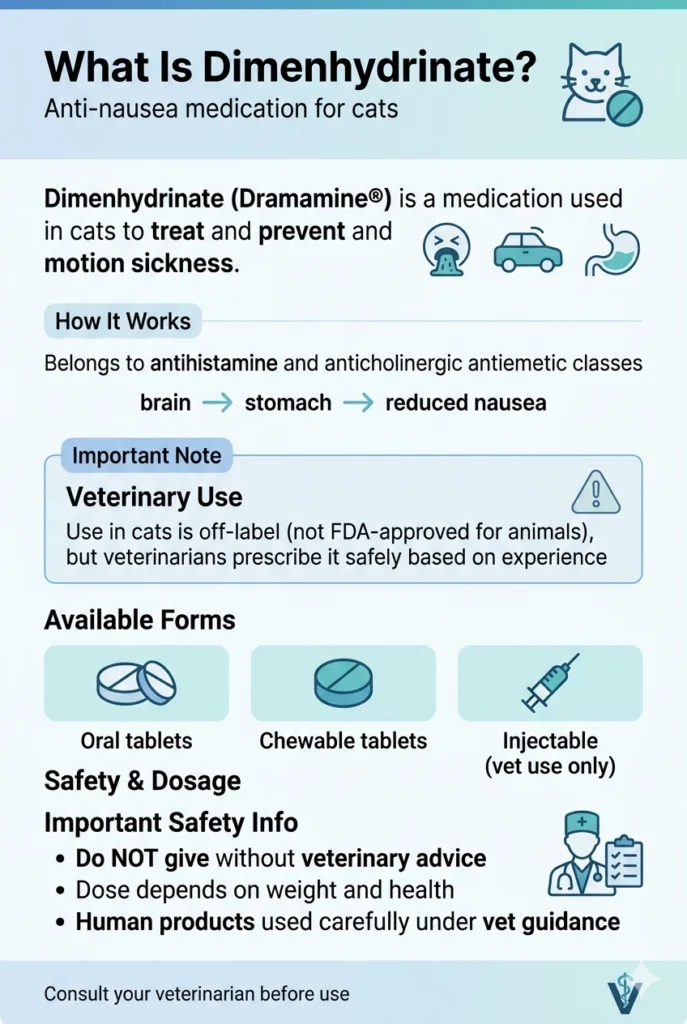
Dimenhydrinate (brand name Dramamine®) is a medication used in cats to treat and prevent vomiting and motion sickness. It belongs to the antihistamine and anticholinergic antiemetic classes, which help reduce nausea and control vomiting.
dimenhydrinate use in cats is considered off-label, meaning it is not officially approved by the FDA for animals, but veterinarians may prescribe it safely based on clinical experience.
There is no specific cat formulation of dimenhydrinate. Human versions are used under veterinary guidance and include:


- Oral tablets
- Chewable tablets
- Injectable form (used only in veterinary hospitals)
While tablets and chewables are available over the counter, they should never be given without veterinary supervision. The correct dosage depends on the cat’s weight, health condition, and reason for use. For special dosing needs, a veterinary compounding pharmacy can provide safer alternatives.
What is the Usage of Dimenhydrinate?
Dimenhydrinate is administered most often in cats to prevent and treat motion sickness, and to control nausea, including nausea of a vestibular (inner ear) disorder. It aids in soothing the balance system of the brain, which is over stimulated in the course of travelling or sickness.
Dimenhydrinate is typically given orally to cats in a tablet or chewable tablet form up to three times daily (after every eight hours). It may also be administered in injectable form within the veterinary clinics depending on the severity of the condition. The injection can be given under the skin (subcutaneously), in a muscle (intramuscular) or in a vein (intravenous).
The medication is administerable with or without food, but in case it results in an upset stomach, it is possible to administer it with a minor portion of food or a snack. To prevent motion sickness, dimenhydrinate is suggested to be taken 30-60 min before travel.
Never ignore instructions of your veterinarian. Ensure that your vet is aware of any other medication, supplements, or herbal products that your cat is taking, and consult them before discontinuing or changing any medication.
What Are the Benefits of Dimenhydrinate?
Dimenhydrinate offers several benefits for cats, primarily in treating and preventing vomiting and nausea. It is especially effective for motion sickness during travel, helping cats feel more comfortable and reducing drooling, vomiting, or dizziness.
This medication is available in tablet, chewable tablet, and injectable forms. In many cases, a cat may receive an initial injectable dose at a veterinary clinic for rapid relief, and then continue treatment at home using tablets or chewables as needed.
Another advantage is that dimenhydrinate is generally well-tolerated by cats, making it a reliable option for managing nausea and motion-related discomfort.
Dimenhydrinate Dosage for Cats
Dimenhydrinate should never be given to cats without consulting a veterinarian. The correct dose is crucial for safety and effectiveness.
For cats, the typical dosage is 12.5 mg per cat, given up to three times daily (every 8 hours). The exact dose and frequency may vary depending on your cat’s weight, health condition, and the reason for treatment.
The duration of treatment depends on how your cat responds to the medication and whether any side effects develop. It is essential to complete the entire course of treatment as prescribed by your veterinarian—even if your cat appears better—to prevent nausea or vomiting from returning.
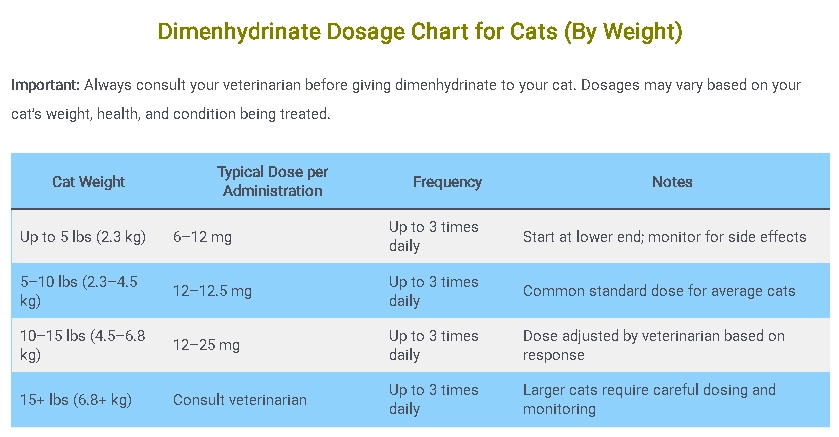
Dimenhydrinate Dosage Chart for Cats (By Weight)
Important: Always consult your veterinarian before giving dimenhydrinate to your cat. Dosages may vary based on your cat’s weight, health, and condition being treated.
| Cat Weight | Typical Dose per Administration | Frequency | Notes |
|---|---|---|---|
| Up to 5 lbs (2.3 kg) | 6–12 mg | Up to 3 times daily | Start at lower end; monitor for side effects |
| 5–10 lbs (2.3–4.5 kg) | 12–12.5 mg | Up to 3 times daily | Common standard dose for average cats |
| 10–15 lbs (4.5–6.8 kg) | 12–25 mg | Up to 3 times daily | Dose adjusted by veterinarian based on response |
| 15+ lbs (6.8+ kg) | Consult veterinarian | Up to 3 times daily | Larger cats require careful dosing and monitoring |
Administration Tips:
- Can be given orally (tablet, chewable, or liquid) or injectable in veterinary clinics.
- Can be given with or without food; use a small meal if vomiting occurs.
- For motion sickness, give 30–60 minutes before travel.
- Only use products containing dimenhydrinate as the single active ingredient.
Duration:
- Continue the full course prescribed by your veterinarian, even if your cat seems better.
- Treatment duration depends on your cat’s condition, response, and any side effects.
Side Note:
- Overdosing can cause excessive sedation, vomiting, or seizures. Always follow veterinary guidance.
How to Give Dimenhydrinate to Cats
Dimenhydrinate can be administered to cats in several forms depending on the situation:
- Oral tablets or chewables: the most common form for home use.
- Compounded liquid: allows precise dosing, especially for smaller cats.
- Injectable form: used in veterinary hospitals for rapid relief.
Administration Tips
- Measure liquid forms carefully to ensure the correct dose.
- The medication can be given with or without food. If your cat vomits on an empty stomach, try giving future doses with a small amount of food.
- For motion sickness during travel, give dimenhydrinate 30–60 minutes before travel.
- Only use products that contain dimenhydrinate as the sole active ingredient—avoid combination medications.
- Always provide free access to fresh water while your cat is taking this medication.
How Quickly It Works
Dimenhydrinate typically starts working within 1–2 hours, and improvement in nausea or vomiting should follow shortly after.
Dimenhydrinate: Warnings & Side Effects
Dimenhydrinate is generally well-tolerated in cats when used under veterinary guidance, but it can cause side effects and requires precautions in certain situations.
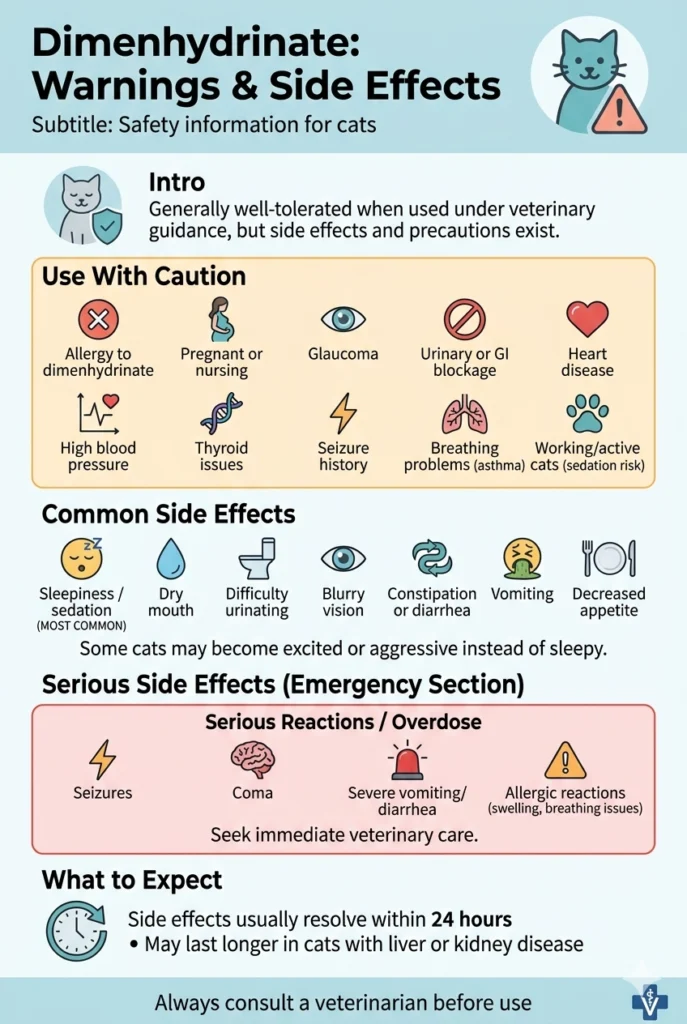
Who Should Use It With Caution
- Cats allergic to dimenhydrinate should never receive it.
- Pregnant or nursing cats: Safety has not been established; use only under veterinary supervision.
- Cats with glaucoma, enlarged prostate, urinary or gastrointestinal blockages, overactive thyroid, seizure history, heart disease, high blood pressure, or breathing problems (like asthma) should use dimenhydrinate cautiously.
- Cats that perform work or tasks may be affected by sedation, which can interfere with normal activity.
Common Side Effects
Most cats tolerate dimenhydrinate well, but side effects can occur, including:
- Sedation or sleepiness (most common)
- Dry mouth
- Difficulty urinating
- Blurry vision
- Constipation or diarrhea
- Vomiting
- Decreased appetite
Some cats may experience excitation or aggression instead of sedation.
Serious Side Effects / Overdose
Serious reactions may indicate an overdose or sensitivity and require immediate veterinary attention:
- Seizures
- Coma
- Severe vomiting or diarrhea
- Allergic reactions
Side effects are usually short-lived, often resolving within 24 hours after stopping the medication. Effects may last longer in cats with liver or kidney disease.
Monitoring & Safety Tips
- Watch for new reactions even after several doses, as sensitivities can develop over time.
- Contact your veterinarian immediately if you notice anything unusual.
- For emergencies outside regular hours, you can reach:
- ASPCA Animal Poison Control Center: 888-426-4435
- Pet Poison Helpline: 855-764-7661
(Fees may apply for emergency consultation.)
Drug Interactions
Dimenhydrinate can interact with other medications, such as heparin, tranquilizers, and sedatives. Always inform your veterinarian of any medications or supplements your cat is receiving.
Does Dimenhydrinate Interact With Other Medicines (Drug Interactions)?
Dimenhydrinate can interact with other medications, which may change how the drugs work or increase the risk of side effects in cats. It’s essential to inform your veterinarian about all medications, supplements, vitamins, and herbal products your cat is taking before starting dimenhydrinate.
Key Interactions to Watch For
- Anticholinergic Medicines
Dimenhydrinate is an anticholinergic drug, which can cause:
- Dry mouth
- Difficulty urinating
- Blurry vision
- Constipation
- Racing heart
Other medications with anticholinergic effects can increase the risk of these side effects if given together.
- Sedating Medicines
Dimenhydrinate may cause sedation or drowsiness. Combining it with other sedating drugs—like opioids or anti-anxiety medications—can lead to excessive sedation, which may be dangerous.
Important Notes
- This is not a complete list of possible drug interactions.
- Always check with your veterinarian before giving dimenhydrinate alongside any other medicine.
- Proper veterinary guidance helps ensure your cat’s treatment is both safe and effective.
When Should You NOT Give Dimenhydrinate to Cats?
Do not use dimenhydrinate in cats that:
- Are allergic to dimenhydrinate or similar antihistamines
- Are neonatal kittens
- Are undergoing antigen skin testing within two weeks
Use caution in cats with:
- Glaucoma
- Seizure disorders
- Overactive thyroid
- Heart disease or high blood pressure
- Enlarged prostate
- Gastrointestinal or urinary blockages
- Respiratory disease
It is generally safe for older cats and pregnant or nursing cats, but always confirm with your veterinarian.
Are There Any Risk Factors for Dimenhydrinate in Cats?
While dimenhydrinate is generally safe when prescribed by a veterinarian, there are specific risk factors to consider before giving it to your cat.
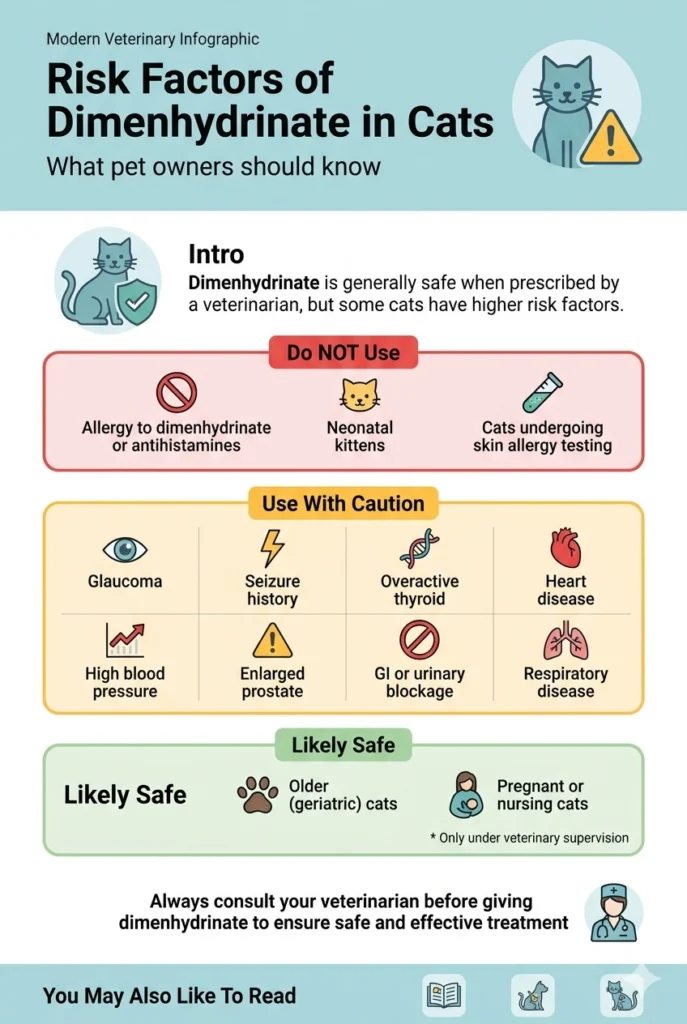
Cats That Should Not Receive Dimenhydrinate
- Cats allergic to dimenhydrinate or similar antihistamines
- Neonatal kittens
- Cats undergoing antigen skin testing within the next two weeks
Cats That Require Caution
Dimenhydrinate should be used carefully in cats with:
- Glaucoma
- Seizure history
- Overactive thyroid
- Heart disease
- High blood pressure
- Enlarged prostate
- Gastrointestinal or urinary blockages
- Respiratory disease
Likely Safe
- Geriatric cats (older cats)
- Pregnant or nursing cats
Always consult your veterinarian before giving dimenhydrinate to cats with any of these conditions to ensure safe and effective treatment.
You May Also Like To Read:
FAQs
Is It Necessary to Monitor this Medication?
No particular follow up is needed when your cat is using dimenhydrinate. Nevertheless, your doctor can check in every now and then to check the effectiveness of medication. Serious side effects should be observed in your cat when treated.
Is Dimenhydrinate Safe for Cats?
Dimenhydrinate is generally safe for cats when prescribed by a veterinarian. It helps prevent nausea, vomiting, and motion sickness. However, it should not be used in cats with allergies to antihistamines or certain high-risk conditions like glaucoma, seizure disorders, or urinary/gastrointestinal blockages. Always follow your veterinarian’s guidance to ensure safety.
What Is the Maximum Dimenhydrinate to administer to my cat?
The typical dose for cats is 12–12.5 mg per cat, given up to three times daily (every 8 hours). The exact amount may vary depending on your cat’s weight, health, and reason for use. Never adjust the dose on your own—always confirm with your veterinarian.
What about Dimenhydrinate?
Dimenhydrinate is to be stored under room temperature and kept in the dark. In case of the compounded forms, the pharmacy gives instructions on how to store the compound to ensure its safety and effectiveness.
What To Do in Case My Cat takes too much or overdoses?
In case you think that your cat was over-dosed with dimenhydrinate, call your veterinarian or emergency veterinary clinic. Timely intervention is significant to safety.
What would you do in Case You Missed a Dose of Medicine?
In case you forget to take one dose, then take immediately as you remember and resume taking the regular dosing schedule.
In case it is close to the next dose, do not take the previous dose and continue taking the regular schedule.
It is not advisable to take two doses because it may enhance the occurrence of side effects.
Due to the fact that dimenhydrinate is usually administered on demand, missed doses are not a significant issue.
In Case of Missing a Dose or Overdose?
Missed dose: administer it immediately. In case the next dose is almost due, forget the one that you had missed and start with the usual schedule. Take not more than one dose.
Overdose: Call your veterinarian or an emergency veterinary hospital. The effects of overdose can be excessive sedation, serious vomiting, or seizures.
Final Thoughts
Dimenhydrinate helps cats with nausea, vomiting, and motion sickness, but it is an off-label medication, so veterinary guidance is essential.
The usual dose for cats is 12–12.5 mg per cat, up to three times daily, but the exact amount depends on your cat’s weight and health. Always follow your veterinarian’s instructions and complete the full course.
Common side effects include sleepiness, dry mouth, vomiting, or diarrhea, while rare reactions may include excitement or aggression. Dimenhydrinate can interact with other medications, so inform your veterinarian about all drugs or supplements your cat is taking.
For motion sickness, give dimenhydrinate 30–60 minutes before travel. Always provide fresh water, and store the medication at room temperature, away from light.
Used carefully, dimenhydrinate is safe and effective for treating your cat’s nausea and motion sickness.