Cyclosporine (Atopica®) for cats is a prescription medication used by veterinarians to treat chronic skin allergies and inflammatory conditions in cats. It is most commonly used for feline allergic dermatitis, a condition that can cause intense itching, skin irritation, sores, facial and neck scratching, miliary dermatitis, eosinophilic plaques, and self-inflicted hair loss (alopecia). It is generally prescribed for cats that are at least 6 months old and weigh 3 lbs (1.4 kg) or more.
Atopica® is a brand name for cyclosporine, a type of immunosuppressant drug. It works by calming the cat’s overactive immune system, which helps reduce inflammation and allergic reactions that lead to skin problems. Because it directly affects immune function, it must always be given under veterinary supervision.
Veterinarians prescribe Atopica for cats when long-term control of allergic skin disease is needed. However, correct Cyclosporine (Atopica®) dosage for cats is very important, as the medication must be carefully adjusted based on the cat’s weight and condition. Improper use can lead to side effects or reduced effectiveness.
In this guide, you will Learn the correct Cyclosporine (Atopica®) dosage for cats, including weight-based chart, uses, side effects, and safety tips for treating feline allergic dermatitis.
Disclaimer: This content is for informational purposes only and should not replace veterinary advice. Always consult your veterinarian before giving Cyclosporine (Atopica®) or adjusting your cat’s dosage.
Key Takeaways
- Cyclosporine (Atopica®) is a prescription veterinary medication for cats used mainly to control feline allergic dermatitis and related inflammation and itching.
- It works by suppressing T-lymphocytes (immune cells) to calm an overactive immune response that causes skin disease.
- The correct Cyclosporine (Atopica®) dosage for cats depends on body weight and condition, and must always be set by a veterinarian.
- Treatment is often long-term and adjusted gradually, with possible dose reduction once symptoms improve.
- It is used not only for skin allergies but also for several immune-mediated diseases such as stomatitis, IBD, and certain autoimmune disorders.
- Common side effects include vomiting, diarrhea, decreased appetite, weight loss, and lethargy, especially during early treatment.
- Because it suppresses immunity, it may increase risk of infections and other health complications, so monitoring is important.
- Cyclosporine should not be used in cats with FeLV, FIV, cancer history, pregnancy, or very young/kittens below recommended age and weight limits.
- Safe handling is important—owners may need to use gloves and proper hygiene when administering the medication.
- When used correctly under veterinary supervision, Atopica® can significantly improve a cat’s comfort, skin health, and quality of life.
What Is Cyclosporine (Atopica®) for Cats?
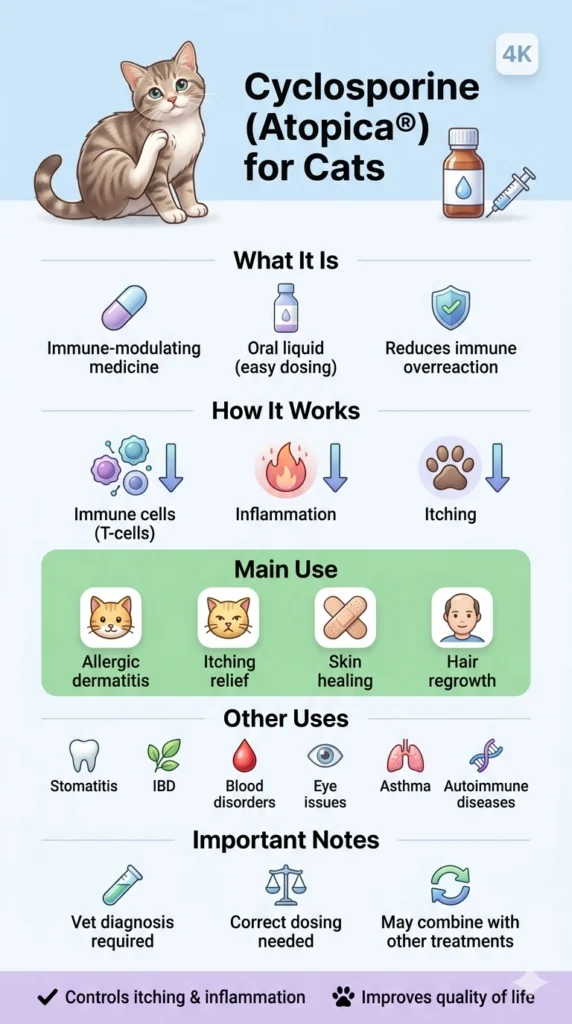
Cyclosporine (Atopica®) is an FDA-approved prescription veterinary medication used in cats to control itching and inflammation caused by allergic dermatitis. It is specifically designed for cats with skin conditions where the immune system becomes overactive and causes irritation, redness, and discomfort.
Atopica® is a liquid oral form of cyclosporine made for cats. Another FDA-approved oral solution called Modulis® for Cats is also available and was approved in 2023.
Cyclosporine is also used by veterinarians as an extra-label treatment for immune-related and inflammatory diseases in cats. These include stomatitis (gum and mouth inflammation), inflammatory bowel disease (IBD), autoimmune skin diseases like pemphigus erythematosus and pemphigus foliaceus, immune-mediated thrombocytopenia (low platelet condition), pure red cell aplasia (rare blood disorder), idiopathic pruritus (unknown itching), prevention of kidney transplant rejection, dirty face syndrome in Persian cats, feline urticaria pigmentosa, and feline hair loss (acquired alopecia).
In some cases, veterinarians may prescribe compounded cyclosporine when a cat cannot take standard formulations, needs a different strength, or has sensitivity to ingredients. These compounded medicines are prepared individually and are not FDA-approved.
Cyclosporine is also available as a human medicine under brands like Gengraf®, Neoral®, and Sandimmune®, but human versions should not be given to cats due to safety and dosage differences.
Cyclosporine works by reducing the activity of certain immune cells (T-lymphocytes), which helps decrease inflammation and itching. It also has anti-inflammatory and anti-itch (antipruritic) effects. After oral administration, it reaches peak levels in the blood within 1–2 hours and is processed in the liver.
This medicine is mainly used in cats when inflammation can affect different parts of the body, especially the skin and immune-related conditions.
Uses of Cyclosporine (Atopica®) for Cats
Cyclosporine (Atopica®) is mainly used in cats to control allergic skin disease (feline allergic dermatitis). It helps reduce itching, skin inflammation, irritation (especially around the head and neck), and symmetrical hair loss, which are common signs of chronic allergic skin problems in cats. In many cases, it significantly improves skin lesions and reduces scratching behavior.
It is also available as an easy-to-use oral liquid formulation, often provided with an oral syringe for accurate dosing. Most cats find the taste acceptable, and it can also be mixed with food to make administration easier for pet owners.
Cyclosporine is widely used in both dogs and cats as an immune system–suppressing medication for several medical conditions. In cats, it is prescribed for allergic skin diseases and also used off-label for immune-mediated and inflammatory conditions when recommended by a veterinarian.
These conditions may include hives, asthma, granulomas, stomatitis (mouth inflammation), certain eye disorders, inflammatory bowel disease (IBD), and autoimmune hemolytic anemia.
Because allergic dermatitis in cats can look similar to other problems such as parasites, infections, or food allergies, a proper veterinary diagnosis is essential before starting cyclosporine. It is also important to understand that cyclosporine is only one part of a treatment plan and may be combined with other medications to control symptoms like itching and inflammation.
Cyclosporine is also used in veterinary medicine for immune-related conditions such as immune-mediated hemolytic anemia, keratoconjunctivitis sicca (dry eye), and in some cases to help prevent rejection after organ or bone marrow transplants.
Cyclosporine (Atopica®) Dosage for Cats
Cyclosporine dosage for cats is based on the cat’s exact body weight, so accurate weighing is very important before starting treatment. The dose also depends on the condition being treated.
At the beginning of therapy, the commonly recommended starting dose is around 7 mg per kg of body weight once daily. In many cases, veterinarians may also prescribe dosing in the range of 2 to 3 mg per pound (approximately 4 to 6 mg/kg) twice daily, depending on the severity of the condition and the cat’s response.
Treatment with cyclosporine is usually long-term and gradual. Cats are typically kept on daily dosing for the initial treatment phase (often 4–6 weeks or longer) to see improvement. Once symptoms such as itching and inflammation are controlled, the veterinarian may slowly reduce the frequency of dosing. This tapering process may result in dosing every other day, or even every two to four days in well-controlled cases. However, dosage adjustments should only be made under veterinary supervision, as some cats may relapse and require restarting treatment.
Atopica® is available as an oral liquid formulation, and is usually given directly into the cat’s mouth or mixed with a small amount of food to ensure the full dose is consumed. It is important that the cat eats all the food if the medication is mixed. Giving the medicine with food or right after a meal can also help improve absorption.
Transdermal (skin-based) administration is sometimes mentioned but is generally not recommended for cats due to reduced absorption. Cyclosporine is also available in ophthalmic (eye drop) form for certain eye conditions.
For best results, the medication should be given consistently at the same time each day, following the veterinarian’s instructions. If a dose is missed, the usual recommendation is to give it when remembered unless it is close to the next scheduled dose—in that case, the missed dose should be skipped. Extra or double dosing should never be given.
Proper preparation of the liquid dose is also important. The bottle should be opened using the child-resistant cap, and the oral dosing syringe must be attached correctly to the adapter. The syringe is used to draw the exact prescribed amount based on the cat’s weight. The dose can then be given directly into the mouth or mixed with a small amount of food. The syringe should be stored properly between uses and not rinsed between doses.
Atopica® should be stored in its original container at room temperature, and once opened, it must be used within the recommended time period based on bottle size (for example, within a few months depending on packaging).
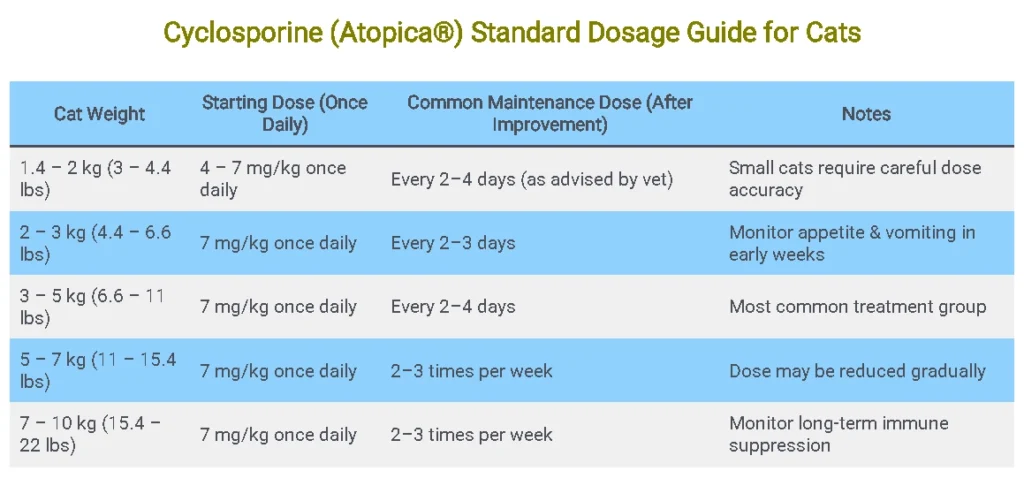
Cyclosporine (Atopica®) Standard Dosage Guide for Cats
| Cat Weight | Starting Dose (Once Daily) | Common Maintenance Dose (After Improvement) | Notes |
|---|---|---|---|
| 1.4 – 2 kg (3 – 4.4 lbs) | 4 – 7 mg/kg once daily | Every 2–4 days (as advised by vet) | Small cats require careful dose accuracy |
| 2 – 3 kg (4.4 – 6.6 lbs) | 7 mg/kg once daily | Every 2–3 days | Monitor appetite & vomiting in early weeks |
| 3 – 5 kg (6.6 – 11 lbs) | 7 mg/kg once daily | Every 2–4 days | Most common treatment group |
| 5 – 7 kg (11 – 15.4 lbs) | 7 mg/kg once daily | 2–3 times per week | Dose may be reduced gradually |
| 7 – 10 kg (15.4 – 22 lbs) | 7 mg/kg once daily | 2–3 times per week | Monitor long-term immune suppression |
Important Safety Notes
- Always use exact body weight before calculating dose
- Never adjust dose without veterinary advice
- Early side effects like vomiting or diarrhea may occur in the first weeks
- Long-term use requires monitoring for immune suppression
- Avoid use in cats with FeLV, FIV, pregnancy, or cancer history unless vet-approved
How Cyclosporine (Atopica®) Works in Cats
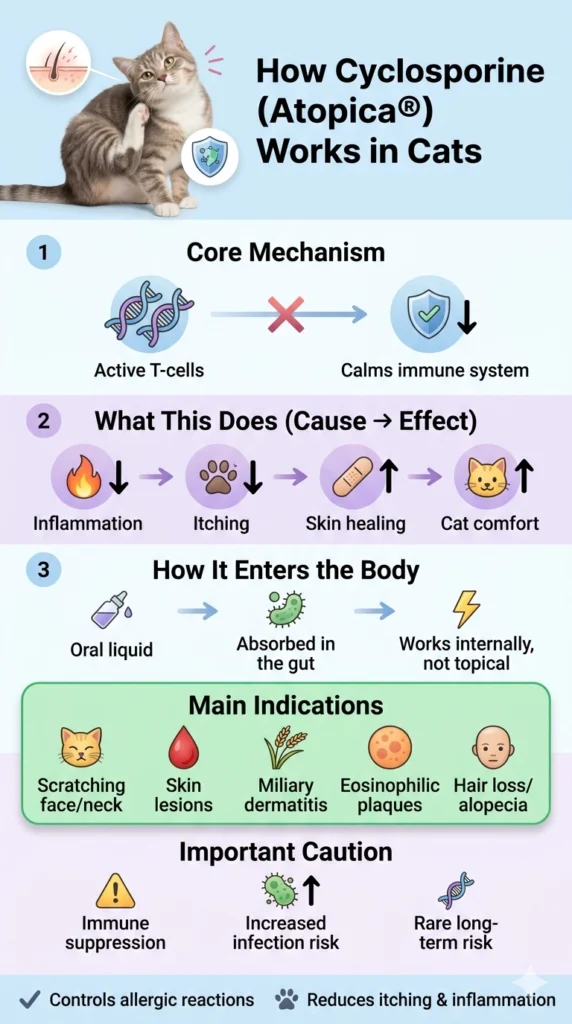
Cyclosporine (Atopica®) contains the active ingredient cyclosporine, which works by acting on the immune system of cats. It specifically blocks T-cells, a type of white blood cell that is responsible for triggering immune responses. When these T-cells are inhibited, the immune system becomes less active, helping to calm an overreactive immune response.
By reducing T-cell activity, cyclosporine helps control feline allergic dermatitis, a condition where the immune system overreacts and causes itching, skin inflammation, and irritation. This action helps stop symptoms such as scratching, lesions, and hair loss caused by excessive immune reactions.
Atopica® for Cats is an oral liquid solution that is absorbed through the intestinal tract. It is generally well tolerated by most cats and works by calming allergic skin conditions through immune system regulation rather than directly treating infection.
Cyclosporine helps reduce the ability of certain white blood cells to organize and respond to perceived triggers, which decreases itching and inflammation. However, because it suppresses immune activity, it may also increase the cat’s susceptibility to infections and, in some cases, may increase the risk of cancer.
Indications (When Atopica® Is Used in Cats)
Atopica® is indicated for the control of feline allergic dermatitis, which may present as:
- Skin scratching and excoriations (especially on the face and neck)
- Miliary dermatitis
- Eosinophilic plaques
- Self-induced hair loss (alopecia)
It is generally prescribed for cats that are at least 6 months old and weigh at least 3 lbs (1.4 kg).
Side Effects of Cyclosporine (Atopica®) in Cats
When using Cyclosporine (Atopica®) in cats, it is important to carefully balance the benefits with the possible side effects because it is a systemic immunosuppressant medication.
Digestive Side Effects
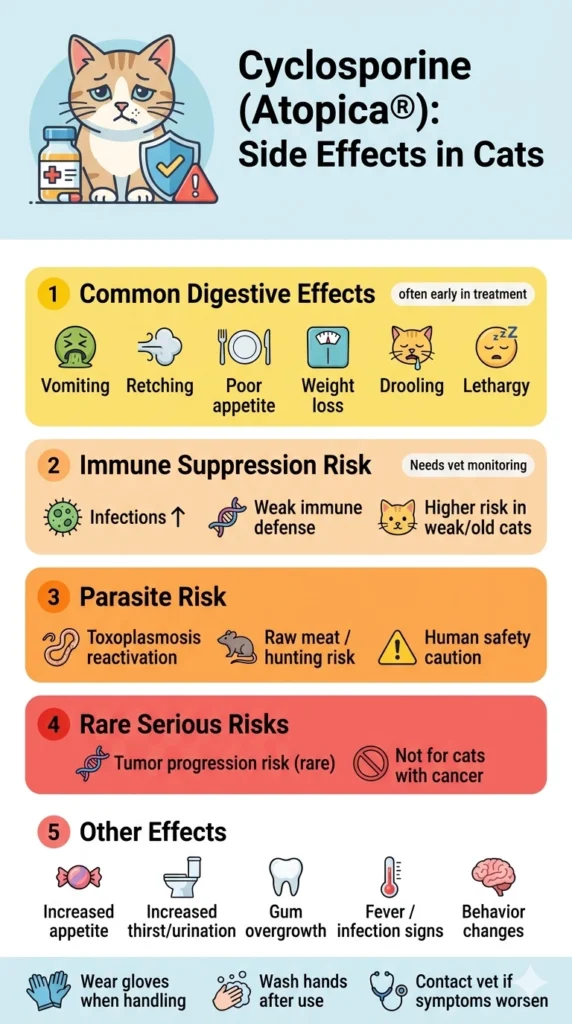
The most common side effects in cats are related to the digestive system, especially during the first month of treatment.
These may include:
- Vomiting
- Retching or regurgitation
- Weight loss
- Poor appetite
- Excess salivation
- Lethargy
Vomiting, retching, or regurgitation may occur in around 35% of cats, while weight loss can be seen in about 20% of cats. In many cases, these symptoms improve after a couple of weeks as the cat adjusts to the medication. Vomiting is often seen within the first 1–2 days of starting treatment.
Immune System Suppression Risks
Cyclosporine works by suppressing the immune system, which helps control allergic and inflammatory diseases but can also reduce the body’s natural defense against infections.
Because of this, cats may become more prone to:
- Viral and bacterial infections
- Worsening of existing immune-related conditions
Cats with weakened immunity, older cats, or those with underlying conditions may be at higher risk. It is often recommended that cats be tested for FeLV (feline leukemia virus) and FIV (feline immunodeficiency virus) before long-term treatment.
Toxoplasmosis Risk
Cyclosporine may reactivate toxoplasmosis, a parasite that can remain inactive in some cats. If reactivated, it can cause serious illness.
Cats at risk include those exposed to:
- Raw meat or prey
- Outdoor hunting
- Environmental contamination
For safety, cats on cyclosporine should not be allowed to hunt or eat raw meat during treatment. This is also important because toxoplasmosis can be transmitted to humans, especially pregnant women.
Rare but Serious Risks
In rare cases, cyclosporine may reduce the body’s ability to control abnormal cell growth. This does not cause cancer directly, but it may allow existing hidden cancers to progress more easily. For this reason, cyclosporine should not be used in cats with known or suspected cancer.
Other Possible Side Effects
Additional side effects reported in cats include:
- Diarrhea
- Increased appetite
- Lethargy
- Drooling (hypersalivation)
- Hyperactivity or behavior changes (hiding or aggression)
- Gingival hyperplasia (gum enlargement)
- Increased thirst
- Signs similar to diabetes (increased urination or drinking)
- Fever, sneezing, coughing, or eye discharge (possible infection)
Some of these effects may resolve on their own, but others may require veterinary attention.
Human Safety Precautions
Cyclosporine (Atopica®) is not intended for human use in this form. People handling the medication should:
- Wear gloves when giving the dose
- Wash hands after handling
- Avoid contact if sensitive to cyclosporine
Human and pet formulations are not interchangeable and should never be used for each other.
When to Contact a Vet
You should contact your veterinarian if:
- Side effects are severe or persistent
- Your cat’s condition worsens
- You suspect an overdose
- You notice signs of infection or unusual behavior
Contraindications of Cyclosporine (Atopica®) for Cats
Cyclosporine (Atopica®) is not suitable for every cat. In some cases, this medication should be avoided or used only under strict veterinary supervision, depending on the cat’s health condition.
Cyclosporine should not be given to cats that are suspected to be allergic or hypersensitive to the active ingredient. It is also not recommended for cats with feline leukemia virus (FeLV) or feline immunodeficiency virus (FIV) unless the cat has been properly tested, as these conditions already weaken the immune system.
Cats with diabetes should avoid cyclosporine use unless specifically directed by a veterinarian. It is also not recommended for kittens under two months of age, or cats weighing less than 2.3 kg, unless a veterinarian determines that the benefits outweigh the risks.
Cyclosporine should not be used in pregnant or lactating cats, because its safety has not been fully established in these cases. There are reports that it may cross the placenta and may also pass into milk, so veterinarians must carefully evaluate the risks before prescribing it.
Cats that have recently received a vaccine within the past two weeks should not be given cyclosporine, and vaccination should also be avoided during treatment or within two weeks after stopping the medication, as cyclosporine may reduce vaccine effectiveness.
In addition, any cat receiving other medications should be carefully evaluated by a veterinarian to avoid possible drug interactions before starting cyclosporine treatment.
Cyclosporine (Atopica®) Overdose in Cats
An overdose of Cyclosporine (Atopica®) in cats can lead to serious health problems.
Possible signs include:
- Vomiting
- Diarrhea
- Loss of appetite
- Kidney damage
- Liver damage
If an overdose is suspected, it is very important to contact a veterinarian or an animal poison control center immediately for emergency guidance.
Cyclosporine (Atopica®) Considerations in Cats
Cyclosporine (Atopica®) works by suppressing the immune system, which helps control allergic and inflammatory diseases in cats. However, this immune suppression can also make it harder for a sick cat to fight infections and may increase the risk of developing cancer.
Because of this, Atopica® should not be used in cats with a history of cancer, or in cats infected with feline leukemia virus (FeLV) or feline immunodeficiency virus (FIV). It should also be avoided in cats that are known to be hypersensitive to cyclosporine. Extra caution is needed in cats with kidney disease or diabetes mellitus, as these conditions may increase health risks during treatment.
Cyclosporine is only approved for use in cats that are at least 6 months old and weigh at least 3 pounds (1.4 kg). It should not be used in breeding cats, pregnant cats, or lactating cats due to safety concerns.
While a cat is on Atopica® treatment, it is important to reduce the risk of infections such as toxoplasmosis. Cats should be kept indoors, not allowed to hunt, and should not be fed raw meat, as these can increase exposure to parasites and disease.
Before and during treatment, veterinarians may perform regular blood tests to monitor the immune system, liver, kidneys, and overall blood health. This helps ensure the medication is working safely and effectively. Any other medications, vitamins, or supplements should always be discussed with the veterinarian to avoid harmful drug interactions.
How to Properly Handle Cyclosporine Products
Because cyclosporine suppresses the immune system, it must be handled carefully by pet owners.
The Atopica® liquid formulation is designed with a dosing syringe system to reduce skin contact with the medication. However, it is still recommended to wear gloves when giving the dose, especially if placing it directly into the cat’s mouth instead of mixing it with food.
After administering the medication, hands should be washed thoroughly. The oral dosing syringe should be stored properly, and manufacturers advise not rinsing it after use to minimize exposure risks.
Gloves should also be used when handling any other forms of cyclosporine, such as capsules or alternative liquid formulations, to ensure safe handling.
Modified vs. Unmodified Cyclosporine: What’s the Difference?
Cyclosporine exists in two main forms: modified cyclosporine and unmodified cyclosporine. The unmodified form is the original version of the drug, but it is less bioavailable, meaning the body does not absorb or use it as efficiently.
The modified form of cyclosporine is more effective, especially in cats and dogs. Because of this difference in absorption, the dosing for unmodified cyclosporine products (such as Sandimmune®) is not the same as modified versions like Atopica® and Neoral®. This is very important when choosing the correct medication for a cat.
This difference also matters when using generic or compounded cyclosporine formulations, since they may not behave the same way in the body as FDA-approved modified products.
How Cyclosporine Is Supplied
Cyclosporine is available in several forms and strengths depending on the product and treatment need.
It is available in tablet form (25 mg and 100 mg), while Atopica® for cats is specifically available as an oral solution in 10 mg, 25 mg, 50 mg, and 100 mg strengths.
In addition to oral forms, cyclosporine is also available as an injectable formulation and as an ophthalmic preparation, which is used for treating certain eye conditions in cats.
You May Also Like To Read:
- Terramycin Dosage for Cats: Safe Use, Eye Ointment Guide & Vet Advice
- Azithromycin Dosage for Cats: Chart, Safe Use & More
FAQs About Cyclosporine (Atopica®) for Cats
What is Cyclosporine (Atopica®) used for in cats?
Cyclosporine (Atopica®) is used to control itching and inflammation caused by feline allergic dermatitis. It is also prescribed by veterinarians for several immune-mediated and inflammatory conditions such as stomatitis, inflammatory bowel disease (IBD), and certain autoimmune skin diseases.
What is Atopica for cats?
Atopica® is a brand name of cyclosporine, available as an oral liquid formulation designed specifically for cats. It is used to manage immune system–related skin problems and reduce chronic itching and inflammation.
What is cyclosporine for cats?
Cyclosporine is a medication that affects the immune system by targeting T-lymphocytes, helping reduce inflammation and allergic reactions in cats. It is commonly used for skin diseases and other immune-related conditions.
How long does cyclosporine take to work in cats?
Cyclosporine usually requires several weeks of continuous use before full improvement is seen. Some cats may show early improvement within a few weeks, but long-term control often takes longer.
Is cyclosporine safe for cats?
Cyclosporine is generally safe when prescribed and monitored by a veterinarian. However, because it suppresses the immune system, it must be used carefully, especially in cats with infections, FeLV, FIV, or other health conditions.
Can cyclosporine be given with food?
Yes, Atopica® oral solution can be given directly or mixed with a small amount of food, but the full dose must be consumed to ensure effectiveness.
Final Thoughts
Cyclosporine (Atopica®) for cats is an important veterinary medication used to manage feline allergic dermatitis and other immune-related inflammatory conditions. It works by calming the immune system, helping reduce chronic itching, skin irritation, and lesions that significantly affect a cat’s quality of life.
While it is highly effective, cyclosporine must always be used with care because it affects immune function. This means the correct Cyclosporine (Atopica®) dosage for cats, proper monitoring, and regular veterinary guidance are essential for safe and successful treatment. Long-term use may require dose adjustments, and some cats may need ongoing maintenance therapy to prevent relapse.
Understanding how the medication works, its correct use, possible side effects, and safety considerations helps cat owners make informed decisions and support their pet’s health more effectively. When used properly under veterinary supervision, Atopica® can provide long-term relief and greatly improve comfort in cats suffering from chronic skin allergies and immune-mediated conditions.