Determining the appropriate dosage of ciprofloxacin for cats is essential to properly treat bacterial infections while reducing the risk of side effects.
As a broad spectrum antibiotic, ciprofloxacin is commonly prescribed by veterinarians in their fight against persistent urinary tract infections, respiratory problems and skin infections.
However, since cats have a different way of processing medications than people or dogs, it is important to dose accurately based on weight and individual medical condition.
This comprehensive guide offers a detailed breakdown of safe dosage charts, administration tips, and potential risks to help ensure your feline friend recovers safely.
Find the correct ciprofloxacin dosage for cats with our safe weight chart. Learn dosing per pound, common uses, side effects, and treatment tips for infections.



Disclaimer: This article is for informational purposes only and does not constitute veterinary advice. Always consult with a licensed veterinarian regarding dosage and treatment for your pet.
Key Takeaways
- Standard Dosage: The typical ciprofloxacin dosage for cats ranges from 5 to 15 mg per kg (2.3 to 6.8 mg per pound) orally every 12 to 24 hours.
- Veterinary Supervision Required: Never administer ciprofloxacin without a veterinary prescription; incorrect dosing can lead to antibiotic resistance or severe side effects like cartilage damage.
- Consistency is Key: Always complete the full course of treatment, even if your cat appears better, to prevent the infection from returning stronger.
- Safety Warning: Not suitable for young, growing kittens or pregnant cats due to cartilage damage risks.
- Administration Forms: It is available in tablets, liquid suspensions, and eye drops, but human-grade pills often require compounding for accurate feline dosing.
- Completion of Course: Always finish the full prescribed course to prevent antibiotic resistance.
What is Ciprofloxacin Dosage for Cats?
Understanding the appropriate of ciprofloxacin dosage for cats begins with understanding the drug itself. Ciprofloxacin is a member of a group of antibiotics called fluoroquinolones.
It is a bacteriacidal agent, which means it kills bacteria, as opposed to only slowing their growth. While it’s a human drug, it’s often used “off-label” in veterinary medicine as a treatment for infections in cats that are resistant to other antibiotics.


Determining the correct ciprofloxacin dosage for cats per day is not a process that works for everyone. It requires a calculation based on the cat’s body weight and the particular bacteria being targeted.
For example, a simple urinary tract infection might require a different dosage than a skin or bone infection that is deep.
Ciprofloxacin for Cats
Ciprofloxacin is an effective weapon in the vet’s arsenal. It is especially good against Gram-negative bacteria, such as E. coli and Pseudomonas, which are frequent causes of difficult to treat infections.
When it comes to ciprofloxacin for cats, it’s a choice that veterinarians often resort to when first-line antibiotics, such as amoxicillin, have failed for cats.
There are different forms of the drug:
- Oral Tablets: Typically 250 mg or 500 mg (human forms).
- Liquid Suspension: Easier to dose smaller cats, but some are compounded by specialty pharmacies.
- Injectable: Used in a hospital setting.
- Eye Drops: Specifically for infection of the eye (Ciloxan).
Because also human tablets are often too strong for cats of smaller sizes, it is important to find the right of ciprofloxacin dosage for cats per pound, so that the pills don’t have to be split into dangerous pieces.
Brand Names and Other Names for Ciprofloxacin
When you’re looking for information or filling a prescription, you may hear different names. It’s important to recognize them to make sure you are taking the right medication.
- Brand Names for Humans: Cipro, Cipro XR, Proquin XR.
- Veterinary Brand Names: Although Cipro is human-grade, there is a similar drug in veterinary usage more often used in a similar fashion, called Enrofloxacin (Brand Name Baytril).
- Ophthalmic Brand: Ciloxan (ciprofloxacin eye drops for cats dosage)
Knowing the brand name will help prevent confusion, especially if a veterinarian simply prescribes the human generic form for cost savings.
How Ciprofloxacin Works in Cats
To understand how you need to be accurate in dosing this helps know the mechanism. Ciprofloxacin works by blocking the enzymes that bacteria use to allow their DNA to wrap around itself (DNA gyrase and topoisomerase IV).
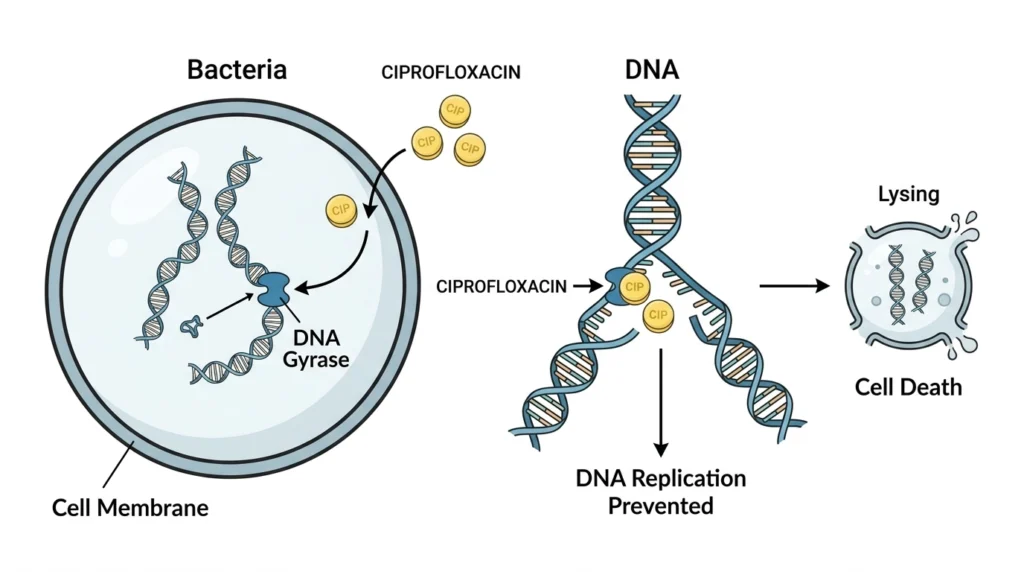
These enzymes are required if bacteria are to replicate and repair their DNA. By inhibiting these enzymes, the drug causes the bacteria’s DNA to degrade, which results in many dying cells. This mechanism makes it very effective against deep tissue infections.
However, the drug penetrates the tissues deeply, which is why the ciprofloxacin veterinary dosage per kg must be respected in order not to accumulate the drug in the cat’s system to toxic levels.
Ciprofloxacin Uses for Cats
Veterinarians prescribe this antibiotic for a host of conditions. The uses of ciprofloxacin for cats are wide because of the ability of the drug to good penetration of the tissue.

- Urinary Tract Infections (UTIs): One of the most common uses specifically for E. coli infections.
- Respiratory Infections: Used in severe upper or lower respiratory infections.
- Skin and Soft Tissue Infections: Effective in infected wounds or abscesses.
- Bone Infections (Osteomyelitis): Because it penetrates very well into the bone.
- Eye Infections: Eye drops containing ciprofloxacin for cats are a routine treatment for bacterial conjunctivitis and corneal ulcers.
The particular condition determines the ciprofloxacin for cats dosage per day how many days you will be treated. A UTI may take 7-14 days and a bone infection may take weeks.
Dosing Information of Ciprofloxacin for Cats
The dosage is the most critical aspect of this guide. The ciprofloxacin dosage for cats must be calculated based on the cat’s exact body weight.
General Dosing Guidelines
The standard dosage range is:
mg to 15 mg per kg (2.3 to 6.8 mg per pound) of body weight
- Frequency: Given by mouth every 12 to 24 hours.
- Duration: Treatment usually takes 7 to 14 days (chronic infections, such as osteomyelitis, may take 4 to 6 weeks).
For mild to moderate infections, a medication dose of 5 mg/kg (2.3 mg/lb), every 12 hours is common. For severe infections, the dose may go up to 10-15 mg/kg (4.5-6.8 mg/lb) every 12 hours.
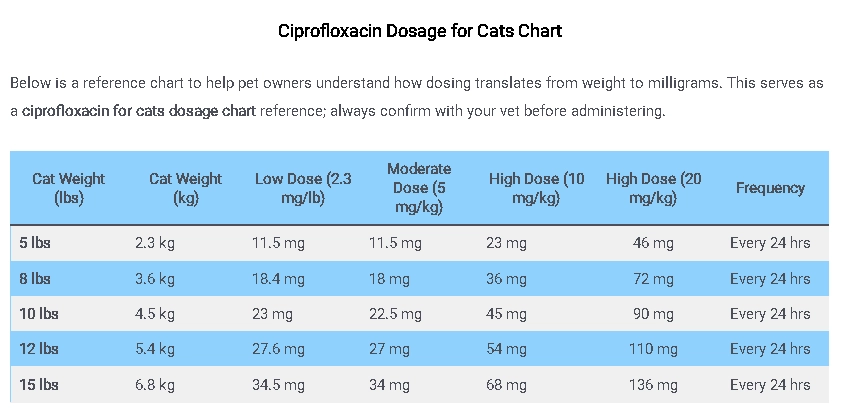
Ciprofloxacin Dosage for Cats Chart
Below is a reference chart to help pet owners understand how dosing translates from weight to milligrams. This serves as a ciprofloxacin for cats dosage chart reference; always confirm with your vet before administering.
| Cat Weight (lbs) | Cat Weight (kg) | Low Dose (2.3 mg/lb) | Moderate Dose (5 mg/kg) | High Dose (10 mg/kg) | High Dose (20 mg/kg) | Frequency |
|---|---|---|---|---|---|---|
| 5 lbs | 2.3 kg | 11.5 mg | 11.5 mg | 23 mg | 46 mg | Every 24 hrs |
| 8 lbs | 3.6 kg | 18.4 mg | 18 mg | 36 mg | 72 mg | Every 24 hrs |
| 10 lbs | 4.5 kg | 23 mg | 22.5 mg | 45 mg | 90 mg | Every 24 hrs |
| 12 lbs | 5.4 kg | 27.6 mg | 27 mg | 54 mg | 110 mg | Every 24 hrs |
| 15 lbs | 6.8 kg | 34.5 mg | 34 mg | 68 mg | 136 mg | Every 24 hrs |
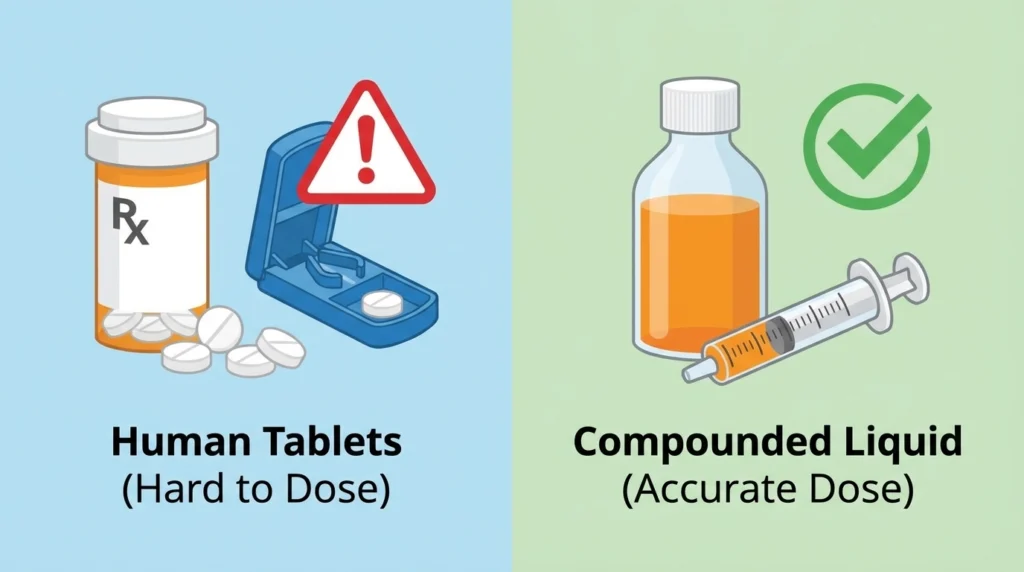
Note: Always round dosages to the nearest available pill strength or follow your compounding pharmacy’s instructions. Do not attempt to cut extended-release tablets (XR).
Ciprofloxacin Dosage for Cats Calculator Concept
While there’s no substitute for a vet’s calculator, the formula is simple:
Weight (in lbs) x Dose of mg per lb to be given = Total Dose
For example, if calculating the amount of ciprofloxacin that should be administered to cats per pound, for a 10-pound cat at a standard rate of 5 mg per kg (approx 2.3 mg per lb):
10 lbs x 2.3 mg = 23 mg.
If your vet prescribes higher dosage for a severe infection (e.g. 10 mg/kg or ~ 4.5 mg/lb):
10 lbs x 4.5 mg = 45 mg.
Ciprofloxacin Eye Drops for Cats Dosage
For the eye problems, the systemic pills are not used. Instead, ophthalmic solutions such as Ciloxan are prescribed.
- Dosage: Usually 1 drop in the affected eye(s)
- Frequency: Initially every 2 to 6 hours followed by a lessening of frequency as the infection improves.
- Duration: usually 7 to 10 days.
Side Effects
While normally safe, ciprofloxacin may have some side effects. Pet owners keeping track of the ciprofloxacin for cats dosage per day how many days regimen should look out for the following:
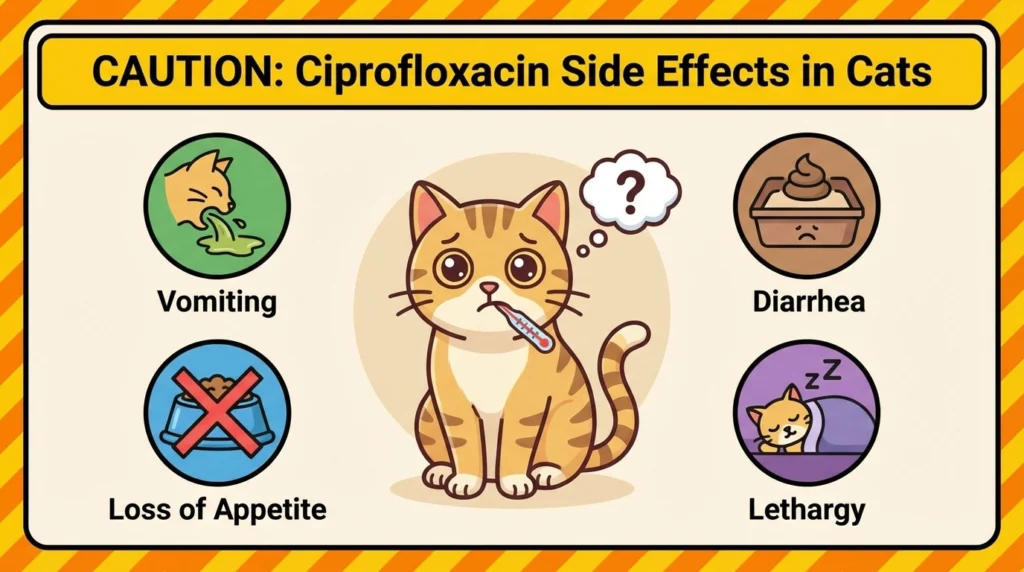
- Gastrointestinal Upset: Vomiting, diarrhea, and loss of appetite are the most common. If the medication is given with a small amount of food, this can be reduced.
- Central Nervous System (CNS) Effects: Very rarely, cats may experience dizziness, seizures or incoordination.
- Cartilage Damage: Fluoroquinolones can cause damage to cartilage development in growing animals. It is usually not given to kittens under 8 months of age or pregnant queens.
- Blindness: While more commonly associated with the related drug enrofloxacin (Baytril), high doses of ciprofloxacin can potentially cause retinal degeneration resulting in vision changes. This is why it is vital to stick to the exact ciprofloxacin veterinary dosage per kg.
- Crystalluria: In dehydrated cats, the drug may crystallize in the urine, leading to kidney problems. Make sure your cat has access to lots of fresh water.
If you see severe diarrhea, hives, swelling of the face, or difficulty breathing, stop the medication and seek emergency veterinary care immediately.
You May Also Like To Read:
FAQs
How often do I give ciprofloxacin to my cat?
Most veterinarians prescribe ciprofloxacin every 12 hours (twice a day.) However, for specific infections, once-daily (once 24 hours) dosing schedule may be recommended. Consistency is extremely important – try to take the medication at the same time every day to get the blood levels of the drug to be consistent.
Can I just use human Cipro for my cat?
Technically, it is the same drug but the dosage forms are problematic. Human tablets are often too high in strength (ie 250mg or 500mg) for a cat so it is not possible to cut the pill accurately. Using human liquid suspension is also risky if it contains xylitol, a sweetener which is toxic to dogs (though less toxic to cats, still best avoided). Always use a veterinary approved product or compounded product.
What happens if I miss a dose?
If you forget a dose, take it as soon as you remember. If it’s nearly the time of the next scheduled dose, skip the one missed and continue with the regular schedule. Do not take twice the dose to catch up, as you may be more likely to have side effects.
How should I store this medicine?
Tablets should be kept at room temperature, out of moisture and light. Liquid Suspensions are to be stored as indicated on the label (some require refrigeration, some do not). Always shake liquid formulations well before measuring.
Is there a drug interaction?
Yes. Ciprofloxacin is not to be administered with antacids, sucralfate or products that contain calcium, magnesium or iron, as these bind with the drug and prevent absorption. If your cat is on these medications, wait at least 2 hours to give the antacid and the antibiotic.
Final Thoughts
Navigating your cat’s health problems can be a stressful experience, but knowing the right of ciprofloxacin dosage for cats will enable you to be a proactive pet owner.
Whether treating a difficult UTI or respiratory infection, ciprofloxacin is a powerful tool if used responsibly.
Always stick to the exact ciprofloxacin dosage for cats chart from your vet and never deviate from the dosage without professional help. With careful administration and monitoring, your feline buddy should be back on their paws in no time.