Baytril® (Enrofloxacin) Dosage for Cats is important for cat owners whose pets are dealing with bacterial infections. Baytril is a commonly prescribed veterinary antibiotic, and its active ingredient, enrofloxacin, belongs to a group of drugs called fluoroquinolones. It works by stopping bacteria from growing and spreading inside your cat’s body.
Veterinarians use enrofloxacin for cats to treat serious infections such as urinary tract infections, skin infections, and respiratory problems. Because it is a strong, broad-spectrum antibiotic, it is usually given only when needed and not for every minor illness.
Getting the correct Baytril dosage for cats is very important. Giving too much or too little can affect how well the treatment works and may cause side effects. In rare cases, improper use can even lead to serious problems like vision issues, so this medicine should always be used under a veterinarian’s guidance.
In this guide, you’ll Learn everything about Baytril® (Enrofloxacin) dosage for cats – uses, proper administration, potential side effects, contraindications, and safe treatment tips. Ensure your cat’s health with expert guidance on this powerful antibiotic.
Disclaimer: This content is for informational purposes only and should not replace veterinary advice. Always consult your veterinarian before giving Baytril® (Enrofloxacin) or adjusting your cat’s dosage.
Key Takeaways
- Baytril (Enrofloxacin) for cats is a broad-spectrum antibiotic used to treat serious bacterial infections in the urinary tract, skin, ears, respiratory system, gastrointestinal tract, liver, and prostate.
- Dosage must be veterinarian-prescribed, typically 2.5 mg/kg twice a day or 5 mg/kg once a day, depending on the infection and the cat’s health.
- Administer Baytril on an empty stomach to maximize absorption; avoid dairy products that can reduce effectiveness.
- Common side effects include vomiting, diarrhea, loss of appetite, lethargy, tremors, seizures, and rarely, retinal damage or blindness.
- Contraindications: Do not give Baytril to kittens under 8 weeks, pregnant or lactating cats, or cats with severe kidney or liver disease. Avoid use in cats with epilepsy or known hypersensitivity to fluoroquinolones.
- Drug interactions: Baytril may interact with tetracyclines, NSAIDs, theophylline, antacids, and minerals like calcium or magnesium.
- Monitoring is essential: Watch for side effects, complete the full course, and consult your veterinarian if symptoms persist or worsen.
What is Baytril (enrofloxacin) for cats?
Enrofloxacin for cats is a strong antibiotic commonly known as Baytril. It is used by veterinarians to treat bacterial infections in cats.
This medicine belongs to a group called fluoroquinolones and works by stopping bacteria from growing and killing them. Because it is a broad-spectrum antibiotic, it can treat many types of infections.
Baytril for cats is often used for:
- Urinary tract infections (UTIs)
- Skin and ear infections
- Respiratory infections
- Infections in organs like the lungs, liver, and digestive system
It works quickly—after giving the medicine, it starts working within a few hours and can stay active in your cat’s body for about 24 hours.
Enrofloxacin is available in different forms such as tablets, liquid, and injections. It is usually given by mouth at home, but in some cases, a vet may give it as an injection.
For best results, Baytril dosage for cats should be given exactly as prescribed, often on an empty stomach to help it work better.
What Is Baytril® Used for in Cats?
Baytril for cats (enrofloxacin) is a powerful antibiotic used to treat a wide range of bacterial infections, especially those that are difficult to manage with other medications. It is a broad-spectrum antibiotic, meaning it works against both gram-positive and gram-negative bacteria, including common pathogens like E. coli, Staphylococcus, and Bordetella.
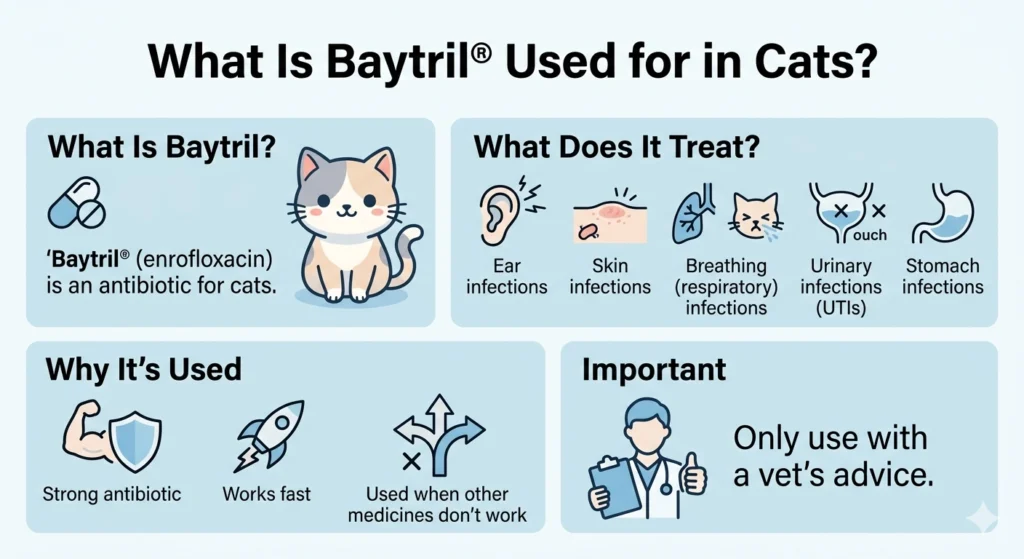
Veterinarians prescribe enrofloxacin for cats to treat infections in different parts of the body, including:
- Ear infections
- Skin infections
- Respiratory infections
- Urinary tract infections (UTIs)
- Gastrointestinal infections
- Prostate infections
- Infections affecting organs like the lungs and liver
This medication is known for being fast-acting and highly effective, making it a reliable option when infections are severe or persistent. However, it is usually not the first choice antibiotic. Veterinarians often reserve Baytril for cases where other antibiotics have not worked or when lab testing (such as a sensitivity test) shows it will be the most effective option.
The reason for this careful use is to reduce side effects and prevent antibiotic resistance, ensuring that the medication remains effective when truly needed.
Originally developed by Bayer, Baytril has become one of the most important veterinary antibiotics for treating bacterial infections in animals. However, it is used only in animals and not in humans.
Baytril Dosage for Cats
Baytril (enrofloxacin) dosage for cats must always be determined by a veterinarian. The exact dose depends on the type and severity of the infection, as well as your cat’s weight, age, and overall health. Giving the wrong dose can make the treatment ineffective or even dangerous.
Typical Dosage Guidelines
- Standard dose: 5 mg per kg of body weight once a day, or 2.5 mg per kg twice a day.
- Duration: Usually 5 days, but in severe or chronic cases, treatment can be extended up to 10 days.
- Maximum dose: Cats should not receive more than 5 mg per kg per day unless instructed by a veterinarian.
Administration Tips
- Baytril can be given orally (tablets or liquid) or by injection; oral administration at home is most common.
- For best absorption, it is recommended to give on an empty stomach.
- Tablets can be given directly or mixed with food if your cat is difficult to medicate.
- The daily dose may be divided into two smaller doses, 12 hours apart, depending on the vet’s instructions.
Important Safety Notes
- Always weigh your cat accurately to ensure the correct dosage.
- Never give two doses at once if a dose is accidentally missed.
- Follow the veterinarian’s instructions strictly to prevent bacterial resistance.
- Inform your vet of any allergies or hypersensitivity to enrofloxacin or other fluoroquinolones.
Monitoring During Treatment
- If no improvement is seen within 2–3 days, contact your veterinarian.
- Watch for side effects such as gastrointestinal upset, loss of appetite, or allergic reactions.
- Complete the full course of medication even if your cat starts feeling better to fully eliminate the infection.
Example: A 50 mg Baytril tablet is usually given at 5 mg per kg once a day for a 5-day treatment. For severe cases, the vet may extend the treatment to 10 days or adjust the dosage.
Following the proper enrofloxacin dosage for cats is crucial for treating infections safely and effectively.
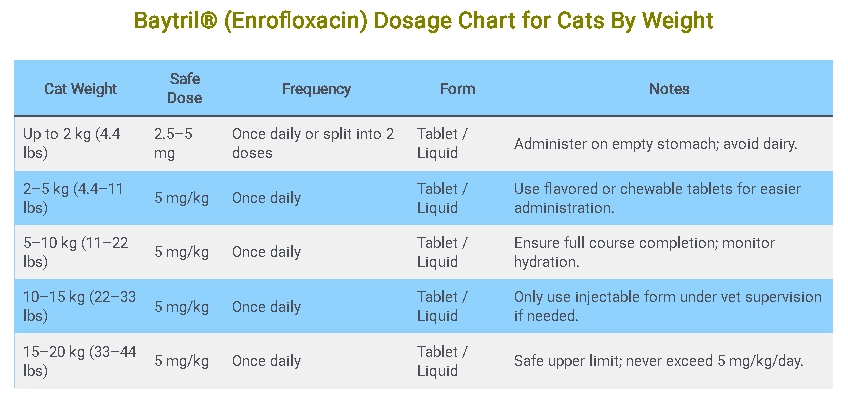
Baytril® (Enrofloxacin) Dosage Chart for Cats By Weight
| Cat Weight | Safe Dose | Frequency | Form | Notes |
|---|---|---|---|---|
| Up to 2 kg (4.4 lbs) | 2.5–5 mg | Once daily or split into 2 doses | Tablet / Liquid | Administer on empty stomach; avoid dairy. |
| 2–5 kg (4.4–11 lbs) | 5 mg/kg | Once daily | Tablet / Liquid | Use flavored or chewable tablets for easier administration. |
| 5–10 kg (11–22 lbs) | 5 mg/kg | Once daily | Tablet / Liquid | Ensure full course completion; monitor hydration. |
| 10–15 kg (22–33 lbs) | 5 mg/kg | Once daily | Tablet / Liquid | Only use injectable form under vet supervision if needed. |
| 15–20 kg (33–44 lbs) | 5 mg/kg | Once daily | Tablet / Liquid | Safe upper limit; never exceed 5 mg/kg/day. |
What Is the Best Way to Give Baytril to My Cat?
Giving Baytril (enrofloxacin) to cats correctly is essential to make sure the medicine works effectively and safely.
Key Tips for Administering Baytril
- Empty stomach: Administer Baytril before food or after a few hours of fasting. This helps your cat absorb the medication better.
- If your cat vomits: Contact your veterinarian immediately for guidance on whether to repeat the dose.
- Mixing with food: If your cat feels nauseous or vomits, you can mix the medication with a small amount of food.
Tablet Forms and Flavors
- Enteric-coated tablets contain a bitter medicine inside. Do not crush these tablets into food or water, as your cat may reject them.
- Chewable or flavored tablets are easier for cats, especially smaller ones who need half or quarter doses. Use these instead of breaking enteric-coated tablets.
Important Warnings
- Avoid dairy products: Never give milk or cheese while your cat is on Baytril. Calcium binds to the medicine and stops it from being absorbed, making it ineffective.
- Always follow the veterinarian’s instructions for dosing and administration.
By following these tips, you can help ensure your cat receives the full benefits of Baytril without side effects or reduced effectiveness.
What Are the Possible Side Effects of Baytril in Cats?
Baytril (enrofloxacin) for cats is a fast-acting, broad-spectrum antibiotic that effectively treats serious bacterial infections. However, like all powerful medications, it can cause side effects, especially if the dose is too high or the treatment is not properly monitored.
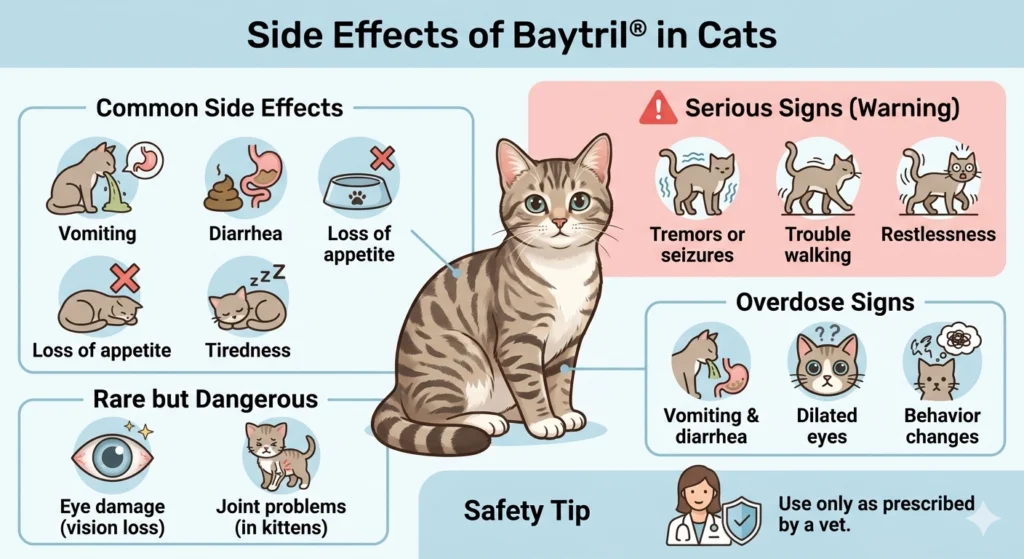
Common Side Effects
Most side effects are mild and often affect the digestive system. Common reactions include:
- Vomiting
- Diarrhea
- Loss of appetite
- Lethargy or drowsiness
- Hypersalivation
Neurological and Behavioral Signs
Some cats may experience effects on the nervous system, particularly if they have underlying conditions:
- Tremors
- Seizures
- Lack of coordination or incoordination
- Restlessness or nervousness
- Increased vocalizations
Eye and Long-Term Risks
High doses or prolonged use of Baytril can affect the eyes and joints, especially in young or growing cats:
- Retinal damage leading to blindness (rare, usually at doses above 5 mg/kg/day)
- Abnormalities of joint cartilage in growing kittens
Overdose Risks
An overdose of enrofloxacin can cause severe toxicity:
- Vomiting and diarrhea
- Mydriasis (dilated pupils)
- Behavioral changes due to central nervous system effects
- Potential irreversible blindness
Safety Tips
- Always follow your veterinarian’s instructions for dosage and administration.
- Administer Baytril on an empty stomach to improve absorption and reduce gastrointestinal upset.
- Never give antibiotics intended for humans to cats—they can be harmful or ineffective.
- Inform your vet immediately if any side effects appear, especially neurological symptoms, eye changes, or severe gastrointestinal signs.
Summary: While Baytril is highly effective against infections in cats, careful administration and monitoring are essential to minimize side effects. Reporting any unusual reactions to your veterinarian ensures safe and effective treatment.
What Are the Contraindications of Baytril for Cats?
While Baytril (enrofloxacin) for cats is a highly effective antibiotic, it is not suitable for all cats. Certain medical conditions, age groups, and concurrent medications can make Baytril unsafe. Always consult your veterinarian before administering this medication.
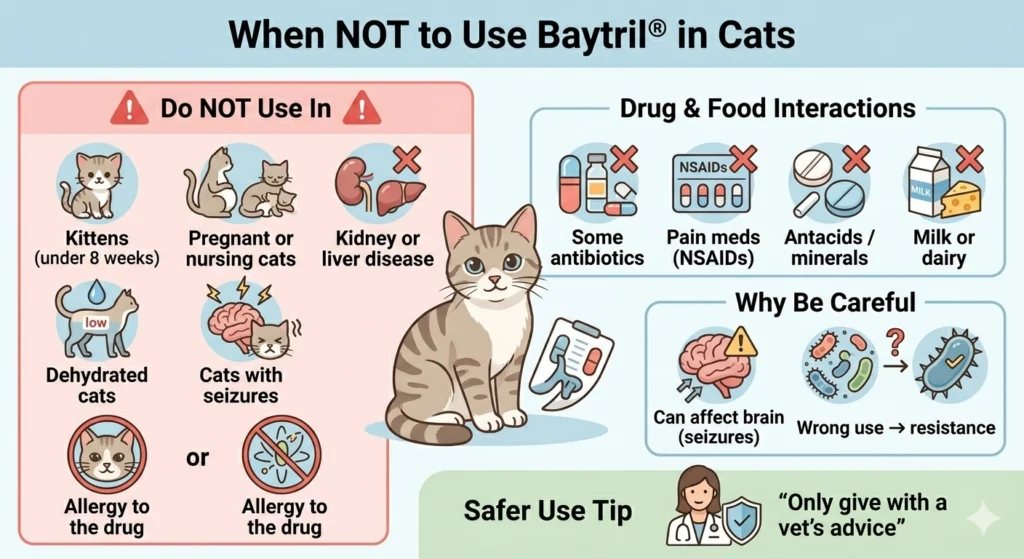
Cats That Should Not Take Baytril
Do not give Baytril to cats with any of the following conditions:
- Kittens under 8 weeks old – may cause abnormal cartilage development
- Pregnant or lactating cats – risks to kittens
- Severe renal (kidney) or hepatic (liver) disease
- Dehydration – proper hydration is essential during treatment
- Epilepsy or other seizure disorders – risk of neurological side effects
- Known allergy or hypersensitivity to enrofloxacin or other fluoroquinolones
Drug Interactions and Food Considerations
Baytril can interact with certain medications or foods, reducing its effectiveness or increasing side effects:
- Tetracyclines – may reduce antibiotic efficacy
- Theophylline – can prolong drug elimination
- NSAIDs – may increase risk of seizures
- Calcium, magnesium, aluminum, or antacids – can delay absorption
- Milk or dairy products – decrease oral bioavailability
Why Caution is Important
- Enrofloxacin can affect the central nervous system, causing tremors, seizures, or disorientation.
- Overuse may lead to antibiotic resistance, making future infections harder to treat.
- Always give Baytril on an empty stomach to improve absorption and reduce gastrointestinal side effects.
Alternative Options
In some cases, veterinarians may choose other antibiotics like metronidazole for infections of the gastrointestinal tract or periodontal disease. The choice depends on the type of infection, cat’s health, and previous antibiotic response.
Summary: Baytril is powerful, but it must only be used under veterinary guidance. Understanding contraindications, proper administration, and potential interactions ensures your cat stays safe while effectively treating infections.
You May Also Like To Read:
FAQs About Baytril® (Enrofloxacin) for Cats
How Long Does It Take for Enrofloxacin to Work in Cats?
Enrofloxacin, commonly known as Baytril, starts working by inhibiting bacterial growth as soon as it is absorbed. Most cats begin to show improvement within 2–3 days, but the full course must be completed to completely eliminate the infection. The exact duration depends on the severity of the infection and your cat’s response. Always administer on an empty stomach for best absorption.
What if I Missed a Dose of Baytril for My Cat?
Give the missed dose as soon as you remember. If it’s almost time for the next dose, skip the missed one and continue on schedule. Do not double doses, as this can increase the risk of side effects.
Are There Any Common Side Effects of Baytril in Cats?
Some cats may experience vomiting, diarrhea, lethargy, or loss of appetite. Neurological symptoms like tremors or seizures are rare but serious. If you notice severe or unusual symptoms, contact your veterinarian immediately.
Can Baytril Be Given With Food?
Baytril is most effective on an empty stomach. If your cat experiences nausea or vomiting, you may give it with a small amount of food or a treat (avoid dairy). Chewable or flavored tablets can help make administration easier.
Is Baytril Safe for Cats?
Yes, when used as prescribed by a veterinarian. Your vet balances potential benefits against side effects. Following dosage instructions, monitoring your cat, and completing the full course ensures safe and effective treatment.
Can Kittens Have Baytril?
Baytril is not recommended for kittens under 8 weeks old because it can interfere with cartilage development and cause long-term joint issues. Always consult your vet before giving antibiotics to young cats.
Final Thoughts
Baytril (enrofloxacin) for cats is a powerful, broad-spectrum antibiotic that effectively treats a wide range of bacterial infections, including urinary tract, skin, ear, respiratory, gastrointestinal, liver, and prostate infections. Its fast-acting nature and versatility make it a valuable tool in veterinary medicine.
However, Baytril should always be used under veterinary guidance. Correct dosage, administration, and monitoring are crucial to ensure effectiveness while minimizing side effects. Typical doses range from 2.5 mg/kg twice a day to 5 mg/kg once a day, depending on the infection and your cat’s health. Always follow your vet’s instructions, and administer the medication on an empty stomach for better absorption.
Side effects can include vomiting, diarrhea, lethargy, loss of appetite, seizures, tremors, and, in rare cases, eye damage or blindness. High doses or overdosing increase these risks, so careful adherence to dosage is essential. Some cats, like kittens under 8 weeks, pregnant or lactating cats, or cats with severe kidney or liver disease, should not take Baytril. Additionally, interactions with other medications and dairy products can reduce its effectiveness.
Ultimately, Baytril is a trusted solution for severe or resistant infections in cats, but it is not the first choice for every infection. Always consult your veterinarian before starting treatment, report any side effects promptly, and ensure your cat completes the full course to prevent resistance. With careful use, Baytril can safely restore your cat’s health and help them recover from serious bacterial infections.