Azithromycin, also known as Zithromax® (Z-pack) in humans, is an antibiotic that veterinarians commonly use to treat bacterial infections in cats. It is often prescribed for problems such as respiratory infections, skin infections, eye infections, and mouth infections like gingivitis, as well as some other bacterial diseases.
This medicine is not officially approved for cats (off-label use), but veterinarians may still prescribe it when needed, especially if other antibiotics do not work or if the cat is allergic to penicillin-type drugs.
When used under a vet’s guidance, azithromycin is generally considered safe for cats of all ages. Treatment usually lasts only a few days. Most side effects are mild and may include vomiting, diarrhea, or loss of appetite.
However, giving the wrong dose or using it without a veterinarian’s advice can be dangerous and may lead to serious health problems. That is why correct Azithromycin Dosage for Cats is very important for safe and effective treatment.
In this guide, you will Learn the correct Azithromycin dosage for cats, its uses, safety, side effects, and how it works to treat infections like respiratory, skin, and urinary tract diseases under veterinary guidance.
Disclaimer: This content is for informational purposes only and should not replace veterinary advice. Always consult your veterinarian before giving Azithromycin or adjusting your cat’s dosage.
Key Takeaways
- Azithromycin is a broad-spectrum macrolide antibiotic used in cats to treat bacterial infections.
- It is commonly used for respiratory infections, skin infections, urinary tract infections, and some specific bacterial diseases.
- The drug works by stopping bacteria from making proteins, which prevents bacterial growth and allows the immune system to clear the infection.
- Azithromycin is an off-label medication in cats, meaning it is not FDA-approved but is legally prescribed by veterinarians.
- It is usually prescribed when other antibiotics are not effective or suitable.
- Common side effects include vomiting, diarrhea, and loss of appetite.
- Serious side effects are rare but may include liver issues, allergic reactions, or heart rhythm problems, especially in sensitive cats.
- Correct dosage and veterinary supervision are very important to ensure safety and effectiveness.
- Always complete the full prescribed course to help prevent antibiotic resistance and treatment failure.
What is Azithromycin and How Does It Work?
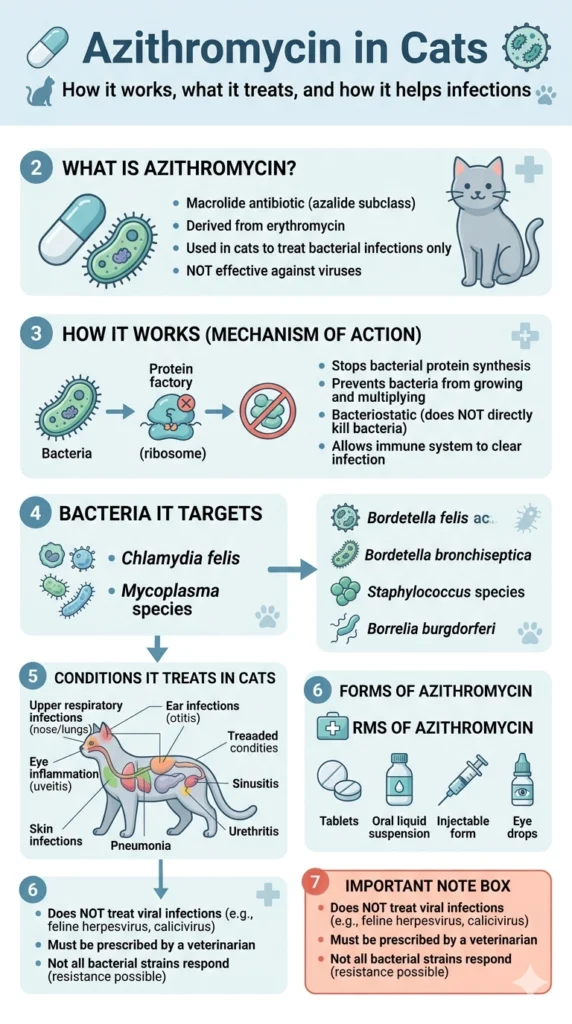
Azithromycin is a type of antibiotic that fights many bacterial infections in cats. It works by stopping bacteria from making proteins, which they need to grow. Because of this action, it is effective against bacteria such as Staphylococcus, Streptococcus, and some Chlamydia and Mycoplasma.
In cats, Azithromycin is an antibiotic derived from erythromycin and belongs to the azalide subclass of macrolide antibiotics. It works by inhibiting bacterial protein synthesis, which stops the growth of susceptible bacteria. This action is called bacteriostatic, meaning it does not directly kill bacteria but prevents them from multiplying. This allows the cat’s immune system to gradually eliminate the infection over time.
Uses of Azithromycin for Cats
Azithromycin is a broad-spectrum macrolide antibiotic used in cats to treat a variety of bacterial infections. However, it is important to note that it cannot treat viral infections, such as those caused by feline herpesvirus or feline calicivirus, which are common causes of feline respiratory disease.
Instead, azithromycin is effective against several bacteria in cats, including:
- Chlamydia felis
- Mycoplasma species (Mycoplasma sp.)
- Bordetella bronchiseptica
- Streptococci species (Streptococcus spp.)
- Staphylococci species (Staphylococcus spp.)
- Borrelia burgdorferi
Because it is a broad-spectrum antibiotic, these represent only some of the bacteria that may respond to azithromycin treatment in cats. However, not all bacterial infections are treatable with this medication, as resistance or lack of susceptibility may occur.
Conditions Treated with Azithromycin in Cats
The bacterial infections listed above can lead to several health conditions in cats, including:
- Upper respiratory tract infections
- Urethritis (inflammation of the urethra)
- Otitis (ear infection)
- Uveitis (eye inflammation)
- Skin infections
- Pneumonia
- Sinusitis
Available Forms of Azithromycin for Cats
Azithromycin is available in multiple formulations depending on the type and location of infection, including:
- Oral tablets
- Oral suspension
- Injectable solution
- Eye drops
The correct formulation is chosen by a veterinarian based on the cat’s condition and treatment needs.
Azithromycin Dosage for Cats
According to veterinary references, the recommended Azithromycin dosage for cats is based on body weight and the type of infection being treated.
For infections caused by susceptible bacteria, the usual dosage is 5–10 mg/kg once daily for 3–7 days. If longer treatment is required, it may be continued at 5–10 mg/kg every 48–72 hours or 10–15 mg/kg twice weekly.
For skin infections, the dose is 5–10 mg/kg once daily for 5–7 days.
For upper respiratory tract infections, it is 5–10 mg/kg daily for 5 days, followed by 5–10 mg/kg every three days for 6–8 weeks.
For Bartonellosis (cat scratch disease), the recommended dose is 10 mg/kg once daily for 21 days.
Because azithromycin is not FDA-approved for cats, it is often given through human formulations or compounded preparations prescribed by a veterinarian.
The general therapeutic dosing range for cats is 5–10 mg/kg (2.5–4.5 mg/lb) once daily for 3–6 days, or in some cases 10–20 mg/kg every 24 hours or 5–10 mg/kg every 12 hours, depending on the condition and veterinary judgment. Treatment usually lasts about 7 days, but can vary based on response.
Azithromycin may also be given in liquid form, such as:
- 100 mg/5 mL (20 mg/mL): 0.25 mL/kg
- 200 mg/5 mL (40 mg/mL): 0.125 mL/kg
Dosage and duration can change depending on the cat’s condition, weight, and response to treatment. A 10-pound cat may receive approximately 25–75 mg per day, depending on the prescribed plan.
In some cases, veterinarians may use tapering or extended dosing schedules, especially for chronic conditions like upper respiratory infections or stomatitis.
Liquid suspension is commonly preferred in cats, and compounded forms may be used if taste or dosing is an issue. It is very important to complete the full course prescribed by the veterinarian to prevent treatment failure and antibiotic resistance.
If a cat receives too much azithromycin, veterinary help should be sought immediately, as overdose may cause nausea, vomiting, or diarrhea.
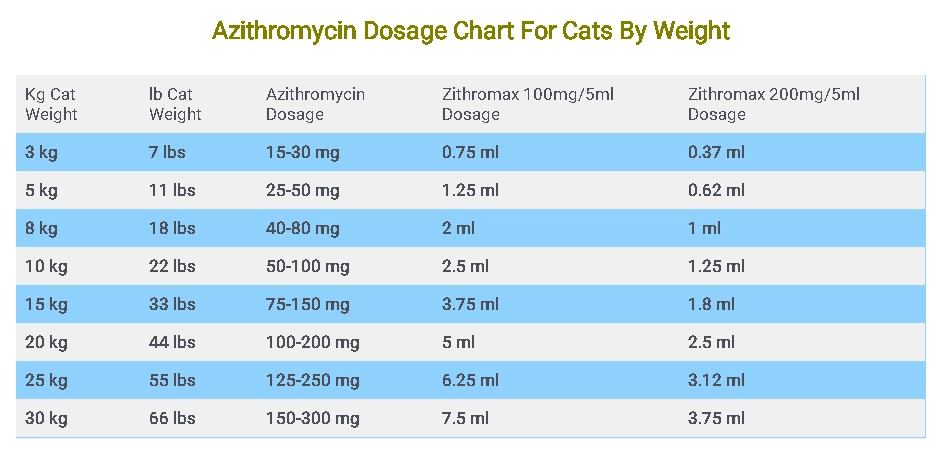
Azithromycin Dosage Chart For Cats By Weight
| Kg Cat Weight | lb Cat Weight | Azithromycin Dosage | Zithromax 100mg/5ml Dosage | Zithromax 200mg/5ml Dosage |
| 3 kg | 7 lbs | 15-30 mg | 0.75 ml | 0.37 ml |
| 5 kg | 11 lbs | 25-50 mg | 1.25 ml | 0.62 ml |
| 8 kg | 18 lbs | 40-80 mg | 2 ml | 1 ml |
| 10 kg | 22 lbs | 50-100 mg | 2.5 ml | 1.25 ml |
| 15 kg | 33 lbs | 75-150 mg | 3.75 ml | 1.8 ml |
| 20 kg | 44 lbs | 100-200 mg | 5 ml | 2.5 ml |
| 25 kg | 55 lbs | 125-250 mg | 6.25 ml | 3.12 ml |
| 30 kg | 66 lbs | 150-300 mg | 7.5 ml | 3.75 ml |
How to Give Azithromycin to Your Cat
It is very important to give azithromycin to your cat carefully, making sure the correct dose and correct method are followed. Whether your cat is prescribed tablets or liquid, always follow your veterinarian’s instructions exactly. This helps ensure the treatment is safe and effective.
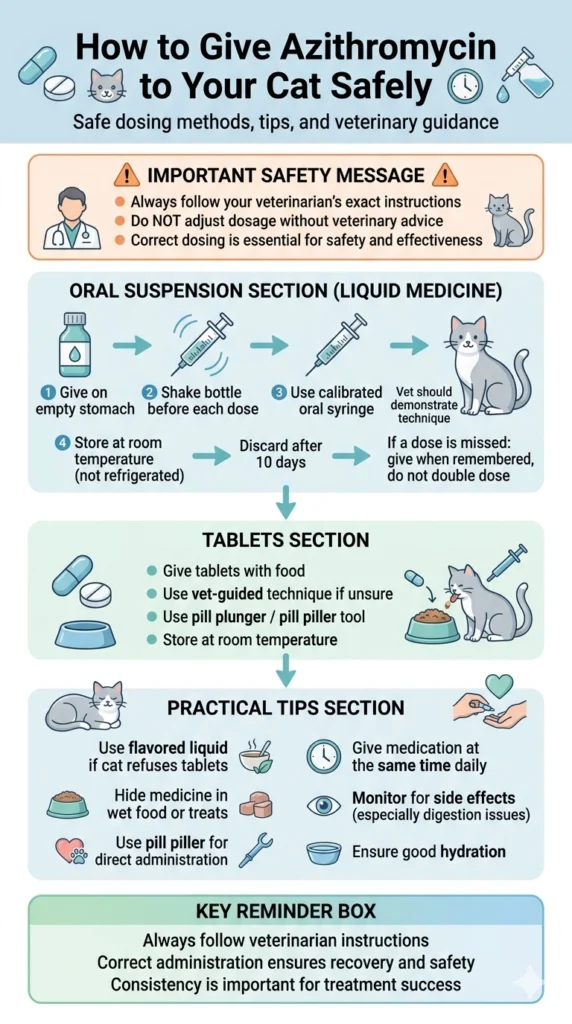
For safety precautions, always go with the less dosage. For a high safe dose, first, take advice from your veterinarian.
How to Give a Cat Azithromycin Oral Suspension
Azithromycin oral suspension should be given with proper care:
- It should be given on an empty stomach
- Shake the bottle before measuring each dose
- Use a calibrated oral syringe to measure the correct amount
- A veterinary professional should demonstrate the proper technique for giving the dose
- Do not refrigerate the oral suspension; store it at room temperature for up to 10 days
- After 10 days, the medicine should be discarded
- If a dose is missed, give it when remembered, but do not double the dose
How to Give a Cat Azithromycin Tablets
When giving tablets:
- Tablets must be given with food
- Ask a veterinary professional to demonstrate the correct technique if you are unsure
- A pill plunger or pill piller can be used to place the tablet in the cat’s mouth
- Store tablets at room temperature
Practical Tips for Easier Administration
Giving medicine to cats can be difficult, but these methods can help:
- Use a liquid formulation if your cat refuses tablets (your vet may provide a flavored compounded version)
- Hide the medicine in wet food or treats so the cat eats the full dose
- Use a pet piller device to place tablets directly in the throat to reduce stress
- Set a fixed schedule and give doses at the same time daily for consistency
- Monitor your cat for any side effects, especially digestive upset, and ensure proper hydration
Key Reminder
Always follow your veterinarian’s instructions carefully. Correct administration of azithromycin is essential for your cat’s recovery and safety.
Alternatives to Azithromycin for Cat
Azithromycin is a commonly used antibiotic in cats, but it is not always the first treatment choice. Veterinarians may select other medications depending on the type of infection, severity of the disease, and the cat’s response to treatment. The choice of antibiotic is always determined by a veterinarian.
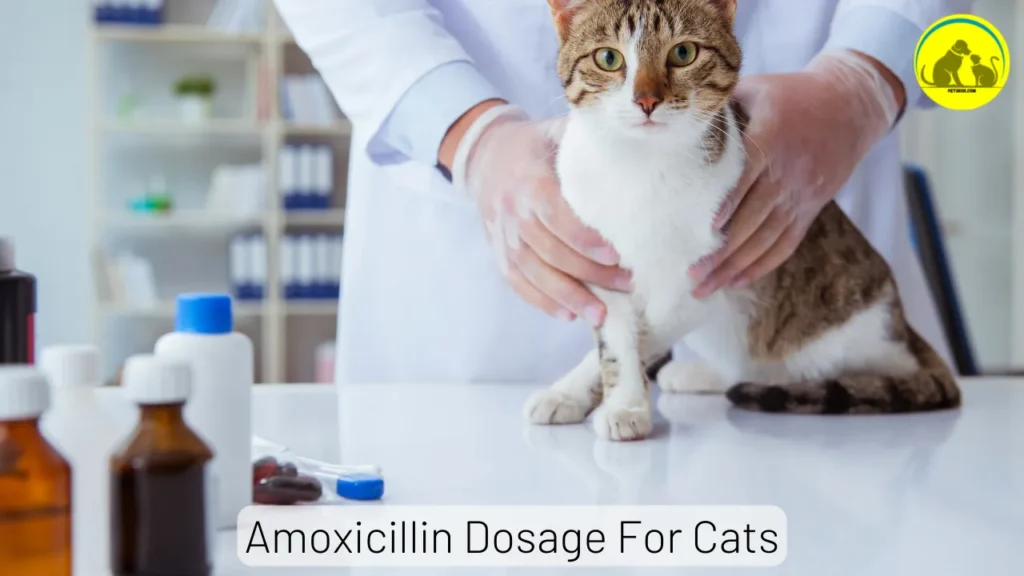
1. Amoxicillin and Potassium Clavulanate
Amoxicillin combined with potassium clavulanate has a broad spectrum of activity against both gram-positive and gram-negative bacteria. Because of its strong distribution and effectiveness in the body, it is used for many infections in cats, including:
- Skin infections caused by bacteria such as Staphylococcus aureus, Staphylococcus epidermidis, Escherichia coli, and Proteus spp.
- Respiratory infections caused by Staphylococcus spp., Pasteurella spp., Bordetella bronchiseptica, Haemophilus spp., and Streptococcus spp.
- Gastrointestinal infections, including diarrhea caused by Escherichia coli, Klebsiella spp., Proteus spp., and Salmonella spp.
- Genitourinary and soft tissue infections, such as pyoderma, dermatitis, abscesses, and infected wounds caused by Streptococcus spp., Corynebacterium spp., Bacillus spp., Fusobacterium necrophorum, and Moraxella spp.
- Periodontal infections caused by aerobic and anaerobic bacteria
2. Cephalexin
Cephalexin is a beta-lactam antibiotic from the cephalosporin group. It works by stopping the formation of bacterial cell walls, leading to the death of bacteria.
It is commonly used in cats for:
- Dermatological infections
- Bone infections
- Lung infections
- Other bacterial infections
3. Enrofloxacin
Enrofloxacin is a broad-spectrum fluoroquinolone antibiotic widely used in cats. It is known for its strong tissue distribution, broad antibacterial activity, and low toxicity.
It has been used successfully in veterinary medicine since 1990 and is often selected for various infectious diseases in cats.
4. Penicillin
Penicillin is one of the first scientifically discovered antibiotics. It works by stopping bacterial growth and replication, allowing the immune system to eliminate the infection.
It is used for a wide range of conditions in cats, including:
- Skin infections
- Ear infections
- Other bacterial diseases
Other Antibiotic Options in Cats
In some cases, veterinarians may also consider:
- Erythromycin (another macrolide antibiotic)
- Doxycycline (tetracycline group)
- Fluoroquinolones such as enrofloxacin
These alternatives are selected based on the infection type and the cat’s health condition.
Side Effects of Azithromycin for Cats
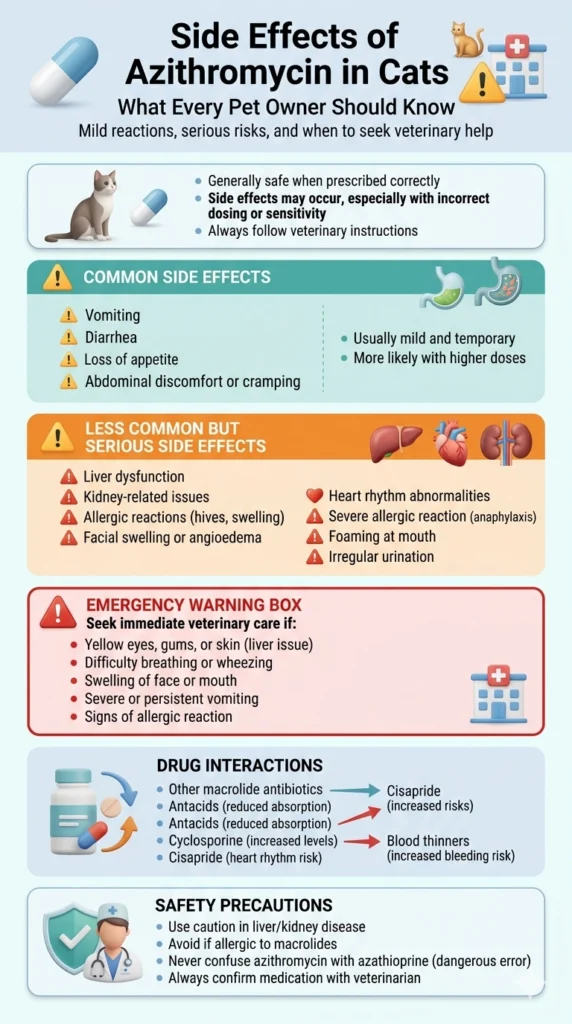
Azithromycin is generally considered a safe and well-tolerated antibiotic in cats when prescribed by a veterinarian. However, like all antibiotics, it can still cause side effects, especially if the dose is incorrect or if the cat has underlying health problems.
Common Side Effects
The most commonly reported side effects of azithromycin in cats are related to the digestive system, including:
- Vomiting
- Diarrhea
- Reduced appetite (loss of appetite)
- Abdominal discomfort or cramping
These effects are often mild but may become more noticeable in case of overdose, since higher doses can increase gastrointestinal upset. Azithromycin may also affect gut movement, which can sometimes contribute to abdominal discomfort.
Less Common but Serious Side Effects
In some cases, more serious side effects may occur, including:
- Liver dysfunction (since azithromycin is mainly metabolized in the liver)
- Kidney-related problems (especially in sensitive cats)
- Allergic reactions (hypersensitivity or angioedema)
- Facial swelling or hives
- Heartbeat irregularities (cardiac arrhythmias)
- Anaphylaxis (severe allergic reaction)
- Foaming at the mouth
- Irregular urination
Rare but serious signs should always be treated as an emergency.
Warning Signs That Need Immediate Veterinary Care
Contact a veterinarian immediately if your cat shows:
- Yellowing of eyes, gums, or skin (possible liver issue)
- Swelling of the face or mouth
- Difficulty breathing or wheezing
- Severe or persistent vomiting
- Signs of a strong allergic reaction
Drug Interactions and Safety Precautions
Azithromycin can interact with other medications, so it is very important to inform your veterinarian about anything your cat is taking, including supplements or herbal products.
Important interactions include:
- Other macrolide antibiotics
- Antacids (may reduce absorption and effectiveness)
- Cyclosporine (may increase drug levels and effects)
- Cisapride (risk of heart rhythm issues)
- Blood thinners (e.g., warfarin in humans) may increase bleeding risk
Important Safety Notes
- Use with caution in cats with liver or kidney disease
- Avoid use in cats with known allergy to macrolide antibiotics
- Always ensure correct identification of the drug, as azithromycin can sometimes be confused with azathioprine, which is a completely different and potentially dangerous medication for cats
Drug Interactions with Azithromycin in Cats
Azithromycin can interact with several medications, sometimes leading to serious or even life-threatening effects. These include:
Increased drug levels (toxicity risk)
- Digoxin
- Theophylline (especially high risk for toxicity in cats)
- Cyclosporine
- Methylprednisolone
These combinations may increase the concentration of the drugs in the blood, leading to strong side effects and potential toxicity.
Delayed drug clearance (anesthesia risk)
- Triazolam
- Midazolam
These may stay longer in the body, causing delayed recovery from anesthesia, increased risk of low body temperature, and other surgical complications. Low body temperature is a major post-surgery risk in cats.
Heart rhythm (arrhythmia) risk
- Cisapride
- Ondansetron
- Dolasetron
- Sotalol
- Quinolone antibiotics
- Azole antifungals (e.g., ketoconazole, metronidazole)
These combinations may increase the risk of heart rhythm disturbances (arrhythmias), which can become fatal if not controlled.
Reduced effectiveness
- Oral antacids (omeprazole, famotidine, etc.)
These can reduce absorption of azithromycin. They should be given at least 2 hours before or after the antibiotic.
Reduced antibiotic effect
- Phenobarbital
This seizure medication may reduce how well azithromycin works in cats.
Which Cats Should Not Take Azithromycin?
Azithromycin should be avoided or used only with extreme caution in:
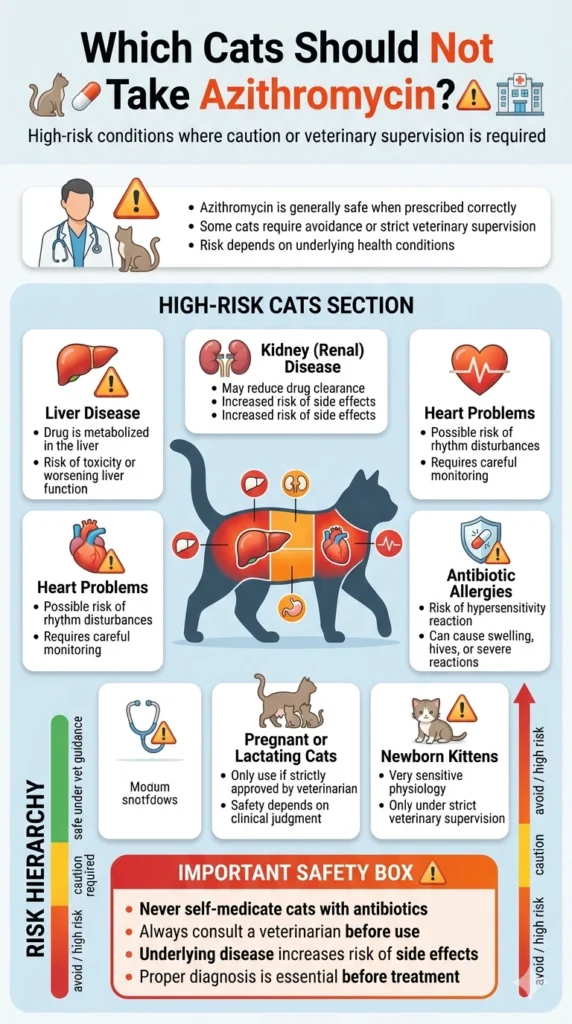
- Cats with liver disease
- Cats with kidney (renal) disease
- Cats with heart problems
- Cats with known antibiotic allergies
- Pregnant or lactating cats (only if vet approves)
- Newborn kittens (only under strict veterinary supervision)
You May Also Like To Read:
- Gabapentin Dosage for Cats: Chart, Safe Use, Benefits & More
- Onsior Dosage for Cats: Chart, Safe Use, Side Effects & More
FAQs About Azithromycin for Cats
Can I give my cat human Azithromycin?
No. You should never give your cat human Azithromycin without veterinary guidance. The dosage and formulation are different, and some human medications may contain ingredients that are unsafe for cats. Always use a veterinary prescription.
How long does it take for Azithromycin to work in cats?
Most cats may show improvement within 2–5 days, but it is important to complete the full prescribed course (usually 5–7 days or as directed by a vet) to fully clear the infection. If there is no improvement, contact your veterinarian.
Is Azithromycin safe for kittens?
Yes, Azithromycin can be used in kittens when prescribed by a veterinarian. However, it is a strong antibiotic, and the dose is carefully adjusted based on the kitten’s weight and condition.
What should I do if my cat vomits after taking Azithromycin?
Mild vomiting can be a common side effect. If vomiting continues, worsens, or your cat becomes weak or stops eating, contact your veterinarian. The dose may need adjustment or a different antibiotic may be required.
Can Azithromycin treat upper respiratory infections in cats?
Yes, Azithromycin is often used to treat bacterial upper respiratory infections in cats. However, it does not work against viral infections such as feline herpesvirus, so proper diagnosis by a veterinarian is important before treatment.
Final Thoughts
Azithromycin is a broad-spectrum macrolide antibiotic commonly used in cats to treat a variety of bacterial infections, including respiratory infections, skin infections, urinary tract infections, and certain specific diseases when other treatments are not effective.
It works by stopping bacteria from producing essential proteins, which prevents their growth and allows the cat’s immune system to clear the infection. Because of its long activity in the body, it often requires less frequent dosing, making it convenient for pet owners and effective in many treatment plans.
However, azithromycin is an off-label medication for cats, meaning it is not FDA-approved for feline use but is still legally prescribed by veterinarians when needed. It is usually reserved for cases where other antibiotics have failed or are not suitable.
While generally safe, it may cause mild side effects such as vomiting, diarrhea, or loss of appetite, and in rare cases, more serious reactions can occur, especially in cats with underlying liver or kidney conditions or when drug interactions are present.
For this reason, it is very important that azithromycin is only given under proper veterinary guidance, with the correct dosage, duration, and monitoring.
In summary, when used responsibly, azithromycin can be an effective and valuable treatment option for managing bacterial infections in cats, helping them recover safely and comfortably under veterinary care.