The standard starting amlodipine dosage for cats is typically 0.625 mg (1/4 of a 2.5 mg tablet) administered orally once daily.
However, the exact dose may vary based on the severity of hypertension and the cat’s weight, ranging generally from 0.1 to 0.5 mg per pound.
Accurate dosing is critical to effectively lower blood pressure without causing hypotension, making veterinary supervision essential for any feline hypertension treatment plan.
Discover the safe amlodipine dosage for cats. Learn the standard 0.625 mg dose, weight-based charts, side effects, and treatment tips for feline hypertension.
Disclaimer: This article is for informational purposes only and does not constitute veterinary advice. Always consult with a licensed veterinarian regarding dosage and treatment for your pet.



Key Takeaways
- Standard Starting Dose: Most vets start with 0.625 mg per cat per day, regardless of weight, adjusting based on response.
- Weight Matters: While there is a general standard, precise amlodipine dosage for cats by weight (0.1 to 0.25 mg/kg) is often used for fragile patients.
- Purpose: It is the gold-standard medication for treating systemic hypertension (high blood pressure) in felines.
- Monitoring: Regular blood pressure checks are mandatory 1 to 2 weeks after starting or adjusting the dose.
- Side Effects: Generally mild but can include lethargy, appetite changes, or low blood pressure if overdosed.
What is Amlodipine Dosage for Cats?
The standard amlodipine dosage for cats is 0.625 mg administered orally once daily.
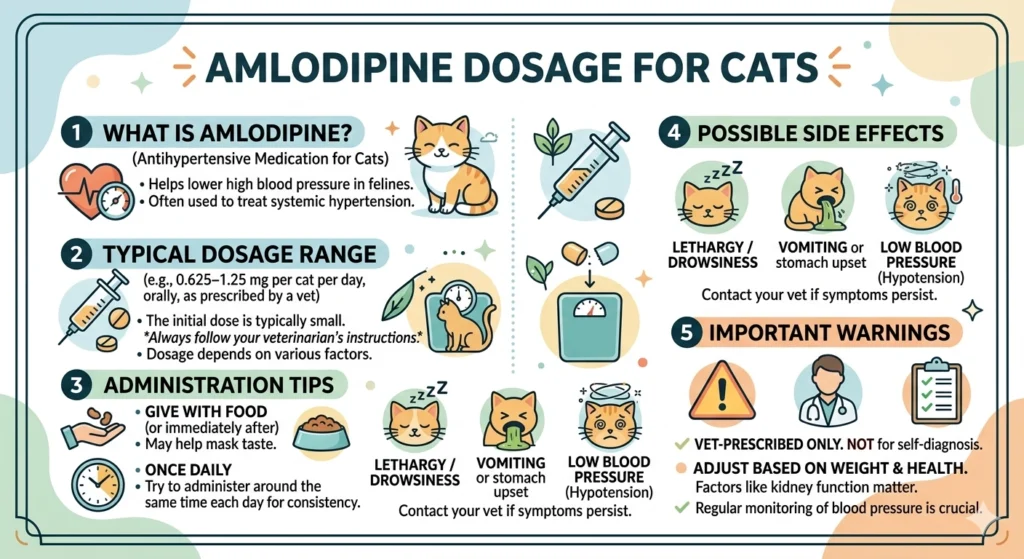
This dosage is typically derived by breaking a standard 2.5 mg tablet into quarters. However, the specific dose may be adjusted by a veterinarian based on the cat’s weight and blood pressure readings.
Here is a quick breakdown of the dosing guidelines:


- Standard Starting Dose: 0.625 mg per cat, once a day.
- Weight-Based Dose: For more precise dosing, veterinarians often calculate 0.1 to 0.25 mg per pound (0.2 to 0.5 mg/kg) of body weight.
- Maximum Dose: In severe cases, the dose may be increased to 1.25 mg or higher, but this requires strict veterinary supervision to avoid hypotension (dangerously low blood pressure).
Important: Never adjust your cat’s medication without consulting your veterinarian. Incorrect dosing can lead to kidney damage or fainting.
Understanding Feline Hypertension
Managing feline hypertension often requires careful attention to the amlodipine dosage for cats, which is a common blood pressure medication for cats with high blood pressure.
But to understand why the dosage is so important, we first have to understand the condition itself.
High blood pressure in cats isn’t typically a disease in and of itself, but instead is often an adverse complication of other common feline health problems.
Often in veterinary medicine we see hypertension and chronic kidney disease (CKD) and hyperthyroidism go hand-in-hand.
When a cat’s blood pressure stays too high for an extended period of time, it puts tremendous pressure on organs such as the eyes, brain, heart, and kidneys.
This is where amlodipine comes in. It has a calcium channel blocking effect, relaxing the blood vessels to allow blood to flow more easily.
Pet owners often ask several questions, such as how much amlodipine to give a cat or what the safe dose of amlodipine for cats. The answer is not one-size-fits-all, but it is precise.
Determining the Correct Amlodipine Dosage for Cats
Finding the appropriate dose of amlodipine for cats is a delicate process that involves balancing the need to lower blood pressure as quickly as possible without bringing blood pressure too low.
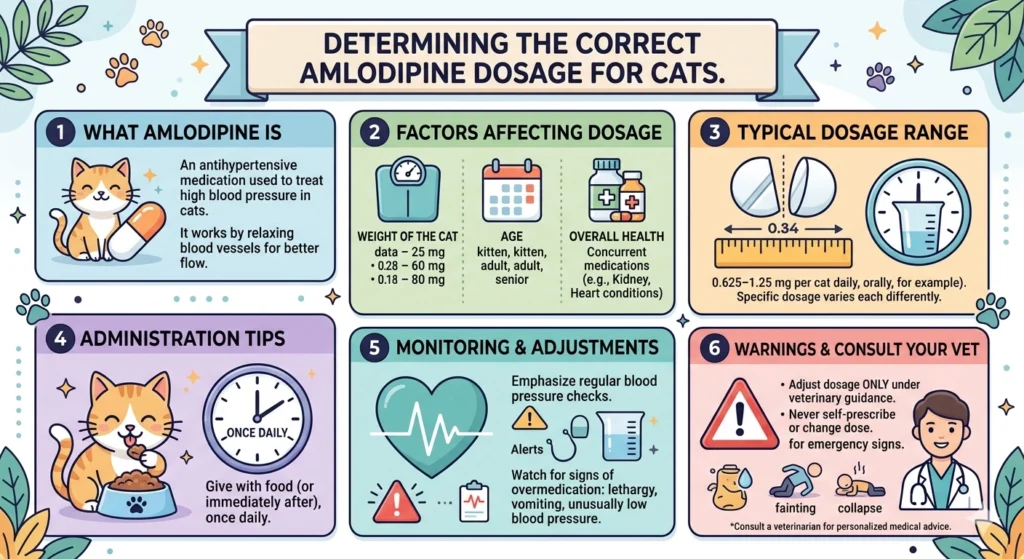
Veterinarians may prescribe amlodipine mg for cats depending upon the weight and health condition of the cat.
The Standard Starting Dose
Most veterinarians have agreed upon certain guidelines when starting therapy. The most common beginning amlodipine dose is for cats per day:
- 0.625 mg per cat once daily.
This usually works out to one-fourth of a standard 2.5 mg human tablet. Interestingly, for a long time this “one size fits all” dose was the norm, regardless of whether the cat weighed 6 pounds or 15 pounds.
However, modern veterinary medicine has moved away from more tailored approaches.
Amlodipine Dosage for Cats by Weight
For cats that are very small, geriatric or have multiple health concerns, a vet might calculate the dose by weight. The dosage range for clinical use is usually 0.1 to 0.25 mg per pound (0.2 to 0.5 mg/kg).
- 8 lb Cat: Can start with 0.625 mg or slightly less.
- 15 lb Cat: Can begin at 0.625 mg but will need to be increased sooner to 1.25 mg
If you are seeking for an amlodipine dosage for cats calculator, it would be best to rely on your veterinarian’s specific formula. However, below is a useful reference chart to see how weight may be a factor in the final prescribed dose.
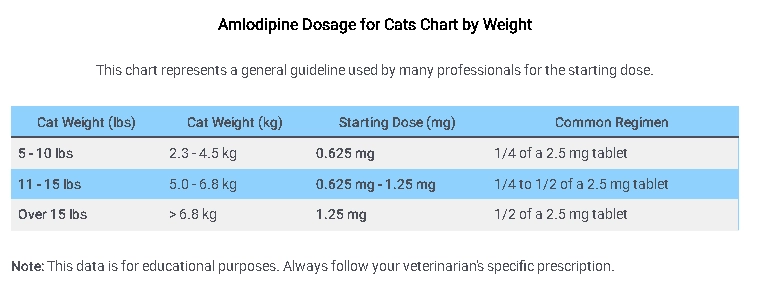
Amlodipine Dosage for Cats Chart by Weight
This chart represents a general guideline used by many professionals for the starting dose.
| Cat Weight (lbs) | Cat Weight (kg) | Starting Dose (mg) | Common Regimen |
|---|---|---|---|
| 5 – 10 lbs | 2.3 – 4.5 kg | 0.625 mg | 1/4 of a 2.5 mg tablet |
| 11 – 15 lbs | 5.0 – 6.8 kg | 0.625 mg – 1.25 mg | 1/4 to 1/2 of a 2.5 mg tablet |
| Over 15 lbs | > 6.8 kg | 1.25 mg | 1/2 of a 2.5 mg tablet |
Note: This data is for educational purposes. Always follow your veterinarian’s specific prescription.
Amlodipine Dosage for Cats Per Pound Per Day
For those who require mathematical precision, the of amlodipine dosage for cats per pound per day is typically determined by multiplying 0.1 mg per pound.
Example Calculation:
- If your cat weighs 10 lbs: 10 lbs x 0.1mg = 1.0mg.
- However, because the common tablets are 2.5 mg, it is hard to split them up into perfect doses of 1.0 mg. This is why the 0.625 mg (quarter tablet) is the pragmatic starting point for most average sized cats.
Forms of Medication: Tablets vs. Liquid
Whether your cat requires amlodipine tablets for high blood pressure or liquid medications, it is important to know the proper plan of action for feline hypertension treatment to ensure your cat is kept healthy.
- Tablets: Amlodipine besylate is most often dispensed in the form of small scored tablets (typically 2.5 mg). This helps owners to cut them easily into quarters.
- Liquid: Constructing a flavored liquid suspension is possible at the compounding pharmacy. This is commonly flavored like tuna or chicken and is ideal for cats that won’t take pills. If using a liquid, the amlodipine for cats dosage chart pdf given by your vet will often show a volume (ml) instead of a weight of the tablet.
Amlodipine for Cats Blindness: Prevention and Treatment
One of the worst complications of high blood pressure that remains untreated is sudden blindness. Many owners do searches on amlodipine for cats blindness since they are usually desperate to reverse this condition.
Retinal detachment can be caused by high blood pressure and lead to acute blindness. While amlodipine is an agent used for the hypertension that is causing the problem, it is essential to know that the medicine in the process does not always work for restoring the vision once the retina has separated.
However, if caught early, lowering the blood pressure rapidly with the correct amlodipine for cats dosage will sometimes allow this retina to reattach partially or fully.
If your cat has lost its vision because of high blood pressure:
- Do not move furniture.
- Administration of medication should be used as prescribed.
- Keep food and water bowls in the same locations.
Side Effects of Amlodipine
While amlodipine is fairly safe and well-tolerated, it is a powerful medication. Proper dosing is important to promote cat cardiovascular health and prevent side effects.
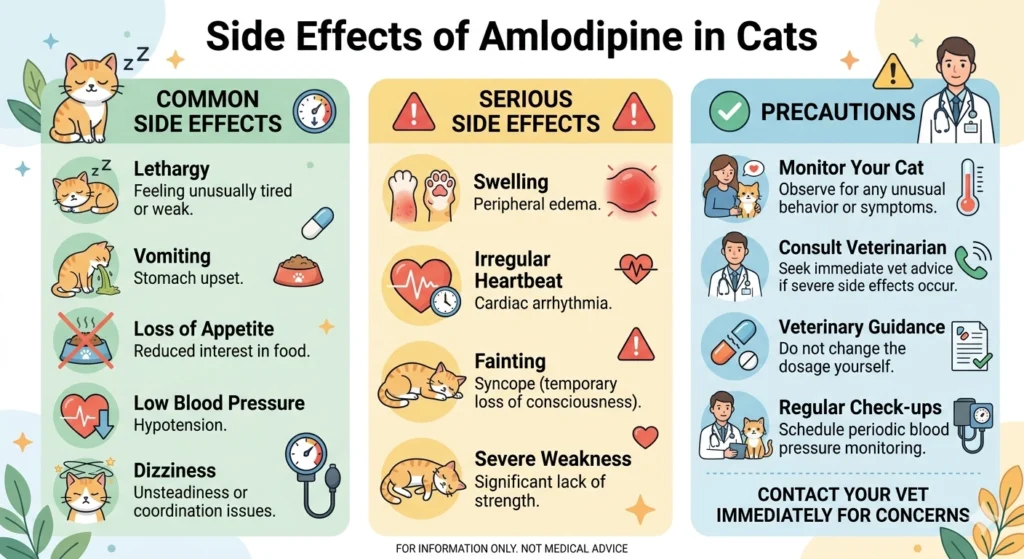
Most of the side effects are associated with the blood pressure getting too low (hypotension).
Common side effects might include:
- Lethargy: You may notice your cat sleeping more or not being interested in playing.
- Gastrointestinal Upset: An upset stomach or diarrhea may result in some sensitive cats.
- Appetite Changes: Some cats may have a decreased appetite especially when initially starting the medication.
- Gingival Hyperplasia: Overgrowth of the gums is a known side effect in humans and has been reported in dogs, however it is less common in cats. It is reversible if the medication is discontinued.
Symptoms of Overdose (Hypotension):
If the amlodipine dosage for cats is too high, your cat may experience:
- Weakness or wobbliness while walking.
- Fainting or collapsing.
- Rapid heart rate as the body attempts to compensate.
If you notice these drastic signs, call your veterinarian or an emergency animal hospital right away.
Monitoring and Long-Term Care
Once your cat starts treatment, the work is not done. Hypertension is typically a lifelong disease that needs lifelong management.
The 7-Day Check-Up
Veterinarians usually recommend that the blood pressure be re-tested 7 to 14 days after beginning the medication. This helps be sure the current amlodipine dosage for cats is effective.
Managing the “White Coat Effect”
Cats are often quite stressful when they go to the vet, which will artificially inflate their blood pressure readings. Vets use different techniques to account for this but home monitoring is becoming increasingly popular.
Discuss with your vet if you should be using an amlodipine dosage for cats calculator at home based on home BP readings though this should always be done under veterinary guidance.
Kidney Function
Since high blood pressure and kidney disease are often related, your vet will probably check kidney values (creatinine and BUN) on a regular basis.
Amlodipine typically has to protect the kidneys via lowering pressure, and so sudden drops can influence the filtration of the kidneys for a short period of time.
Drug Interactions and Safety Precautions
Before you begin amlodipine, tell your veterinarian about all the supplements or medications that your cat is taking.
- Diuretics (Furosemide): This is often used for heart failure. When combined with the amlodipine the risk of dehydration and low blood pressure is increased.
- Beta-blockers: Can sometimes have an additive effect in lowering heart rate.
- Other Antihypertensives: A combination of multiple blood pressure medicines is extremely risky.
You May Also Like To Read:
FAQs
Can I cut amlodipine pills?
Yes, amlodipine pills are stable and can be safely cut. Most prescriptions for cats will be to divide a 2.5 mg tablet into quarters (0.625 mg). Using a pill cutter is much more precise than using a kitchen knife to cut pills.
How long does it take for amlodipine to work in cats?
Amlodipine has a fairly fast onset. Peak concentrations in the blood are reached in about 1 to 2 hours after dosing but blood pressure lowering effects may take a few days to stabilize fully. Vets are usually able to determine efficacy after 1 to 2 weeks of consistent administration.
What if I miss a dose?
What if I miss a dose A: If you miss a dose, give it as soon as you remember. If it is almost time for the next dose that is due, miss the missed dose and resume the regular schedule. Do not give a double dose because this may result in a dangerous fall in blood pressure.
Is there amlodipine dosage for cats chart pdf available?
While there are charts in many veterinary textbooks, the best chart is the one that your veterinarian makes for your particular cat based on his or her most recent blood pressure readings and blood work.
Can amlodipine cause kidney failure in cats?
No, in fact, it is used for protection against the damage of hypertension to the kidney. However, if a cat has severe underlying kidney disease and the blood pressure drops too aggressively it can temporarily reduce the blood flow to the kidneys. This is why slow dosing and monitoring is so important.
Final Thoughts
Navigating the world of veterinary cardiology can be daunting, but understanding the amlodipine dosage for cats is a huge step toward protecting your pet.
Whether you are dealing with chronic kidney disease, hyperthyroidism, or primary hypertension, this medication remains a cornerstone of therapy.
Remember, the goal is not just to lower a number on a blood pressure cuff, but to prevent organ damage—specifically to the eyes, brain, and kidneys.
With careful monitoring, regular vet visits, and precise administration, cats on amlodipine often live comfortable, high-quality lives for years after their diagnosis.