Amitriptyline, also known as Elavil, is a medication often prescribed by veterinarians to help cats with behavior problems and certain medical issues. It is commonly used for anxiety, aggression, excessive grooming, urinary marking, and inappropriate urination. In addition, it can help relieve chronic pain, itching, or bladder inflammation.
It’s important to know that amitriptyline is not approved by the FDA for use in cats, so its use is considered off-label. This means it should only be given under a veterinarian’s guidance, with careful attention to dosage, potential side effects, and interactions with other medications. Common side effects in cats include sleepiness, weight gain, and reduced grooming.
For cats showing stress or behavior issues, changes to their environment, playtime, and routine can help—but sometimes medication like amitriptyline is necessary.
In This guide will Learn about Amitriptyline Dosage for cats, including safe dosages by weight, uses for anxiety, urinary issues, chronic pain, and itchy skin. Discover how to give it, potential side effects, risks, and veterinary tips for safe long-term treatment.
Disclaimer: This content is for informational purposes only and should not replace veterinary advice. Always consult your veterinarian before giving Amitriptyline or adjusting your cat’s dosage.
Key Takeaways
- Amitriptyline for cats is a tricyclic antidepressant commonly used off-label to manage anxiety, behavioral issues, urinary problems, chronic pain, and itching.
- It works by modulating neurotransmitters such as serotonin and norepinephrine, which helps stabilize mood, reduce stress, and calm overactive nerves.
- Dosage is typically 0.5–2 mg/kg daily, given once or twice per day, but may vary depending on the condition being treated.
- Administration can be via tablets or veterinary-compounded oral suspension. Consistency and proper technique are crucial for effectiveness.
- Benefits include improved behavior, reduced urinary stress, pain relief, and better overall quality of life.
- Common side effects: sedation, dry mouth, constipation, drooling, changes in appetite, urinary retention, and messy coat.
- Serious risks: seizures, heart rhythm changes, overdose symptoms. Close veterinary supervision is essential.
- Drug interactions and health conditions such as liver, kidney, heart disease, diabetes, or thyroid disorders require caution.
- Always consult a veterinarian before starting, adjusting, or discontinuing amitriptyline. Gradual dose changes may be necessary to avoid withdrawal effects.
- Combining medication with behavioral strategies or calming aids can enhance outcomes.
What Is Amitriptyline for Cats?
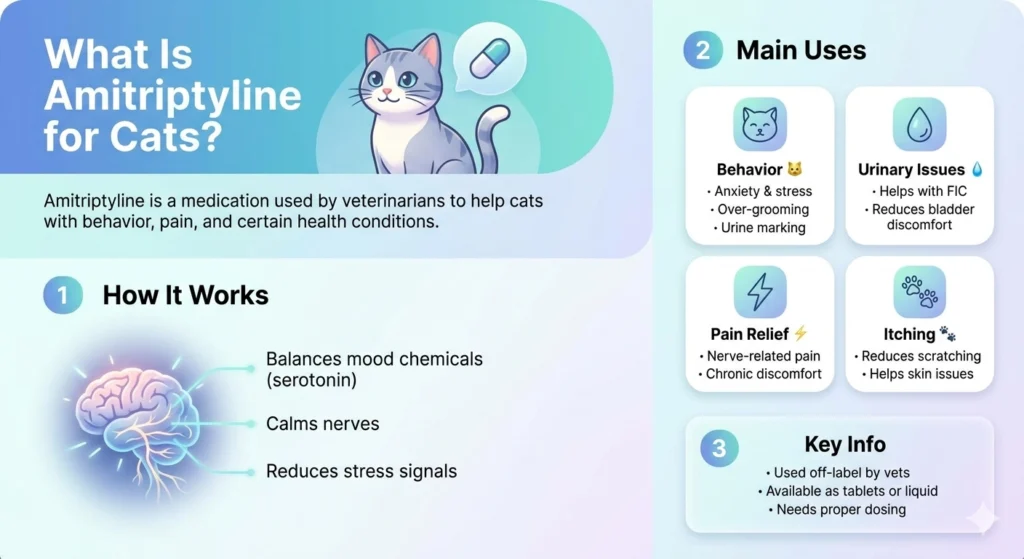
Amitriptyline, also known by the brand name Elavil, is a Tricyclic antidepressant (TCA) that affects neurotransmitters like serotonin and norepinephrine in the brain. In cats, it is used off-label under veterinary guidance for purposes not officially approved by the FDA.
Veterinarians commonly use amitriptyline for cats to treat:
- Behavioral issues: Anxiety, stress-related behaviors, compulsive disorders like excessive grooming, ingesting non-edible items (pica), hiding, conflicts with other pets, and inappropriate urination or defecation.
- Urinary problems: Feline idiopathic cystitis (FIC) or stress-related inappropriate urination.
- Chronic pain: Neuropathic or nerve-related pain, usually when other pain medications have already been tried.
- Itching and scratching: Persistent skin problems that do not respond to other treatments.
Amitriptyline is available in tablet or liquid form, with tablets being the most common for cats. Proper dosing and veterinary supervision are essential to ensure safety and effectiveness.
What Does Amitriptyline Do for Cats?
Amitriptyline is a tricyclic antidepressant that affects several neurotransmitters in the brain, including serotonin and norepinephrine. By blocking their reuptake, it increases their levels, which can help stabilize mood, reduce anxiety, and ease stress in cats.
The medication also has anticholinergic activity, which helps:
- Reduce overactivity of the smooth muscle in the urinary tract, improving issues like overactive urination.
- Calm hyperactive nerve-muscle junctions in the skin, helping cats with itchy or oversensitive skin.
Amitriptyline can act against mast cells, which are involved in inflammation and skin irritation, providing additional relief for cats with persistent itching.
Additionally, it blocks alpha-1 adrenergic receptors, which can:
- Reduce fear and startle responses in anxious cats.
- Relax smooth muscle in the urinary tract, similar to medications like prazosin, used for lower urinary tract disease signs.
While some clinicians debate the use of alpha-blockers for urinary signs due to limited formal research, long-standing clinical experience supports the effectiveness of amitriptyline and similar drugs for these purposes.
What Is Amitriptyline Used for in Cats?
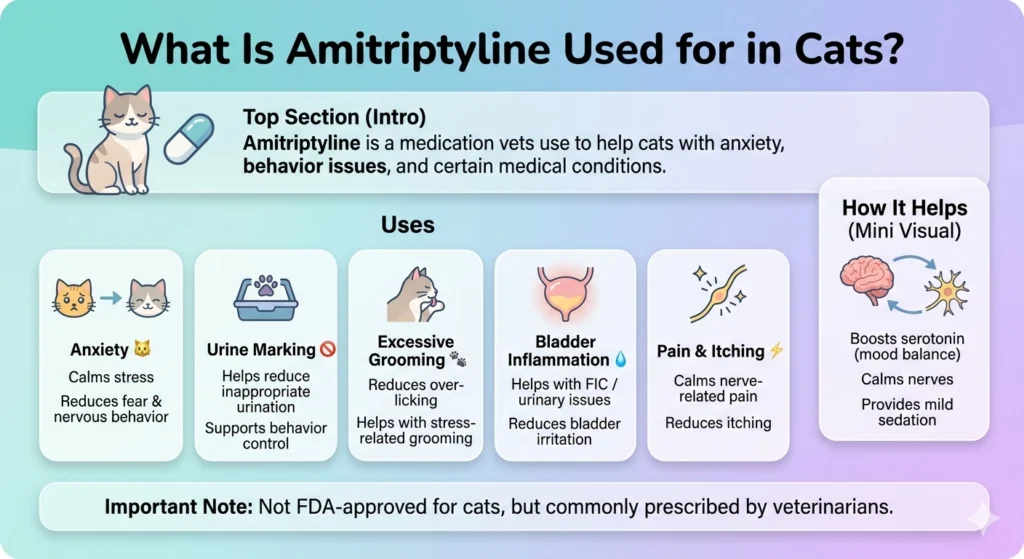
Although amitriptyline is not FDA-approved for cats, veterinarians commonly prescribe it off-label to help with several behavioral and medical conditions. It is particularly useful for anxiety, inappropriate urination, excessive grooming, and feline idiopathic cystitis (FIC). Additionally, it may serve as an add-on treatment for chronic pain or excessive itching.
1. Anxiety
Cats with anxiety may show signs such as peeing outside the litter box, hiding, running away, biting, trembling, panting, meowing, or excessive salivation. Common forms of feline anxiety include separation anxiety and situational panic or stress. Amitriptyline helps by:
- Increasing serotonin levels at nerve junctions for long-term anxiety relief.
- Acting as an antihistamine, providing sedation and calming effects.
- Using anticholinergic activity to reduce physical symptoms like excessive salivation.
2. Urine Marking
Behavioral issues such as urine marking, biting, chewing, clawing, or aggression are usually addressed first with behavior modification and environmental changes. When these measures are insufficient, amitriptyline may be prescribed. Its calming effects are thought to be related to its sedative properties, although the exact mechanism is not fully understood.
3. Excessive Grooming
Excessive grooming, which can sometimes be self-harming, may result from anxiety, behavior problems, or nerve issues. Amitriptyline addresses all three causes, helping to reduce compulsive grooming behaviors.
4. Urinary Bladder Inflammation
Amitriptyline is widely used to manage feline lower urinary tract disease (FLUTD), also called feline idiopathic cystitis (FIC). While veterinarians employ a variety of treatments for FIC, amitriptyline is often added as a long-term preventive or adjunct therapy to help reduce bladder inflammation and overactive urinary behavior.
5. Chronic Pain and Itching
Amitriptyline works by quieting nerve signals, which can help relieve chronic pain and itching when nerves are involved. For these conditions, it is usually used after other nerve medications like gabapentin have been tried, serving as an add-on to provide additional relief.
Amitriptyline Dosage for Cats
The standard amitriptyline dosage for cats is 0.5–2 mg/kg daily, which can be given as one daily dose or divided into two doses. Dosages vary depending on the condition being treated:
- Behavior disorders: 0.5–1 mg/kg once daily or 2.5–12.5 mg once daily
- Neuropathic pain: 2.5–12.5 mg once daily
- Itchy skin (pruritus): 2.5–12.5 mg once daily or 2.5–7.5 mg twice daily
- Bladder inflammation (idiopathic feline lower urinary tract disease, FIC/FLUTD): 2.5–12.5 mg per day
There are no veterinary-specific formulations; cat owners use human prescription tablets or tablets/oral suspensions prepared by compounding pharmacies.
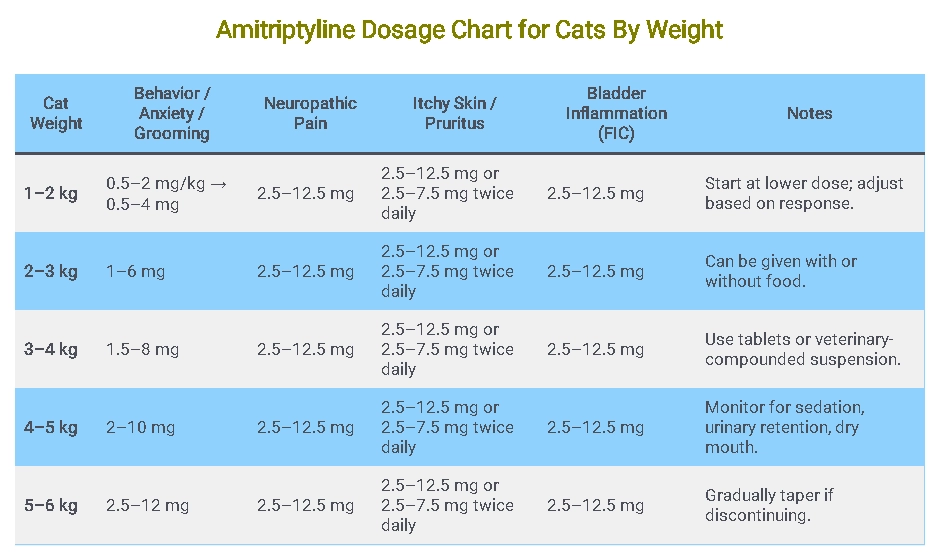
Amitriptyline Dosage Chart for Cats By Weight
| Cat Weight | Behavior / Anxiety / Grooming | Neuropathic Pain | Itchy Skin / Pruritus | Bladder Inflammation (FIC) | Notes |
|---|---|---|---|---|---|
| 1–2 kg | 0.5–2 mg/kg → 0.5–4 mg | 2.5–12.5 mg | 2.5–12.5 mg or 2.5–7.5 mg twice daily | 2.5–12.5 mg | Start at lower dose; adjust based on response. |
| 2–3 kg | 1–6 mg | 2.5–12.5 mg | 2.5–12.5 mg or 2.5–7.5 mg twice daily | 2.5–12.5 mg | Can be given with or without food. |
| 3–4 kg | 1.5–8 mg | 2.5–12.5 mg | 2.5–12.5 mg or 2.5–7.5 mg twice daily | 2.5–12.5 mg | Use tablets or veterinary-compounded suspension. |
| 4–5 kg | 2–10 mg | 2.5–12.5 mg | 2.5–12.5 mg or 2.5–7.5 mg twice daily | 2.5–12.5 mg | Monitor for sedation, urinary retention, dry mouth. |
| 5–6 kg | 2.5–12 mg | 2.5–12.5 mg | 2.5–12.5 mg or 2.5–7.5 mg twice daily | 2.5–12.5 mg | Gradually taper if discontinuing. |
Important Safety Notes
- Monitor for side effects: sedation, dry mouth, constipation, urinary retention, unkempt coat, or changes in appetite.
- Serious risks include heart rhythm changes, seizures, or overdose.
- Always follow veterinarian guidance; dosing may vary per individual cat.
How to Give Your Cat Amitriptyline
Most veterinarians recommend dosing your cat once daily, though twice daily is sometimes possible. Consistency is important—missed doses can reduce effectiveness, and improvements may take several weeks of regular dosing.
Administration Guidelines
- Follow your veterinarian’s instructions carefully; do not change the dose or schedule.
- Amitriptyline can be given with or without food; if the cat vomits, try giving the dose with food.
- If you’re unsure how to give tablets, ask a veterinary technician to demonstrate proper technique, or use a pill plunger with guidance.
- For cats that resist tablets, a compounded oral suspension can be prepared by a veterinary pharmacist. Shake well before use and measure doses with a calibrated oral syringe.
Tips for Safe Administration
- Never use human prescriptions without veterinary guidance; dosages differ for cats
- Use a pill dispenser (like a Pet Piller) to make tablet administration easier
- Monitor for side effects such as lethargy, vomiting, or appetite changes and report them to your vet
- Liquid formulations must be compounded by a veterinary pharmacist for correct dosing
Benefits of Amitriptyline for Cats
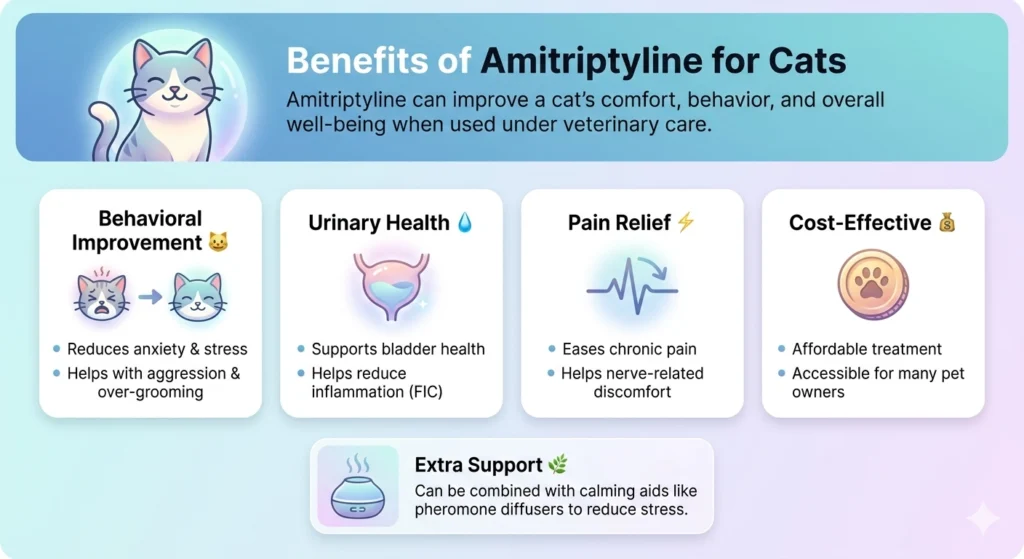
When used under veterinary supervision, amitriptyline for cats provides several benefits:
1. Behavioral Improvement
Cats with anxiety or compulsive behaviors—such as excessive licking, aggression, or urine spraying—often show significant improvement. Amitriptyline can help reduce stress-related behaviors, improving the cat’s overall mood and interactions.
2. Urinary Health Support
For cats with feline idiopathic cystitis (FIC) or stress-induced urinary issues, amitriptyline may reduce bladder inflammation and promote comfort, supporting urinary tract health.
3. Pain Management
Cats suffering from chronic pain conditions, including arthritis or neuropathic pain, may experience improved quality of life when amitriptyline is used as part of their treatment plan.
4. Cost-Effective Treatment
Amitriptyline is generally more affordable than many specialized veterinary medications, making it accessible to a wide range of pet owners.
Additional Support
Cat owners can complement amitriptyline treatment with calming aids such as the FELIWAY Classic Cat Calming Diffuser, which releases pheromones to help reduce stress-related behaviors.
Is Amitriptyline Safe for Cats?
Amitriptyline for cats is generally considered safe when prescribed and monitored by a veterinarian. However, cats may experience side effects that are not seen in dogs or humans, such as messy coats due to reduced grooming. Other potential side effects include sedation, dry mouth, and urinary retention.
Precautions and Contraindications
Amitriptyline should never be given to cats that:
- Are allergic to amitriptyline or other tricyclic antidepressants
- Are taking monoamine oxidase inhibitors (MAOIs)
Veterinarians use caution in cats with conditions such as:
- Diabetes
- Seizure disorders
- Thyroid problems
- Abnormal heart rhythms
- Liver disease
- Dry eye or glaucoma
- Pregnant or nursing cats
Before starting amitriptyline, always inform your veterinarian about your cat’s health conditions to ensure safe use.
Potential Side Effects and Risks of Amitriptyline in Cats
While amitriptyline for cats can be highly effective, it may cause side effects that cat owners should monitor closely. Most side effects are mild and manageable, but serious effects are rare and require immediate veterinary attention.
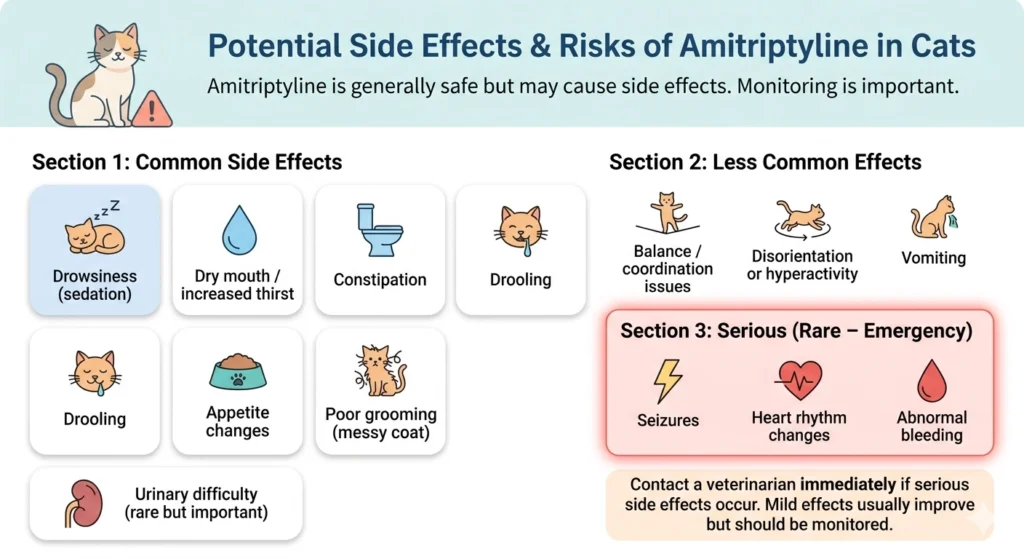
Common Side Effects
- Sedation: Cats may appear drowsy or lethargic, especially at the start of treatment.
- Dry mouth: Anticholinergic properties may reduce saliva production, leading to increased thirst.
- Constipation: Slowed digestion can result from the medication’s anticholinergic effects.
- Drooling: Some cats may drool after taking the medication.
- Appetite changes: Increased or decreased appetite may occur, sometimes leading to weight gain.
- Messy or unkempt coat: Some cats may stop grooming themselves properly.
- Urinary retention: In rare cases, urination may become difficult, which is a concern for cats with urinary issues.
Less Common Effects
- Coordination and balance problems
- Disorientation or hyperactivity (rare paradoxical reactions)
- Vomiting
Serious but Rare Side Effects
- Seizures
- Heart rhythm changes
- Abnormal bleeding
If you notice any serious side effects, take your cat to the veterinarian immediately. Common side effects usually do not require concern unless they worsen or persist.
Drug Interactions
Before giving amitriptyline, inform your veterinarian about all medications, supplements, and flea or tick products your cat uses. Certain medications and conditions can interact with amitriptyline:
- Monoamine oxidase inhibitors (MAOIs): Includes linezolid, selegiline, and amitraz (found in some flea collars). Must be stopped at least 14 days before starting amitriptyline.
- Central nervous system depressants: Opioids, benzodiazepines, other antidepressants, and CBD may worsen sedation.
- Selective serotonin reuptake inhibitors (SSRIs): Fluoxetine and similar drugs used for anxiety or aggression.
- Sympathomimetics: Drugs like phenylpropanolamine for urinary incontinence.
- Thyroid hormones
- Anticholinergic drugs or antihistamines: Clomipramine, diphenhydramine, chlorpheniramine, clemastine.
- Heartburn and ulcer medications: Cimetidine.
- Heart rhythm drugs: Quinidine and similar medications.
- Antifungal medications: Terbinafine.
Certain health conditions may also increase risk, including:
- Liver or kidney disease
- Diabetes
- Hyperthyroidism
- Heart disease
Most Serious Risks of Amitriptyline in Cats
While amitriptyline for cats can be highly effective, the most serious risks are usually associated with an overdose or pre-existing health conditions. Close veterinary supervision is essential.
Signs of Amitriptyline Overdose
If your cat takes too much amitriptyline, watch for:
- Vomiting
- Severe incoordination or falling
- Collapse
- Pale gums
If any of these symptoms occur, contact your veterinarian immediately or call a pet poison hotline.
Precautions Before Giving Amitriptyline
Amitriptyline can affect blood levels, liver, kidneys, and heart function. Special care is needed for cats with:
- Liver or kidney disease
- Heart conditions, including risk of arrhythmias
Before prescribing, veterinarians may recommend:
- Blood work to check overall health
- Electrocardiogram (EKG) to assess heart rhythm
- Echocardiogram or heart ultrasound for detailed heart evaluation
Follow-up checks may be scheduled every 6 months while the cat is on amitriptyline to ensure the medication is not negatively affecting health.
You May Like To Read:
FAQs
Can I give my cat amitriptyline every day?
Yes, amitriptyline is usually a long-term treatment. It may take several weeks of daily dosing for improvements in behavior or symptoms to appear. Once the cat’s condition improves, the veterinarian will gradually taper the dose to prevent withdrawal symptoms like vomiting, shaking, or agitation.
What should you do if your cat misses a dose of amitriptyline?
If a dose is missed:
Give the missed dose as soon as possible.
Resume the regular schedule the next day.
Never give two doses at the same time or within 12 hours of each other to “catch up.”
How can you tell if your cat has anxiety?
Common signs of cat anxiety include:
Hiding more than usual
Body language changes (looking smaller or tense)
Aggressive behavior
Grooming more or less than usual
Not using the litter box
Reduced appetite
Excessive meowing
Do you have to wean your cat off of amitriptyline?
Yes, cats should be slowly tapered off amitriptyline because it alters brain chemistry. Never stop abruptly; your veterinarian will provide a safe weaning schedule.
How long does it take for amitriptyline to work in cats?
Although amitriptyline is rapidly absorbed orally and reaches peak levels in 1–2 hours, it can take 1–4 weeks for behavioral or chronic pain improvements. Urinary benefits may appear sooner, sometimes within a few days to a week, depending on the cat’s condition.
Can I give my cat amitriptyline without a prescription?
No. Amitriptyline should never be given without a veterinarian’s prescription, as human formulations may contain harmful additives and incorrect dosing can cause serious side effects or toxicity.
Are there alternatives to amitriptyline for cats?
Yes, alternatives include:
Fluoxetine or gabapentin for anxiety
Buprenorphine for pain
Environmental modifications, like pheromone diffusers (e.g., FELIWAY) for stress-related behaviors
Your veterinarian can recommend the best option based on your cat’s needs.
Can amitriptyline be used long-term in cats?
Yes, amitriptyline can be used long-term for chronic conditions like feline idiopathic cystitis or arthritis, but regular veterinary monitoring is essential to ensure safety, check for side effects, and adjust doses as necessary.
Final Thoughts
Amitriptyline for cats is a versatile medication that can help manage anxiety, behavioral issues, chronic pain, urinary problems, and itching. When used under veterinary supervision, it offers significant benefits, including improved behavior, better urinary health, pain relief, and a higher quality of life for cats.
However, like all medications, amitriptyline comes with potential side effects and risks. Common side effects include sedation, dry mouth, constipation, drooling, urinary retention, and appetite changes, while serious risks—though rare—can involve seizures, heart arrhythmias, and overdose symptoms. Drug interactions and pre-existing conditions such as liver, kidney, heart disease, or diabetes require careful monitoring.
Proper dosing, consistent administration, and follow-up veterinary care are essential to ensure safety and effectiveness. Additionally, combining amitriptyline with supportive measures like calming diffusers or behavior modification can enhance its benefits.
Always consult your veterinarian before starting, adjusting, or stopping amitriptyline, and never administer human medications without professional guidance. By following these precautions, you can help your cat live a happier, healthier, and more comfortable life.