Albuterol sulfate for Cats, also known as salbutamol, is a fast-acting bronchodilator commonly used to help cats with asthma and breathing problems. It works by relaxing the muscles in a cat’s airways, allowing them to open up so your cat can breathe more easily—especially during sudden asthma attacks or episodes of wheezing and coughing.
In cats, albuterol is mainly used as a rescue medication for quick relief, not as a daily treatment. Most veterinarians recommend using it alongside long-term medications, such as inhaled steroids, to properly manage feline asthma. Because its use in cats is considered off-label, it’s very important to follow your veterinarian’s exact dosage and instructions.
Albuterol is usually given through an inhaler with a spacer and mask (like an AeroKat) or sometimes with a nebulizer. This method delivers the medicine directly to the lungs, making it more effective and reducing side effects. Training your cat to accept the mask before an emergency can make treatment much easier and more successful.
While albuterol can be life-saving for cats with breathing issues, giving the correct dosage is critical to ensure safety and effectiveness.
In this guide, you’ll Learn everything about Albuterol Sulfate Dosage for Cats—how it works, proper inhaler use, safe dosage, side effects, and precautions. Keep your cat breathing easier and manage asthma effectively under veterinary guidance.
Disclaimer: This content is for informational purposes only and should not replace veterinary advice. Always consult your veterinarian before giving Albuterol Sulfate or adjusting your cat’s dosage.
Key Takeaways
- Albuterol sulfate is a bronchodilator that relaxes airway muscles, helping cats breathe more easily.
- It is primarily used as a rescue medication for asthma flare-ups or sudden breathing difficulties.
- Inhalers with a spacer or nebulizers are the preferred delivery methods for fast and effective relief.
- Proper dosage and administration are critical—cats are sensitive to changes, and dog dosages should never be used.
- Side effects can include increased heart rate, shakiness, nervousness, and, in rare cases, more serious reactions like hypokalemia.
- Precautions include monitoring long-term use, avoiding racemic albuterol unless approved, and checking for drug interactions.
- Albuterol should always be used under veterinary guidance and combined with anti-inflammatory medications for long-term asthma management.
- Training your cat to accept the inhaler or mask ahead of time improves effectiveness and reduces stress.
- Regular veterinary check-ups ensure the dose remains safe and effective.
What Is Albuterol and How Does It Work?
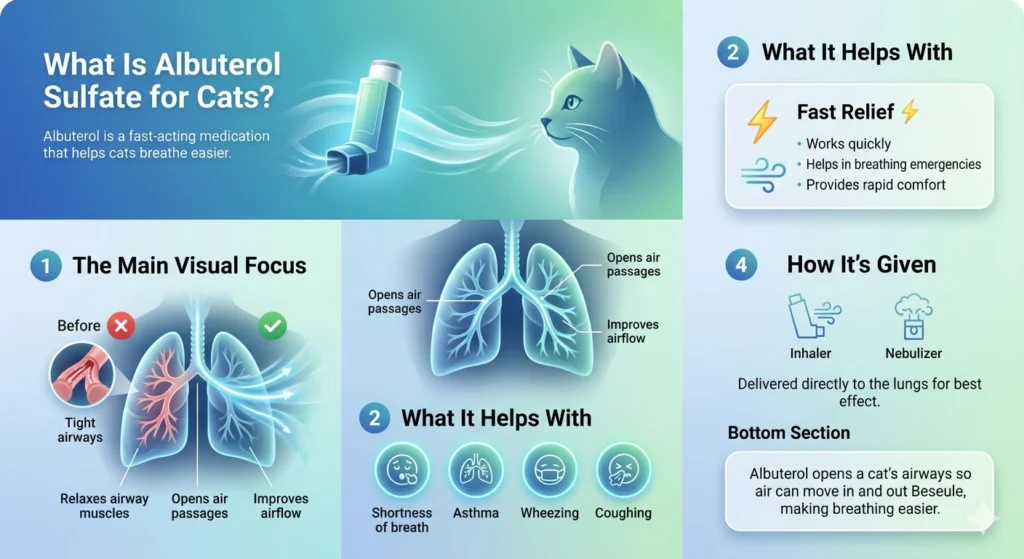
Albuterol is a bronchodilator commonly used in cats to help relieve breathing problems caused by inflammation or tightening of the airway muscles. It works by relaxing the muscles around the airways, allowing them to open up so air can flow more freely into the lungs.
The active ingredient in albuterol targets beta-2 adrenergic receptors in the lungs. When it attaches to these receptors, it causes the airway muscles to loosen, which helps reduce symptoms such as wheezing, coughing, and shortness of breath in cats with asthma or other respiratory conditions.
Albuterol acts quickly, making it useful for providing fast relief when a cat is struggling to breathe. It is typically given using methods that deliver the medication directly to the lungs, such as an inhaler or a nebulizer.
In simple terms, albuterol helps by opening up a cat’s airways, making breathing easier and more comfortable.
Common Respiratory Conditions Treated with Albuterol
Albuterol is commonly used in cats to treat respiratory conditions that cause airway narrowing and inflammation, making it difficult for them to breathe. One of the most common conditions is feline asthma, where the airways become inflamed and constricted.
In cats with asthma, albuterol is often used because it can quickly open up the airways during flare-ups, providing fast relief from breathing difficulty. It is also helpful for other airway diseases that involve inflammation and tightening of the air passages.
However, albuterol is mainly used as a quick-relief (rescue) medication and not as a replacement for long-term treatment. Veterinarians usually recommend combining it with anti-inflammatory medications, which help control the underlying inflammation. This combination approach allows for better overall management of respiratory symptoms.
Comparison with Other Bronchodilators
In addition to albuterol, veterinarians may use other bronchodilators, such as terbutaline, to treat cats with breathing issues. Both medications work by relaxing the airway muscles, but they differ in how quickly they act and how long their effects last.
Albuterol works faster, making it the preferred choice for emergency situations or sudden asthma attacks, but its effects are shorter-lasting. On the other hand, some bronchodilators like terbutaline may be available in oral (pill) form and can provide longer-lasting control.
The choice between albuterol and other bronchodilators depends on your cat’s specific condition and how it responds to treatment, as some cats may do better with one medication over another.
Proper Dosage Guidelines for Cats
The correct albuterol dosage for cats depends on the severity of their breathing problems, so it is essential to always follow your veterinarian’s instructions. Vets typically recommend giving several small puffs through an inhaler instead of one large dose. This method ensures the medicine works effectively while reducing the risk of side effects.
Albuterol should never be given by mouth or in larger doses than prescribed. Cats are particularly sensitive to changes in dosage, and improper use can lead to complications such as dangerously low blood potassium levels. Regular veterinary check-ups are important to ensure the dose remains appropriate over time. Dog dosages are not safe for cats and should never be used as a reference.
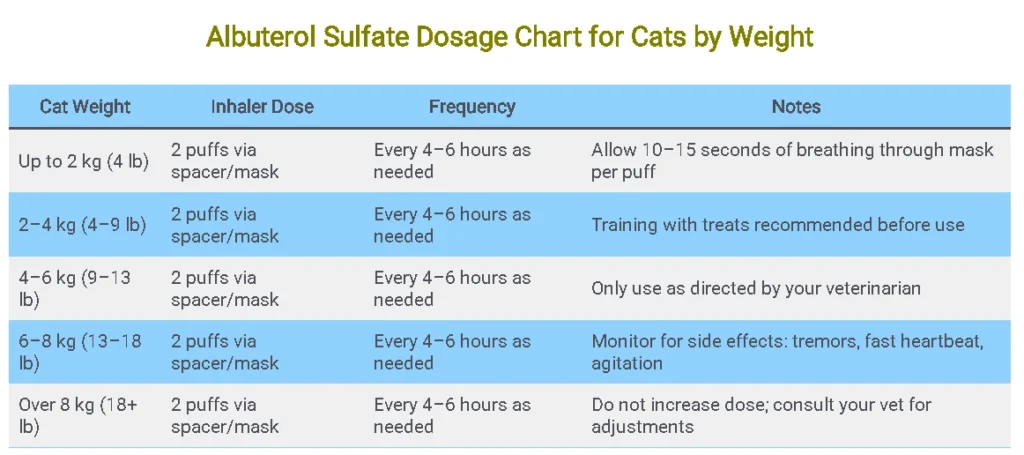
Albuterol Sulfate Dosage Chart for Cats by Weight
| Cat Weight | Inhaler Dose | Frequency | Notes |
|---|---|---|---|
| Up to 2 kg (4 lb) | 2 puffs via spacer/mask | Every 4–6 hours as needed | Allow 10–15 seconds of breathing through mask per puff |
| 2–4 kg (4–9 lb) | 2 puffs via spacer/mask | Every 4–6 hours as needed | Training with treats recommended before use |
| 4–6 kg (9–13 lb) | 2 puffs via spacer/mask | Every 4–6 hours as needed | Only use as directed by your veterinarian |
| 6–8 kg (13–18 lb) | 2 puffs via spacer/mask | Every 4–6 hours as needed | Monitor for side effects: tremors, fast heartbeat, agitation |
| Over 8 kg (18+ lb) | 2 puffs via spacer/mask | Every 4–6 hours as needed | Do not increase dose; consult your vet for adjustments |
How Albuterol Is Administered in Cats
The preferred method for cats is aerosolized inhalation using a Metered-Dose Inhaler (MDI) with a pediatric spacer and mask (e.g., AeroKat). The typical instructions are:
- Administer two puffs into the spacer
- Allow the cat to breathe through the mask for 10–15 seconds
- Repeat every 4–6 hours as needed, according to your vet’s guidance
The duration and frequency of treatment depend on:
- The cat’s specific condition
- Their response to the medication
- Any side effects that may occur
Always complete the prescription exactly as directed by your veterinarian to ensure safe and effective treatment.
How to Use an Inhaler with Cats
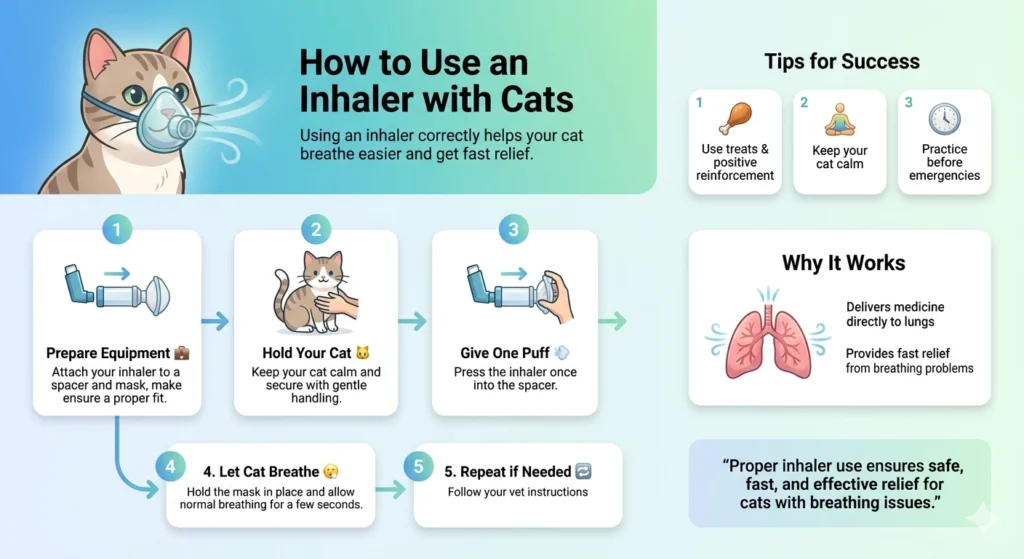
Using an inhaler for your cat requires patience, the right equipment, and gentle handling. The most effective way to deliver albuterol is with a special spacer or mask designed to fit a cat’s face. This ensures the medication goes directly into the lungs, providing fast relief from coughing, wheezing, and difficulty breathing.
Step-by-Step Guide:
- Prepare the spacer and mask: Make sure it fits snugly over your cat’s nose and mouth.
- Gently hold your cat: Keep your cat calm and secure to make the process easier.
- Administer the puff: Press the inhaler once into the spacer.
- Allow normal breathing: Let your cat breathe naturally through the mask for a few seconds so the medicine reaches the lungs.
- Repeat if directed: Follow your veterinarian’s instructions for the number of puffs and timing.
Tips for Success
- Training and positive reinforcement: Use treats and gentle handling to help your cat get used to the mask over time.
- Practice before an emergency: Familiarizing your cat with the inhaler before an asthma attack improves the effectiveness of treatment.
This method ensures maximum absorption of albuterol, giving your cat fast and safe relief from respiratory distress.
How do I give my cat albuterol?
Albuterol is most commonly given to cats as an inhaled treatment using an aerosol canister and an approved delivery device (e.g., AeroKat®).
Steps for proper administration:
- Shake the inhaler well and ensure the medication is at room temperature.
- Pre-load the chamber with a puff of medication.
- Place the mask snugly over the cat’s nose and mouth.
- Allow the cat to breathe normally 7–10 times before removing the mask.
- Never puncture the canister or expose it to heat or fire.
Tips:
- Some cats need a training period to accept the device.
- Use praise, treats, and gentle handling to encourage acceptance.
Potential Side Effects and Precautions of Albuterol in Cats
Albuterol is generally safe and effective for cats when prescribed by a veterinarian, but like all medications, it can cause side effects and requires careful monitoring.
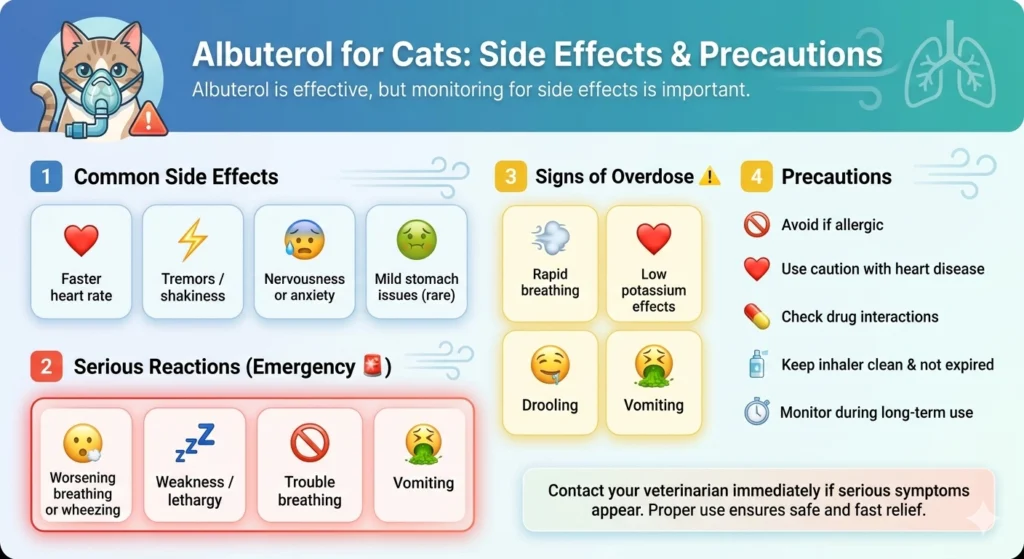
Common Side Effects
Some cats may experience mild reactions, including:
- Faster heart rate (tachycardia)
- Shakiness or tremors
- Nervousness or anxiety
- Gastrointestinal issues (rare)
Serious Reactions
If your cat shows any of the following after using albuterol, contact your veterinarian immediately:
- Increased coughing or wheezing
- Weakness or lethargy
- Trouble breathing
- Signs of overdose, such as:
- Rapid breathing (tachypnea)
- Cardiac arrhythmias
- Hypokalemia (low blood potassium)
- Hyperactivity or depression
- Excessive drooling (hypersalivation)
- Vomiting
Precautions
- Allergies: Do not use albuterol in cats with known hypersensitivity to the drug.
- Heart disease: Use caution in cats with heart conditions, as albuterol can affect heart rate and rhythm.
- Drug interactions: Albuterol may interact with certain medications, such as L-deprenyl, tricyclic antidepressants (like clomipramine), and diuretics. Always inform your veterinarian about other medications your cat is taking.
- Formulation: Avoid racemic (mixed) albuterol unless specifically approved by your vet, as some forms can worsen airway inflammation in cats.
- Maintenance: Keep the inhaler clean and check expiration dates to ensure safe and effective treatment.
- Long-term use: Because albuterol can lower blood potassium, long-term administration requires regular veterinary monitoring.
By following these precautions and monitoring your cat closely, albuterol can provide safe, fast relief for cats struggling with asthma or other breathing problems.
You May Also Like To Read:
FAQs About Albuterol for Cats
How do I determine the correct dose of albuterol for my cat?
The correct dose depends on your cat’s weight and overall health. Only a veterinarian can determine the proper amount after examining your cat. Never guess or use human doses, as this can be dangerous.
What is the safe frequency for administering albuterol to my cat?
Most cats receive albuterol only during episodes of breathing difficulty. Daily use should occur only if your veterinarian specifically approves it. Using it too frequently can increase the risk of side effects and complications.
What side effects should I watch for when my cat is taking albuterol?
Watch for:
Faster heartbeat
Shaking or tremors
Restlessness or nervousness
Worsened breathing in some cases
If you notice any of these symptoms, contact your veterinarian immediately.
Can I safely use my own inhaler to treat my cat’s respiratory issues?
No. Human inhalers have different doses and ingredients. Using them on your cat without veterinary guidance can be harmful. Always use medications specifically prescribed for cats.
Are the dosages of albuterol the same for cats and dogs?
No. Cats and dogs require different doses because their bodies metabolize the medication differently. Only a veterinarian can calculate the safe and effective dose for each species.
What if I miss giving my cat a dose?
If you miss a dose:
Give it as soon as you remember.
If it is close to the next scheduled dose, skip the missed one and continue the regular schedule.
Never give two doses at once or give extra medication.
Are there any risk factors for this medication?
Albuterol should not be used in cats that are allergic to it. Use caution in cats with:
Chronic conditions like diabetes, hyperthyroidism, or high blood pressure
Heart disease, including abnormal rhythms
Seizures
Pregnancy (especially late stages, as it can inhibit uterine contractions and delay labor)
Final Thoughts
Albuterol sulfate is a lifesaving bronchodilator for cats with asthma or other breathing difficulties. When used correctly, it opens up the airways, eases coughing and wheezing, and provides rapid relief during flare-ups.
It is important to remember that albuterol is primarily a rescue medication, not a replacement for long-term management. Combining it with anti-inflammatory treatments, following your veterinarian’s instructions, and using proper inhalation techniques ensures the best outcomes for your cat.
Always monitor your cat for side effects, use the correct dosage, and keep up with regular veterinary check-ups. With careful use, albuterol can greatly improve your cat’s quality of life, making breathing easier and helping them stay active and comfortable.
In short, understanding how albuterol works, how to give it safely, and the proper dosage for your cat is essential for effective and safe treatment of feline respiratory conditions.